These tasks shouldn’t take up your workweek. But when systems fall short, they do. If you’re a small or mid-size business owner or HR leader, you probably didn’t get into this role because you love tracking down time-off requests, chasing signatures, or answering the same benefits question 14 times.
And yet… here we are.
Studies show that small business owners spend about 16 hours (or two full days) per week on HR-related administrative work.
Most businesses lose valuable time to the slow drip of small, repetitive “this will only take a minute,” tasks that quietly eat up the workweek. Add them up, and suddenly your strategic HR goals, like recruitment, retention, and leadership development, get pushed aside.
Here are some of the most common areas that may be draining your time.
Time-Consuming HR-Related Tasks
They seem small. But over time, these tasks drain your attention, your energy, and your progress.
1. Repetitive Tasks and Rework
Every time you hunt down a missing signature or resend login details, you lose time you could be using elsewhere. The common offenders? Answering the same employee questions over and over:
“How do I add my baby to insurance?” “When do benefits start?” “How many PTO days do I have left?”
Sound familiar?
Individually, these are quick answers. Collectively? They’re a constant interruption machine. When you stop to respond, you lose focus, break momentum, and push higher-value work further down your list.
🛠️How To Fix It:Uncover the pain points.Which areas are bogging down the process due to repetition? Where can you create a self-service culture? This can mean establishing a simple internal HR hub (in your intranet, shared drive, or HR platform), short FAQs on benefits, PTO, payroll timing, and onboarding, or short videos that walk through routine processes.
Then, train employees to go there first. When someone asks a repeated question, send the link along with your answer. Over time, behavior shifts. HR becomes a source, not a help desk.
2. Correcting Payroll Errors
The latest software makes running payroll seem easy, but if something goes wrong, the liability is still yours. Miscalculating pay, outdated tax information, and manually tracking time off are time-consuming to fix, hard to catch, and expensive if you don’t, not just in terms of costs but also in lost time and eroded trust among your workers.
🛠️How To Fix It:Automate what you can.Look for tools that let employees request time off directly, route approvals to managers, automatically update balances, and sync with payroll.
When automation handles the basics, HR shifts away from data entry to policy guidance. You’ll still handle exceptions, but you won’t be stuck crunching numbers late at night.
Or leave it to the experts by outsourcing payroll to an IRS-certified PEO. A PEO can simplify the payroll process with a cloud-based payroll portal for employers, online employee access to pay stubs, W-2s, benefits info, employee handbooks, and secure, paperless direct deposits. They can also take care of onboarding, payroll taxes, IRS deposits, benefits administration, compliance guidance, and provide HR support.
3. DIY Compliance Monitoring
Labor laws change constantly. Posting requirements update. Salary thresholds shift. Leave laws multiply. Keeping up with shifting deadlines, state-level compliance requirements, and studying the IRS’s recently updated guidance under the One Big Beautiful Bill Act. Trying to monitor all of this yourself is not only time-consuming – it’s also stressful.
One misstep can be costly. In 2025, the Department of Labor’s Wage and Hour Division recovered more than $259 million in back wages for nearly 177,000 employees. That’s an average of $1,465 per worker (the most since 2019).
🛠️How To Fix It:Don’t carry compliance alone.Get expert help by partnering with a professional. Whether it’s through a PEO, outside counsel, or a compliance partner, get support that keeps you updated on requirements that apply to your business.
You’ll need advice on tricky employee situations, alerts on multi-state regulatory changes, new pay transparency rules, evolving paid leave requirements, changing wage-and-hour laws, new employment-related laws on AI, and much more.
🚀 Pro Tip: Stay compliant with our HR Checklist covering the latest updates and deadlines related to compliance, benefits, payroll, and general HR that you need to take care of each quarter. Download your free HR Checklist ➡️ HERE
4. Updating Employee Data in Multiple Places
Name changes. Address changes. Promotions. New pay rates. If you’re entering the same update into payroll, benefits, retirement platforms, and internal trackers, you’re doing triple-plus work and increasing the chance of errors.
🛠️How To Fix It:Integrate your systems, invest in HR technology, or work with a PEO. A unified HR platform can help connect payroll, benefits, time tracking, and employee records, among other things.
With better integration, changes flow through automatically. That means fewer entries, fewer errors, and more free time.
5. Handling Every Employee Issue Personally
When you’re the only go-to for every conflict, complaint, or issue, your day gets hijacked fast. Some things absolutely belong with HR. But many could be resolved earlier and better by trained managers.
🛠️How To Fix It:Upskill your managers by teaching them to give feedback,handle minor conflicts, anddocument specific issues. This doesn’t remove HR from the process; rather, it elevates the role, moving them from firefighter to advisor.
Stop the HR Busy Work, Amplify Your Impact
Normalizing HR busy work has real consequences, including burnout. Your top performers may feel overwhelmed by constant overtime or pressure to meet demands. It also creates dependence on key team members, making it difficult to delegate when only a few people hold essential knowledge or responsibilities.
Maintaining inefficient processes limits growth, slows project delivery, and prevents your team from focusing on strategic initiatives.
🛠️How To Fix It: Partnering with an IRS-certified PEO can help. By taking on time-consuming tasks, PEOs help small businesses get back more time to focus on productivity and growth.
In addition to saving time, a PEO can also save your business money by identifying inefficiencies, streamlining HR processes, and helping you make critical cost-cutting decisions.
If you constantly feel behind, the fix isn’t more hustle. It’s better tools, clearer processes, and the right support. A PEO can help you stop the small stuff from piling up, so you can invest your time where it matters most. And if you need help, just give us a call at📱 800-446-6567
Find Out What a PEO Can Do for You
If you’re a small to mid-sized business, a PEO can lighten your workload and strengthen your operations. Imagine focusing on growth while experts handle your payroll, taxes, benefits, HR, and compliance.
⬇️Read more about the advantages of working with a PEO in our series:
🔷 HELP WANTED: HR Team or PEO Partner
Investing in an HR team versus partnering with a PEO, which path is best for your small business? As your business grows, managing HR gets complicated – fast.
Should you build your own HR team or explore the benefits of partnering with a PEO? Here’s how to decide which choice best fits your business. ➡️Link #1Link #1Read More
🔷 NEW RESEARCH: More Small Businesses Are Turning to PEOs
Compelling research from the National Association of Professional Employer Organizations (NAPEO) shows that PEOs are helping small businesses scale – a game-changer in 2026.
Working with a PEO isn’t about outsourcing; it’s about upgrading how you manage HR. It’s about investing in smarter growth, happier employees, and peace of mind. In a business world that’s only getting more complex, that’s a benefit worth having on your side. Thousands of successful businesses are already doing it – and the data proves it works. ➡️Link #2Link #2Read More
IT’S HERE!
Your FREE HR Checklist
Here’s your checklist of important tasks related to payroll, benefits, compliance, and general HR.
About Propel HR.Propel HR is an IRS-certified PEO and a leading provider of human resources and payroll solutions for 30 years. Propel partners with small to mid-sized businesses to manage payroll, employee benefits, compliance and risks, and other HR functions in a way that maximizes efficiency and reduces costs. For more information, visit propelhr.com
Productivity is the secret sauce that separates teams stuck on the sidelines from those with winning streaks. Chances are you’re juggling hiring, compliance, benefits, culture, and about a dozen other priorities . . . all while the clock keeps ticking.
Your power play? Outsourcing. When used strategically, it boosts productivity, streamlines operations, and frees you up to focus on what actually moves the scoreboard – your bottom line.
First Quarter: What Productivity Really Means
In HR, productivity isn’t about sprinting faster – it’s about running the right plays at the right time.
True HR productivity means delivering meaningful outcomes with minimal wasted effort. Speed matters, sure, but impact matters more.
Fast hiring doesn’t matter if turnover remains high. Smooth payroll is great . . . unless errors keep forcing replays.
At its core, productivity is about consistent, high-quality execution that supports your business year-round.
Here’s the basic stat line. The fundamental formula HR teams use looks like this: Productivity = Total Output / Total Input.
🎯Stronger Compliance Defense. Mistakes lead to fines, audits, and penalties – that’s expensive. Productive HR keeps risk off the scoreboard.
🎯Scoring Efficiency. In the Red Zone, the stakes are high, and scoring opportunities significantly increase. When your HR team isn’t buried in paperwork, they can make a more strategic impact by focusing on culture, performance, and growth.
🎯Leadership Trust. HR shifts from order-taker to trusted partner.
The results? A productive HR function is the engine that keeps your people – and your business – moving forward.
The Stats Don’t Lie: Proof from the League
The data backs it up:
➡️Flexibility & Remote Work. A Gartner report finds that 43% of employees working flexible hours say they are more productive. Gallup found that fully remote workers report the highest engagement levels.
➡️Engagement Matters. Highly engaged teams are 17% – 21% more productive than disengaged ones.
➡️The Productivity Gap. Top-tier companies grew more productive, while others saw declines due to inefficient collaboration and low engagement.
🎯Winning teams don’t guess; they measure, adjust, optimize, and power up.
The Box Score: Common HR Productivity Metrics
To know how your team is performing, you need the right stats:
📊 Output Metrics. Revenue per employee, output per hour, goals completed vs. assigned
📊 Efficiency Metrics. Time spent per task, employee utilization
📊 Quality Metrics. Accuracy and impact, not just speed
📊 Engagement Indicators. Engagement scores and absenteeism.
📊 Financial Metrics. Total Cost of Workforce (TCOW)
These numbers tell you whether your plays are working and what needs to be redesigned.
A PEO helps improve productivity by offloading time-consuming tasks while strengthening the entire employee lifecycle through MVP expertise and next-level HR tech.
🔥Think of it as adding multiple Tom Bradys to your roster.
THE GAME PLAN
Play #1: Reallocate Resources to Core Strengths
The fastest productivity gain comes from freeing your teams from admin overload. By outsourcing, you get:
✅Time Savings. Business owners can spend 20+ hours per month on HR admin-related tasks. Outsourcing frees up time for growth, sales, and strategy.
✅Administrative Relief. Payroll, benefits enrollment, and multi-state compliance tasks move off your plate and into expert hands.
✅A Team of MVPs. Outsourcing gives you access to a team of pros, ready to help when you need it.
Play #2: Build a Deeper Talent Bench that Flexes
An engaged workforce is naturally more productive.
💼 Lower Turnover. Companies using PEOs see 10%–14% lower turnover, reducing disruptions and retraining time.
💼 Big-league Benefits. PEOs provide access to Fortune 500-level benefits, boosting satisfaction and engagement.
💼 Faster Onboarding. Streamlined onboarding helps new hires get in the game.
Play #3: Upgrade Your Tech Stack
PEOs give small and mid-sized businesses access to advanced HR technology without the big-ticket price tag.
📊 Automation.Payroll and tax automation reduce errors and time-consuming fixes.
📊 Employee Self-service. Employees handle PTO, pay stubs, and benefits updates themselves with fewer interruptions for HR.
Play #4: Strengthen Your Compliance Defense
Compliance isn’t optional and managing it internally can drain focus fast. With a PEO on your team, you get:
🛡️Expert Guidance. A team of HR pros helps prevent fumbles and penalties. PEOs stay on top of federal, state, and local regulations, including ACA and FMLA.
🛡️Safety Programs. Proactive safety audits reduce workplace incidents and business disruption.
Play #5: Win on the Scoreboard
All these efficiencies lead to real, measurable stats:
🏆Faster Growth. Businesses using a PEO grow 7% – 9% faster than those that don’t. And are 50% Less Likely to Go Out of Business
💥That’s not just a win – it’s a blowout. It’s the stuff championships are made of.
FINAL CALL: Make Productivity Your Winning Play!
How far can you go? Productivity isn’t a one-time drill – it’s a GOAT mindset.
When you measure what matters, optimize repetitive work, and outsource strategically, you’re not just working faster . . . You’re working smarter. That’s for legends.
🔥Outsourcing is no rookie move. It’s a strategic productivity partner that helps HR shift from scrambling to scoring. And keeping that winning streak hot.
Ready to Turn HR into a Powerhouse?
Ready to hear your crowd ROOOAAARRR? 🎉 This power playbook is your first step.
➡️If you need some coaching or a huddle about your productivity game plan, we’ve got you all the way to the Super Bowl winning streak and beyond – just give us a call.
IT’S HERE!
Your FREE HR Checklist
Here’s your checklist of important tasks related to payroll, benefits, compliance, and general HR.
About Propel HR. Propel HR is an IRS-certified PEO and a leading provider of human resources and payroll solutions for 30 years. Propel partners with small to mid-sized businesses to manage payroll, employee benefits, compliance, risk, and other HR functions in ways that maximize efficiency and reduce costs.
To learn more, visit propelhr.com
If you run a small or midsize business, you already know growth is exciting, yes — but also unpredictable, and sometimes overwhelming. That’s exactly why more business owners and HR leaders are choosing Professional Employer Organizations, or PEOs, not just to outsource HR tasks, but to grow smarter, faster, and more sustainably.
The Top 10
A PEO helps you scale without letting the behind-the-scenes stuff collapse under the weight of bigger payrolls, more onboarding, greater compliance risk, and higher employee expectations. It’s like adding an entire HR department overnight, minus the overhead and recruitment scramble. A few advantages include:
1. You Get HR Infrastructure Before You Actually Need It (Which Is Exactly When You Need It)
Most small businesses don’t feel the pain of HR complexity until it’s too late. Payroll errors start multiplying, employees want benefits you’re not equipped to provide, and suddenly you’re Googling state labor laws at 11:30 p.m.
A PEO lays the foundation before those cracks show. Payroll scales without drama. Whether you have 10 people or 110, payroll stays smooth, compliant, and on time.
Onboarding becomes a real process and not a scramble. Templates, checklists, digital forms, background screening, and automated workflows ensure consistency as you grow.
Policies adjust proactively. A PEO helps you build employee handbooks, update them with new laws, and create clear rules that reduce risk as your headcount increases.
2. A PEO Delivers the Big-Company Benefits Employees Want
Here’s the part that often surprises business owners: a PEO can give you access to benefits packages typically reserved for much larger companies.
Because a PEO pools together employees across its client base, you essentially get to “buy in bulk,” accessing high-quality benefits at lower rates. That means you can offer your team robust health plans, retirement savings options, and other top-tier benefits typically reserved for larger companies (and top talent expects).
🎯When employees enjoy comprehensive benefits without compromise, your company is seen as a long-term career option. Retention rises, and as every HR pro knows, that’s a growth strategy.
3. Compliance Stops Being a Guessing Game
Growth = risk. New states. New regulations. New employment laws. New reporting requirements.
This is where many small businesses unintentionally step into danger territory. The rules change constantly and the stakes are high.
✅They track federal, state, and local employment laws.
✅They help maintain the required documentation.
✅They ensure new hires are classified correctly.
✅They reduce risk with structured workplace policies.
✅And because of the co-employment relationship, many PEOs also share certain administrative responsibilities – meaning you’re not alone if something goes sideways.
🎯Growing is risky. Growing without compliance support? That’s gambling.
4. HR Technology You Don’t Have to Build Yourself
Scaling is smoother when everything is connected, such as payroll, onboarding, PTO tracking, benefits enrollment, performance management, and reporting. But building your own HR tech stack or licensing multiple vendors gets expensive fast.
🎯A PEO delivers the all-in-one HR command center designed for your business. Better data, better workflows, better decision-making.
5. A PEO Frees Up Time (A Lot of It)
If you’re a business owner, your job is to grow the business, not troubleshoot payroll deductions. If you’re an HR manager, your job is to support the people strategy, not drown in admin work.
A PEO takes on repetitive, time-consuming tasks, such as processing payroll, managing benefits, handling tax filings, and preparing compliance documentation. The more you grow, the more time you reclaim, instead of watching your workload escalate with each hire.
6. You Gain a Team of HR Experts Without Expanding Your Staff
Growing companies don’t always have the luxury of immediately hiring a full HR team — HR generalists, benefits specialists, payroll administrators, compliance officers, recruiters, risk managers, the whole lineup.
A PEO gives you access to exactly those roles, on-demand expertise, without the full-time salary load.
Need help rolling out a new PTO policy? Preparing for benefits renewal? Handling a sensitive employee relations issue? There’s an expert for that. It’s like having a seasoned HR department already onboard, ready to advise you every step of the way.
7. You Become More Attractive to Investors and Partners
Here’s something entrepreneurs don’t always think about: investors love operational maturity. When a PEO is part of your infrastructure, it signals you’re compliant, manage risks well, your HR processes are stable and that you can scale responsibly.
🎯For investors, lenders, and potential partners, a strong HR foundation = reduced risk. And reduced risk makes you a better bet. For acquisitions and rapid growth phases, a PEO can also make integration smoother.
8. A PEO Helps You Build a Better Employee Experience
Growth doesn’t just require more people; it requires keeping the good people you already have on board.
A PEO helps you:
✅Improve communication and access to information.
✅Build modern HR processes that employees trust.
✅Provide competitive benefits
✅Create fair, consistent workplace policies.
🎯A better employee experience leads to lower turnover and higher morale. And in high-growth companies, stability is gold.
9. You Can Expand Into New States With Confidence
Need to hire employees in another state? That’s great for growth, but it creates compliance challenges due to different tax rules and labor law requirements.
🎯A PEO handles all of it, letting you recruit the best talent in any location without losing sleep or risking penalties.
10. You Scale Strategically
Growth can stress your business when operations lag behind headcount. A PEO aligns both, so you’re expanding strategically.
🎯The result? Smooth transitions. Predictable costs. Cleaner processes. Less risk. Happier employees. And more time to focus on what actually grows the business — not on what slows it down.
Growth Is Easier ➡️When You’re Not Doing Everything Yourself
If you’re preparing to scale — or even thinking about it — the question isn’t whether you can handle growth alone. It’s whether you should.
With a PEO, growth is a plan.
A PEO delivers the infrastructure, expertise, and stability that power growing companies, without requiring a major investment or a staff increase.
Ready to see what a PEO can do? We can lighten your workload and help you drive growth, just give us a call at (800) 446-6567 or visit propelhr.com
🎯PEO Series: The PEO Difference🎯
Learn more about how a PEO can help your business in our series:
🔶HR Help Wanted: In-house Team or PEO Partner. Investing in an HR team versus partnering with a PEO, which path is best for your small business? As your business grows, managing HR gets complicated – fast. Should you build your own HR team or explore the benefits of partnering with a PEO? Here’s how to decide which choice best fits your business. Read More
🔶Navigating Compliance Minefields. Navigating HR compliance can feel like tiptoeing through a minefield — one wrong move can trigger costly consequences. From pay transparency laws to overtime thresholds, new regulations evolve faster than most small HR teams can keep up with. Here’s a look at the top HR compliance challenges and how to avoid turning small missteps into expensive lessons. Read More
🔶New Research Shows Why More Small Businesses Are Turning to PEOs. The data is in! And it shows how partnering with a PEO will be the smartest move for small businesses in 2026. Recently released research from the National Association of Professional Employer Organizations (NAPEO) shows that PEO partnerships are helping small businesses scale. It’s smarter, more efficient, and a game-changer. Here’s what the latest data shows. Read More
IT’S HERE!
Your FREE HR Checklist
Here’s your checklist of important tasks related to payroll, benefits, compliance, and general HR.
About Propel HR. Propel HR is an IRS-certified PEO that has been a leading provider of human resources and payroll solutions for more than 25 years. Propel partners with small to mid-sized businesses to manage payroll, employee benefits, compliance and risks, and other HR functions in a way that maximizes efficiency and reduces costs. For more information, visit www.propelhr.com
My teenage daughter spent last week raising money for a local charity through her high school. The Student Council planned their annual Spirit Week which consisted of fun events, such as car washes, a tacky prom, powderpuff football, and dodgeball games. From costumes to class buyouts to old fashion “dialing for dollars”, all money raised went to the chosen charity.
The student leaders had been preparing for months for this week and their work paid off. The best part about this week is that the fundraising element is part of the friendly competition with a rival high school.
Both schools raise money for different non-profits, and they present their final tallies at half-time during the big game. The schools have a chance to “win” both the Spirit Week competition and the football game, but in actuality, EVERYONE wins!
This year, the combined totals raised from both schools exceeded $400,000.
Photo Credit: Pamela Dunlap Photography.
Every year, I am amazed at what I see the youth of today accomplish in one week. They decide on the non-profit to sponsor through a competitive grant process, organize the calendar, delegate the volunteers for the events, hype up the student body, and sell their dreams like the most seasoned development team around. The work they do during that week and leading up to that week (with a little help from teachers and parents) should make every business leader pause and try to tap into that Gen-Z spirit.
Generation Z is just now hitting the workplace. It is important that we know who they are and what they stand for. As with all generations, Gen Z is defined by their era. Individuals born between 1997 and 2012 are considered a part of this generation and it is estimated that by 2025, they will make up 27% of the workforce. They have been raised during a tumultuous time. They are the post-9/11 generation, and they witnessed the impact of the Great Recession to their parent’s jobs and homes. Smartphones have always existed during their time, and they are the first generation that has never known the world without the Worldwide Web. They are living through a global pandemic, an environmental crisis, and political and civil unrest. Generation Z is also the most racially and ethnically diverse generation in U.S. history.
What Defines Generation Z and How Will This Impact the Workplace?
Diversity, Equity, Inclusion. As the most diverse generation, Gen-Z has high standards when it comes to diversity in their workplace. It is not just a “nice to have.” It is essential. Generation Z wants to work for companies that reflect who they are. They want to see diverse leaders and an intentional approach to a more inclusive environment.
Values-Driven Approach. Social issues are important to this generation. They want to know that the work they are doing has a positive impact to the world. They have always used social media and their buying power as a tool to reflect their values. Now, they want to work for organizations which share their ethical systems. Be warned, this generation will not accept weak platitudes. They want to see their values in action.
Digital Natives. This generation has never used a phone with a cord, and many can’t remember a time before Snapchat. Technology and digital tools are a part of their DNA, however, don’t lump them into one bucket. Gen-Z still values strong interpersonal relationships. They may go to YouTube to learn a new skill, but they want workplaces that have the technology they need and the teams they can trust.
Economic Security. After seeing their parents navigate the Great Recession, Gen-Z value stability over risk. They are more likely to stay at a company longer than Millennials and are willing to put in the extra work for a higher paycheck. They are less interested in the risks associated with starting their own businesses and prefer to work for companies that can help advance their careers.
Last week, I had the opportunity to see the drive, energy, and altruistic spirit of this up-and-coming generation. As a parent, I am proud, and as a business leader, I am excited that this generation is entering the business world. I believe they can do anything that set their mind to. In fact, they already have, and we are ALL the recipients of their talent and determination.
Propel HR President Lee Yarborough currently serves as Chair of the National Association of Professional Employer Organizations (NAPEO) Board of Directors. She spoke with PEO Insider magazine to share where she thinks the industry is headed and how NAPEO can continue to grow. Download a pdf version of the full interview: A Passion To Serve
About Propel HR. Propel HR is an IRS-certified PEO that has been a leading provider of human resources and payroll solutions for more than 25 years. Propel partners with small to midsized businesses to manage payroll, employee benefits, compliance and risks, and other HR functions in a way that maximizes efficiency and reduces costs. Visit our website at www.propelhr.com.
Many small businesses turn to Human Resources to play a more significant role in helping the business run better for less. Outsourcing can be a valuable partner.
What is Outsourcing?
Outsourcing is a strategy of hiring outside business experts to perform a specific service traditionally handled in-house by the company’s staff. Many small businesses already take advantage of outsourcing certain HR-related tasks, such as payroll, employee benefits administration, including employee health plans, and compliance and risk management.
Benefits of Outsourcing Human Resources
Here are few top reasons that many small businesses outsource HR.
Significantly Reduces Paperwork and HR-Related Tasks. Outsourcing significantly reduces the growing HR administrative workload and frees up valuable time, which can invest back into growing your business.
Access to More Expertise. Your HR team benefits from the knowledge and experience of a seasoned team of HR experts who have solved challenges like yours for many other businesses.
Saves Time and Money. Because you pay for only the services you need, the cost to outsource is often less expensive than the cost it would take to expand your Human Resources department. In addition, there are also savings in terms of increased productivity and efficiency. In addition, by outsourcing time-consuming administrative functions, your in-house team gains more time to get more done, and company leadership can focus on growing the business.
What are Some of the Most Common Challenges Facing Small Businesses Today?
The growing responsibilities of HR are more complex and time-consuming than ever before and often too costly for small businesses to manage on their own. Here are a few challenges small businesses are currently facing where outsourcing can help.
Employees Working Remotely. During the pandemic, many employees transitioned to working remotely, and businesses had to find new ways to help employees meet expectations, such as providing training, tools, and resources. In addition, those employers with employees working in different states were subject to different employment laws and additional requirements as well as new state business and payroll taxes.
Keeping and Attracting Top Talent during a Severe Labor Shortage. HR professionals have their work cut out for them to bring employees back to work, retain top talent, and find qualified workers. During the pandemic, many workers reassessed their jobs and need for a work-life balance. As a result, many opted not to return. According to the U.S. Bureau of Labor Statistics, job openings reached a record high of 10.1 million by the end of June 2021. Outsourcing can help employers identify qualified candidates. It can also help keep employees long-term by providing strategies to strengthen employee engagement, including guidance on assembling a competitive employee benefits package that is meaningful to your workforce and right for your business.
Reducing Workplace Risks. Staying on top of new regulations and changes in employment law is no easy task. In addition to federal employment laws, many state and local governments have their own laws. While not all laws apply to all employers, HR managers should be familiar with the laws that may affect your business. Outsourcing can help with guidance on ways to reduce risks and prevent costly compliance violations, including complying with the current requirements of labor laws and regulations. Some of the most common areas include the Fair Labor Standards Act (FLSA), workforce classifications, overtime pay, record-keeping, Family Medical Leave Act (FMLA) eligibility, and responding to EEOC complaints.
Staying in Compliance with Multiple State Regulations. Navigating different and sometimes conflicting labor laws can be a compliance challenge for businesses both large and small. Outsourcing can help with guidance on reducing risks and preventing costly compliance violations, including complying with the labor laws and regulations governed by the state where employees are working, not just where the employer is based. Navigating Changing Covid-related Workplace Safety Requirements. The pandemic is not over. But as vaccination rates rise and more workers return to the workplace, employers, especially multi-state employers, can benefit from outsourcing in order to stay current with changing Covid-related mandates for keeping employees safe.
Providing Better Benefits & Affordable Health Insurance Options. Enhanced employee benefits packages and affordable enterprise-level health insurance plans are at the top of the list for many job seekers and are also important for keeping your best employees.
According to a Society of Human Resources Management (SHRM) research study focused on employee benefits, employers who improved their employee benefits packages reported better overall employee performance and productivity, as well as improved recruitment and retention results. Over the past year, the needs of your workforce have likely changed. Take a fresh look at your current employee benefits package to make sure it includes more perks and competitive benefits, such as mental health benefits or a retirement plan.
What Are the Common Reasons Preventing Small Businesses from Considering Outsourcing for Help?
Fear of Losing Control of the Business. Some business owners believe that outsourcing may result in losing control over their business or a specific process. Not so. As a business owner, you maintain complete control over the business, its activities, and its employees. What you gain is a valued partner and HR expert to your team to handle the time-consuming administrative HR workload. And as a result, you also get more time back to concentrate on other crucial aspects of running your business, such as operations and financial growth.
Losing Your In-House HR Staff. Your in-house Human Resources team may not be equipped to handle the growing administrative demands of HR or meet the deadlines and requirements of changing employment laws. Outsourcing can give your HR staff access to a team of trusted HR experts who can help fill the gaps, protect your company from potential risks and compliance issues, and help your business run more smoothly.
Should Your Small Business Consider Outsourcing HR?
Do you have a partner on your team helping you make important decisions about your business? Every small business is faced with challenges and change. But those who partnered with an IRS-certified PEO, like Propel HR, to outsource HR-related tasks benefited from expert guidance and the support to help their business grow.
Propel HR President Lee Yarborough Elected Chair of the National Association of Professional Employer Organizations (NAPEO) Board of Directors.
Propel HR President Lee Yarborough was recently elected Chair of the National Association of Professional Employer Organizations (NAPEO) Board of Directors. She spoke with PEO Insider magazine to share where she thinks the industry is headed and how NAPEO can continue to grow. Download a pdf version of the full interview: A Passion To Serve
You Got This! Lee was also featured on the podcast, TWO FEET IN. In season 2 of the podcast, Coach Heather Macy highlights “inspiring women who are focused on empowering other women.” In this short but in-depth conversation, Lee talks about changes in the workplace due to the pandemic, faith over fear, listening instead of giving advice, making smart business decisions, trusting her intuition, and her favorite version of herself. Available on Apple Podcasts, Spotify or wherever you listen to podcasts.
About Propel HR. Propel HR is an IRS-certified PEO that has been a leading provider of human resources and payroll solutions for 25 years. Propel partners with small to midsized businesses to manage payroll, employee benefits, compliance and risks, and other HR functions in a way that maximizes efficiency and reduces costs. Visit our new website at www.propelhr.com
What’s unique about the latest data on available jobs is that it not only represents growth and demand but it also represents openings from workers leaving their jobs – experts are calling this record-breaking departure, The Great Resignation.
During the pandemic, many workers seized the opportunity to reassess their jobs. As a result, many opted not to return for a number of reasons:
Workers found that working remotely at home had many benefits, such as flexibility, more free time for family, and reduced costs by eliminating work-related expenses, such as commuting.
The lack of affordable childcare options, remote learning mandates due to closed schools, and increased workloads drove many women out of the labor force (nearly 1.8 million).
As workers examined their work-life balance or the lack of one, they found better paying, more fulfilling opportunities than the jobs they left or lost during the pandemic.
Remote work allowed workers the flexibility to move to new markets where they were able to improve their lifestyles. Once employers required workers to return to the office, many remote workers opted for more work-life balance.
Many workers fulfilled their dream of starting their own businesses.
What is Employee Engagement?
Employee engagement is not just about keeping employees happy. It’s about understanding what motivates your employees to perform in their jobs and how strongly employees are connected to their work and their employer.
Why Does Employee Engagement Matter?
When employers take care of their employees, the benefits are many. Some of the most common include:
On the downside, employees that are not engaged will end up impacting the bottom line. According to one Gallup report, businesses lose up to $605 billion each year because of employee disengagement. And the cost of employee turnover is also expensive. On average, expect to pay approximately 20% of a salary to rehire.
Who Should Lead Employee Engagement Efforts?
Employees want to develop relationships, especially with a manager who can support their goals and help them reach the next level. Because managers are responsible for overseeing their employee’s work and helping employees understand how their work connects to business success, managers have great influence over engagement. In fact, one of the most significant findings of a Gallup study on the subject found that the manager or team leader alone accounts for 70% of the variance in team engagement. Employers can empower managers to take the lead in implementing employee engagement strategies and look to HR team leaders to oversee the process.
Ways Employers Can Engage Workers
As you build an employee engagement program, consider the following strategies:
Understand What Employees Need and Want. What can employers do better to engage workers? Beyond a paycheck, many employees want purpose and meaning from their work, and they also want a work-life balance.
First, take an in-depth review of your current culture. Then, survey employees to learn about what is working and the improvements that need to be made.
A new study conducted by Deloitte Global on Women at Work shows that women who work foremployers with an inclusive work culture report better motivation and mental well-being and increased productivity. They are also more loyal to their employers and more likely to remain with their current employer.
Offer Flexible Hours and Remote Work Options. Look to build relationships with employees that focus on wellbeing. Thanks to technology, employees can be productive in any location. Offer options such as a flexible work schedule and remote working arrangements to help encourage a work-life balance. Studies show that by providing employees the culture and support to help them to succeed, employers have a more productive and motivated workforce and are likely to report greater retention results.
Provide Employees with the Tools and Support to Ensure Success. Many workers have transitioned to a new way of working. That means businesses need to find new ways to help employees meet expectations, such as additional training, tools, and resources.
Be Transparent and Consistent with Communication. Regularly check in with employees and create an environment where employees feel safe to provide helpful feedback. Also, communicate with transparency and let them know how your business is performing.
Support Employee Growth. According to a recent LinkedIn report on Workforce Learning, 93 percent of employees would remain at their current job longer if their employer invested in their professional development.
Allow employees to grow by enhancing their skills. Professional development and training enable workers to shift into new roles with growth opportunities or prepare for changing job responsibilities.
Create a Culture Where Employees Feel Valued. According to a Deloitte study on Human Capital, 84% of those surveyed named the employee experience as a top issue. Look for ways to create an environment where workers are valued and are treated as humans – not employees.
Recognize Employee Efforts. Show appreciation and recognize your team for their hard work and contributions, especially those working remotely and working new schedules.
Offer a Competitive Employee Benefits Package. Great benefits attract and keep great employees. According to a Society of Human Resources Management (SHRM) study on The Evolution of Benefits, employers that improved their benefits packages reported better overall employee performance and improved recruitment and retention results.
This may require enhancing your health insurance plans to include mental health benefits or adding a retirement plan. Thanks to new legislation, the SECURE Act, it’s now easier for small businesses to offer employees a competitive and affordable retirement plan. Consider options such as PEO insurance which features more competitive health plans at lower rates. Also, look for ways to include more perks to your employee benefits package, such as more time-off and incentives for reaching personal goals.
Engaging Employees is a Long-Term Investment
Employee engagement is not a new concept. But in today’s environment – where there are more job openings than job seekers – it’s important to understand the motivation, commitment, and connection employees need to their job and their employer. Developing a successful employee engagement program doesn’t happen overnight. However, employers can learn ways to improve the connections between employees to work and the workplace to keep workers engaged.
Propel HR President Lee Yarborough
Propel HR President Lee Yarborough was recently elected Chair of the National Association of Professional Employer Organizations (NAPEO) Board of Directors. She spoke with PEO Insider magazine to share where she thinks the industry is headed and how NAPEO can continue to grow. Download a pdf version of the full interview: A Passion To Serve
You Got This! Lee was also featured on the podcast, TWO FEET IN. In season 2 of the podcast, Coach Heather Macy highlights “inspiring women who are focused on empowering other women.” In this short but in-depth conversation, Lee talks about changes in the workplace due to the pandemic, faith over fear, listening instead of giving advice, making smart business decisions, trusting her intuition, and her favorite version of herself. Available on Apple Podcasts, Spotify or wherever you listen to podcasts.
About Propel HR. Propel HR is an IRS-certified PEO that has been a leading provider of human resources and payroll solutions for 25 years. Propel partners with small to midsized businesses to manage payroll, employee benefits, compliance and risks, and other HR functions in a way that maximizes efficiency and reduces costs. Visit our new website at www.propelhr.com
Not only did the world witness athletic prowess in Tokyo this month, but we also had a front row seat to the impact of mental health and the stigma that is associated with it. When gymnast Simone Biles, stepped down from competition to prioritize her mental health, the reactions were varied, from support, to anger, to misunderstanding. However, athletes such as Biles, swimmer Michael Phelps, and tennis star Naomi Osaka have put mental health in the spotlight and have begun to change the conversation.
Your workplace may not be an Olympic stadium, but it can be a place of stress and anxiety. According to The Hartford 2021 Future of Benefits Study, 70% of employers recognize that mental health is a significant workplace issue. The pandemic had a huge impact to our country’s mental health. In fact, the study found that 27% of U.S. workers suffer from depression and anxiety multiple times per week, compared to only 20% from the 2020 study. This number is highest among the younger workers.
Mental health is not just a personal issue, it has a direct impact on productivity at work. Workers struggling with depression, addiction, or other mental health problems have trouble concentrating, and collaborating at work. They are more likely to miss deadlines as well as have increased absences. In fact, the Centers for Disease Control and Prevention (CDC) estimate that depression causes 200 million lost workdays per year costing employers $17 billion to $44 billion.
Although 70% of employers agree that mental health is a critical issue, very few have addressed the stigma associated with it. In mental health, stigma can have far reaching consequences. Stigma can create shame and prevent a person from getting help when they need it most.
McKinsey & Company found that 75% of employers surveyed acknowledge stigma in their workplace and realize that employees are afraid to speak up. The survey confirmed the prevalence of this stigma in the workplace: 37% of employees with behavioral-health conditions and 52% of employees with substance-abuse disorder said they would avoid seeking treatment to keep others from finding out about their conditions.
How To Reverse the Stigma Around Mental Health in the Workplace
How can employers provide a culture for all employees to thrive and reverse the stigma around mental health in the workplace?
Evaluate Benefits. Ensure that the company’s health insurance, disability plans, and leave policies support mental health. In fact, mental health issues are among the top five reasons, excluding pregnancy, for short-term disability claims. Understand the policy terms and communicate clearly to employees.
Engage an EAP. Employee Assistance Programs provide counseling, training, and other tools to help employees with personal issues that may be impacting their work. Since the pandemic, 70% of employers have seen an increase in the use of their EAP.
Use Non-stigmatizing Language. Communicate using person-first language, such as “a person with a substance use disorder” instead of an “addict.” This simple change decreases the stigma and shifts the attention to a health condition instead of an individual fault.
Encourage Connections. Employees are craving connection right now, more than ever. Whether a virtual meet up or some outdoor social opportunities, invite employees to form friendships and connections in the workplace. If your workplace is large enough, consider a mentor program or affinity group.
Train Managers. Provide tools for managers to recognize the signs of mental illness or substance abuse (Ask your EAP for help). Make sure the entire workplace understands that if there is concern for anyone’s safety, that it must be reported.
Work with HR. Make sure that your HR department or your PEO is aware of any concerns you have about an employee’s mental health. Not only will they be able to help you navigate the difficult territory, but they will also be able to address any additional compliance issues such as disability qualifications and reasonable accommodations.
Simone Biles did not win the number of gold medals that was originally projected, but she did show the world that she is a true champion. She did not let the stigma of mental health get in her way and was able to prioritize the care she needed. The bravery she exhibited, by being honest, on a world stage is remarkable. Now, we must take the lesson that she gave to us and apply them to our own lives and workplaces. As she demonstrated clearly, we must prioritize mental health.
Propel HR President Lee Yarborough
Propel HR President Lee Yarborough was recently elected Chair of the National Association of Professional Employer Organizations (NAPEO) Board ofDirectors. She spoke with PEO Insider magazine to share where she thinks the industry is headed and how NAPEO can continue to grow. Download a pdf version of the full interview: A Passion To Serve
You Got This! Lee was also featured on the podcast, TWO FEET IN. In season 2 of the podcast, Coach Heather Macy highlights “inspiring women who are focused on empowering other women.” In this short but in-depth conversation, Lee talks about changes in the workplace due to the pandemic, faith over fear, listening instead of giving advice, making smart business decisions, trusting her intuition, and her favorite version of herself. Available on Apple Podcasts, Spotify or wherever you listen to podcasts.
About Propel HR. Propel HR is an IRS-certified PEO that has been a leading provider of human resources and payroll solutions for 25 years. Propel partners with small to midsized businesses to manage payroll, employee benefits, compliance and risks, and other HR functions in a way that maximizes efficiency and reduces costs. Visit our new website at www.propelhr.com
New changes to the Setting Every Community Up for Retirement Enhancement Act, known as the SECURE ACT, provide several attractive cost-saving benefits, including enhanced tax credits for eligible small businesses that offer retirement plans.
What is the SECURE Act?
Signed into law on December 20, 2019, the SECURE Act was created to make it easier to save for retirement and increase the availability of retirement plans to more people. Recently, the House Ways and Means Committee approved a second bill, the Securing a Strong Retirement Act of 2021, nicknamed the SECURE Act 2.0. The new legislation modifies some of the retirement account rules included in the 2019 SECURE Act.
Key areas include:
Expanding coverage and increasing retirement savings
Preservation of income
Simplification and clarification of retirement plan rules
Technical amendments
Administrative provisions
Revenue provisions
To learn more, review the summary and the full text of the new legislation provided by the Ways and Means Committee.
Enhanced Tax Credits for Small Businesses
As an incentive to help small businesses provide retirement plans to workers, the SECURE Act offers enhanced tax credits that help small businesses significantly lower their costs.
Currently, eligible small businesses can claim a tax credit for three years for starting a retirement plan. The credit equals 50 percent of administrative costs, up to a maximum of $5,000 per year. The tax credit increases to 100 percent of expenses for employers with up to 50 employees. Here’s how it works.
The SECURE Act tax credit applies during the first tax credit year (the year the retirement plan is established) and each of the two taxable years immediately following. The tax credit available to small businesses is the greater of $500 or, the lesser of $250 for each Non-Highly Compensated Employee(NHCE) eligible to participate in the retirement plan, or a maximum of $5,000.
Here are a few examples of how the tax credits are calculated:
Employer with one eligible NHCE: 1 x $250 = $250 but qualifies for the $500 tax credit
Employer with 5 eligible NHCE’s: 5 x $250 = $1,250 tax credit
Employer with 10 eligible NHCE’s: 10 x $250 = $2,500 tax credit
Employer with 20 or more eligible NHCE’s: 20 x $250 = $5,000 tax credit
Key Requirements
Employer Must Establish a New Retirement Plan. The tax credit is only available when an employer establishes a new retirement plan, including 401(k) plans. The tax credit is not available for employers who established a retirement plan in the past three years, which substantially covers the same employees as the new plan.
Automatic Enrollment of Participants. In order to qualify for the tax credit, plans must automatically enroll participants upon eligibility. For a plan with automatic enrollment (in 2020 or later), a $500 credit is available in the year automatic enrollment was activated and for each of the following two years. A new plan that implements automatic enrollment would be eligible for both credits.
The Tax Credit Can Not Be Used as a Deduction.The tax credit reduces the employer’s tax liability dollar-for-dollar. For example, if the tax credit is calculated to equal $2,000, the employer’s tax liability is reduced by $2,000.
The IRS provides additional information about tax credits for retirement plans start up costs here.
Additional Advantages
Cost and Time Savings. The enhanced credits and automatic enrollment are just a few ways the SECURE Act helps small businesses save time and money. The Act also significantly reduces the time-consuming administrative burden by eliminating various disclosures and documents that employers were required to provide participants not enrolled in the company’s plan. And for employers who choose not to establish a retirement plan, the Act would also make it easier to join a multiple employer plan (MEP) option.
Enhances Your Employee Benefits Package. Great benefits attract and keep great employees. Today, with record-low unemployment rates, that’s more important than ever before. The SECURE Act gives small employers an advantage by making it easier to offer a competitive and affordable retirement plan as part of its overall benefits package.
Please Note: This information is for general reference purposes only. Because laws, regulations, and filing deadlines are constantly changing, check with the appropriate organizations or government agencies for the latest information and consult your employment attorney and/or benefits advisor regarding your responsibilities to ensure you’re compliant with all of the laws that apply to your business. In addition, your company may be exempt from certain requirements and/or be subject to different requirements under the laws of your state.
Propel HR President Lee Yarborough
Propel HR President Lee Yarborough was recently elected Chair of the National Association of Professional Employer Organizations (NAPEO) Board ofDirectors. She spoke with PEO Insider magazine to share where she thinks the industry is headed and how NAPEO can continue to grow. Download a pdf version of the full interview: A Passion To Serve
You Got This! Lee was also featured on the podcast, TWO FEET IN. In season 2 of the podcast, Coach Heather Macy highlights “inspiring women who are focused on empowering other women.” In this short but in-depth conversation, Lee talks about changes in the workplace due to the pandemic, faith over fear, listening instead of giving advice, making smart business decisions, trusting her intuition, and her favorite version of herself. Available on Apple Podcasts, Spotify or wherever you listen to podcasts.
About Propel HR. Propel HR is an IRS-certified PEO that has been a leading provider of human resources and payroll solutions for 25 years. Propel partners with small to midsized businesses to manage payroll, employee benefits, compliance and risks, and other HR functions in a way that maximizes efficiency and reduces costs. Visit our new website at www.propelhr.com
PEOs offer a number of great benefits for small businesses, such as increased productivity, improved employee engagement, business growth, better benefits, and significant cost savings. Yet, with so many positive reasons to work with a PEO, many myths tend to hold employers back from taking the next step. Here are some of the most common.
MYTH 1: Co-employment Means Losing Control of My Business.
Co-employment is designed to help and protect your employees and your business — not control it. The partnership means there is a contractual allocation of specific responsibilities between the employer and the PEO.
The employer continues to maintain control over all business decisions, operations and manages day-to-day activities, recruitment and retention efforts, and core job functions of its workers. In addition to providing HR expertise and services, PEOs are responsible for specific HR-related tasks, such as payroll and benefits administration, reporting, collecting, and depositing employment taxes with local, state, and federal authorities, and compliance.
MYTH 2: Working with a PEO is Expensive.
Working with a PEO lowers HR-related expenses and saves your business money in many ways.According to a report conducted by the National Association of Professional Employer Organizations (NAPEO), PEOs provide access to more HR services at a cost that is close to $450 lower per employee compared to companies that manage their HR services in-house.
Most small businesses are surprised to find that by using a PEO, they can also lower health plan costs and provide better benefits at the same time. Bypartnering with a PEO, employers are able to offer top-rated health insurance plans and enterprise-level benefit packages similar to those offered at large corporations. This is because of a PEO’s ability to group employees of small businesses into one pool in order to negotiate better health plans at lower rates.
By cutting out inefficiencies, reducing HR-related administrative tasks, and streamlining HR processes, PEOs can help businesses save time and money. Studies show that companies that partner with a PEO see a 21% savings on HR administration.
MYTH 3: Co-employment Puts my Company at Risk for Increased Mistakes.
What happens if something goes wrong? Who is responsible for missed tax deadlines? Who pays the penalties for a compliance error? In a co-employment relationship, the risks are shared between the PEO and the employer.
Because the employer reports its wages under the PEO’s Federal Employer Identification Number (FEIN), PEOs are trusted with a body of sensitive information, such as employee data, Social Security numbers, and financial information. That’s why it’s important to work with a PEO certified by the IRS. If something goes wrong, the liability shifts to the certified PEO, not the employer. As a business grows, so does the risk of HR-related compliance issues. A PEO can help minimize the risks of costly compliance violations and protect your company.
MYTH 4: We No Longer Need Our In-house HR Team.
By working with a PEO, your in-house HR team gains access to a team of experts who can fill the gaps, protect your company from risks, and help your business run more smoothly.
One of the benefits of working with a PEO is the guidance for staffing, firing, and discipline, if necessary. Your HR team will learn how to handle and document situations properly in the event of an employment claim. PEOs can also assist with recruitment efforts by helping to identify candidates with the right skills who fit your organizational culture.
MYTH 6: PEOs Don’t have the Skills and Expertise Relative to my Business.
With the complexity of changing employment laws, your HR team may not be equipped to handle the growing demands of HR effectively. A PEO provides your business with access to an entire team of HR experts who can help your company achieve its goals.
MYTH 7: PEOs are not Flexible and Can't Help my Business Grow.
From payroll, compliance, and benefits administration, there are a number of HR services that can be customized to meet the needs that are specific to your business and work with you as your business grows and needs change.
By aligning the outsourced business process with your company goals, employers can access new tools, implement more innovative strategies, and gain valuable industry expertise to impact your company’s performance. According to a recent study, 70% of companies that use a PEO report revenue growth twice that of comparable non-PEO firms. In addition, the ROI for businesses that work with a PEO—based on cost savings alone—is 27.2 % per year.
ARE MYTHS ABOUT WORKING WITH A PEO HOLDING YOU BACK?
When you’re running your business, it’s tough to step back and see the big picture. Are you looking for ways to become more cost-efficient and productive, reduce liability and save money? Then it may be time to consider working with a certified PEO like Propel HR. We offer a number of services that can be outsourced as a standalone service or as part of our IRS-certified PEO arrangement.
Propel HR President Lee Yarborough
Propel HR President Lee Yarborough was recently elected Chair of the National Association of Professional Employer Organizations (NAPEO) Board ofDirectors. She spoke with PEO Insider magazine to share where she thinks the industry is headed and how NAPEO can continue to grow. Download a pdf version of the full interview: A Passion To Serve
You Got This! Lee was also featured on the podcast, TWO FEET IN. In season 2 of the podcast, Coach Heather Macy highlights “inspiring women who are focused on empowering other women.” In this short but in-depth conversation, Lee talks about changes in the workplace due to the pandemic, faith over fear, listening instead of giving advice, making smart business decisions, trusting her intuition, and her favorite version of herself. Available on Apple Podcasts, Spotify or wherever you listen to podcasts.
About Propel HR. Propel HR is an IRS-certified PEO that has been a leading provider of human resources and payroll solutions for 25 years. Propel partners with small to midsized businesses to manage payroll, employee benefits, compliance and risks, and other HR functions in a way that maximizes efficiency and reduces costs. Visit our new website at www.propelhr.com
Recently Propel HR’s president, Lee Yarborough, was featured on the podcast, TWO FEET IN. In season 2 of the podcast, Coach Heather Macy is highlighting “inspiring women who are focused on empowering other women.” In this short but in-depth conversation, Lee talks about changes in the workplace due to the pandemic, faith over fear, listening instead of giving advice, making smart business decisions, trusting her intuition, and her favorite version of herself. Available on Apple Podcasts, Spotify or wherever you listen to podcasts.
Favorite quote: To whom much has been given, much is required. (Luke 12:48)
Book recommendations: The Road by Cormac McCarthy and The Power by Naomi Alderman
Lee served on the Board of Directors of NAPEO (National Association of Professional Employer Organizations) and currently serves as the Chair for the NAPEO. As Chair, she is focused on diversity and deepening member relations by forming Women in NAPEO (WIN). The goal of WIN is to engage, empower, and encourage the women in the PEO industry. She also served as the Chair for NAPEO’s Carolinas Leadership Council for over 10 years. In 2015, she was honored to be named a Fellow of the eleventh class of the Liberty Fellowship Program and a member of the Aspen Global Leadership Network. Lee is also an advocate for public education. She served on the executive board as Chair of Public Education Partners and is the founder and director of Read Up Greenville, a young adult and middle grades book festival in downtown Greenville, SC. When she takes a break from board meetings, client visits, and networking, she most likely reading, camping, or spending time with her family. She also enjoys volunteering at her church and staying involved in her children’s schools.
What does it take to build a customer service experience that attracts and keeps customers long-term? To earn loyal customers, you may need to take a hard look at your customer journey – the complete experience your customers go through when interacting with your business.
Here are a few ways to create a customer journey experience that stands out.
Communicate. Communicate. Communicate.
As in any successful relationship, communication is the most important part of the customer journey experience. Take time to understand your customer’s communication preferences, how your business interacts, and develop a thoughtful and consistent communication structure.
Define Roles and Expectations
Relationships are a two-way street. As a business, we have certain responsibilities to our customers. Our customers also have a role and responsibilities in the relationship with our business. Define the roles and expectations of both parties in the relationship.
All roads lead to nowhere if you don’t have a plan. A plan of action is one of the best ways to manage expectations. Create a plan that includes a timeline and details the entire process your customer can expect to have with your business at every stage of their journey.
Be Transparent
This should be expected, but unfortunately, often overlooked. Make sure information is accurate, easy to find, and simple to understand.
Use Technology to Enhance Service, Not Replace It
Technology, along with a dedicated customer service team, is a powerful combination for enhancing the customer experience.
Self-service technologies help to resolve immediate issues quickly and allows other staff members to be available to handle more complex customer issues.
Read More: Complying with State Labor Laws
Invest in Customer Service Training
After multiple calls for help, you are finally connected to a customer service rep only to find they have no clue about your account, no experience, and no solution – we have all been there. Every second wasted with long wait times and being shuffled from rep to rep diminishes the experience and erodes trust.
Resolving an issue in a single interaction defines a superior customer service experience. By investing in a top customer service training program, you can equip your team with the necessary skills to do just that. At Propel, we have taken the idea a step further. Each of our clients has a dedicated team of Propel Pros, who are specialists in payroll, benefits, and Human Resources. Each Propel Pro team member knows their client and their business.
Get Human
When something goes wrong, customers want to connect with a real person. In the areas of Human Resources, employee benefits, compliance, and payroll, change is constant. And with the added complexity of employment laws, many businesses may not be equipped to handle the growing demands of HR.
Small and midsize businesses, like Propel HR, have an advantage over larger payroll and HR companies in the ability to get human with customers. Through our Propel 911 service, our clients can connect with key personnel for immediate help with critical and emergency issues. The assurance that a knowledgeable professional, backed by a team of HR experts, is just a phone call away goes a long way in building trust.
Deliver Value at Every Stage
A successful customer journey also has a lot to do with how your business responds to bumps along the way. With the help of a customer journey process, you can gain a better understanding of your customer’s expectations, pain points, and how your customers want to interact with your business. Knowing this is helpful for anticipating what your customer needs before they even make the first call. For example, in preparation for a holiday schedule, let your customers know in advance about your new hours and ways to communicate with their team.
Be Flexible
Don’t get bogged down in the process of rigid touchpoints. Every business is different. Keep in mind that your customers may experience multiple journeys during a relationship with your business. As their business changes, their needs may change as well. Design a journey that delivers what your customer needs right now, which is the flexibility to adopt new strategies as the journey changes.
Check-In and Check-up
Today, customers view your standard of customer service as a key differentiator in their decision to work with you over the competition. If you are not constantly elevating your standards, expect to be left behind.
Once you determine what it means for a relationship to be successful, conduct a check-up with your customer for feedback and make sure goals are on track. Identify important growth areas and address areas and processes that may need improvement.
The Road to a Successful Partnership
Customers come to your business for many different reasons, and every customer journey is unique. Part of what defines a successful relationship is sharing a common goal for exactly what you want the relationship to be and where you want it to go. At Propel, we see our customer’s success also as our success. Our unique and personable approach is a distinct point of difference that separates us from other payroll and HR providers, and we are proud of our ability to deliver unparalleled customer service to our customers. Here, our customer’s journey is about developing a partnership with our customers and building a long-term relationship.
About Teresa Dick, Vice President of Operations, Propel HR. With considerable experience working on both sides of the PEO partnership, Teresa brings a unique perspective to all Propel HR clients. She spent more than 21 years in corporate administrative management in the restaurant industry, where she was instrumental in a successful national expansion effort for a major restaurant chain. In 1995 she stepped into the role as a PEO client, where she gained experience managing the complex issues related to payroll, benefits, and Workers’ Compensation. Recognizing the value PEOs bring to small businesses, Teresa left the restaurant corporate side in 2000 to join the PEO industry. For more than a decade, she would serve in executive management roles before joining Propel HR’s executive team in 2011.
About Propel HR. An IRS-certified Professional Employer Organization (PEO), Propel HR has been a leading provider of Human Resources and payroll solutions for more than 25 years. We partner with small to mid-sized businesses to manage payroll, employee benefits, compliance, and other HR functions in a way that maximizes efficiency and reduces costs. Visit our new website at www.propelhr.com.
As vaccination rates rise and more workers return to the workplace, employers, especially multi-state employers, should stay current with changing Covid-related mandates in states where employees are working. Here are a few areas to watch.
Emergency Declaration Status
By declaring a state of emergency, governors were able to quickly respond to the needs of their state as well as gain access to federal resources. While most states have lifted their emergency declarations and are fully open, some states and local governments still have restrictions in place for certain situations. Employers should be familiar with any restrictions that may still apply in the states where workers are located.
The Occupation Safety and Health Administration (OSHA) has enforcement authority over workplace safety issues. Recently, OSHA updated its general Covid-19 guidance for employers and workers not subject to the new Emergency Temporary Standard for the healthcare industry.
As part of this guidance, employers no longer need to take steps to protect fully vaccinated employees from Covid-19 exposure. However, employers still need to protect unvaccinated and at-risk workers as required by applicable state, and local laws.
Occupancy Limits
Regulations on occupancy limits and capacity requirements, which also impact social distancing efforts, remain in place in some states. For example, in New Mexico, gatherings are capped at 150 people. Restaurants can offer indoor dining at 75 percent capacity upon completing a state safety certified training program. Most other businesses can operate at 75 percent capacity.
Vaccination Guidance
When considering vaccine requirements, employers should ensure compliance with federal guidelines, as well as applicable state and local requirements.
Applicable employers are allowed to ask their employees if they have received a Covid-19 vaccine. But asking employees whether they have received a vaccine is different than requiring proof of vaccination.
In some states, there are laws that prohibit employers from requiring Covid-19 vaccine documentation as a condition of employment.
Paid Leave Requirements
After the federal Families First Coronavirus Response Act (FFCRA) expired along with its mandate for employers to provide paid sick leave, state laws stepped in to help. Employers should review expanded Covid-19 state laws and understand how these laws interact with existing state and local level laws. In many cases, existing legislation may have different employer requirements, making compliance a challenge for businesses with workers in multiple locations. The Society of Human Resources Management (SHRM) provides an interactive map with details state and local paid-sick-leave laws that extend beyond the pandemic.
Remote Workers
During the pandemic, many employees transitioned to working remotely. If you have employees working in different states, your business may be subject to different or additional laws as well as new state business and payroll taxes. A few employment laws that may vary by state include: paid leave, minimum wage and overtime.
As employers face reopening their worksites, navigating different and sometimes conflicting state labor laws can be a compliance challenge. Outsourcing HR to a certified PEO, like Propel HR, can help your business reduce risks and prevent costly compliance violations. This includes complying with the labor laws and regulations governed by the state where all of your employees are working, not just where your business is located.
Please Note: This information is for general reference purposes only. Because laws, regulations, and filing deadlines are constantly changing, check with the appropriate organizations or government agencies for the latest information and consult your employment attorney and/or benefits advisor regarding your responsibilities to ensure you’re compliant with all of the laws that apply to your business. In addition, your company may be exempt from certain requirements and/or be subject to different requirements under the laws of your state.
Propel HR President Lee Yarborough was recently elected Chair of the National Association of Professional Employer Organizations (NAPEO) Board of Directors. She spoke with PEO Insider magazine to share where she thinks the industry is headed and how NAPEO can continue to grow. Download a pdf version of the full interview: A Passion To Serve
About Propel HR. Propel HR is an IRS-certified PEO that has been a leading provider of human resources and payroll solutions for 25 years. Propel partners with small to midsized businesses to manage payroll, employee benefits, compliance and risks, and other HR functions in a way that maximizes efficiency and reduces costs.
In addition to federal laws, employers must also comply with all state laws. While not all state labor laws apply to every business, employers should be familiar with the laws that do.
Federal versus State. Which Laws Should Your Business Follow? In general, state labor laws don’t supersede federal laws. However, in certain situations, if a state law offers more rights and protection than a federal law, employers are entitled to the protections that are the most beneficial to them.
How do State Labor Laws Differ from Federal Labor Laws? In many cases, state laws are stricter and may provide a greater level of protection over federal employment laws.
Here are some of the most common areas where state and federal laws may differ.
The Fair Labor Standards Act (FLSA)
Under the Fair Labor Standards Act (FLSA), there are a few areas where state law can supersede federal law. The Department of Labor provides more details on the differences between federal laws and individual state laws under FLSA at www.dol.gov/agencies/whd/state.
Minimum Wage and Overtime Rules
The area of minimum wage is one example of how state employment laws can differ from federal laws. While FLSA provides basic wage and hour protection for most workers, individual states also have the authority to establish separate standards, including higher minimum wage and more protective overtime rules for workers.
If the state law sets the minimum wage below the federal minimum wage, the federal law then supersedes the state law. However, if the state law sets the minimum wage higher than the federal minimum wage, the state law supersedes the federal law. The Department of Labor’s interactive map provides the latest information on minimum wage rates and laws in each state.
Every state has laws specific to child labor issues. When the standards of federal and state laws are different, the rules that provide the most protection to young workers apply.
Occupational Health and Safety Act (OSHA)
The Occupational Health and Safety Act (OSHA) oversees workplace safety and health standards at the federal level. However, many states also have similar laws which enforce stricter standards than required by OSHA.
Drug Testing
Federal and state labor laws can differ on drug testing for both applicants and employees. To protect your business, have a drug-testing policy in place that details the specifics of testing in the states where you have employees. For example, in some states, blood testing is illegal.
Right to Work Law
There is no federal Right to Work law, but many states include laws preventing employees from having to pay union dues in order to work.
The Family and Medical Leave Act (FMLA) provides eligible employees unpaid, job-protected time off from work, along with benefits, for qualifying events. In some states, and under certain circumstances, additional time-off may be allowed.
The Department of Labor (DOL) provides additional information and a comparison of federal and state labor laws under the Family and Medical Leave Act (FMLA) at www.dol.gov/agencies/whd/state
Workers’ Compensation Laws
Workers’ Compensation laws were designed to eliminate the need for litigation and ensure injured employees are financially protected from lost wages and medical bills. Workers’ Compensation requirements vary by state, by industry, as well as by the size and of your business and payroll.
Workplace Labor Posters and Notices
Mandatory labor laws for posting labor posters differ by state, such as EEOC notices about employment rights, FLSA minimum wage posters, and OSHA notices about workplace safety.
Workplace Training
Employment-related training responsibilities can be a challenge for employers with workers in multiple states. For example, in some states, mandatory training on EEOC laws and sexual harassment may be required, as well as required training related to specific industries and occupations.
Additional State-Specific Labor Laws
Depending on the issue, there may be additional areas where state and federal laws differ, such as requirements for paid rest and meal periods and payday requirements. Check with the Department of Labor for more information on individual state labor laws.
Keep Your Business In Compliance
As changing labor laws become more complex, and the burden of HR compliance continues to grow, outsourcing to a certified PEO, like Propel HR, can help reduce risks and prevent costly compliance violations. This includes complying with the labor laws and regulations governed by the state where all of your employees are working, not just where your business is based.
Please Note: This information is for general reference purposes only. Because laws, regulations, and filing deadlines are constantly changing, check with the appropriate organizations or government agencies for the latest information and consult your employment attorney and/or benefits advisor regarding your responsibilities to ensure you are compliant with all of the laws that apply to your business. In addition, your company may be exempt from certain requirements and/or be subject to different requirements under the laws of your state.
Propel HR President Lee Yarborough was recently elected Chair of the National Association of Professional Employer Organizations (NAPEO) Board ofDirectors. She spoke with PEO Insider magazine to share where she thinks the industry is headed and how NAPEO can continue to grow. Download a pdf version of the full interview: A Passion To Serve
About Propel HR. Propel HR is an IRS-certified PEO that has been a leading provider of human resources and payroll solutions for 25 years. Propel partners with small to midsized businesses to manage payroll, employee benefits, compliance and risks, and other HR functions in a way that maximizes efficiency and reduces costs.
Did you know that North Carolina has a parental school leave requirement?
Did you know that Georgia requires employers to pay employees while serving jury duty?
Did you know that Massachusetts has a Paid Family and Medical Leave (PFML) for any size employer that provides up to 26 weeks of paid, job-protected leave?
Did you know that New York employers can not make hiring decisions based on a positive cannabis drug test?
Did you know that a terminated employee in Tennessee must receive a completed State Separation Form from their employer within 24 hours of separation?
Did you know that Michigan has an extensive anti-discrimination law which includes height and weight?
Did you know that California, South Carolina, and Maine are just 3 of the many states which have a paid organ and bone marrow donation leave requirement?
In today’s tight labor market, it may be important for you to know labor laws from multiple states. Many companies are embracing the lessons learned from the pandemic by actively recruiting from outside of their geographic area. The goal is to find top talent, regardless of where they may reside. By recruiting outside of the company’s geographic footprint, a wider net can be cast.
In addition, many people moved during the pandemic when forced to quarantine and they may want to continue working as a remote employee. This flexibility can improve retention and is an enticing incentive in recruitment.
However, it is important that each company assess what works best for them. A workforce in multiple states adds layers of complexity and additional liabilities. Do not hire blindly. Before hiring in an additional state, do your homework and proceed cautiously.
Areas to review when hiring in a new state:
Registration and Licensing
Before a new employee begins work, make sure that you have the proper registrations and licensing required by the state. Apply for the State Tax ID and Unemployment number.
Different states have different wage and hour requirements. It is important to make sure you know the rules for each state regarding minimum wage rules, overtime requirements, pay schedules, child labor laws, rest breaks and meal periods, and more. Using a Certified Professional Employer Organization (PEO), like Propel HR, will help employers of all sizes expand to new states.
Taxes
Generally, taxes are withheld for the state where the employee performs the work. For example, if an employee lives in North Carolina, but crosses the state line each day and works in South Carolina, then you must withhold taxes for South Carolina. Yet, some states have reciprocity agreements which allows its residents to pay tax based on where they live, instead of where they work. For example, Kentucky and Indiana have a reciprocity agreement. An employee who lives in Kentucky, but works in Indiana, only pays state and local taxes for Kentucky, their home state. And some states do not even have a state withholding tax. If you have remote workers, it is crucial that you know where the employee is working and tax correctly.
Workers’ Compensation and Disability
Each state has different rates and requirements for Workers’ Comp coverage. In addition, five states and Puerto Rico have state mandated short-term disability programs. Funding is through employee wage deductions and/or employer contributions, depending on the state. Before hiring in a different state, secure the necessary coverages.
If you currently offer employee health plans, confirm that coverage can extend into additional states. Using a Certified PEO with a Master Health Plan adds ease and security to the complex benefits process.
OSHA and Risk Management
The federal Occupational Safety and Health Act (OSHA) requires employers to provide a safe working environment. 21 states and Puerto Rico have established their own State Plans for workplace safety and health programs. When hiring in a new state, become familiar with these regulations. Even if an employee is working from their home, the employer is still obligated to provide a safe workplace.
Ask the remote employee to submit of photo of their workspace and provide necessary tools if necessary. An ergonomic chair is a minor expense compared to a workplace injury.
HR Compliance
From required posters to e-verify to handbook stipulations, every state has its own unique governance. Plus, new regulations are constantly added. Failure to adhere to each state’s conditions can result in significant penalties. Work with legal counsel, your HR department, or consider partnering with a PEO to make sure that your business is compliant.
Hiring from a larger talent pool can be a game changer for your business. The positives can far outweigh the negatives as you are able to hire the best from anywhere. However, use caution and common sense. By partner with experts to successfully employ in additional states, your company will be able to hire the best talent available to Propel your business forward.
Propel HR President Lee Yarborough was recently elected Chair of the National Association of Professional Employer Organizations (NAPEO) Board ofDirectors. She spoke with PEO Insider magazine to share where she thinks the industry is headed and how NAPEO can continue to grow. Download a pdf version of the full interview: A Passion To Serve
About Propel HR. Propel HR is an IRS-certified PEO that has been a leading provider of human resources and payroll solutions for 25 years. Propel partners with small to midsized businesses to manage payroll, employee benefits, compliance and risks, and other HR functions in a way that maximizes efficiency and reduces costs.
New regulations, frequently changing labor laws, and filing deadlines make managing Human Resources more challenging than ever before. To help, we’ve made it easy with a checklist of some of the most important HR-related tasks to check out and check off during Q3.
PAYROLL & TAX
Review ARPA Provisions for Employee Retention Credits. Under the American Rescue Plan Act of 2021 (ARPA), eligible employers can claim tax credits for paying qualified wages to employees through Dec. 31, 2021.
Review ARPA Provisions for Employer Tax Credits for Paid Sick and Family Leave. The American Rescue Plan Act of 2021 provides tax credits for employer-provided paid sick and family leave from April 1, 2021 to Sept. 30, 2021.
The new law also expands the paid leave credits to cover Covid-19 vaccinations, recovering from vaccination side-effects and wait times for test results. It also provides reimbursement for contributions made to certain pension plans and apprenticeship programs.
Review Deferred Tax Responsibilities Under the CARES Act. If you took advantage of the CARES Act’s employer Social Security tax deferral for 2020, you must pay the first 50 percent of your deferred taxes by Dec. 31, 2021. The remaining 50 percent is due Dec. 31, 2022.
GENERAL HR
Review Staffing Plans. Take a fresh look at staffing plans as your needs may have changed as a result of the pandemic.
COMPLIANCE
Submit EEO-1 Component 1 Data. Applicable employers are required to submit information, including the number of employees organized by job category, race, ethnicity, and gender. The deadline for submitting data is July 19, 2021.
Review All Insurance Policies.As you begin to bring employees back into your workplace, determine if adjustments need to be made on liabilities to cover additional exposure. Also, check with your Workers’ Compensation broker to determine if any changes in your work environment or staff work assignments affect your exposure and codes on your account.
Train Temporary Workers. OSHA mandates applicable employers provide temporary workers the same safety orientation and training opportunities available to full-time workers.
Submit VETS 4212 for Federal Contractors. Applicable contractors and subcontractors must file annually FormVETS-4212to report affirmative action efforts in employing veterans. The deadline to file is Sept. 30, 2021.
File ERISA Annual Report Form 5500. Applicable employers must report retirement plans, such as a 401(k), for every year the plan holds assets. The filing deadline is the last day of the 7th month following the end of the plan year or July 31 for calendar year plans.
Review Requirements for New COBRA Premium Subsidy. Under the American Rescue Plan Act of 2021, the federal government will pay 100 percent of COBRA insurance premiums for employees who lost their jobs, and their covered relatives, through Sept. 30, 2021. The subsidy applies to involuntary reductions of hours and involuntary terminations of employment.
COBRA subsidies apply from April 1 through Sept. 30, 2021. Employers must give eligible employees notice of their right to a new election and meet certain obligations. Eligible individuals must be allowed at least 60 days after receiving the new election notice to make that election. Check the Dept. of Labor for further guidance on complying with the new COBRA subsidy law.
Review Health Plan Benefits. Now is a good time for a mid-year check-in to review your employees needs and to determine if adjustments need to be made to your health plan.
Need Help?
Depending on the type of business and industry, your HR Checklist may be different and even more complex. If so, just contact us. By partnering with a certified PEO (CPEO), like Propel HR, you gain access to a team of HR experts to help you navigate the complexities of HR as well as stay compliant. Download your one-page checklist for Q3 2021 now: www.mypropelpro.com/checklist
Propel HR President Lee Yarborough was recently elected Chair of the National Association of Professional Employer Organizations (NAPEO) Board ofDirectors. She spoke with PEO Insider magazine to share where she thinks the industry is headed and how NAPEO can continue to grow. Download a pdf version of the full interview: A Passion To Serve
About Propel HR. Propel HR is an IRS-certified PEO that has been a leading provider of human resources and payroll solutions for 25 years. Propel partners with small to midsized businesses to manage payroll, employee benefits, compliance and risks, and other HR functions in a way that maximizes efficiency and reduces costs.
PLEASE NOTE: This information is for general reference purposes only. Because laws, regulations, and filing deadlines are likely to change, please check with the appropriate organizations or government agencies for the latest information and consult your employment attorney and/or benefits advisor regarding your responsibilities. In addition, your business may be exempt from certain requirements and/or be subject to different requirements under the laws of your state. (Updated June 10, 2021)







 Maintaining inefficient processes limits growth, slows project delivery, and prevents your team from focusing on strategic initiatives.
🛠️ How To Fix It: Partnering with an IRS-certified PEO can help. By taking on time-consuming tasks, PEOs help small businesses get back more time to focus on productivity and growth.
In addition to saving time, a PEO can also save your business money by identifying inefficiencies, streamlining HR processes, and helping you make critical cost-cutting decisions.
Maintaining inefficient processes limits growth, slows project delivery, and prevents your team from focusing on strategic initiatives.
🛠️ How To Fix It: Partnering with an IRS-certified PEO can help. By taking on time-consuming tasks, PEOs help small businesses get back more time to focus on productivity and growth.
In addition to saving time, a PEO can also save your business money by identifying inefficiencies, streamlining HR processes, and helping you make critical cost-cutting decisions. 



 When HR productivity is dialed in, your entire team plays better.



 A PEO lays the foundation before those cracks show. Payroll scales without drama. Whether you have 10 people or 110, payroll stays smooth, compliant, and on time.
Onboarding becomes a real process and not a scramble. Templates, checklists, digital forms, background screening, and automated workflows ensure consistency as you grow.
Policies adjust proactively. A PEO helps you build employee handbooks, update them with new laws, and create clear rules that reduce risk as your headcount increases.
A PEO lays the foundation before those cracks show. Payroll scales without drama. Whether you have 10 people or 110, payroll stays smooth, compliant, and on time.
Onboarding becomes a real process and not a scramble. Templates, checklists, digital forms, background screening, and automated workflows ensure consistency as you grow.
Policies adjust proactively. A PEO helps you build employee handbooks, update them with new laws, and create clear rules that reduce risk as your headcount increases.  This is where many small businesses unintentionally step into danger territory. The rules change constantly and the stakes are high.
 If you’re a business owner, your job is to grow the business, not troubleshoot payroll deductions. If you’re an HR manager, your job is to support the people strategy, not drown in admin work.
 ✅Build modern HR processes that employees trust.
 With a PEO, growth is a plan.
 🔶HR Help Wanted: In-house Team or PEO Partner. Investing in an HR team versus partnering with a PEO, which path is best for your small business? As your business grows, managing HR gets complicated – fast. Should you build your own HR team or explore the benefits of partnering with a PEO? Here’s how to decide which choice best fits your business.
  🔶Navigating Compliance Minefields. Navigating HR compliance can feel like tiptoeing through a minefield — one wrong move can trigger costly consequences. From pay transparency laws to overtime thresholds, new regulations evolve faster than most small HR teams can keep up with. Here’s a look at the top HR compliance challenges and how to avoid turning small missteps into expensive lessons.
  🔶New Research Shows Why More Small Businesses Are Turning to PEOs. The data is in! And it shows how partnering with a PEO will be the smartest move for small businesses in 2026. Recently released

 After seeing their parents navigate the Great Recession, Gen-Z value stability over risk. They are more likely to stay at a company longer than Millennials and are willing to put in the extra work for a higher paycheck. They are less interested in the risks associated with starting their own businesses and prefer to work for companies that can help advance their careers.
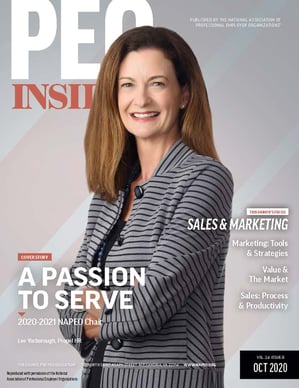



 Lee was also featured on the podcast, TWO FEET IN. In season 2 of the podcast, Coach Heather Macy highlights “inspiring women who are focused on empowering other women.” In this short but in-depth conversation, Lee talks about changes in the workplace due to the pandemic, faith over fear, listening instead of giving advice, making smart business decisions, trusting her intuition, and her favorite version of herself. Available on





 Although 70% of employers agree that mental health is a critical issue, very few have addressed the stigma associated with it. In mental health, stigma can have far reaching consequences. Stigma can create shame and prevent a person from getting help when they need it most.






 From payroll, compliance, and benefits administration, there are a number of HR services that can be customized to meet the needs that are specific to your business and work with you as your business grows and needs change.
  Lee served on the Board of Directors of NAPEO (National Association of Professional Employer Organizations) and currently serves as the Chair for the NAPEO. As Chair, she is focused on diversity and deepening member relations by forming Women in NAPEO (WIN). The goal of WIN is to engage, empower, and encourage the women in the PEO industry. She also served as the Chair for NAPEO’s Carolinas Leadership Council for over 10 years. In 2015, she was honored to be named a Fellow of the eleventh class of the Liberty Fellowship Program and a member of the Aspen Global Leadership Network. Lee is also an advocate for public education. She served on the executive board as Chair of Public Education Partners and is the founder and director of Read Up Greenville, a young adult and middle grades book festival in downtown Greenville, SC. When she takes a break from board meetings, client visits, and networking, she most likely reading, camping, or spending time with her family. She also enjoys volunteering at her church and staying involved in her children’s schools.
 Self-service technologies help to resolve immediate issues quickly and allows other staff members to be available to handle more complex customer issues.
 Small and midsize businesses, like Propel HR, have an advantage over larger payroll and HR companies in the ability to get human with customers. Through our Propel 911 service, our clients can connect with key personnel for immediate help with critical and emergency issues. The assurance that a knowledgeable professional, backed by a team of HR experts, is just a phone call away goes a long way in building trust.
 Once you determine what it means for a relationship to be successful, conduct a check-up with your customer for feedback and make sure goals are on track. Identify important growth areas and address areas and processes that may need improvement.
 With considerable experience working on both sides of the PEO partnership, Teresa brings a unique perspective to all Propel HR clients. She spent more than 21 years in corporate administrative management in the restaurant industry, where she was instrumental in a successful national expansion effort for a major restaurant chain. In 1995 she stepped into the role as a PEO client, where she gained experience managing the complex issues related to payroll, benefits, and Workers’ Compensation. Recognizing the value PEOs bring to small businesses, Teresa left the restaurant corporate side in 2000 to join the PEO industry. For more than a decade, she would serve in executive management roles before joining Propel HR’s executive team in 2011.
About Propel HR. An IRS-certified Professional Employer Organization (PEO), Propel HR has been a leading provider of Human Resources and payroll solutions for more than 25 years. We partner with small to mid-sized businesses to manage payroll, employee benefits, compliance, and other HR functions in a way that maximizes efficiency and reduces costs. Visit our new website at
With considerable experience working on both sides of the PEO partnership, Teresa brings a unique perspective to all Propel HR clients. She spent more than 21 years in corporate administrative management in the restaurant industry, where she was instrumental in a successful national expansion effort for a major restaurant chain. In 1995 she stepped into the role as a PEO client, where she gained experience managing the complex issues related to payroll, benefits, and Workers’ Compensation. Recognizing the value PEOs bring to small businesses, Teresa left the restaurant corporate side in 2000 to join the PEO industry. For more than a decade, she would serve in executive management roles before joining Propel HR’s executive team in 2011.
About Propel HR. An IRS-certified Professional Employer Organization (PEO), Propel HR has been a leading provider of Human Resources and payroll solutions for more than 25 years. We partner with small to mid-sized businesses to manage payroll, employee benefits, compliance, and other HR functions in a way that maximizes efficiency and reduces costs. Visit our new website at 









 Even if an employee is working from their home, the employer is still obligated to provide a safe workplace.
Ask the remote employee to submit of photo of their workspace and provide necessary tools if necessary. An ergonomic chair is a minor expense compared to a workplace injury.
Even if an employee is working from their home, the employer is still obligated to provide a safe workplace.
Ask the remote employee to submit of photo of their workspace and provide necessary tools if necessary. An ergonomic chair is a minor expense compared to a workplace injury.
 Review ARPA Provisions for Employer Tax Credits for Paid Sick and Family Leave. The American Rescue Plan Act of 2021 provides tax credits for
 As you begin to bring employees back into your workplace, determine if adjustments need to be made on liabilities to cover additional exposure. Also, check with your Workers’ Compensation broker to determine if any changes in your work environment or staff work assignments affect your exposure and codes on your account.