These tasks shouldn’t take up your workweek. But when systems fall short, they do. If you’re a small or mid-size business owner or HR leader, you probably didn’t get into this role because you love tracking down time-off requests, chasing signatures, or answering the same benefits question 14 times.
And yet… here we are.
Studies show that small business owners spend about 16 hours (or two full days) per week on HR-related administrative work.
Most businesses lose valuable time to the slow drip of small, repetitive “this will only take a minute,” tasks that quietly eat up the workweek. Add them up, and suddenly your strategic HR goals, like recruitment, retention, and leadership development, get pushed aside.
Here are some of the most common areas that may be draining your time.
Time-Consuming HR-Related Tasks
They seem small. But over time, these tasks drain your attention, your energy, and your progress.
1. Repetitive Tasks and Rework
Every time you hunt down a missing signature or resend login details, you lose time you could be using elsewhere. The common offenders? Answering the same employee questions over and over:
“How do I add my baby to insurance?” “When do benefits start?” “How many PTO days do I have left?”
Sound familiar?
Individually, these are quick answers. Collectively? They’re a constant interruption machine. When you stop to respond, you lose focus, break momentum, and push higher-value work further down your list.
🛠️How To Fix It:Uncover the pain points.Which areas are bogging down the process due to repetition? Where can you create a self-service culture? This can mean establishing a simple internal HR hub (in your intranet, shared drive, or HR platform), short FAQs on benefits, PTO, payroll timing, and onboarding, or short videos that walk through routine processes.
Then, train employees to go there first. When someone asks a repeated question, send the link along with your answer. Over time, behavior shifts. HR becomes a source, not a help desk.
2. Correcting Payroll Errors
The latest software makes running payroll seem easy, but if something goes wrong, the liability is still yours. Miscalculating pay, outdated tax information, and manually tracking time off are time-consuming to fix, hard to catch, and expensive if you don’t, not just in terms of costs but also in lost time and eroded trust among your workers.
🛠️How To Fix It:Automate what you can.Look for tools that let employees request time off directly, route approvals to managers, automatically update balances, and sync with payroll.
When automation handles the basics, HR shifts away from data entry to policy guidance. You’ll still handle exceptions, but you won’t be stuck crunching numbers late at night.
Or leave it to the experts by outsourcing payroll to an IRS-certified PEO. A PEO can simplify the payroll process with a cloud-based payroll portal for employers, online employee access to pay stubs, W-2s, benefits info, employee handbooks, and secure, paperless direct deposits. They can also take care of onboarding, payroll taxes, IRS deposits, benefits administration, compliance guidance, and provide HR support.
3. DIY Compliance Monitoring
Labor laws change constantly. Posting requirements update. Salary thresholds shift. Leave laws multiply. Keeping up with shifting deadlines, state-level compliance requirements, and studying the IRS’s recently updated guidance under the One Big Beautiful Bill Act. Trying to monitor all of this yourself is not only time-consuming – it’s also stressful.
One misstep can be costly. In 2025, the Department of Labor’s Wage and Hour Division recovered more than $259 million in back wages for nearly 177,000 employees. That’s an average of $1,465 per worker (the most since 2019).
🛠️How To Fix It:Don’t carry compliance alone.Get expert help by partnering with a professional. Whether it’s through a PEO, outside counsel, or a compliance partner, get support that keeps you updated on requirements that apply to your business.
You’ll need advice on tricky employee situations, alerts on multi-state regulatory changes, new pay transparency rules, evolving paid leave requirements, changing wage-and-hour laws, new employment-related laws on AI, and much more.
🚀 Pro Tip: Stay compliant with our HR Checklist covering the latest updates and deadlines related to compliance, benefits, payroll, and general HR that you need to take care of each quarter. Download your free HR Checklist ➡️ HERE
4. Updating Employee Data in Multiple Places
Name changes. Address changes. Promotions. New pay rates. If you’re entering the same update into payroll, benefits, retirement platforms, and internal trackers, you’re doing triple-plus work and increasing the chance of errors.
🛠️How To Fix It:Integrate your systems, invest in HR technology, or work with a PEO. A unified HR platform can help connect payroll, benefits, time tracking, and employee records, among other things.
With better integration, changes flow through automatically. That means fewer entries, fewer errors, and more free time.
5. Handling Every Employee Issue Personally
When you’re the only go-to for every conflict, complaint, or issue, your day gets hijacked fast. Some things absolutely belong with HR. But many could be resolved earlier and better by trained managers.
🛠️How To Fix It:Upskill your managers by teaching them to give feedback,handle minor conflicts, anddocument specific issues. This doesn’t remove HR from the process; rather, it elevates the role, moving them from firefighter to advisor.
Stop the HR Busy Work, Amplify Your Impact
Normalizing HR busy work has real consequences, including burnout. Your top performers may feel overwhelmed by constant overtime or pressure to meet demands. It also creates dependence on key team members, making it difficult to delegate when only a few people hold essential knowledge or responsibilities.
Maintaining inefficient processes limits growth, slows project delivery, and prevents your team from focusing on strategic initiatives.
🛠️How To Fix It: Partnering with an IRS-certified PEO can help. By taking on time-consuming tasks, PEOs help small businesses get back more time to focus on productivity and growth.
In addition to saving time, a PEO can also save your business money by identifying inefficiencies, streamlining HR processes, and helping you make critical cost-cutting decisions.
If you constantly feel behind, the fix isn’t more hustle. It’s better tools, clearer processes, and the right support. A PEO can help you stop the small stuff from piling up, so you can invest your time where it matters most. And if you need help, just give us a call at📱 800-446-6567
Find Out What a PEO Can Do for You
If you’re a small to mid-sized business, a PEO can lighten your workload and strengthen your operations. Imagine focusing on growth while experts handle your payroll, taxes, benefits, HR, and compliance.
⬇️Read more about the advantages of working with a PEO in our series:
🔷 HELP WANTED: HR Team or PEO Partner
Investing in an HR team versus partnering with a PEO, which path is best for your small business? As your business grows, managing HR gets complicated – fast.
Should you build your own HR team or explore the benefits of partnering with a PEO? Here’s how to decide which choice best fits your business. ➡️Link #1Link #1Read More
🔷 NEW RESEARCH: More Small Businesses Are Turning to PEOs
Compelling research from the National Association of Professional Employer Organizations (NAPEO) shows that PEOs are helping small businesses scale – a game-changer in 2026.
Working with a PEO isn’t about outsourcing; it’s about upgrading how you manage HR. It’s about investing in smarter growth, happier employees, and peace of mind. In a business world that’s only getting more complex, that’s a benefit worth having on your side. Thousands of successful businesses are already doing it – and the data proves it works. ➡️Link #2Link #2Read More
IT’S HERE!
Your FREE HR Checklist
Here’s your checklist of important tasks related to payroll, benefits, compliance, and general HR.
About Propel HR.Propel HR is an IRS-certified PEO and a leading provider of human resources and payroll solutions for 30 years. Propel partners with small to mid-sized businesses to manage payroll, employee benefits, compliance and risks, and other HR functions in a way that maximizes efficiency and reduces costs. For more information, visit propelhr.com
Productivity is the secret sauce that separates teams stuck on the sidelines from those with winning streaks. Chances are you’re juggling hiring, compliance, benefits, culture, and about a dozen other priorities . . . all while the clock keeps ticking.
Your power play? Outsourcing. When used strategically, it boosts productivity, streamlines operations, and frees you up to focus on what actually moves the scoreboard – your bottom line.
First Quarter: What Productivity Really Means
In HR, productivity isn’t about sprinting faster – it’s about running the right plays at the right time.
True HR productivity means delivering meaningful outcomes with minimal wasted effort. Speed matters, sure, but impact matters more.
Fast hiring doesn’t matter if turnover remains high. Smooth payroll is great . . . unless errors keep forcing replays.
At its core, productivity is about consistent, high-quality execution that supports your business year-round.
Here’s the basic stat line. The fundamental formula HR teams use looks like this: Productivity = Total Output / Total Input.
🎯Stronger Compliance Defense. Mistakes lead to fines, audits, and penalties – that’s expensive. Productive HR keeps risk off the scoreboard.
🎯Scoring Efficiency. In the Red Zone, the stakes are high, and scoring opportunities significantly increase. When your HR team isn’t buried in paperwork, they can make a more strategic impact by focusing on culture, performance, and growth.
🎯Leadership Trust. HR shifts from order-taker to trusted partner.
The results? A productive HR function is the engine that keeps your people – and your business – moving forward.
The Stats Don’t Lie: Proof from the League
The data backs it up:
➡️Flexibility & Remote Work. A Gartner report finds that 43% of employees working flexible hours say they are more productive. Gallup found that fully remote workers report the highest engagement levels.
➡️Engagement Matters. Highly engaged teams are 17% – 21% more productive than disengaged ones.
➡️The Productivity Gap. Top-tier companies grew more productive, while others saw declines due to inefficient collaboration and low engagement.
🎯Winning teams don’t guess; they measure, adjust, optimize, and power up.
The Box Score: Common HR Productivity Metrics
To know how your team is performing, you need the right stats:
📊 Output Metrics. Revenue per employee, output per hour, goals completed vs. assigned
📊 Efficiency Metrics. Time spent per task, employee utilization
📊 Quality Metrics. Accuracy and impact, not just speed
📊 Engagement Indicators. Engagement scores and absenteeism.
📊 Financial Metrics. Total Cost of Workforce (TCOW)
These numbers tell you whether your plays are working and what needs to be redesigned.
A PEO helps improve productivity by offloading time-consuming tasks while strengthening the entire employee lifecycle through MVP expertise and next-level HR tech.
🔥Think of it as adding multiple Tom Bradys to your roster.
THE GAME PLAN
Play #1: Reallocate Resources to Core Strengths
The fastest productivity gain comes from freeing your teams from admin overload. By outsourcing, you get:
✅Time Savings. Business owners can spend 20+ hours per month on HR admin-related tasks. Outsourcing frees up time for growth, sales, and strategy.
✅Administrative Relief. Payroll, benefits enrollment, and multi-state compliance tasks move off your plate and into expert hands.
✅A Team of MVPs. Outsourcing gives you access to a team of pros, ready to help when you need it.
Play #2: Build a Deeper Talent Bench that Flexes
An engaged workforce is naturally more productive.
💼 Lower Turnover. Companies using PEOs see 10%–14% lower turnover, reducing disruptions and retraining time.
💼 Big-league Benefits. PEOs provide access to Fortune 500-level benefits, boosting satisfaction and engagement.
💼 Faster Onboarding. Streamlined onboarding helps new hires get in the game.
Play #3: Upgrade Your Tech Stack
PEOs give small and mid-sized businesses access to advanced HR technology without the big-ticket price tag.
📊 Automation.Payroll and tax automation reduce errors and time-consuming fixes.
📊 Employee Self-service. Employees handle PTO, pay stubs, and benefits updates themselves with fewer interruptions for HR.
Play #4: Strengthen Your Compliance Defense
Compliance isn’t optional and managing it internally can drain focus fast. With a PEO on your team, you get:
🛡️Expert Guidance. A team of HR pros helps prevent fumbles and penalties. PEOs stay on top of federal, state, and local regulations, including ACA and FMLA.
🛡️Safety Programs. Proactive safety audits reduce workplace incidents and business disruption.
Play #5: Win on the Scoreboard
All these efficiencies lead to real, measurable stats:
🏆Faster Growth. Businesses using a PEO grow 7% – 9% faster than those that don’t. And are 50% Less Likely to Go Out of Business
💥That’s not just a win – it’s a blowout. It’s the stuff championships are made of.
FINAL CALL: Make Productivity Your Winning Play!
How far can you go? Productivity isn’t a one-time drill – it’s a GOAT mindset.
When you measure what matters, optimize repetitive work, and outsource strategically, you’re not just working faster . . . You’re working smarter. That’s for legends.
🔥Outsourcing is no rookie move. It’s a strategic productivity partner that helps HR shift from scrambling to scoring. And keeping that winning streak hot.
Ready to Turn HR into a Powerhouse?
Ready to hear your crowd ROOOAAARRR? 🎉 This power playbook is your first step.
➡️If you need some coaching or a huddle about your productivity game plan, we’ve got you all the way to the Super Bowl winning streak and beyond – just give us a call.
IT’S HERE!
Your FREE HR Checklist
Here’s your checklist of important tasks related to payroll, benefits, compliance, and general HR.
About Propel HR. Propel HR is an IRS-certified PEO and a leading provider of human resources and payroll solutions for 30 years. Propel partners with small to mid-sized businesses to manage payroll, employee benefits, compliance, risk, and other HR functions in ways that maximize efficiency and reduce costs.
To learn more, visit propelhr.com
If you run a small or midsize business, you already know growth is exciting, yes — but also unpredictable, and sometimes overwhelming. That’s exactly why more business owners and HR leaders are choosing Professional Employer Organizations, or PEOs, not just to outsource HR tasks, but to grow smarter, faster, and more sustainably.
The Top 10
A PEO helps you scale without letting the behind-the-scenes stuff collapse under the weight of bigger payrolls, more onboarding, greater compliance risk, and higher employee expectations. It’s like adding an entire HR department overnight, minus the overhead and recruitment scramble. A few advantages include:
1. You Get HR Infrastructure Before You Actually Need It (Which Is Exactly When You Need It)
Most small businesses don’t feel the pain of HR complexity until it’s too late. Payroll errors start multiplying, employees want benefits you’re not equipped to provide, and suddenly you’re Googling state labor laws at 11:30 p.m.
A PEO lays the foundation before those cracks show. Payroll scales without drama. Whether you have 10 people or 110, payroll stays smooth, compliant, and on time.
Onboarding becomes a real process and not a scramble. Templates, checklists, digital forms, background screening, and automated workflows ensure consistency as you grow.
Policies adjust proactively. A PEO helps you build employee handbooks, update them with new laws, and create clear rules that reduce risk as your headcount increases.
2. A PEO Delivers the Big-Company Benefits Employees Want
Here’s the part that often surprises business owners: a PEO can give you access to benefits packages typically reserved for much larger companies.
Because a PEO pools together employees across its client base, you essentially get to “buy in bulk,” accessing high-quality benefits at lower rates. That means you can offer your team robust health plans, retirement savings options, and other top-tier benefits typically reserved for larger companies (and top talent expects).
🎯When employees enjoy comprehensive benefits without compromise, your company is seen as a long-term career option. Retention rises, and as every HR pro knows, that’s a growth strategy.
3. Compliance Stops Being a Guessing Game
Growth = risk. New states. New regulations. New employment laws. New reporting requirements.
This is where many small businesses unintentionally step into danger territory. The rules change constantly and the stakes are high.
✅They track federal, state, and local employment laws.
✅They help maintain the required documentation.
✅They ensure new hires are classified correctly.
✅They reduce risk with structured workplace policies.
✅And because of the co-employment relationship, many PEOs also share certain administrative responsibilities – meaning you’re not alone if something goes sideways.
🎯Growing is risky. Growing without compliance support? That’s gambling.
4. HR Technology You Don’t Have to Build Yourself
Scaling is smoother when everything is connected, such as payroll, onboarding, PTO tracking, benefits enrollment, performance management, and reporting. But building your own HR tech stack or licensing multiple vendors gets expensive fast.
🎯A PEO delivers the all-in-one HR command center designed for your business. Better data, better workflows, better decision-making.
5. A PEO Frees Up Time (A Lot of It)
If you’re a business owner, your job is to grow the business, not troubleshoot payroll deductions. If you’re an HR manager, your job is to support the people strategy, not drown in admin work.
A PEO takes on repetitive, time-consuming tasks, such as processing payroll, managing benefits, handling tax filings, and preparing compliance documentation. The more you grow, the more time you reclaim, instead of watching your workload escalate with each hire.
6. You Gain a Team of HR Experts Without Expanding Your Staff
Growing companies don’t always have the luxury of immediately hiring a full HR team — HR generalists, benefits specialists, payroll administrators, compliance officers, recruiters, risk managers, the whole lineup.
A PEO gives you access to exactly those roles, on-demand expertise, without the full-time salary load.
Need help rolling out a new PTO policy? Preparing for benefits renewal? Handling a sensitive employee relations issue? There’s an expert for that. It’s like having a seasoned HR department already onboard, ready to advise you every step of the way.
7. You Become More Attractive to Investors and Partners
Here’s something entrepreneurs don’t always think about: investors love operational maturity. When a PEO is part of your infrastructure, it signals you’re compliant, manage risks well, your HR processes are stable and that you can scale responsibly.
🎯For investors, lenders, and potential partners, a strong HR foundation = reduced risk. And reduced risk makes you a better bet. For acquisitions and rapid growth phases, a PEO can also make integration smoother.
8. A PEO Helps You Build a Better Employee Experience
Growth doesn’t just require more people; it requires keeping the good people you already have on board.
A PEO helps you:
✅Improve communication and access to information.
✅Build modern HR processes that employees trust.
✅Provide competitive benefits
✅Create fair, consistent workplace policies.
🎯A better employee experience leads to lower turnover and higher morale. And in high-growth companies, stability is gold.
9. You Can Expand Into New States With Confidence
Need to hire employees in another state? That’s great for growth, but it creates compliance challenges due to different tax rules and labor law requirements.
🎯A PEO handles all of it, letting you recruit the best talent in any location without losing sleep or risking penalties.
10. You Scale Strategically
Growth can stress your business when operations lag behind headcount. A PEO aligns both, so you’re expanding strategically.
🎯The result? Smooth transitions. Predictable costs. Cleaner processes. Less risk. Happier employees. And more time to focus on what actually grows the business — not on what slows it down.
Growth Is Easier ➡️When You’re Not Doing Everything Yourself
If you’re preparing to scale — or even thinking about it — the question isn’t whether you can handle growth alone. It’s whether you should.
With a PEO, growth is a plan.
A PEO delivers the infrastructure, expertise, and stability that power growing companies, without requiring a major investment or a staff increase.
Ready to see what a PEO can do? We can lighten your workload and help you drive growth, just give us a call at (800) 446-6567 or visit propelhr.com
🎯PEO Series: The PEO Difference🎯
Learn more about how a PEO can help your business in our series:
🔶HR Help Wanted: In-house Team or PEO Partner. Investing in an HR team versus partnering with a PEO, which path is best for your small business? As your business grows, managing HR gets complicated – fast. Should you build your own HR team or explore the benefits of partnering with a PEO? Here’s how to decide which choice best fits your business. Read More
🔶Navigating Compliance Minefields. Navigating HR compliance can feel like tiptoeing through a minefield — one wrong move can trigger costly consequences. From pay transparency laws to overtime thresholds, new regulations evolve faster than most small HR teams can keep up with. Here’s a look at the top HR compliance challenges and how to avoid turning small missteps into expensive lessons. Read More
🔶New Research Shows Why More Small Businesses Are Turning to PEOs. The data is in! And it shows how partnering with a PEO will be the smartest move for small businesses in 2026. Recently released research from the National Association of Professional Employer Organizations (NAPEO) shows that PEO partnerships are helping small businesses scale. It’s smarter, more efficient, and a game-changer. Here’s what the latest data shows. Read More
IT’S HERE!
Your FREE HR Checklist
Here’s your checklist of important tasks related to payroll, benefits, compliance, and general HR.
About Propel HR. Propel HR is an IRS-certified PEO that has been a leading provider of human resources and payroll solutions for more than 25 years. Propel partners with small to mid-sized businesses to manage payroll, employee benefits, compliance and risks, and other HR functions in a way that maximizes efficiency and reduces costs. For more information, visit www.propelhr.com
Today, employers are facing an unprecedented labor shortage that’s being called “The Great Resignation” or “The Big Quit,” an exodus resulting from the impact of the pandemic. According to the Department of Labor, there were 10.6 million job openings at the end of Nov. 2021 and 6.9 million unemployed workers. Also, the number of workers quitting their jobs have hit a new high of 4.5 million.
What’s driving the current labor shortage? There are many reasons. As more information becomes available over time, we are learning that there is a mix of different factors causing workers to leave their jobs. Here are a few.
PRIMARY DRIVERS
Lack of Work-Life Balance and Flexible Work Options. During the pandemic, workers had an opportunity to reevaluate their priorities, which led them to quit their jobs for opportunities that offered a better work-life balance and more pay.
Employees also found that working remotely at home had many benefits, such as flexibility, more available free time to spend with family, and more money by eliminating work-related expenses, such as commuting. According to a recent study, nearly one in five workers say work-life balance and flexible work options had the most impact on overall job satisfaction. More than half of those surveyed said they would want to work remotely long-term, three days a week or more.
And flexibility is not limited to working remotely but may also include the ability to select a work schedule that best suits what an employee needs.
Better Jobs And Better Pay. At first, the laborshortage was the most visible among the service industry. But now, the labor shortage is more evident across all industry sectors. As workers examined their work-life balance (or the lack of one), they found more fulfilling opportunities with better pay than the jobs they left or lost during the pandemic.
Widespread Burnout. As businesses transitioned their workforce to working remotely, the lines between work and home were often blurred. As a result, with little downtime, workers became completely burned out. According to a recent study of new hires, burnout was the primary reason for leaving their job, followed by organizational changes within the company, lack of flexibility, not feeling valued, and insufficient employee benefits.
High Levels of Change. Change is hard. And it is also hard on employees. In the past two years, businesses were forced to pivot in order to survive. As a result, workplace change continues to be the new norm. From remote work, new technology, new and changing health and safety mandates, employees have had to learn how to adapt to ongoing uncertainty while handling their work responsibilities at the same time.
Lack of Adequate Benefits. Although burnout is one of the many causes behind the mass resignations, a recent study finds that many employees left due to the lack of adequate employee benefits and because their employer did not support their well-being.
Health and Safety Concerns. As we continue to work during an active pandemic, it’s understandable that anxiety is at an all-time high. Workers are fearful of contracting the virus, and many workers have left the labor force because of the lack of health concerns and safety measures among employers.
Limited Childcare Options. For some working parents, keeping their job is not an affordable option. School and daycare closing, remote learning mandates, and unexpected quarantine periods due to Covid exposure in schools have put additional pressures on working parents. The lack of adequate and affordable childcare options forced many to leave their jobs to care for children or to find new positions that offered more flexible work options.
UNDERSTANDING WHAT WORKERS NEED
The reasons driving the labor shortage are so different and more than complex. And the solution will not be a simple one. However, it can viewed as an opportunity. As more information becomes available, employers can better understand the changes required to attract and keep workers long-term.
About Propel HR. Propel HR is an IRS-certified PEO that has been a leading provider of human resources and payroll solutions for more than 25 years. Propel partners with small to midsized businesses to manage payroll, employee benefits, compliance and risks, and other HR functions in a way that maximizes efficiency and reduces costs. Visit our new website at www.propelhr.com.
**PLEASE NOTE: As this story continues to evolve, we’ll keep you informed on the latest updates.
OSHA is withdrawing its vaccination and testing Emergency Temporary Standard (ETS) issued on Nov. 5, 2021 that would have been applicable to employers with 100 or more employees. The withdrawal is effective immediately. Although OSHA is withdrawing the vaccination and testing ETS as an enforceable temporary standard, the agency is not withdrawing the ETS as a proposed rule.
If you are confused about vaccination and testing compliance, you are not alone. The following includes background about OSHA’s vaccination and testing ETS.
The Occupational Safety and Health Act of 1970 (OSH Act) protects workers from being seriously harmed at work. The law also created the Occupational Safety and Health Administration (OSHA), the regulatory group which establishes and enforces protective workplace safety and health standards and provides safety information, training, and assistance to employers and workers. Under the OSH Act, employers are held accountable for the safety of their employees and responsible for providing a safe and healthy workplace that is free from recognized hazards that may cause death or serious physical harm.
Employers Must Comply with OSHA Standards. Employers must follow a list of safety mandates, which addresses such areas as using personal protective equipment, posting and record-keeping requirements for work-related injuries and illnesses, and identifying and correcting known health hazards. It also prohibits retaliation against other workers for exercising their rights under the law. Employers with 10 or fewer employers may be exempt from some of the standard OSHA requirements.
Employers are also legally required to comply with all of the safety rules outlined in OSHA Standards. These requirements include mandates for fall protection, exposure to some infectious diseases, exposure to harmful substances such as asbestos and lead, safety guards on machines, respirators, and other safety equipment, and training. For example, in industries like construction and agriculture, the standards protect workers with certain safety guidelines related to hazardous chemicals, such as exposure amounts, safety practices, equipment, and monitoring procedures for specific hazards.
Employers & Workers Protected Under OSHA. OSHA protection applies to most private sector employers and workers in all 50 states, the District of Columbia, and other U.S. jurisdictions directly through Federal OSHA or an OSHA-approved state program. It also applies to federal government workers at all federal agencies.
Federal OSHA does not cover state and local government workers, but they are protected if working in states operating their own program. States with approved health and safety programs include: AK, AZ, CA, CT, HI, IA, IL, IN, KY, MD, MI, MN, NC, NJ, NM, NV, NY, OR, SC, TN, UT, VA, VT, WA, WY, Puerto Rico, and the Virgin Islands. Self-employed workers, and workplace hazards regulated by another federal agency, for example, the Department of Energy, are not covered by the OSH Act.
COVID-19 EMERGES: New Virus Poses a Significant Health and Safety Threat
Covid-19, an infectious disease caused by the SARS-CoV-2 virus, emerged in late 2019 and quickly spread. On March 13, 2020, the U.S. declared Covid-19 a national emergency by Proclamation 9994. Because Covid-19 was a novel virus, there were many unknowns, and businesses across all industries were faced with new and ever-changing safety challenges.
In response, OSHA introduced the National Emphasis Program (NEP)for Covid-19. The NEP targeted large companies and certain high-hazard industries, which presented the highest risk for Covid-19, with guidance on protecting workers from Covid-19 exposure, as well as compliance policies, and enforcement procedures.
OSHA INTRODUCES ETS: New Rule for Covid-19 Vaccination & Testing
➡️ Nov. 5, 2021:OSHA Publishes ETS. Once the data and science of Covid-19 vaccines demonstrated effectiveness against the spread of Covid-19, OSHA introduces the Emergency Temporary Standard (ETS), a set of vaccination and testing mandates focused on protecting unvaccinated workers. On Nov. 5, 2021, OSHA publishes ETS and it becomes law.
Under the ETS, private employers with 100 or more employees were required to develop, implement, and enforce a mandatory Covid-19 vaccination policy for employees or a policy allowing the option of vaccination or proof of weekly Covid-19 testing and wearing a face covering while at the workplace.
The ETS was to remain in effect for six months from publication or May 5, 2022. Covered employers had to meet the compliance deadlines of Dec. 6, 2021, for activities such as developing policies for vaccination and masking and determining the vaccination status of all workers. By Jan. 4, 2022, employers were also required to ensure weekly testing of unvaccinated employees.
ETS LITIGATION TIMELINE: Is Covid-19 a General Hazard or a Workplace-specific Hazard?
➡️ Nov. 6, 2021: The ETS is Stayed by the U.S. Court of Appeals for the Fifth Circuit.Once ETS was published, the legal battle began. Were the mandates under the OSHA’s ETS valid? Various groups, both public and private, quickly challenged OSHA’s new rule in a number of circuit courts nationwide. Ultimately, the ETS was blocked by the U.S. Court of Appeals for the Fifth Circuit.
➡️ Nov. 30, 2021: Vaccination Mandate for Federal Contractors is Blocked in Three States.A federal district court in Kentucky temporarily blocked the mandate requiring employees of federal contractors and subcontractors to get vaccinated. The district court’s ruling applied to Kentucky, Ohio, and Tennessee.
➡️ Dec. 7, 2021: The Vaccination Mandate for Federal Contractors is Blocked Nationwide. A federal district court in Georgia temporarily blocked the vaccine requirement for federal contractors nationwide.
➡️ Dec. 17, 2021: The Stay is Lifted by the Sixth Circuit U.S. Court of Appeals.A three-judge panel from the Sixth U.S. Circuit Court of Appeals lifted the stay on the ETS and extended the deadlines to provide employers with enough time to comply.
➡️ Jan. 13, 2022: The U.S. Supreme Court Blocks the ETS.While Covid-19 continues to be a threat, it is not an occupational hazard or workplace-specific danger. Therefore, OSHA did not have the authority to enforce the rule as it was published. On Jan. 13, 2022, the U.S. Supreme Court blocks the ETS. In a separate opinion, the Supreme Court allowed the federal Centers for Medicare and Medicaid Services (CMS) the authority to require Covid-19 vaccination for health care workers at Medicare- and Medicaid-certified providers and suppliers.
➡️ Jan. 26, 2022: OSHA Withdraws its Vaccination and Testing ETS. The case pending before the Sixth Circuit is dismissed.
More Developments at the State Level. This recent decision now leaves the states free to regulate and pass any COVID-related vaccination laws. States have been and expected to become even more active in creating their own regulations in this area.
Currently, 22 states have their own OSHA Plan that governs both private and public employers, and 11 states have either bans or additional required exemptions from vaccine-related mandates. In addition, some states and/or cities have issued private employer vaccine mandates that employers must follow or face penalties. More developments at the state and local levels are expected, so stay informed to ensure compliance as it applies to your business and where you operate.
More Developments Expected on Vaccination & Testing Rules. While OSHA withdrew the ETS as an enforceable emergency temporary standard, the agency is not withdrawing the ETS as a proposed rule. The agency is also “prioritizing its resources to focus on finalizing a permanent COVID-19 Healthcare Standard.”
PLEASE NOTE: This information is for general reference purposes only. As we continue to work during the pandemic, laws, regulations, and filing deadlines are likely to change. Please check with the appropriate organizations or government agencies for the latest information and consult your employment attorney and/or benefits advisor regarding your responsibilities. In addition, your company may be exempt from certain requirements and/or be subject to different requirements under the laws of your state. (Updated Jan. 26, 2022)
About Propel HR. Propel HR is an IRS-certified PEO that has been a leading provider of human resources and payroll solutions for 25 years. Propel partners with small to midsized businesses to manage payroll, employee benefits, compliance and risks, and other HR functions in a way that maximizes efficiency and reduces costs. Visit our new website at www.propelhr.com.
I am one of those people who loves New Year’s—not for the parties because truthfully, I am usually home with my husband on New Year’s Eve watching the ball drop on TV. The reason I love New Year’s is the idea of having a clean slate. I love looking at the calendar and dreaming up the next year’s adventures. I love setting goals, and I even visualize checking them off throughout the upcoming year. I like to set goals on three levels: personal goals, family goals, and business goals. Setting a goal motivates me, and I review my progress throughout the year to keep me on track and focused.
However, this New Year’s has been quite different. I was diagnosed with COVID right before the end of the year, and I watched the ball drop from the isolation of my bedroom. My husband left a tray outside my door with a glass of sparkling grape juice, and I forced myself to stay awake and ring in 2022. I did not wake up on January 1st, ready to take on the world. Instead, I slept throughout the day with fever and congestion. I did not eat the obligatory collards, peas, and pork but instead sipped on soup and hot tea. And I have yet to make a list of goals.
Being in quarantine for a week has been interesting. I know of no other way to describe it. At times, I have enjoyed it. I have had the “alone time” that I often crave, and I have had a chance to read, work puzzles, write, and work remotely.
Yet, I have craved human touch and interaction. A phone call or conversation through a closed door is not the same as a hug and a smile. My family and co-workers have been wonderful and supportive, but I miss being a true part of the world. However, I do count my blessings, I have not been too sick, and I have the good fortune of living in a comfortable house with all that I need. I recognize that many people do not have my good fortune.
Spending the start of the year in isolation has changed the way I am approaching 2022. I have been more pensive and less positive. I have been more meditative and less active. I have spent time looking backward and less looking forward. I haven’t made my list of goals yet, but instead, I’ve focused on lessons learned from the past year and thought about how those lessons will shape this new year:
Gratitude for My Community. 2021 had its share of difficulty both professionally and personally. Yet, my tribe showed up and supported me through very difficult times. The experience was humbling and, at times, overwhelming.
My wish for 2022 is to figure out how to accurately express my appreciation and pay it forward. After being on the receiving end, I have realized that the simple act of writing a note or reaching out to a friend in support can make a world of difference in someone’s day. I plan to give more in the new year.
Business is About People, Not Numbers. We spend so much time at work looking at numbers and setting goals based on profits and finances. While this is important and must always be addressed, we need to also set goals around people.
What will make us an employer of choice? What will keep our clients tied to our services? How can we deliver top-notch customer service day after day? How can both our customers and our employees feel appreciated? My goals for the new year will focus on people, and I know the profit will follow.
The World is Moving Fast, Are We Prepared? 2021 seemed to fly by, and the world changed quickly around us. From cybersecurity breaches to climate change events, we all had to adapt and learn how to survive when the world turns upside down. How do we better prepare for disasters? This is not a one-time exercise for a business. We need to constantly reshape and refine our disaster recovery plans. We need to make sure we are prepared for the worst-case scenarios as well as the best.
COVID is Here to Stay. I laugh when I think about how we honestly believed that if we stayed at home for a few weeks in March 2020, we could “flatten the curve” and go back to normal. We are now living a new normal, and we must adapt in order to prosper.
We have been challenged to be innovative and nimble, and we have lived up to that challenge. I am proud of Propel’s team and the value we have provided our clients during the past two years of COVID. We have learned new laws, developed new processes, and supported our clients during the many variants of the virus.
These lessons have made us stronger as we continue to navigate the pandemic in the new year. In 2022, we will continue to focus on the health of our team as we manage the daily business needs in new ways we never thought were possible before.
People are More than Political Beings. The past few years have brought about an extreme divisiveness in our nation. Friends and families have been torn apart in the name of politics and political ideologies. I have also been guilty of judging people based on their voting records and have even narrowed my circle to exclude those who do not agree with my tenets. This is wrong, and I aim to change this in the new year. I am going to start by focusing on our similarities instead of our differences when I interact with others. I will strive to be more open-minded and tolerant. I also plan to turn off the constant news cycle and just enjoy people more!
I hope to be out of quarantine in a day or so, and my idle time of pondering will pass. Life will be back in full swing, and my days will be spent in meetings, on the phone, cooking dinner, and shuttling carpools. However, this year, I may not make my traditional list of goals. I may just focus on my thoughts from this week and use them to propel me and the business forward.
About Propel HR. Propel HR is an IRS-certified PEO that has been a leading provider of human resources and payroll solutions for more than 25 years. Propel partners with small to midsized businesses to manage payroll, employee benefits, compliance and risks, and other HR functions in a way that maximizes efficiency and reduces costs. Visit our new website at www.propelhr.com.
Small businesses go through many different growth stages. And just as working with an advisor, such as your lawyer or accountant, can help with important decisions about your business, adding a PEO to a team of trusted advisors brings a new perspective on making those strategic decisions during critical phases of growth. Here are a few ways.
START-UP STAGE
During the start-up stage, business is new, and budgets are lean. As a result, you have to rely on a small core team, where every employee juggles many different roles.
A PEO can help:
Reduce HR-related Expenses. A PEO can save small businesses time and money by helping to identify inefficiencies, streamline HR processes, and making cost-cutting decisions. According to the report conducted by the National Association of Professional Employer Organizations (NAPEO), PEOs provide access to more HR services at a cost that is close to $450 lower per employee compared to companies that manage their HR services in-house.
Additional studies on how PEOs help businesses save show:
Provide Access to Better Employee Benefits. Employees are the most important asset and also the most expensive. When budgets are tight, it may be a challenge to keep costs low without losing productivity — or your best workers.
A great employee benefits package is one way to attract and keep great employees. Studies show that businesses that have enhanced their benefits packages report higher employee performance, a more engaged workforce, lower turnover rates, and fewer missed workdays.
But due to costs, providing high-quality employee benefits out of reach. A PEO can help with access to enterprise-level benefits like those offered at large corporations, including comprehensive health plans at more affordable rates. This is because of a PEO’s ability to group employees of small businesses into one pool as a way to negotiate better benefits packages at lower rates. A PEO can also help by handling time-consuming HR-related tasks such as benefits administration and identifying plans.
From new reporting requirements, record-keeping, and frequently changing filing deadlines, the HR responsibilities of an established business continue to grow. While the day-to-day seems routine, your time may be consumed with HR administrative paperwork versus growing your business.
A PEO can help:
Save Time. Business owners can get behind when the majority of time is consumed by chasing paperwork, keeping up with deadlines, and addressing internal issues rather than attending to their customers’ needs. Because the PEO takes over much of the HR-related administrative tasks, employers have more time to focus on growing their business.
EXPANSION STAGE
You’ve come a long way, and business is growing – maybe even taking off. At this stage, you may expand your business by adding more employees and more locations. During this stage, important decisions have to be made quickly, without any room for mistakes.
A PEO can help:
Reduce Workplace Risks and Prevent Costly Compliance Violations. Partnering with a PEO is much like gaining access to a full-service HR division with a team of experts knowledgeable about employment laws and are current with changing federal, state, and local regulations as well as the latest filing deadlines. As a result, a PEO can protect employers and their employees with reducing risks and preventing costly compliance violations.
In addition to federal laws, employers must also follow all state laws that apply to their business. State laws vary from state to state, which adds another level of complexity to compliance, especially for employers expanding operations in multiple states. A PEO can help businesses comply with the labor laws and regulations governed by the state where employees are working, not just where your business is based.
Provide Guidance on General HR Responsibilities. Even with a dedicated HR professional on staff, staying on top of all the changes and requirements during the expansion stage can be complicated. A PEO can help with guidance on HR-administrative tasks such as handling unemployment claims, employment verifications, background checks, and drug tests, provide resolution strategies and advice for handling complaints, disciplinary actions, and terminations.
Provide Reliable and Accurate Payroll Processing. When it comes to managing payroll during the expansion stage, you want to work with a reliable provider that will save time and money without sacrificing essential features. A PEO can simplify the time-consuming process of managing payroll and take care of employee onboarding, payroll tax withdrawals, and timely IRS deposits.
CHANGE STAGE
Whether planned or unexpected, all businesses experience change. For example, changes in the economy, market conditions, or a global pandemic crisis can quickly affect your business, requiring you to make critical decisions.
A PEO can help:
Provide Expert Guidance. During the pandemic, businesses had to quickly pivot in order to survive. To prevent business disruption and minimize the impact of the pandemic, PEOs helped employers navigate a number of new and changing workplace challenges, such as staff reductions, remote work, payroll processing, employee benefits, new Covid-related compliance regulations, PPP loans, and more.
Provide Strategies to Attract (and Keep) Top Talent. In recent years,employers have had their work cut out for them to retain top talent and find qualified workers. During the pandemic, many workers reassessed their jobs and need for a work-life balance. As a result, many opted not to return, leaving employers nationwide scrambling to fill open positions. PEOs can help employers keep workers long-term with strategies to strengthen employee engagement and productivity, including ways to provide a more competitive employee benefits package.
Keeping and attracting top workers are currently top concerns for employers.
A TRUSTED ADVISOR AT ANY GROWTH STAGE
Regardless of the stage your business is currently experiencing, the one thing most employers have in common is the need for expert guidance from a trusted advisor. From access to better benefits, compliance protection, reducing costs to a higher ROI, the advantages of adding a certified PEO, like Propel HR, to your team of advisors increases the odds for success at every stage.
About Propel HR. Propel HR is an IRS-certified PEO that has been a leading provider of human resources and payroll solutions for more than 25 years. Propel partners with small to midsized businesses to manage payroll, employee benefits, compliance and risks, and other HR functions in a way that maximizes efficiency and reduces costs. Visit our new website at www.propelhr.com.
***IMPORTANT UPDATE:A three-judge panel from the Sixth Circuit Court of Appeals has lifted the stay on the OSHA vaccine-or-test mandate (the Emergency Temporary Standard, or ETS), which applies to employers with 100 or more employees.
Lifting the stay means the ETS is in immediate effect and employers should prepare to comply.
The first compliance deadline was December 6 (for policies, notices, masking, vaccination status, etc.), and employers were to begin testing unvaccinated employees by January 4. However, OSHA recognizes that compliance in such a short period is not feasible for many employers, so has said the following about enforcement:
“To provide employers with sufficient time to come into compliance, OSHA will not issue citations for noncompliance with any requirements of the ETS before January 10 and will not issue citations for noncompliance with the standard’s testing requirements before February 9, so long as an employer is exercising reasonable, good faith efforts to come into compliance with the standard. OSHA will work closely with the regulated community to provide compliance assistance.”
Summary of Vaccinate or Test Mandates
On Nov. 4, 2021, the U.S. Department of Labor’s Occupational Safety and Health Administration (OSHA) issued an ETS for Covid-19 Vaccination and Testing to minimize the risk of COVID-19 transmission in the workplace. Here is a summary of important requirements.
Under the new ETS, private employers with 100 or more employees are required to have all employees vaccinated must also ensure that their employees have received all of the necessary shots by the deadline. Unvaccinated employees are also required to produce negative Covid tests on a weekly basis.
Understand the Definition of Covered Employer. If your business falls within the scope of the ETS 100-employee threshold on the effective date, Nov. 5, 2021, then the ETS applies for the duration of the standard. The 100 employee count must be conducted at the employer level and does not apply at the individual location. For example, if a business has multiple locations, all employees at all locations are included in the total count. For information about other situations, such as multi-employer worksites and remote worker, visit OSHA’s ETS site at www.osha.gov/coronavirus/ets2/faqs.
Create a Written Employer Vaccination Policy. The ETS requires covered employers to develop, implement, and enforce a mandatory Covid-19 vaccination policy for all employees or a policy that allows employees to elect between vaccination or providing required proof of regular Covid-19 testing and wearing a face covering while at the workplace.
Determine Employee Vaccination Status. Covered employers must track each employee’s vaccination status (partial, full, or unvaccinated), obtain acceptable proof of that status, and maintain records and a roster of each employee’s status.
Employers must also ensure that each employee, not fully vaccinated, be tested for Covid-19 on a weekly basis if the employee is in the workplace at least once a week. If the employee is away from the workplace for a week or longer, then the employee must be tested within seven days before allowed to return to work.
Employers are required to keep a record of each Covid test result. The test results are considered employee medical records, covered under OSHA’s Access to Medical Records standard, and must be kept during the duration of the ETS. The medical records can only be disclosed as required under the ETS or other federal law, including the Americans with Disabilities Act (ADA).
The ETS does not require employers to pay for costs associated with testing. However, employers may be required to cover testing under other laws, regulations, or other collective bargaining and negotiated agreements.
Review Acceptable Methods of Proof of Vaccination Status. Under the ETS, acceptable methods of proof of vaccination status include:
Immunization record from a health care provider or pharmacy
U.S. Covid-19 Vaccination Record Card
Medical records documenting the vaccination
Immunization records from public health, state, or tribal immunization information system
Other types of official documents verify the date, location, and type of vaccine received
Reporting Covid-19 Fatalities and Hospitalizations to OSHA. The ETS requires employers to report work-related Covid-19 fatalities to OSHA within 8 hours of the incident and work-related Covid-19 in-patient hospitalizations within 24 hours.
Make Records Available. The ETS requires employers to provide employees with vaccine documentation and related test results and the total number of employees, including the total of fully vaccinated employees, at the workplace.
Understand Requirements for Paid Time-Off for Vaccinations and Testing. Under the ETS, employers must provide employees up to four hours of paid time off in order to receive each dose of the vaccine, in addition to reasonable time and paid sick leave to recover from any side effects. Employers are not required to provide paid time off to employees who receive a positive test result. However, it may be required under state and other laws.
Review Requirements for Face Coverings. The ETS requires employers to ensure that employees, who are not fully vaccinated, wear a face covering when indoors or in a vehicle with another person for work-related purposes, except in certain circumstances. In addition, employers must not prevent any employee, regardless of vaccination status, from voluntarily wearing a face-covering unless it creates a serious workplace hazard. The ETS does not require employers to pay for face coverings, but employers may be required to pay under other applicable laws.
Distribute Required Information to Employees. Under the ETS, employers must provide employees with the following information:
Requirements of the ETS and workplace policies and procedures established to implement the ETS
CDC document “Key Things to Know About Covid-19 Vaccines”
Information about protection against retaliation and discrimination
information about laws and criminal penalties for knowingly supplying false statements or documentation
Keep Your Workplace Safe
Because OSHA may revise or update the ETS as the pandemic continues to evolve, it’s important to consult your legal counsel and HR advisors to understand your responsibilities and how it applies to your business. In addition, it’s important for all employers to stay up to date on any new developments, resources, and changes that may impact workplace safety.
PLEASE NOTE: This information is for general reference purposes only. As we continue to work during the pandemic, laws, regulations, and filing deadlines are likely to change. Please check with the appropriate organizations or government agencies for the latest information and consult your employment attorney and/or benefits advisor regarding your responsibilities. In addition, your company may be exempt from certain requirements and/or be subject to different requirements under the laws of your state. (Updated Dec. 22, 2021)
About Propel HR. Propel HR is an IRS-certified PEO that has been a leading provider of human resources and payroll solutions for more than 25 years. Propel partners with small to midsized businesses to manage payroll, employee benefits, compliance and risks, and other HR functions in a way that maximizes efficiency and reduces costs. Visit our new website at www.propelhr.com.
The new year brings new reporting requirements and filing deadlines and a number of other important HR-related tasks that employers need to take care of. To help, our Propel Pros have put together a checklist of some of the most important tasks for first quarter, related to HR, payroll and taxes, benefits, and compliance.
PAYROLL & TAX
File FICA and FUTA. IRS (FICA) Form 941 for Q4 and federal unemployment tax (FUTA) Form 940 are due Jan. 31, 2022. However, if you deposited all FUTA tax when due, you have until Feb. 10, 2022, to file.
File Forms W-2 and W-3. The deadline for filing 2021 Forms W-2 and W-3 with the Social Security Administration is Jan. 31, 2022, for filing both paper and electronically. Employers must distribute Form W-2 to employees by Feb. 1, 2022.
File Nonemployee Compensation Tax Forms. By Feb. 1, 2022, employers must distribute appropriate tax forms to individuals who received cash payments during 2021, including wages, nonemployee compensation, dividends, royalties, and profit-sharing distributions. Additional copies must be submitted to the Social Security Administration at the same time. Employers have until Feb. 28, 2022,to send corresponding copies to the IRS if filing by paper, and March 31, 2022, if filing electronically.
Prepare ACA Reporting. Under the Affordable Care Act (ACA), the responsibility for affordable healthcare coverage is on the employer, and reporting requirements depend on the number of full-time equivalent employees (FTEs). Employers with 50 or more FTEs last year are considered an Applicable Large Employer (ALE) for the current year. If your company is an ALE, verify that your health plan meets all ACA requirements for coverage and affordability.
The deadline for applicable employers to distribute Form 1095-C to employees is March 2, 2022. For the calendar tax year, Forms 1094-C, employee coversheet, and 1095-C must be filed by Feb. 28, 2022, if filing by paper, and March 31, 2022, if filing electronically. Also, check with your benefits broker for any changes in reporting and that required annual notices are distributed to employees, such as Medicare Part D, HIPPA, and CHIPRA.
File Form M-1. Information regarding a multiple employer welfare arrangement (MEWA) and any entity claiming exception (ECE) must be filed by March 1, 2022. Because each state regulates MEWAs differently, employers should understand their specific responsibilities.
Review Deferred Tax Responsibilities Under the CARES Act. If you took advantage of the CARES Act’s employer Social Security tax deferral for 2020, you were required to pay the first 50 percent of your deferred taxes by Dec. 31, 2021. The remaining 50 percent is due Dec. 31, 2022.
COMPLIANCE
Prepare and File OSHA Form 300A. Applicable employers, with 10 or more employees, are required to file a completed OSHA Form 300A, a summary of workplace injuries and illnesses, to OSHA for the previous calendar year by March 2, 2022. Note that the employee count includes employees at all business locations combined. Applicable businesses are also required to post Form 300A every year from Feb. 1 until April 1.
Review OSHA ETS Updates. Created to minimize the risk of Covid-19 transmission in the workplace, OSHA’s Emergency Temporary Standard (ETS) outlines requirements to protect unvaccinated employees of large private employers, 100 or more employees, from the risk of contracting. Covid-19. Recently, OSHA suspended activities related to the implementation and enforcement of the ETS pending future developments. The announcement results from the Fifth Circuit’s opinion, which continues the stay of the ETS. As the future of the ETS currently remains uncertain, it’s important to stay up to date with the latest developments and understand how it may impact your business.
Check Independent Contractor Classifications. Review IRS guidelines for classifying independent contractor relationships. If your business hires or contracts with other individuals to provide services, you must determine if the individuals providing the services are classified as employees or independent contractors. Misclassification in this area may result in significant penalties and fines.
Monitor State Law Requirements. State laws can vary.If your business has locations in multiple states, be sure to stay up to date on any state-specific changes which may impact your organization, such as minimum wage increases, expanded leave provisions, and posting requirements.
BENEFITS
Prepare ERISA Plan Report. Applicable employers are required to file an employee benefits plan report, Form 5500, with the Department of Labor (DOL) if, on the first day of an ERISA plan year (which is different than the policy year), 100 or more participants are enrolled in coverage. In addition, health and life insurance and retirement plans require employers to provide enrollment figures and balances before the end of the year.
▶️ Read More: How to Attract Great Employees When No One Wants to Work
Medicare Part D Disclosure. Employersproviding prescription drug coverage to Medicare-eligible individuals must also disclose to the Centers for Medicare and Medicaid Services (CMS) whether the coverage is creditable or non-creditable. This annual disclosure must be made no more than 60 days after the beginning of each plan year.
Audit Form I-9 files. Review Form I-9 binders and update documents following the U.S. Citizenship and Immigration Services (USCIS), the Department of Homeland Security (DHS), and U.S. Immigration and Customs Enforcement (ICE) guidelines. Also, stay up to date on compliance requirements related to Form I-9 and Employment Eligibility Verification due to Covid-19.
GENERAL HR
Conduct an Equity Audit. An equity audit accesses your company’s policies and behaviors and allows you to determine if any barriers exist for employees. The new year is a good time to conduct an audit of all compensation components to ensure there is no unintended disparity in wages.
Plan Ahead for Employee Appreciation Day. An annual holiday observed on the first Friday in March, Employee Appreciation Day recognizes employees for their commitment and hard work. On Friday, March 4, 2022, make plans to celebrate your most valuable asset – your employees.
We Can Help. Depending on the type of business and industry, your HR Checklist may be different and even more complex. If so, just contact us. By partnering with a certified PEO (CPEO), like Propel HR, you gain access to a team of HR experts to help you navigate the complexities of your business as well as stay compliant.
Please Note: This information is for general reference purposes only. Because laws, regulations, and filing deadlines are likely to change, please check with the appropriate organizations or government agencies for the latest information and consult your employment attorney and/or benefits advisor regarding your responsibilities. In addition, your business may be exempt from certain requirements and/or be subject to different requirements under the laws of your state. (Updated Dec. 15, 2021)
About Propel HR. Propel HR is an IRS-certified PEO that has been a leading provider of human resources and payroll solutions for more than 25 years. Propel partners with small to midsized businesses to manage payroll, employee benefits, compliance and risks, and other HR functions in a way that maximizes efficiency and reduces costs. Visit our new website at www.propelhr.com.
Over the past several months, a record number of workers across the country quit their jobs. As a result, job openings are at an all-time high. According to the Department of Labor, there are currently 11 million positions available nationwide.
Named “The Great Resignation,” the mass exit of workers has left employers scrambling to fill positions and find qualified candidates. As the movement continues, here’s one way to get the best workers back.
Getting Workers Back With Better Benefits
Today’s workers are making job choices that align with new priorities, including a better work-life balance, better compensation, and growth opportunities.
Employers are taking note. According to a recent workforce study, a majority of employers surveyed have enhanced their benefits package with top-rated options to meet the needs of their employees. Here are a just a few.
Flexible Work Options. A flexible work option is another one of the most requested benefits. For workers, flexibility means significant time and cost-savings and better work-life balance.
Workplace flexibility is not limited to working remotely. It may also include the opportunity of choosing a schedule that best suits what an employee’s needs. According to the same workforce study, nearly one in five employees surveyed indicate that flexible work options have the most impact on overall work satisfaction. More than half of employees surveyed said they would want to work remotely at least three days a week or more.
In addition, the lack of flexibility can be a deal breaker. Studies show that a majority of job seekers are more likely to accept a job that allowed the flexibility to work remotely.
A flexible work option is also a win for employers. Thanks to technology, employees can be productive in any location. A recent study found that 94% of employers have experienced the same productivity levels or higher since shifting to flexible work arrangement.
Better Employee Health Plan. Healthcare is the most sought-after benefit and for new hires, the most important. For small to mid-sized companies, a master health plan is one way to provide the type of benefits normally available only to large corporations. Accessed through a Professional Employer Organization (PEO), like Propel HR, these high-quality, comprehensive health plans offer more benefits at lower prices.
Mental Health and Wellness Options. As mental health issues and stress continue to rise, employer’s costs also increase in higher healthcare costs and absenteeism, and lower productivity. Make sure mental health benefits are included through an Employee Assistance Program (EAP). EAP services can be effective in helping employees, their family members, and dependents cope with personal issues that may affect the health, mental and emotional well-being, and job performance. Also, take a look at including wellness programs and activities.
Paid Time Off. Time off is another major benefit workers want. According to the Society for Human Resource Management (SHRM), employees rank paid time off as the second most important benefit after healthcare. Time off not only increases job satisfaction rates, but also boosts productivity as well. As a result, many companies are moving toward including more paid time off as part of their employee benefits packages.
Financial Wellness Tools and Training. Since the beginning of the pandemic, many workers have experienced an increase in financial stress. According to a recent SHRM survey, offering financial wellness tools and training can help. Some of the most requested options to consider include retirement savings plans, emergency savings funds, safety net insurance, and financial coaching opportunities.
Access to Better Benefits in 2022
Do you have the best benefits package to compete for top talent and retain workers? Employees who feel like their employers are investing in them are more likely to invest back in their company.
About Propel HR. Propel HR is an IRS-certified PEO that has been a leading provider of human resources and payroll solutions for more than 25 years. Propel partners with small to midsized businesses to manage payroll, employee benefits, compliance and risks, and other HR functions in a way that maximizes efficiency and reduces costs. Visit our new website at www.propelhr.com.
***IMPORTANT UPDATE: OSHA has suspended activities related to the implementation and enforcement of the Emergency Temporary Standard (ETS) pending future developments. The announcement is a result of the Fifth Circuit’s opinion which continues the stay of the ETS. As the future of the ETS currently remains uncertain, please stay up to date with the latest developments.
On Nov. 4, 2021, the U.S. Department of Labor’s Occupational Safety and Health Administration (OSHA) issued an ETS for Covid-19 Vaccination and Testing to minimize the risk of COVID-19 transmission in the workplace. Here is a summary of important requirements.
Summary of New ETS Mandates
Under the new ETS, private employers with 100 or more employees are required to have all employees vaccinated must also ensure that their employees have received all of the necessary shots by the deadline. Unvaccinated employees are also required to produce negative Covid tests on a weekly basis.
Understand the Definition of Covered Employer. If your business falls within the scope of the ETS 100-employee threshold on the effective date, Nov. 5, 2021, then the ETS applies for the duration of the standard. The 100 employee count must be conducted at the employer level and does not apply at the individual location. For example, if a business has multiple locations, all employees at all locations are included in the total count. For information about other situations, such as multi-employer worksites and remote worker, visit OSHA’s ETS site at www.osha.gov/coronavirus/ets2/faqs.
Create a Written Employer Vaccination Policy. The ETS requires covered employers to develop, implement, and enforce a mandatory Covid-19 vaccination policy for all employees or a policy that allows employees to elect between vaccination or providing required proof of regular Covid-19 testing and wearing a face covering while at the workplace.
Determine Employee Vaccination Status. Covered employers must track each employee’s vaccination status (partial, full, or unvaccinated), obtain acceptable proof of that status, and maintain records and a roster of each employee’s status.
Employers must also ensure that each employee, not fully vaccinated, be tested for Covid-19 on a weekly basis if the employee is in the workplace at least once a week. If the employee is away from the workplace for a week or longer, then the employee must be tested within seven days before allowed to return to work.
Employers are required to keep a record of each Covid test result. The test results are considered employee medical records, covered under OSHA’s Access to Medical Records standard, and must be kept during the duration of the ETS. The medical records can only be disclosed as required under the ETS or other federal law, including the Americans with Disabilities Act (ADA).
The ETS does not require employers to pay for costs associated with testing. However, employers may be required to cover testing under other laws, regulations, or other collective bargaining and negotiated agreements.
Review Acceptable Methods of Proof of Vaccination Status. Under the ETS, acceptable methods of proof of vaccination status include:
Immunization record from a health care provider or pharmacy
U.S. Covid-19 Vaccination Record Card
Medical records documenting the vaccination
Immunization records from public health, state, or tribal immunization information system
Other types of official documents verify the date, location, and type of vaccine received
Reporting Covid-19 Fatalities and Hospitalizations to OSHA. The ETS requires employers to report work-related Covid-19 fatalities to OSHA within 8 hours of the incident and work-related Covid-19 in-patient hospitalizations within 24 hours.
Make Records Available. The ETS requires employers to provide employees with vaccine documentation and related test results and the total number of employees, including the total of fully vaccinated employees, at the workplace.
Understand Requirements for Paid Time-Off for Vaccinations and Testing. Under the ETS, employers must provide employees up to four hours of paid time off in order to receive each dose of the vaccine, in addition to reasonable time and paid sick leave to recover from any side effects. Employers are not required to provide paid time off to employees who receive a positive test result. However, it may be required under state and other laws.
Review Requirements for Face Coverings. The ETS requires employers to ensure that employees, who are not fully vaccinated, wear a face covering when indoors or in a vehicle with another person for work-related purposes, except in certain circumstances. In addition, employers must not prevent any employee, regardless of vaccination status, from voluntarily wearing a face-covering unless it creates a serious workplace hazard. The ETS does not require employers to pay for face coverings, but employers may be required to pay under other applicable laws.
Distribute Required Information to Employees. Under the ETS, employers must provide employees with the following information:
Requirements of the ETS and workplace policies and procedures established to implement the ETS
CDC document “Key Things to Know About Covid-19 Vaccines”
Information about protection against retaliation and discrimination
information about laws and criminal penalties for knowingly supplying false statements or documentation
Keep Your Workplace Safe
Because OSHA may revise or update the ETS as the pandemic continues to evolve, it’s important to consult your legal counsel and HR advisors to understand your responsibilities and how it applies to your business. In addition, it’s important for all employers to stay up to date on any new developments, resources, and changes that may impact workplace safety.
For more information and the full text of the new OSHA Vaccination and Testing ETS, visit www.osha.gov/coronavirus/ets2.
PLEASE NOTE: This information is for general reference purposes only. As we continue to work during the pandemic, laws, regulations, and filing deadlines are likely to change. Please check with the appropriate organizations or government agencies for the latest information and consult your employment attorney and/or benefits advisor regarding your responsibilities. In addition, your company may be exempt from certain requirements and/or be subject to different requirements under the laws of your state. (Updated Dec. 6, 2021)
About Propel HR. Propel HR is an IRS-certified PEO that has been a leading provider of human resources and payroll solutions for more than 25 years. Propel partners with small to midsized businesses to manage payroll, employee benefits, compliance and risks, and other HR functions in a way that maximizes efficiency and reduces costs. Visit our new website at www.propelhr.com.
Here are some of the important requirements of the ETS.
Summary of New ETS Mandates
Under the new ETS, private employers with 100 or more employees are required to have all employees vaccinated by Jan. 4, 2022. Employers must also ensure that their employees have received all of the necessary shots by the deadline. Beginning Jan., 4, unvaccinated employees are required to produce negative Covid tests on a weekly basis.
Understand the Definition of Covered Employer. If your business falls within the scope of the ETS 100-employee threshold on the effective date, Nov. 5, 2021, then the ETS applies for the duration of the standard. The 100 employee count must be conducted at the employer level and does not apply at the individual location. For example, if a business has multiple locations, all employees at all locations are included in the total count. For information about other situations, such as multi-employer worksites and remote worker, visit OSHA’s ETS site at www.osha.gov/coronavirus/ets2/faqs.
Create a Written Employer Vaccination Policy. The ETS requires covered employers to develop, implement, and enforce a mandatory Covid-19 vaccination policy for all employees or a policy that allows employees to elect between vaccination or providing required proof of regular Covid-19 testing and wearing a face covering while at the workplace.
Determine Employee Vaccination Status. Covered employers must track each employee’s vaccination status (partial, full, or unvaccinated), obtain acceptable proof of that status, and maintain records and a roster of each employee’s status.
Employers must also ensure that each employee, not fully vaccinated, be tested for Covid-19 on a weekly basis if the employee is in the workplace at least once a week. If the employee is away from the workplace for a week or longer, then the employee must be tested within seven days before allowed to return to work.
Employers are required to keep a record of each Covid test result. The test results are considered employee medical records, covered under OSHA’s Access to Medical Records standard, and must be kept during the duration of the ETS. The medical records can only be disclosed as required under the ETS or other federal law, including the Americans with Disabilities Act (ADA).
The ETS does not require employers to pay for costs associated with testing. However, employers may be required to cover testing under other laws, regulations, or other collective bargaining and negotiated agreements.
Review Acceptable Methods of Proof of Vaccination Status. Under the ETS, acceptable methods of proof of vaccination status include:
Immunization record from a health care provider or pharmacy
U.S. Covid-19 Vaccination Record Card
Medical records documenting the vaccination
Immunization records from public health, state, or tribal immunization information system
Other types of official documents verify the date, location, and type of vaccine received
Reporting Covid-19 Fatalities and Hospitalizations to OSHA. The ETS requires employers to report work-related Covid-19 fatalities to OSHA within 8 hours of the incident and work-related Covid-19 in-patient hospitalizations within 24 hours.
Make Records Available. The ETS requires employers to provide employees with vaccine documentation and related test results and the total number of employees, including the total of fully vaccinated employees, at the workplace.
Understand Requirements for Paid Time-Off for Vaccinations and Testing. Under the ETS, employers must provide employees up to four hours of paid time off in order to receive each dose of the vaccine, in addition to reasonable time and paid sick leave to recover from any side effects. Employers are not required to provide paid time off to employees who receive a positive test result. However, it may be required under state and other laws.
Review Requirements for Face Coverings. The ETS requires employers to ensure that employees, who are not fully vaccinated, wear a face covering when indoors or in a vehicle with another person for work-related purposes, except in certain circumstances. In addition, employers must not prevent any employee, regardless of vaccination status, from voluntarily wearing a face-covering unless it creates a serious workplace hazard. The ETS does not require employers to pay for face coverings, but employers may be required to pay under other applicable laws.
Distribute Required Information to Employees. Under the ETS, employers must provide employees with the following information:
Requirements of the ETS and workplace policies and procedures established to implement the ETS
CDC document “Key Things to Know About Covid-19 Vaccines”
Information about protection against retaliation and discrimination
information about laws and criminal penalties for knowingly supplying false statements or documentation
Important Deadlines
The ETS is effective immediately and remains in effect for six months, or until May 5, 2022, and preempts related state and local laws.
Determine vaccination status of each employee, obtain acceptable proof of vaccination, maintain records and roster of vaccination status
Provide support for employee vaccination
Require employees to provide a notice of positive Covid-19 test or diagnosis promptly
Remove employees who received a positive Covid-19 test or diagnosis
Ensure employees, who are not fully vaccinated, wear face coverings when indoors or when occupying a vehicle with another person for work purposes
Provide all employees information about the ETS; workplace policies and procedures; vaccination efficacy, safety and benefits; protections against retaliation and discrimination; and laws that provide for criminal penalties for knowingly supplying false documentation
Report work-related Covid-19 fatalities to OSHA within 8 hours and work-related Covid-19 in-patient hospitalizations within 24 hours
Make certain records available
Due Jan. 4, 2022:
Covered employers must ensure that each employee, who is not fully vaccinated, be tested for Covid-19 at least weekly if the employee is in the workplace at least once a week. If the employee is not in the workplace for a week or longer, then the employee must be tested within seven days before returning to work.
Keep Your Workplace Safe
OSHA may revise or update the ETS as the pandemic continues to evolve. Consult your legal counsel and HR advisors to understand your responsibilities under this new rule and how it applies to your business. In addition to these new vaccination and testing mandates, it’s important for all employers to stay up to date on any new developments, resources, and changes that may impact workplace safety.
For more information and the full text of the new OSHA Vaccination and Testing ETS, visit www.osha.gov/coronavirus/ets2.
PLEASE NOTE: This information is for general reference purposes only. As we continue to work during the pandemic, laws, regulations, and filing deadlines are likely to change. Please check with the appropriate organizations or government agencies for the latest information and consult your employment attorney and/or benefits advisor regarding your responsibilities. In addition, your company may be exempt from certain requirements and/or be subject to different requirements under the laws of your state. (Updated Nov. 17, 2021)
About Propel HR. Propel HR is an IRS-certified PEO that has been a leading provider of human resources and payroll solutions for more than 25 years. Propel partners with small to midsized businesses to manage payroll, employee benefits, compliance and risks, and other HR functions in a way that maximizes efficiency and reduces costs. Visit our new website at www.propelhr.com.
PEOs provide a number of strategic advantages that can benefit professional and trade associations and enhance the value of membership.
Professional and trade associations are membership organizations that come together for a common cause. According to the American Society of Association Executives (ASAE), in the U.S., there are more than 60,000 associations that employ more than 1.3 million workers and represent $55 billion in payroll.
Both professional and trade associations establish their own membership requirements and charge membership dues. Each association elects and is accountable to a board of directors, which in partnership with a paid staff, determines the strategic direction and ensures compliance of its operations.
In general, professional associations are usually made up of individuals of a common profession, such as the American Dental Association and the American Bar Association, for example. The membership of a trade association consists of companies in a specific industry and includes businesses of all sizes. A few examples include the National Association of Home Builders, the American Small Businesses Association, and the American Advertising Federation.
THE PERKS OF PEO SERVICES
Associations serve the interest of their members by creating programs, services, and other initiatives that benefit their members and the public.
One of the top reasons many companies join an association is to take advantage of exclusive services and special offers that may not be available to the general public. This is where a PEO can deliver significant value with benefits and perks, such as payroll processing, HR consultation, benefits administration, access to better benefits and more affordable health plans, risk management, and a number of other important HR-related duties that are necessary for running a business.
Because the PEO takes over much of the HR-related administrative tasks, employers have more time to focus on growing their business, and associations can focus on their mission and membership development. Benefits that PEO services provide include:
Access to Competitive Benefits and a More Affordable Health Plan.Keeping and Attracting Top Workers as well as maintaining overall well-being are currently top concerns for employers. Studies have shown that businesses that improved their benefits packages reported higher employee performance, a more engaged workforce, lower turnover rates, and fewer missed workdays. Yet, due to costs, many small businesses often find high-quality benefits out of reach.
PEO’s can help employers enhance their benefits by providing employers access to enterprise-level benefits, similar to those offered at large corporations, including comprehensive health plans at more affordable rates.
Strategies to Reduce Risks and Prevent Costly Compliance Violations. Partnering with a PEO is much like gaining access to a full-service HR division with a team of experts knowledgeable about employment laws and current with changing regulations and the latest filing deadlines.
In addition to federal laws, employers must also follow all state and local laws that apply to their business. These laws vary from state to state, which adds another level of complexity to compliance, especially for multi-state employers. A PEO can help national associations and their local chapters with guidance on compliance-related issues at every level.
Ways to Lower HR-related Expenses and Increase the Bottom Line. From new regulatory reporting, record-keeping, and frequently changing filing deadlines, the HR responsibilities of employers continue to grow. A PEO can save significant time and money by identifying inefficiencies and developing strategies to streamline HR processes.
Studies show that companies that work with a PEO:
Experience a 21% savings just on HR administration
Have access to more HR services at a cost that is close to $450 lower per employee compared to companies that manage their HR services in-house
Expert Guidance During Growth and Change. Just as having an advisor brings a new perspective on business decisions, partnering with PEO provides the added confidence to help employers make strategic decisions during change and growth. During the pandemic, employers faced much uncertainty.
For example, associations had much of their revenue tied to in-person events and trade shows. With that revenue no longer available, association executives were forced to make difficult decisions, such as reducing and furloughing staff. PEOs gave employers an edge that helped prevent disruption and minimize the impact of a pandemic that rocked businesses nationwide.
With the support of their PEO, employers were able to navigate a flurry of new and changing workplace challenges, such as staff reductions, remote work, payroll processing, employee benefits, Covid-related regulations, PPP loans, and more.
A new study shows that help has paid off. According to a recently released white paper, PEO Clients in the COVID-19 Pandemic: Follow-up Analysis, those businesses working with a PEO demonstrated better results overall and, today, are in a stronger position for long-term success.
Relative to comparable small businesses, the businesses experienced:
58 percent less likely to have permanently closed
32 percent less likely to have seen an overall negative effect on business from the pandemic
82 percent more likely to have business operations back to normal (or better)
Employment growth by 6 percent since early 2020 (compared to a 1 percent decline for comparable small businesses)
Rate of employment growth over the last six months that is 81 percent higher
18 percent more likely to have had their 2020 PPP loans forgiven
71 percent more likely to have received a PPP loan in 2021
A VALUE-ADDED PARTNER
Associations are legal entities and share some of the same challenges and goals as small businesses. From managing payroll, providing access to better benefits, to saving money and reducing liability, a certified PEO, like Propel HR, can deliver value-added services and help associations and businesses grow.
About Propel HR. Propel HR is an IRS-certified PEO that has been a leading provider of human resources and payroll solutions for more than 25 years. Propel partners with small to midsized businesses to manage payroll, employee benefits, compliance and risks, and other HR functions in a way that maximizes efficiency and reduces costs. Visit our new website at www.propelhr.com.
During the pandemic, businesses were confronted with much uncertainty. But those working with a Professional Employer Organization (PEO) had an advantage and did not have to face it alone. They put their PEO to the test and relied on the expertise and resources that PEOs are known for to help make tough decisions. The result? What was the effect on business outcomes for those businesses using PEO services?
According to a recently released National Association of Professional Employer Organizations (NAPEO) study conducted by McBassi & Company, the results are significant, particularly in three areas:
Business Operations
Changes in Employment
Success in Accessing Major Government Support Programs
PEO SERVICES
In general, professional associations are usually made up of individuals of a common profession, such as the American
First, let’s take a look at the basics and the overall benefits of using a PEO in normal times.
Keeping up with employment-related laws, changing filing deadlines, growing paperwork, and HR-related tasks, it’s easy to see how any company can lose focus of running the business. However, by reducing time-consuming administrative workload, a PEO can step in and help companies regain valuable time, which can be used to focus on productivity and growth. How does it work? In general, PEOs act as co-employers of a business, meaning there’s a contractual allocation and sharing of employer responsibilities. As a result, the business continues to maintain control over operations and managing employees, while the PEO oversees HR-related responsibilities, such as payroll and benefits administration.
Some of the most common PEO services that small and mid-sized businesses use include payroll, benefits administration, employee health plans, reducing risks, and managing compliance. But there are also a host of additional HR services available that can also be customized.
Dental Association and the American Bar Association, for example. The membership of a trade association consists of companies in a specific industry and includes businesses of all sizes. A few examples include the National Association of Home Builders, the American Small Businesses Association, and the American Advertising Federation.
THE BENEFITS OF USING PEO SERVICES
By providing a number of important benefits, a PEO can be a valuable business partner. Here’s how.
Lowering Costs. Employees are one of the most important assets as well as one of the most significant expenses. PEOs can help businesses take care of their employees and lower costs without cutting productivity. Partnering with a PEO can help employers gain a new perspective on difficult cost-cutting decisions.
For example, according to the report conducted by the National Association of Professional Employer Organizations (NAPEO), PEOs provide access to more HR services at a cost that is close to $450 lower per employee compared to companies that manage their HR services in-house. National Association of Professional Employer Organizations, 2016 Key Findings
Building Your Workforce and Keeping Top Talent. As your business grows, keeping and attracting top talent and building the right team with the right skills is essential.Businesses that work with a PEO have significantly higher employee satisfaction as well as lower rates of employee turnover.
Providing Access to Better Employee Benefits. Employees are more loyal to their employer when offered the right benefits. However, due to costs, many small businesses often find high-quality benefits out of reach. A PEO can help employers by providing access to better health insurance options with more stable and affordable rates. This is because of the PEO’s ability to pool employees together into one group to negotiate better health plans at lower rates.
Reducing Risks and Staying Compliant. Partnering with a PEO is much like gaining access to a full-service HR division with a team of experts knowledgeable about employment laws and are current with changing regulations and the latest filing deadlines. As a result, a PEO can protect your workforce and your business with guidance on minimizing the risks of costly compliance violations.
Providing HR Expertise. As your business grows, the expertise of your HR staff may be limited and, therefore, not equipped to help your company reach the next stage. A PEO can help with additional skills and resources.
Building the Bottom Line. According to a recent study, 70 percent of companies that work with a PEO report revenue growth twice that of comparable non-PEO firms. And the ROI of working with a PEO—based on cost savings alone—is 27.2 percent per year.
THE BENEFITS OF USING PEO SERVICES
To prevent business disruption, PEOs helped businesses make difficult decisions, such as layoffs and allocating labor and resources for the short- and long-term. In addition, PEOs provided support on payroll processing, employee benefits, and leave administration, as well as applying for PPP loans.
How did businesses benefit from the guidance of their PEO during the pandemic compared to similar businesses without a PEO?
The new NAPEO study, conducted from early 2020 through July 2021, explored a range of different measures in the following categories:
Business Operations
Business Closures
Overall Impact on Business
Return to Normal Level of Operations
Changes in Employment
Employment Change During Different Periods of the Pandemic
Current Hiring
Success in Accessing Major Government Support Programs
The findings indicate that relative to comparable small businesses, the businesses that partnered with a PEO experienced:
58 percent less likely to have permanently closed
32 percent less likely to have seen an overall negative effect on business from the pandemic
82 percent more likely to have business operations back to normal (or better)
Employment growth by 6 percent since early 2020 (compared to a 1 percent decline for comparable small businesses)
Rate of employment growth over the last six months that is 81 percent higher
18 percent more likely to have had their 2020 PPP loans forgiven
71 percent more likely to have received a PPP loan in 2021
Overall, as of July 2021, those businesses working with a PEO demonstrate better results in each of the three categories and are in a stronger position for future long-term success.
For details and more information, download the full white paper, PEO Clients in the COVID-19 Pandemic: Follow-up Analysis,HERE.
MAINTAINING SUCCESS
In good times and in crisis, a PEO has proven to be a trustworthy partner to help make critical decisions and help businesses thrive and survive. While the pandemic continues to present new and ongoing challenges, a certified PEO, like Propel HR, can help your business through uncertainty by recommending ways to reduce risks, save money, and prepare your business for what’s ahead.
About Propel HR. Propel HR is an IRS-certified PEO that has been a leading provider of human resources and payroll solutions for more than 25 years. Propel partners with small to midsized businesses to manage payroll, employee benefits, compliance and risks, and other HR functions in a way that maximizes efficiency and reduces costs. Visit our new website at www.propelhr.com.
From changing Covid-related safety regulations to complying with new labor laws at the federal, state, and local levels, many business owners and HR professionals face new obligations at the close of 2021. To help, we’ve created a comprehensive list of some of the most important HR tasks related to Payroll, Compliance, Benefits, and General HR. Here’s your year-end HR Checklist for 2021.
PAYROLL AND TAX
Review ARPA Provisions for Employee Retention Credits. Under the American Rescue Plan Act of 2021 (ARPA), eligible employers can claim tax credits for paying qualified wages to employees they retained on their payroll during the pandemic through Dec. 31, 2021.
Audit Payroll Balances. Audit any payroll balances for policies that are calendar year based for any carry-over practices, reminders, and any negative balances to address.
Review Deferred Tax Responsibilities Under the CARES Act. If you took advantage of the CARES Act’s employer Social Security tax deferral for 2020, you must pay the first 50 percent of your deferred taxes by Dec. 31, 2021. The remaining 50 percent is due Dec. 31, 2022.
Prepare FICA and FUTA forms.IRS (FICA) Form 941 is due Oct. 31, 2021, for Q3 2021, and Jan. 31, 2022, for Q4. Federal unemployment tax (FUTA) Form 940 is due Jan. 31, 2022. However, if you deposited all FUTA tax by the deadline, you have until Feb. 10, 2022, to file. If you claim certain nonrefundable tax credits, note changes made on Form 941 for reporting tax liabilities.
COMPLIANCE
Review Mandates under President Biden’s New Covid Plan. President Biden recently announced a new Covid-19 strategy which OSHA will implement through an Emergency Temporary Standard (ETS). Key mandates in the new plan include:
Employers with 100+ Employees to Ensure their Workers are Vaccinated or Tested Weekly
Vaccinations for Contractors that Do Business with the Federal Government
Vaccinations for Health Care Workers at Medicare and Medicaid Participating Hospitals and Other Health Care Settings.
Employers to Provide Paid Time Off to Get Vaccinated
The requirements go into effect immediately upon publication of the ETS in the Federal Register. Determine how these mandates, as well as all of the provisions of this new law, may impact your business.
Review Expanded EEO Laws for Discrimination during the Covid-19 pandemic. The Equal Employment Opportunity Commission (EEOC) updated and expanded guidance regarding federal Equal Employment Opportunity laws to help employees and employers understand their rights and responsibilities at work during the pandemic.
Review the Laws in the City and State Where Employees are Working. In addition to federal laws, employers must also follow the state laws where their employees work – a compliance challenge, especially for multi-state employers. While not all state labor laws apply to every business, employers should be familiar with the laws that do and understand the requirements of each law.
Update Workplace Labor Posters and Notices. Requirements for posting labor posters differ by state, such as EEOC notices about employment rights, FLSA minimum wage posters, and OSHA notices about workplace safety. If there are any updates to the posters in your operating states, you will want to update your wall posters or electronic posters to remote employees.
Review All Insurance Policies including Workers’ Comp. Contact your insurance broker to determine if you need to adjust your liabilities to cover additional exposure. Also, check with your Workers’ Compensation broker to determine if any changes in your work environment or staff work assignments may affect your exposure and codes currently on your account.
File EEO-1 Component 1 Report. Under federal law, businesses with 100 or more employees and federal contractors with 50 or more employees must file an EEO-1 Component report each year. The demographic workforce data includes information about race/ethnicity, sex, and job categories. On Aug. 18, 2021, the Equal Employment Opportunity Commission (EEOC) extended the EEO-1 filing deadline for 2019 and 2020 EEO-1 reports to Oct. 25, 2021.
Prepare and Distribute Annual Compliance Notices. Each year, your business may be required to distribute certain compliance notices to employees. Examples include a Summary of Benefits and Coverage (SBC), privacy practices on personal health information (HIPPA), the Children’s Health Insurance Program Reauthorization Act on health coverage assistance (CHIPRA), Women’s Health and Cancer Rights Act (WHCRA), and COBRA General Rights and Elections notices.
Also, make sure that your wellness program follows the compliance requirements under Equal Employment Opportunity Commission (EEOC), Americans with Disabilities Act (ADA), and Genetic Information Nondiscrimination Act (GINA).
Check All Required Compliance Training. Check all federal, state, and industry workplace training requirements that apply to your business, as well as workplace training mandated in your state. For example, many states require Covid-19 workplace safety training and best practices for sexual harassment training. However, if Covid-19 training is not required in your state, employers should consider workplace training consistent with OSHA and CDC guidelines.
BENEFITS
Audit FTEs for ACA Compliance. An Applicable Large Employer (ALE) is an employer with 50 or more full-time and FTE employees. Under the Affordable Care Act (ACA), an ALE must offer health coverage and meet certain annual reporting requirements.
To determine if your business is an ALE and must comply with ACA in 2022, audit your FTEs for each month of 2021 to determine if you have reached or exceeded 50 full-time and/or full-time equivalent employees. ALEs that fail to provide full-time workers with minimum essential coverage that meets the affordability threshold are subject to two different penalties, which the IRS refers to as shared-responsibility payments.
Audit FTEs for FMLA Compliance. Audit your FTEs to determine if you have reached or exceeded 50 employees and are required to comply with the Family Medical Leave Act (FMLA) in 2022. Employers covered by the FMLA are obligated to provide their employees with certain important FMLA notices, so both employees and the employer have a shared understanding of the terms of the FMLA leave. Note that FMLA compliance requirements are different from ACA compliance.
Review 2022 Health Plans Against New Affordability Thresholds. Review your employee health plan to make sure it satisfies the Affordable Care Act (ACA) affordability threshold requirements. The affordability threshold is the highest percentage of household income an employee must pay for monthly health insurance plan premiums, based on the least expensive employer-sponsored plan offered that meets the minimum essential coverage requirements required under the ACA. The IRS lowered the 2022 employer health plan affordability threshold, or cost-sharing limit, to 9.61% of an employee’s income. The threshold in 2021 was 9.83%.
Prepare and Distribute Annual Medicare Part D. If you provide prescription drug coverage, you must distribute a creditable coverage notice, Medicare Part D, to participants by Oct. 15, 2021. Participants may join a Medicare Part D plan during the annual election period, Oct. 15 to Dec. 7, 2021.
Enhance Your Employee Benefits Package. A competitive benefits package is key to keeping and attracting top talent.Assess your current benefits package and consider making necessary adjustments to include options, such as expanded mental health support, for example.
GENERAL HR
Review Employee Records. The fourth quarter is a good time to review your employee records and check record retention guidelines. Don’t forget to dispose of outdated termination and outdated job applications properly. With W2s around the corner, make sure all addresses and information are updated.
Develop and Distribute Your 2022 Calendar. Create and distribute a calendar outlining important dates, vacation time, pay dates, and company-observed holidays for 2022.
Review and Update Employee Handbook. Review your employee handbook to make sure it is up-to-date and addresses areas, such as employment law mandates, new COVID-related policies, guidelines for remote working, privacy policies, compensation and performance reviews, social media policies, attendance, and time-off, break periods, benefits, and procedures for termination, discipline, workplace safety, and emergency procedures.
PLEASE NOTE: This information is for general reference purposes only. Because laws, regulations, and filing deadlines are likely to change, please check with the appropriate organizations or government agencies for the latest information and consult your employment attorney and/or benefits advisor regarding your responsibilities. In addition, your business may be exempt from certain requirements and/or be subject to different requirements under the laws of your state. (Updated Oct. 4, 2021)
About Propel HR. Propel HR is an IRS-certified PEO that has been a leading provider of human resources and payroll solutions for 25 years. Propel partners with small to midsized businesses to manage payroll, employee benefits, compliance and risks, and other HR functions in a way that maximizes efficiency and reduces costs.







 Maintaining inefficient processes limits growth, slows project delivery, and prevents your team from focusing on strategic initiatives.
🛠️ How To Fix It: Partnering with an IRS-certified PEO can help. By taking on time-consuming tasks, PEOs help small businesses get back more time to focus on productivity and growth.
In addition to saving time, a PEO can also save your business money by identifying inefficiencies, streamlining HR processes, and helping you make critical cost-cutting decisions.
Maintaining inefficient processes limits growth, slows project delivery, and prevents your team from focusing on strategic initiatives.
🛠️ How To Fix It: Partnering with an IRS-certified PEO can help. By taking on time-consuming tasks, PEOs help small businesses get back more time to focus on productivity and growth.
In addition to saving time, a PEO can also save your business money by identifying inefficiencies, streamlining HR processes, and helping you make critical cost-cutting decisions. 



 When HR productivity is dialed in, your entire team plays better.



 A PEO lays the foundation before those cracks show. Payroll scales without drama. Whether you have 10 people or 110, payroll stays smooth, compliant, and on time.
Onboarding becomes a real process and not a scramble. Templates, checklists, digital forms, background screening, and automated workflows ensure consistency as you grow.
Policies adjust proactively. A PEO helps you build employee handbooks, update them with new laws, and create clear rules that reduce risk as your headcount increases.
A PEO lays the foundation before those cracks show. Payroll scales without drama. Whether you have 10 people or 110, payroll stays smooth, compliant, and on time.
Onboarding becomes a real process and not a scramble. Templates, checklists, digital forms, background screening, and automated workflows ensure consistency as you grow.
Policies adjust proactively. A PEO helps you build employee handbooks, update them with new laws, and create clear rules that reduce risk as your headcount increases.  This is where many small businesses unintentionally step into danger territory. The rules change constantly and the stakes are high.
 If you’re a business owner, your job is to grow the business, not troubleshoot payroll deductions. If you’re an HR manager, your job is to support the people strategy, not drown in admin work.
 ✅Build modern HR processes that employees trust.
 With a PEO, growth is a plan.
 🔶HR Help Wanted: In-house Team or PEO Partner. Investing in an HR team versus partnering with a PEO, which path is best for your small business? As your business grows, managing HR gets complicated – fast. Should you build your own HR team or explore the benefits of partnering with a PEO? Here’s how to decide which choice best fits your business.
  🔶Navigating Compliance Minefields. Navigating HR compliance can feel like tiptoeing through a minefield — one wrong move can trigger costly consequences. From pay transparency laws to overtime thresholds, new regulations evolve faster than most small HR teams can keep up with. Here’s a look at the top HR compliance challenges and how to avoid turning small missteps into expensive lessons.
  🔶New Research Shows Why More Small Businesses Are Turning to PEOs. The data is in! And it shows how partnering with a PEO will be the smartest move for small businesses in 2026. Recently released
 According to a recent
  At first, the labor shortage was the most visible among the service industry. But now, the labor shortage is more evident across all industry sectors. As workers examined their work-life balance (or the lack of one), they found more fulfilling opportunities with better pay than the jobs they left or lost during the pandemic.
 Change is hard. And it is also hard on employees. In the past two years, businesses were forced to pivot in order to survive. As a result, workplace change continues to be the new norm. From remote work, new technology, new and changing health and safety mandates, employees have had to learn how to adapt to ongoing uncertainty while handling their work responsibilities at the same time.
 For some working parents, keeping their job is not an affordable option. School and daycare closing, remote learning mandates, and unexpected
  Under the
  For example, in industries like construction and agriculture, the standards protect workers with certain safety guidelines related to hazardous chemicals, such as exposure amounts, safety practices, equipment, and monitoring procedures for specific hazards.
  The NEP targeted large companies and certain high-hazard industries, which presented the highest risk for Covid-19, with guidance on protecting workers from Covid-19 exposure, as well as compliance policies, and enforcement procedures.
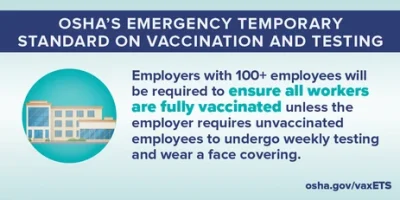 proof of weekly Covid-19 testing and wearing a face covering while at the workplace.
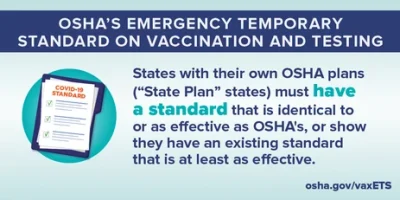 17, 2021:
  Employers Remain Accountable for Workplace Safety. Employers are responsible for the safety of their workers and OSHA “Regardless of the ultimate outcome of these proceedings,
  states have either bans or additional required exemptions from vaccine-related mandates. In addition, some states and/or cities have issued private employer vaccine mandates that employers must follow or face penalties. More developments at the state and local levels are expected, so stay informed to ensure compliance as it applies to your business and where you operate.





 . A PEO can save small businesses time and money by helping to identify inefficiencies, streamline HR processes, and making cost-cutting decisions. According to the report conducted by the National Association of Professional Employer Organizations (NAPEO), PEOs provide access to more HR services at a cost that is close to
  Business owners can get behind when the majority of time is consumed by chasing paperwork, keeping up with deadlines, and addressing internal issues rather than attending to their customers’ needs. Because the PEO takes over much of the HR-related administrative tasks, employers have more time to focus on growing their business.
 Partnering with a PEO is much like gaining access to a full-service HR division with a team of experts knowledgeable about employment laws and are current with changing federal, state, and local regulations as well as the latest filing deadlines. As a result, a
  When it comes to
  During the pandemic, businesses had to quickly pivot in order to survive. To prevent business disruption and minimize the impact of the pandemic,




 By Feb. 1, 2022, employers must distribute appropriate tax forms to individuals who received cash payments during 2021, including wages, nonemployee compensation, dividends, royalties, and profit-sharing distributions. Additional copies must be submitted to the Social Security Administration at the same time. Employers have until Feb. 28, 2022, to send corresponding copies to the IRS if filing by paper, and March 31, 2022, if filing electronically.
 Prepare and File OSHA Form 300A. Applicable employers, with 10 or more employees, are required to file a completed
  Conduct an Equity Audit. An equity audit accesses your company’s policies and behaviors and allows you to determine if any barriers exist for employees. The new year is a good time to conduct an audit of all compensation components to ensure there is no unintended disparity in wages.
 More than half of employees surveyed said they would want to work remotely at least three days a week or more.
  As mental health issues and stress continue to rise, employer’s costs also increase in higher healthcare costs and absenteeism, and lower productivity. Make sure