These tasks shouldn’t take up your workweek. But when systems fall short, they do. If you’re a small or mid-size business owner or HR leader, you probably didn’t get into this role because you love tracking down time-off requests, chasing signatures, or answering the same benefits question 14 times.
And yet… here we are.
Studies show that small business owners spend about 16 hours (or two full days) per week on HR-related administrative work.
Most businesses lose valuable time to the slow drip of small, repetitive “this will only take a minute,” tasks that quietly eat up the workweek. Add them up, and suddenly your strategic HR goals, like recruitment, retention, and leadership development, get pushed aside.
Here are some of the most common areas that may be draining your time.
Time-Consuming HR-Related Tasks
They seem small. But over time, these tasks drain your attention, your energy, and your progress.
1. Repetitive Tasks and Rework
Every time you hunt down a missing signature or resend login details, you lose time you could be using elsewhere. The common offenders? Answering the same employee questions over and over:
“How do I add my baby to insurance?” “When do benefits start?” “How many PTO days do I have left?”
Sound familiar?
Individually, these are quick answers. Collectively? They’re a constant interruption machine. When you stop to respond, you lose focus, break momentum, and push higher-value work further down your list.
🛠️How To Fix It:Uncover the pain points.Which areas are bogging down the process due to repetition? Where can you create a self-service culture? This can mean establishing a simple internal HR hub (in your intranet, shared drive, or HR platform), short FAQs on benefits, PTO, payroll timing, and onboarding, or short videos that walk through routine processes.
Then, train employees to go there first. When someone asks a repeated question, send the link along with your answer. Over time, behavior shifts. HR becomes a source, not a help desk.
2. Correcting Payroll Errors
The latest software makes running payroll seem easy, but if something goes wrong, the liability is still yours. Miscalculating pay, outdated tax information, and manually tracking time off are time-consuming to fix, hard to catch, and expensive if you don’t, not just in terms of costs but also in lost time and eroded trust among your workers.
🛠️How To Fix It:Automate what you can.Look for tools that let employees request time off directly, route approvals to managers, automatically update balances, and sync with payroll.
When automation handles the basics, HR shifts away from data entry to policy guidance. You’ll still handle exceptions, but you won’t be stuck crunching numbers late at night.
Or leave it to the experts by outsourcing payroll to an IRS-certified PEO. A PEO can simplify the payroll process with a cloud-based payroll portal for employers, online employee access to pay stubs, W-2s, benefits info, employee handbooks, and secure, paperless direct deposits. They can also take care of onboarding, payroll taxes, IRS deposits, benefits administration, compliance guidance, and provide HR support.
3. DIY Compliance Monitoring
Labor laws change constantly. Posting requirements update. Salary thresholds shift. Leave laws multiply. Keeping up with shifting deadlines, state-level compliance requirements, and studying the IRS’s recently updated guidance under the One Big Beautiful Bill Act. Trying to monitor all of this yourself is not only time-consuming – it’s also stressful.
One misstep can be costly. In 2025, the Department of Labor’s Wage and Hour Division recovered more than $259 million in back wages for nearly 177,000 employees. That’s an average of $1,465 per worker (the most since 2019).
🛠️How To Fix It:Don’t carry compliance alone.Get expert help by partnering with a professional. Whether it’s through a PEO, outside counsel, or a compliance partner, get support that keeps you updated on requirements that apply to your business.
You’ll need advice on tricky employee situations, alerts on multi-state regulatory changes, new pay transparency rules, evolving paid leave requirements, changing wage-and-hour laws, new employment-related laws on AI, and much more.
🚀 Pro Tip: Stay compliant with our HR Checklist covering the latest updates and deadlines related to compliance, benefits, payroll, and general HR that you need to take care of each quarter. Download your free HR Checklist ➡️ HERE
4. Updating Employee Data in Multiple Places
Name changes. Address changes. Promotions. New pay rates. If you’re entering the same update into payroll, benefits, retirement platforms, and internal trackers, you’re doing triple-plus work and increasing the chance of errors.
🛠️How To Fix It:Integrate your systems, invest in HR technology, or work with a PEO. A unified HR platform can help connect payroll, benefits, time tracking, and employee records, among other things.
With better integration, changes flow through automatically. That means fewer entries, fewer errors, and more free time.
5. Handling Every Employee Issue Personally
When you’re the only go-to for every conflict, complaint, or issue, your day gets hijacked fast. Some things absolutely belong with HR. But many could be resolved earlier and better by trained managers.
🛠️How To Fix It:Upskill your managers by teaching them to give feedback,handle minor conflicts, anddocument specific issues. This doesn’t remove HR from the process; rather, it elevates the role, moving them from firefighter to advisor.
Stop the HR Busy Work, Amplify Your Impact
Normalizing HR busy work has real consequences, including burnout. Your top performers may feel overwhelmed by constant overtime or pressure to meet demands. It also creates dependence on key team members, making it difficult to delegate when only a few people hold essential knowledge or responsibilities.
Maintaining inefficient processes limits growth, slows project delivery, and prevents your team from focusing on strategic initiatives.
🛠️How To Fix It: Partnering with an IRS-certified PEO can help. By taking on time-consuming tasks, PEOs help small businesses get back more time to focus on productivity and growth.
In addition to saving time, a PEO can also save your business money by identifying inefficiencies, streamlining HR processes, and helping you make critical cost-cutting decisions.
If you constantly feel behind, the fix isn’t more hustle. It’s better tools, clearer processes, and the right support. A PEO can help you stop the small stuff from piling up, so you can invest your time where it matters most. And if you need help, just give us a call at📱 800-446-6567
Find Out What a PEO Can Do for You
If you’re a small to mid-sized business, a PEO can lighten your workload and strengthen your operations. Imagine focusing on growth while experts handle your payroll, taxes, benefits, HR, and compliance.
⬇️Read more about the advantages of working with a PEO in our series:
🔷 HELP WANTED: HR Team or PEO Partner
Investing in an HR team versus partnering with a PEO, which path is best for your small business? As your business grows, managing HR gets complicated – fast.
Should you build your own HR team or explore the benefits of partnering with a PEO? Here’s how to decide which choice best fits your business. ➡️Link #1Link #1Read More
🔷 NEW RESEARCH: More Small Businesses Are Turning to PEOs
Compelling research from the National Association of Professional Employer Organizations (NAPEO) shows that PEOs are helping small businesses scale – a game-changer in 2026.
Working with a PEO isn’t about outsourcing; it’s about upgrading how you manage HR. It’s about investing in smarter growth, happier employees, and peace of mind. In a business world that’s only getting more complex, that’s a benefit worth having on your side. Thousands of successful businesses are already doing it – and the data proves it works. ➡️Link #2Link #2Read More
IT’S HERE!
Your FREE HR Checklist
Here’s your checklist of important tasks related to payroll, benefits, compliance, and general HR.
About Propel HR.Propel HR is an IRS-certified PEO and a leading provider of human resources and payroll solutions for 30 years. Propel partners with small to mid-sized businesses to manage payroll, employee benefits, compliance and risks, and other HR functions in a way that maximizes efficiency and reduces costs. For more information, visit propelhr.com
Productivity is the secret sauce that separates teams stuck on the sidelines from those with winning streaks. Chances are you’re juggling hiring, compliance, benefits, culture, and about a dozen other priorities . . . all while the clock keeps ticking.
Your power play? Outsourcing. When used strategically, it boosts productivity, streamlines operations, and frees you up to focus on what actually moves the scoreboard – your bottom line.
First Quarter: What Productivity Really Means
In HR, productivity isn’t about sprinting faster – it’s about running the right plays at the right time.
True HR productivity means delivering meaningful outcomes with minimal wasted effort. Speed matters, sure, but impact matters more.
Fast hiring doesn’t matter if turnover remains high. Smooth payroll is great . . . unless errors keep forcing replays.
At its core, productivity is about consistent, high-quality execution that supports your business year-round.
Here’s the basic stat line. The fundamental formula HR teams use looks like this: Productivity = Total Output / Total Input.
🎯Stronger Compliance Defense. Mistakes lead to fines, audits, and penalties – that’s expensive. Productive HR keeps risk off the scoreboard.
🎯Scoring Efficiency. In the Red Zone, the stakes are high, and scoring opportunities significantly increase. When your HR team isn’t buried in paperwork, they can make a more strategic impact by focusing on culture, performance, and growth.
🎯Leadership Trust. HR shifts from order-taker to trusted partner.
The results? A productive HR function is the engine that keeps your people – and your business – moving forward.
The Stats Don’t Lie: Proof from the League
The data backs it up:
➡️Flexibility & Remote Work. A Gartner report finds that 43% of employees working flexible hours say they are more productive. Gallup found that fully remote workers report the highest engagement levels.
➡️Engagement Matters. Highly engaged teams are 17% – 21% more productive than disengaged ones.
➡️The Productivity Gap. Top-tier companies grew more productive, while others saw declines due to inefficient collaboration and low engagement.
🎯Winning teams don’t guess; they measure, adjust, optimize, and power up.
The Box Score: Common HR Productivity Metrics
To know how your team is performing, you need the right stats:
📊 Output Metrics. Revenue per employee, output per hour, goals completed vs. assigned
📊 Efficiency Metrics. Time spent per task, employee utilization
📊 Quality Metrics. Accuracy and impact, not just speed
📊 Engagement Indicators. Engagement scores and absenteeism.
📊 Financial Metrics. Total Cost of Workforce (TCOW)
These numbers tell you whether your plays are working and what needs to be redesigned.
A PEO helps improve productivity by offloading time-consuming tasks while strengthening the entire employee lifecycle through MVP expertise and next-level HR tech.
🔥Think of it as adding multiple Tom Bradys to your roster.
THE GAME PLAN
Play #1: Reallocate Resources to Core Strengths
The fastest productivity gain comes from freeing your teams from admin overload. By outsourcing, you get:
✅Time Savings. Business owners can spend 20+ hours per month on HR admin-related tasks. Outsourcing frees up time for growth, sales, and strategy.
✅Administrative Relief. Payroll, benefits enrollment, and multi-state compliance tasks move off your plate and into expert hands.
✅A Team of MVPs. Outsourcing gives you access to a team of pros, ready to help when you need it.
Play #2: Build a Deeper Talent Bench that Flexes
An engaged workforce is naturally more productive.
💼 Lower Turnover. Companies using PEOs see 10%–14% lower turnover, reducing disruptions and retraining time.
💼 Big-league Benefits. PEOs provide access to Fortune 500-level benefits, boosting satisfaction and engagement.
💼 Faster Onboarding. Streamlined onboarding helps new hires get in the game.
Play #3: Upgrade Your Tech Stack
PEOs give small and mid-sized businesses access to advanced HR technology without the big-ticket price tag.
📊 Automation.Payroll and tax automation reduce errors and time-consuming fixes.
📊 Employee Self-service. Employees handle PTO, pay stubs, and benefits updates themselves with fewer interruptions for HR.
Play #4: Strengthen Your Compliance Defense
Compliance isn’t optional and managing it internally can drain focus fast. With a PEO on your team, you get:
🛡️Expert Guidance. A team of HR pros helps prevent fumbles and penalties. PEOs stay on top of federal, state, and local regulations, including ACA and FMLA.
🛡️Safety Programs. Proactive safety audits reduce workplace incidents and business disruption.
Play #5: Win on the Scoreboard
All these efficiencies lead to real, measurable stats:
🏆Faster Growth. Businesses using a PEO grow 7% – 9% faster than those that don’t. And are 50% Less Likely to Go Out of Business
💥That’s not just a win – it’s a blowout. It’s the stuff championships are made of.
FINAL CALL: Make Productivity Your Winning Play!
How far can you go? Productivity isn’t a one-time drill – it’s a GOAT mindset.
When you measure what matters, optimize repetitive work, and outsource strategically, you’re not just working faster . . . You’re working smarter. That’s for legends.
🔥Outsourcing is no rookie move. It’s a strategic productivity partner that helps HR shift from scrambling to scoring. And keeping that winning streak hot.
Ready to Turn HR into a Powerhouse?
Ready to hear your crowd ROOOAAARRR? 🎉 This power playbook is your first step.
➡️If you need some coaching or a huddle about your productivity game plan, we’ve got you all the way to the Super Bowl winning streak and beyond – just give us a call.
IT’S HERE!
Your FREE HR Checklist
Here’s your checklist of important tasks related to payroll, benefits, compliance, and general HR.
About Propel HR. Propel HR is an IRS-certified PEO and a leading provider of human resources and payroll solutions for 30 years. Propel partners with small to mid-sized businesses to manage payroll, employee benefits, compliance, risk, and other HR functions in ways that maximize efficiency and reduce costs.
To learn more, visit propelhr.com
If you run a small or midsize business, you already know growth is exciting, yes — but also unpredictable, and sometimes overwhelming. That’s exactly why more business owners and HR leaders are choosing Professional Employer Organizations, or PEOs, not just to outsource HR tasks, but to grow smarter, faster, and more sustainably.
The Top 10
A PEO helps you scale without letting the behind-the-scenes stuff collapse under the weight of bigger payrolls, more onboarding, greater compliance risk, and higher employee expectations. It’s like adding an entire HR department overnight, minus the overhead and recruitment scramble. A few advantages include:
1. You Get HR Infrastructure Before You Actually Need It (Which Is Exactly When You Need It)
Most small businesses don’t feel the pain of HR complexity until it’s too late. Payroll errors start multiplying, employees want benefits you’re not equipped to provide, and suddenly you’re Googling state labor laws at 11:30 p.m.
A PEO lays the foundation before those cracks show. Payroll scales without drama. Whether you have 10 people or 110, payroll stays smooth, compliant, and on time.
Onboarding becomes a real process and not a scramble. Templates, checklists, digital forms, background screening, and automated workflows ensure consistency as you grow.
Policies adjust proactively. A PEO helps you build employee handbooks, update them with new laws, and create clear rules that reduce risk as your headcount increases.
2. A PEO Delivers the Big-Company Benefits Employees Want
Here’s the part that often surprises business owners: a PEO can give you access to benefits packages typically reserved for much larger companies.
Because a PEO pools together employees across its client base, you essentially get to “buy in bulk,” accessing high-quality benefits at lower rates. That means you can offer your team robust health plans, retirement savings options, and other top-tier benefits typically reserved for larger companies (and top talent expects).
🎯When employees enjoy comprehensive benefits without compromise, your company is seen as a long-term career option. Retention rises, and as every HR pro knows, that’s a growth strategy.
3. Compliance Stops Being a Guessing Game
Growth = risk. New states. New regulations. New employment laws. New reporting requirements.
This is where many small businesses unintentionally step into danger territory. The rules change constantly and the stakes are high.
✅They track federal, state, and local employment laws.
✅They help maintain the required documentation.
✅They ensure new hires are classified correctly.
✅They reduce risk with structured workplace policies.
✅And because of the co-employment relationship, many PEOs also share certain administrative responsibilities – meaning you’re not alone if something goes sideways.
🎯Growing is risky. Growing without compliance support? That’s gambling.
4. HR Technology You Don’t Have to Build Yourself
Scaling is smoother when everything is connected, such as payroll, onboarding, PTO tracking, benefits enrollment, performance management, and reporting. But building your own HR tech stack or licensing multiple vendors gets expensive fast.
🎯A PEO delivers the all-in-one HR command center designed for your business. Better data, better workflows, better decision-making.
5. A PEO Frees Up Time (A Lot of It)
If you’re a business owner, your job is to grow the business, not troubleshoot payroll deductions. If you’re an HR manager, your job is to support the people strategy, not drown in admin work.
A PEO takes on repetitive, time-consuming tasks, such as processing payroll, managing benefits, handling tax filings, and preparing compliance documentation. The more you grow, the more time you reclaim, instead of watching your workload escalate with each hire.
6. You Gain a Team of HR Experts Without Expanding Your Staff
Growing companies don’t always have the luxury of immediately hiring a full HR team — HR generalists, benefits specialists, payroll administrators, compliance officers, recruiters, risk managers, the whole lineup.
A PEO gives you access to exactly those roles, on-demand expertise, without the full-time salary load.
Need help rolling out a new PTO policy? Preparing for benefits renewal? Handling a sensitive employee relations issue? There’s an expert for that. It’s like having a seasoned HR department already onboard, ready to advise you every step of the way.
7. You Become More Attractive to Investors and Partners
Here’s something entrepreneurs don’t always think about: investors love operational maturity. When a PEO is part of your infrastructure, it signals you’re compliant, manage risks well, your HR processes are stable and that you can scale responsibly.
🎯For investors, lenders, and potential partners, a strong HR foundation = reduced risk. And reduced risk makes you a better bet. For acquisitions and rapid growth phases, a PEO can also make integration smoother.
8. A PEO Helps You Build a Better Employee Experience
Growth doesn’t just require more people; it requires keeping the good people you already have on board.
A PEO helps you:
✅Improve communication and access to information.
✅Build modern HR processes that employees trust.
✅Provide competitive benefits
✅Create fair, consistent workplace policies.
🎯A better employee experience leads to lower turnover and higher morale. And in high-growth companies, stability is gold.
9. You Can Expand Into New States With Confidence
Need to hire employees in another state? That’s great for growth, but it creates compliance challenges due to different tax rules and labor law requirements.
🎯A PEO handles all of it, letting you recruit the best talent in any location without losing sleep or risking penalties.
10. You Scale Strategically
Growth can stress your business when operations lag behind headcount. A PEO aligns both, so you’re expanding strategically.
🎯The result? Smooth transitions. Predictable costs. Cleaner processes. Less risk. Happier employees. And more time to focus on what actually grows the business — not on what slows it down.
Growth Is Easier ➡️When You’re Not Doing Everything Yourself
If you’re preparing to scale — or even thinking about it — the question isn’t whether you can handle growth alone. It’s whether you should.
With a PEO, growth is a plan.
A PEO delivers the infrastructure, expertise, and stability that power growing companies, without requiring a major investment or a staff increase.
Ready to see what a PEO can do? We can lighten your workload and help you drive growth, just give us a call at (800) 446-6567 or visit propelhr.com
🎯PEO Series: The PEO Difference🎯
Learn more about how a PEO can help your business in our series:
🔶HR Help Wanted: In-house Team or PEO Partner. Investing in an HR team versus partnering with a PEO, which path is best for your small business? As your business grows, managing HR gets complicated – fast. Should you build your own HR team or explore the benefits of partnering with a PEO? Here’s how to decide which choice best fits your business. Read More
🔶Navigating Compliance Minefields. Navigating HR compliance can feel like tiptoeing through a minefield — one wrong move can trigger costly consequences. From pay transparency laws to overtime thresholds, new regulations evolve faster than most small HR teams can keep up with. Here’s a look at the top HR compliance challenges and how to avoid turning small missteps into expensive lessons. Read More
🔶New Research Shows Why More Small Businesses Are Turning to PEOs. The data is in! And it shows how partnering with a PEO will be the smartest move for small businesses in 2026. Recently released research from the National Association of Professional Employer Organizations (NAPEO) shows that PEO partnerships are helping small businesses scale. It’s smarter, more efficient, and a game-changer. Here’s what the latest data shows. Read More
IT’S HERE!
Your FREE HR Checklist
Here’s your checklist of important tasks related to payroll, benefits, compliance, and general HR.
About Propel HR. Propel HR is an IRS-certified PEO that has been a leading provider of human resources and payroll solutions for more than 25 years. Propel partners with small to mid-sized businesses to manage payroll, employee benefits, compliance and risks, and other HR functions in a way that maximizes efficiency and reduces costs. For more information, visit www.propelhr.com
Never heard of a PEO? Chances are, you will soon. Here’s why.
A PEO, Professional Employer Organization, helps small businesses by taking back-office paperwork off their plate and letting them focus on their business. PEOs provide payroll, benefits, workers’ comp, regulatory compliance assistance, and scores of other HR services to more than 173,000 small and mid-sized businesses across the U.S., collectively employing more than 4 million people.
PEOs partner with businesses in software, construction, media, clothing, finance, and dozens of other sectors spanning every pocket of the country, not to mention mom-and-pop businesses on Main Street.
Propel HR is an IRS-certified PEO and part of a $270 billion industry that prides itself on being an ally and supporter of the little guy and gal. We provide small and mid-sized businesses access to essential services — like cutting-edge technology and competitive health insurance – typically only available at larger firms. This allows them to punch above their weight, grow faster, and experience lower employee turnover.
PEOs are particularly indispensable when the going gets tough. For example, during the darkest days of the COVID-19 pandemic, we were on the frontlines as a true partner, invested in helping our clients survive as they faced layoffs, decimated sales, closure, and increasing disconnect with their local communities. They needed our help.
So, PEOs banged on the doors of Congress to help clients across the country secure the Paycheck Protection Program (PPP) loans that were the difference between life and death. We helped clients navigate the loan forgiveness process, support their employees, apply for available tax credits, and get to a place where they knew they could rebuild and emerge stronger than they were pre-pandemic. In fact, businesses that partner with a PEO were nearly 60 percent less likely to have permanently closed than those that did not use a PEO during the pandemic.
After the pandemic, yet another huge issue has surfaced for small businesses: the Employee Retention Tax Credit (ERTC). Passed as part of the pandemic relief aimed at small businesses, the ERTC is a refundable tax credit for businesses that continued to pay employees while shut down due to the pandemic or had a significant decline in revenue. Today, almost one million small businesses are waiting in a backlog at the IRS for their money. Some have even gone out of business while waiting.
PEOs have become the voice of small business on this issue, advocating for Congress to nudge the IRS to do its job and ensure that every small business gets the funds they are entitled to before it is too late. We’ll keep pushing the issue until then because that’s what PEOs do: support small businesses and help them navigate through government red tape.
In fact, in the last 12 years, the PEO industry has quadrupled in size as the regulatory landscape gets increasingly complicated and more and more businesses turn to PEOs for back-office assistance. The total employment represented by the PEO industry is roughly the same as the combined number of employees for five of the ten largest employers in the U.S.
And as we grow, we will remain a friend of and a crusader for small and mid-sized businesses nationwide – and in Washington, DC.
About Propel HR. Propel HR is an IRS-certified PEO that has been a leading provider of human resources and payroll solutions for more than 25 years. Propel partners with small to mid-sized businesses to manage payroll, employee benefits, compliance and risks, and other HR functions in a way that maximizes efficiency and reduces costs. Visit our new website at www.propelhr.com.
NEW! From Propel HR. Introducing PropelHIRES, You’ve trusted us with your payroll and other HR needs, and now we are thrilled to help you find the right candidate. We’re excited to welcome, PropelHIRES, to the Propel team!
In today’s tight labor market, hiring the right person for the right position is even more critical. PropelHIRES considers the culture of the company and the demands of the specific position, along with the experience, qualifications, and personality, to find a fit that lasts. This means less turnover, higher productivity, and ultimately greater growth.
And when you are ready to take your business to another level, pair PropelHIRES‘ recruiting with Propel HR’s concierge PEO services. We help you recruit new talent and then seamlessly onboard them. As a result, you can focus on your core business while we take care of payroll, benefits, technology, and human resources.
So let us do the heavy lifting and connect your business with top-tier candidates for consideration. To accelerate your next hire, contact Brent Deedrick at (864) 261-1901 or schedule a call or video conference HERE. Learn more at www.propelhires.com.
To better understand someone’s role in your business, try walking in their shoes. Here are a few benefits.
“Before you judge a man, walk a mile in his shoes.”
Recent news stories have highlighted how Uber CEO, Dara Khosrowshahi, played “undercover boss” by driving for Uber and delivering meals through Uber Eats. This on-the-job experience led to significant changes and ultimately increased Uber’s revenue and market share.
Khosrowshahi drove a used car and went by the name “Dave K” as he chauffeured passengers through the San Francisco area. After the U.S. began to emerge from COVID, Uber had more riders than drivers and was struggling to meet demand. To solve this problem, Uber initially paid bonuses and offered financial incentives. However, this was hard on the bottom line and did not necessarily solve the labor shortage problem. At the suggestion of the Head of Driver Operations, the Uber CEO decided he should drive and see what it is like to be a gig worker.
Starting with the Uber sign-up process, Mr. Khorowshahi was frustrated and felt that the instructions were not clear. His feedback quickly brought about changes in the app as well as messaging about estimated pay per ride. When “Dave K” was punished by the Uber app for rejecting some remote trips, he worked with his team to change the approach to incentivize drivers for difficult trips instead of punishing them.
Through his act of driving passengers and delivering meals, he understood what it meant to deal with harassing customers, rush hour traffic, and an unsavory practice called “tip baiting,” which strips the driver of the tip after enticing them to accept the order with a phony good tip. These experiences motivated him to work with his team to enhance the app, add new safety features, and better disclose estimated pay and mileage. While these enhancements have not eliminated all driver concerns, they have significantly impacted the driver experience, and in 2022, Uber’s ride-share revenue more than doubled. Dara Khosrowshahi lived up to the adage and more – he didn’t just walk a mile; he drove for many miles, which ultimately made him a better leader and Uber, a stronger company.
Walking a Mile at Propel HR
I have recently had a similar experience. At Propel HR, all new hires must “Walk a Mile” as part of their orientation process. New employees spend several hours with each department in our operations to learn what each role does and how each department intersects with others.
As a PEO, Propel HR is a complicated business that impacts our clients’ employees. We process payroll, submit taxes, provide benefits, administer Workers’ Compensation, offer HR support, and ensure it works efficiently through our various software programs. It is important that our pros understand how each function coordinates with other departments.
Here are a few examples:
Workers’ Comp Injury. Our payroll, benefits, risk management, and human resources teams are all involved when an injured employee is on leave due to a Workers’ Comp injury.
Compliance in Multiple States. When an employee moves to another state, our payroll team must work with the tax department to make sure taxes are changed, the HR partner to determine any new compliance items, and our benefits and Workers’ Comp departments make sure coverage is properly secured.
Everyone at Propel HR must work together, so by walking a mile in each other’s shoes, our Propel Pros learn the importance of the whole team.
When my father and I first started the company in 1996, there were four of us. My father handled the sales and overall growth and vision. We had one person who processed payroll and a controller who paid taxes and oversaw financials. My job was everything that was left over! I handled Workers’ Compensation coverage and claims, benefits administration, and gave HR advice as needed. And if someone was on vacation, we each handled the other’s job.
Our business has grown since then, and our industry has also matured. Employment laws have multiplied and have become more complex. Today, Propel HR has Master Health plans, multiple Workers’ Compensation plans, and two payroll platforms. Our worksite employees are in 47 states and will soon be in all 50 states. Twenty-seven years ago, I felt comfortable handling most of our operational functions; today, I wouldn’t know where to start!
It is strange to understand so much about the big picture of the business but not understand how all the pieces work on a daily basis. To better understand, I spent time this past month on my own Walk-a-Mile. I met with different departments, asked lots of questions, and saw their jobs from a different perspective. I watched, I listened, and I helped when I could. The time I spent with each team was incredibly valuable, and I look forward to walking more miles with each of them in the future.
The Benefits
Here are some of the benefits of walking in another’s shoes:
The Value of a Bird’s-eye View.Since I am not in the daily details of each job, I was able to bring a different perspective to the teams. I questioned why they did things the way they did and asked if there may be a more efficient way to get the same results. I encouraged the team to think differently and question the why more. Are we doing something just because that is how we have always done it? The detailed information I learned, coupled with my elevated view, helped me think critically about new processes and cross-team interactions.
The Evaluation of New Tools. By learning the details of each job, I was able to determine if there are some tools we are not using or not even asking for because we don’t know they are available. I was able to quickly see some needs for new technologies and integrations that can save time. I recognize that these tools and customizations cost money now but may save money and time in the future. My position brings knowledge of what tools are available and what we can afford to implement. Once I learn what the true needs are, then we can provide the best solutions.
The Ability to Assess Staffing Needs.In my role, I often hear that we need to hire more people. At times, this is the right answer, but other times I wonder if another human will solve the problem. Working beside the teams, I learned so much, which will help with future hiring strategies. I learned the time needed for each task, questioned manual processes, and asked each person about their workload. I also asked specifically what skills and traits make someone successful in their role. I listened intently and tried to understand what needs they had.
A Chance to Celebrate the Team. The biggest takeaway from my Walk-a-Mile was how amazing our team is. It was so exciting to see the value they bring to our clients each day. Sometimes in my role, I am required to focus on the big issues. This program reminded me that no job is too small, and we must work together to provide excellent service to our partners. The knowledge each employee has, and their pride in their work are impressive.
Every one of our employees is truly a Propel PRO!
You don’t have to be the CEO of Uber to gain experience from walking a mile in your team’s shoes. Through my Walk-a-Mile process, I learned new things which will help provide solutions as our company grows. Whether driving or walking, I strongly suggest you take the time to work in your team’s role. It will make you a better leader and your organization stronger.
Propel HR President Lee Yarborough
“My father, Braxton Cutchin, and I founded the company in 1996. After being in the PEO and HR world for 25 years, I have experienced firsthand the value we can provide to both the clients and the employees. It is truly a win for all parties. I’m proud to have helped establish Propel HR as an industry forerunner in the Southeast. There is nothing I love more than receiving phone calls from clients who seek my advice as a trusted advisor. This is a business where I feel that I can help others, and that is important to my own value.”
— Lee Yarborough, President, Propel HR
🎧Learn more about Lee’s experience starting Propel with her father, her work on Women in NAPEO & NextGen, and the importance of having the “freedom to fail.” Listen HERE on Spotify or search People Pat Meets where you get your podcasts.
Active in many professional and community organizations, Lee recently served as Chair of the Board of Directors of the National Association of Professional Employer Organizations (NAPEO). As NAPEO Chair, Lee focused on diversity and initiatives to deepen member relations. Under her leadership, she formed Women in NAPEO (WIN), a networking group designed to engage, empower, and encourage women working in the PEO industry. On the local level, Lee also served as the Chair of NAPEO’s Carolinas Leadership Council for more than a decade. In 2015, she was named a Fellow of the eleventh class of the Liberty Fellowship Program and a member of the Aspen Global Leadership Network.
An advocate for public education, Lee has served on the executive board as Chair of Public Education Partners and is the founder and director of Read Up Greenville, a young adult and middle grades book festival in downtown Greenville, SC.
When she breaks from board meetings, client visits, and networking, most likely, you will find Lee reading, camping, or spending time with her family. She also enjoys volunteering at her church and staying involved with her children’s schools.
About Propel HR. Propel HR is an IRS-certified PEO that has been a leading provider of human resources and payroll solutions for more than 25 years. Propel partners with small to midsized businesses to manage payroll, employee benefits, compliance and risks, and other HR functions in a way that maximizes efficiency and reduces costs. Visit our website, www.propelhr.com.
Is your employee benefits package helping your business or holding it back? Employee benefits are essential to a running a business, and knowing how well it’s working is not always obvious. Here are some common signs that it’s time for a change.
Attracting Top Talent is Challenging. In a recent study, nearly one-third of workers surveyed said that high-quality benefits are as important as compensation and play an important role in evaluating a job offer. If keeping and attracting top talent is challenging, your employee benefits package may need to be more competitive.
Employee Turnover Rates are High. High turnover can be costly and disruptive to business. According to a Pew Research study, inadequate benefits were one of the top reasons nearly half of workers left their jobs in 2021.
Shifts in the Job Market. The job market is constantly changing, and the benefits that were once a standard part of a benefits package may no longer be enough. For example, during the pandemic, priorities shifted. While health care remained the benefits employers believed to be a top priority to their workforce, other benefits emerged in importance. According to an SHRM study, benefits such as flexible work, paid leave, family-friendly and wellness benefits were considered most important.
Employee Demographics are Changing. The demographics of your employees can also affect your benefits package. For example, younger workers may value different benefits, such as a wellness program, while those with growing families may value childcare options or time off.
Employee Satisfaction is Low. Are your benefits keeping pace with your employees’ expectations? Are you getting questions and complaints about your benefits? Is morale low? Are you experiencing a decrease in engagement and productivity? Your benefits package may be a driving factor as it reflects how much you value your staff and their well-being.
A recent benefits study finds that more than one-third of workers surveyed find their benefits inaccessible and unaffordable and fail to meet their real-life needs. Find out what your workforce wants and needs by gathering feedback to determine what areas need improvement.
Health Plan Costs are Increasing. How much is your health plan costing you? And your employees? How does it compare to the competition? Do you have a great health plan, but it’s expensive for employees? What’s behind rising costs? Increasing costs or sudden changes in premiums are signals it’s time to reevaluate your benefits.
New Laws and Regulatory Changes. Be familiar with applicable federal and state health insurance laws and regulations that apply to your business. Laws are constantly changing, and failing to keep up can impact your benefits resulting in costly compliance violations and penalties.
Your Business is Growing. Has your business experienced significant change or expanding into other markets? If so, your benefits may need to be adjusted to keep up with your growing business.
More Expert Guidance is Needed. Is your broker still the best advisor for your business? Maybe you’ve outgrown them, or they are too big to give you attention. The right partner with the right expertise can evaluate what’s working and identify solutions that’s best for your business and your employees.
Is It TIme to Make a Change? We’re Here to Help.
In a tight labor market, a top-rated employee benefits package is a must for attracting and retaining top talent, showing employees that you care, and remaining competitive.
While benefits basically come down to your employee needs and your budget, there are still a number of other factors to consider. An IRS-certified PEO, like Propel HR can help. For example, Propel offers comprehensive medical insurance plans designed to fit your employee’s needs and your budget. Propel HR’s Master Health Plan is administered through BlueChoice, a part of an AM Best A+ rated health insurance carrier and one of the nation’s largest and most trusted health insurance providers.
In addition, our national BlueChoice Master Health Plan has had a 0% rate increase over a four-year period. If you’re used to 10- 20% premium rate hikes year after year, you can see how this kind of savings can be substantial.
When was the last time you took a hard look at your benefits package? Assessing your benefits program once a year during renewal may be too complex and time-consuming to tackle alone. If you need help finding options right for your small business, just give us a call at (800) 446-6567.
NEW! From Propel HR
Introducing PropelHIRES, You’ve trusted us with your payroll and other HR needs, and now we are thrilled to help you find the right candidate. We’re excited to welcome, PropelHIRES, to the Propel team!
In today’s tight labor market, hiring the right person for the right position is even more critical. PropelHIRES considers the culture of the company and the demands of the specific position, along with the experience, qualifications, and personality, to find a fit that lasts. This means less turnover, higher productivity, and ultimately greater growth.
And when you are ready to take your business to another level, pair PropelHIRES’ recruiting with Propel HR’s concierge PEO services. We help you recruit new talent and then seamlessly onboard them. As a result, you can focus on your core business while we take care of payroll, benefits, technology, and human resources.
So let us do the heavy lifting and connect your business with top-tier candidates for consideration. To accelerate your next hire, contact Brent Deedrick at (864) 261-1901 or schedule a call or video conference HERE. Learn more at www.propelhires.com.
About Propel HR. Propel HR is an IRS-certified PEO that has been a leading provider of human resources and payroll solutions for more than 25 years. Propel partners with small to mid-sized businesses to manage payroll, employee benefits, compliance and risks, and other HR functions in a way that maximizes efficiency and reduces costs. Visit our new website at www.propelhr.com.
From misclassifying employees and failing to distribute a W-2 to a simple record-keeping error, payroll mistakes cost in terms of fines and business, morale, and turnover. Here are some of the most common payroll errors.
COMMON PAYROLL MISTAKES
Payroll mistakes are more common than you think. According to a recent Ernst & Young (EY) study, 1 in 5 payrolls contains errors costing about $291 per error on average, not including the added cost of compliance penalties and the time to resolve the mistakes.
Some of the most common errors include:
Record-keeping Errors. Failing to keep accurate records lead to inaccurate pay rates, errors in overtime calculations, and missed payments.
Making Late Payroll Tax Payments. Making late tax payments can result in interest charges and a 15 percent failure to deposit penalty. https://www.irs.gov/payments/penalties
Not Distributing W-2 Tax Forms.Failing to provide a W-2 is another common payroll mistake. Each year, employers are required to file a W-2 for each employee by Jan. 31. A copy also needs to be distributed to employees as well.
In a recent survey, only 45% of businesses provide their employees with W-2 forms, despite this being required by federal law. Once the W-2 is late, penalties apply based on when the corrected W-2 is filed. For example, if the corrected W-2 is filed after Dec. 31, 2023, the penalty is $60 per W-2 if filed within 30 days of the due date. The maximum penalty for a small business is $220,500 per year. The fees continue to increase if filed more than 30 days after the due date.
Misclassifying Employees. Employee or independent contractor? Exempt or non-exempt? One of the most common payroll mistakes is misclassifying an employee, which can lead to fines, incorrect pay, underpayment of taxes, and legal issues. This simple error can cost thousands per misclassified worker and additional penalties and interest charges.
Failing to Withhold Correct Taxes.Employers are required to withhold payroll taxes, including federal income tax, Social Security tax, and Medicare tax, from employees’ paychecks. Failure to withhold the correct amount can lead to penalties and interest charges.
Mistakes Tracking Time. Tracking employee hours is essential for calculating pay. Mistakes can lead to errors in paying salaries, bonuses, and overtime pay.
Not Providing Accurate Pay Stubs. Employees are entitled to accurate pay stubs showing their gross pay, deductions, and net pay. Failure to provide accurate pay stubs can result in legal issues.
Failing to Comply with Minimum Wage Laws. Employers failing to pay the federal minimum wage may be subject to fines and penalties of up to $1,000 per violation. In addition, many states also have minimum wage laws. In cases where an employee is subject to both state and federal minimum wage laws, the employee is entitled to a higher minimum wage.
Errors in Calculating Overtime. After a Department of Labor investigation, a residential contractor was required to pay $320,000 after denying overtime wages to workers. The Wage and Hour Division determined that the company failed to pay overtime for hours over 40 in a workweek to their piece-rate and hourly workers and also failed to maintain proper records of their employees’ work hours and other payroll records. Both mistakes violated requirements under the Fair Labor Standards Act.
Unless exempt, workers covered under the Fair Labor Standards Act (FLSA) must receive overtime pay for hours over 40 in a workweek at a rate not less than time and one-half their regular pay rate. Employers who fail to pay are subject to back wages and penalties per violation.
Failing to Comply with State and Federal Labor Laws. In addition to federal tax regulations, employers must also follow state regulations, as each state has its own rules regarding taxes, overtime pay, termination pay, and minimum wage.
Failing to Keep Up with Changing Tax Laws. Over the past decade, the tax code has been revised more than 4,000 times. Because tax laws are constantly changing, employers need to stay updated to ensure compliance and avoid penalties.
THE HIDDEN COSTS
Fines and penalties are not the only consequences of payroll errors. There are also hidden costs. Here are some of the most common.
Increased Turnover. Inaccurate or late paychecks can result in losing some of your best talent. A Kronos study shows that 49% of workers will start a new job search after experiencing just two problems with their paycheck.
Added Administrative Costs. From reissuing paychecks, reconciling payroll records, and dealing with employee complaints, correcting payroll mistakes can be time-consuming and expensive in terms of added administrative costs.
Damage to Your Company’s Reputation. Payroll mistakes can damage a company’s reputation, leading to negative reviews, loss of business, and increased turnover.
Legal Costs. In addition to penalties, payroll errors can also result in legal costs. In the EY study, one in six employers surveyed experienced litigation issues related to payroll errors. Overall, employers reported an average of 32 legal complaints, with resulted in $3,200 in direct costs and 29 hours of staff time to resolve.
HOW TO PREVENT PAYROLL MISTAKES
The good news is that many payroll mistakes are preventable. Employers can minimize the risk of payroll mistakes by following a few steps.
Use Top-Rated and Reliable Payroll Software. Using payroll software can help automate and streamline the payroll process, reducing the likelihood of errors.
Keep Accurate Records. Keep track of all payroll transactions, including salaries, wages, benefits, and tax obligations. This documentation can help you quickly identify and correct errors before they cause problems.
Stay Current with Federal, State, and Local Tax Laws and Regulations. Federal, state, and local tax laws and regulations frequently change, so staying on top of the latest updates is essential to ensure compliance.
Communicate with Employees. Communicate with employees about their pay, benefits, and deductions to avoid misunderstandings and potential legal issues.
Seek Expert Guidance. According to a Deloitte Global Payroll study, 73% of employers already outsource some aspect of payroll. Seeking expert guidance by working with a professional payroll service or an IRS-certified Professional Employer Organization, like Propel HR, can help to avoid mistakes and ensure timely and accurate payroll processing and that filing deadlines and timely IRS deposits are met.
By working with a PEO, employers gain access to expertise and comprehensive services, including payroll, benefits administration, compliance assistance, and Human Resources. Additional benefits include cost and time savings for managing payroll, benefits, compliance, and HR functions and providing access to high-quality health plans.
GET PEACE OF MIND
When it comes to payroll, there’s no room for mistakes – or delays. Propel HR provides the assurance and peace of mind that your employees’ paychecks are always accurate and delivered right on time. And if you need more help, we can also handle your benefits, compliance, and other important HR-related tasks and recommend custom solutions based on your industry, size, and location. By taking care of all this and more, you can get busy running your business, not your payroll. For more info, just give us a call at (800) 446-6567 or visit www.propelhr.com.
PLEASE NOTE: This information is for general reference purposes only. Because laws, regulations, and filing deadlines are likely to change, please check with the appropriate organizations or government agencies for the latest information and consult your payroll specialist and/or employment attorney regarding your responsibilities. In addition, your business may be exempt from certain requirements and/or be subject to different requirements under the laws of your state. (Updated April 19, 2023)
NOW HIRING FOR YOU!
Introducing PropelHIRES. You’ve trusted us with your payroll and other HR needs, and now we are thrilled to help you find the right candidate. We’re excited to welcome, PropelHIRES, to the Propel team!
In today’s tight labor market, hiring the right person for the right position is even more critical. PropelHIRES considers the culture of the company and the demands of the specific position, along with the experience, qualifications, and personality, to find a fit that lasts. This means less turnover, higher productivity, and ultimately greater growth.
And when you are ready to take your business to another level, pair PropelHIRES’ recruiting with Propel HR’s concierge PEO services. We help you recruit new talent and then seamlessly onboard them. As a result, you can focus on your core business while we take care of payroll, benefits, technology, and human resources.
So let us do the heavy lifting and connect your business with top-tier candidates for consideration. To accelerate your next hire, contact Brent Deedrick at (864) 261-1901 or schedule a call or video conference HERE. Learn more at www.propelhires.com.
About Propel HR. Propel HR is an IRS-certified PEO that has been a leading provider of human resources and payroll solutions for more than 25 years. Propel partners with small to mid-sized businesses to manage payroll, employee benefits, compliance and risks, and other HR functions in a way that maximizes efficiency and reduces costs. Visit our new website at www.propelhr.com.
In a tight labor market and high job vacancy costs, there’s no time to waste when it comes to finding and keeping top talent. Here’s how to strengthen your competitive advantage with a better talent strategy.
Offer Competitive Benefits. Studies show that three in 10 employers have experienced increased employee turnover this year due to employees leaving for better pay and benefits offered elsewhere. Employers can bolster their recruitment and retention success by meeting employee expectations for competitive compensation packages and high-quality benefits. Remember that the same high-quality benefits that make employers attractive to potential new hires are often the same benefits that keep current employees engaged and productive and want to stay long-term. This may include more competitive health plans, retirement plans, paid time-off, bonuses, and other perks and incentives designed to keep workers satisfied and engaged.
Create a Positive Work Environment. A positive work culture can help attract and retain skilled talent. Employers can create this culture by promoting open communication, encouraging feedback, recognizing and rewarding achievements, and investing in employee training and development.
Emphasize A Sense of Purpose. From better pay and benefits to more growth opportunities, flexible work options, and burnout, there are many reasons workers leave their jobs. But for the next generation of talent, work is about making a difference. They want to join companies that have sense of purpose, community, and a place where they can make a greater difference.
According to a Gallup study, when employees feel their job is important, businesses experience a 51% reduction in absenteeism, a 64% reduction in safety incidents, and a 29% improvement in quality. Employers can start by training managers on how to help workers connect their work to purpose and how their contributions are meaningful and integral to a company’s overall mission.
Offer Flexible Work Arrangements. A flexible work location, the ability to work from anywhere, and a flexible work schedule are the top three priorities that grew in importance during the pandemic. And by now, employers understand the value of flexibility and how it can attract more skilled workers. This may include such options as remote work, flexible hours, or part-time work arrangements.
Enhance the Onboarding Process. According to a recent study, nearly half of employees surveyed are actively looking for a new job. But there’s good news. Effective onboarding can be a powerful retention tool. Once a new hire accepts a position, a positive and effective onboarding experience helps works feel valued, motivated, and confident in their new roles.
In 2022, businesses spent an average of $1,207 training a new employee. The price tag is even higher for a weak onboarding process where employers can expect to pay 90% to 200% of an employee’s annual salary to find their replacement.
Provide Opportunities for Career Advancement. One of the top reasons workers leave is due to a lack of opportunities for growth and advancement. Businesses can attract these workers by offering career paths, mentorship programs, and opportunities for professional development. Mapping out career paths with employees helps them invest in a future with your company and gives them a reason to stay.
Develop Your Employees to Fill the Skills Gap. Business growth depends on the availability and quality of the skills of their workers. Creating a culture that prioritizes continuous learning and skill development is another way to attract talent and keep workers. In a tight labor market, employers have to get creative to find ways to fill the skill gaps, such as leveraging talent already on staff.
Emphasize Work-Life Balance. Finally, businesses can attract skilled workers by supporting work-life balance. This may include offering paid time off, family leave, or flexible schedules that allow employees to manage their personal and professional responsibilities.
According to a recent workforce study, employees cited a four-day or 32-hour workweek without a reduction in pay as the most desirable flexible work options. By prioritizing work-life balance, businesses can attract skilled workers who value their personal lives as much as their careers.
Prioritize Well-being. According to a recent Gallup poll, only 21% of workers worldwide are engaged with their job. What’s the disconnect with the remaining 70%? Studies indicated that it’s time to take responsibility for workplace well-being and think about the employee as a person and not just a worker. When employees are engaged, productivity goes up and the incidences of health issues as a result of stress and burnout are significantly reduced.
Now Hiring for YOU! Introducing PropelHIRES
You’ve trusted us with your payroll and other HR needs, and now we are thrilled to help you find the right candidate. We’re excited to welcome, PropelHIRES, to the Propel team!
In today’s tight labor market, hiring the right person for the right position is even more critical. PropelHIRES considers the culture of the company and the demands of the specific position, along with the experience, qualifications, and personality, to find a fit that lasts. This means less turnover, higher productivity, and ultimately greater growth.
And when you are ready to take your business to another level, pair PropelHIRES’ recruiting with Propel HR’s concierge PEO services. We help you recruit new talent and then seamlessly onboard them. As a result, you can focus on your core business while we take care of payroll, benefits, technology, and human resources.
So let us do the heavy lifting and connect your business with top-tier candidates for consideration. To accelerate your next hire, contact Brent Deedrick at (864) 261-1901 or schedule a call or video conference HERE. Learn more at www.propelhires.com.
About Propel HR. Propel HR is an IRS-certified PEO that has been a leading provider of human resources and payroll solutions for more than 25 years. Propel partners with small to mid-sized businesses to manage payroll, employee benefits, compliance and risks, and other HR functions in a way that maximizes efficiency and reduces costs. Visit our new website at www.propelhr.com.
From new laws to filing deadlines for state, federal, and local compliance, HR responsibilities continue to grow. Stay up to date with important changes and deadlines related to payroll, benefits, compliance, and general HR. Here’s your HR checklist, which includes some of the most important tasks to take care of in the coming months.
PAYROLL & TAX
Verify Requirements for Minimum Wage. Under federal law, covered non-exempt employees must be paid a minimum wage of $7.25 per hour. Many states also have minimum wage laws. When an employee is subject to state and federal minimum wage laws, the employee is entitled to the higher minimum wage rate. To learn more about applicable minimum wage laws in the states where you have employees working, visit the Department of Labor’s interactive map.
Also note that minimum wage exceptions vary and apply under specific circumstances, such as workers with disabilities, full-time students, those under age 20 (in their first 90 consecutive days of employment), tipped employees, and student learners. The Department of Labor provides more details about exceptions and requirements under the Fair Labor Standards Act in this comprehensive reference guide.
COMPLIANCE
Stay Up-to-Date on the Latest Changes on Form 1-9 Compliance. According to the U.S. Department of Homeland Security (DHS), employers should continue to use the current Form I-9, which expired October 31, 2022), until further notice. Follow DHS for announcements about the new version of Form I-9, tentatively scheduled for May 2023. DHS has also extended the deadline of its temporary policy, allowing employers to review Form I-9 documents virtually until July 31, 2023.
Prepare 2022 EEO-1 Component 1 Data Collection. Follow the EEOC for updates on requirements for covered employers to report 2022 EEO-1 Component 1 data collection, tentatively scheduled to open in mid-July 2023.
Remove OSHA Form 300A. Under OSHA’s record-keeping requirements, applicable employers must post a summary of the previous year’s injuries and illnesses from February through April. These records must be maintained at the worksite for at least five years. On April 30, 2023, applicable employers can remove OSHA Form 300A, a summary of workplace injuries and illnesses.
Schedule Required Compliance Training. Check all required federal, state, and industry workplace training requirements that apply to your business and workplace training mandated in your state.
Look for Updates on DOL’s Proposed Overtime Rule. The Department of Labor’s proposed changes to the overtime rule, which may include increases in salary thresholds and expanding duties tests to classify certain employees as exempt, for example, are expected to be announced this spring. The current threshold is $684 per week or $35,568 annually.
Review Record-keeping Requirements. Small businesses are required to follow a number of regulations for record-keeping. A few examples include:
Employment Records. Age Discrimination in Employment Act (ADEA), Americans with Disabilities Act (ADA), and the Civil Rights Act of 1964 (Title VII) requires employers to retain hiring (including resumes or applications of those interviewed) and employment records for one year after creating the documents or the hire/no-hire decision, whichever is later. In addition, after employment terminates, employers must keep existing employment records for one year from the termination date.
Employment Tax Records. Under the Federal Insurance Contribution Act (FICA), Federal Unemployment Tax Act, and Internal Revenue Code, employers should keep employment tax records for four years after filing the 4th quarter taxes.
Leave Records. The Family Medical Leave Act (FMLA) requires employers to keep leave records for three years.
Form I-9. The Immigration Reform and Control Act (IRCA) and Immigration and Nationality Act (INA) require employers to keep copies of Form I-9 and supporting documentation for three years after the date of hire or one year after the date of termination, whichever is later.
BENEFITS
Review Your Employee Benefits Plan. Check with your benefits broker for updates, deadlines, and any changes in reporting. Also, verify that all healthcare reform requirements are met.
Review All Insurance Policies. Is your health plan the right fit for your business? Do you know what to expect during the insurance renewal process? Do you have all the policies in place to protect your business? National Insurance Awareness Day is June 28, 2023, and an annual reminder to review all of your insurance policies. Determine if changes in your work environment or staff work assignments may impact your current exposure and codes on your account. Also, check with your Workers’ Comp insurance broker to determine if you need to make any necessary adjustments to cover additional exposure, including remote workers.
Verify Compliance with Health Care Price Transparency Rules. Employers need to take action to ensure compliance with new regulations for group health plans issued by the Department of Labor (DOL). Employers offering fully insured health plans should confirm in writing with their issuer or third-party administrators (TPAs) to ensure compliance with the DOL price comparison tool and related disclosures.
For plan years that began or after January 1, 2023, plans and issuers must make price comparison information available for 500 items, services, and drugs on the first day of the plan year. For plan years beginning on or after January 1, 2024, price comparison information must be available for all covered items, services, and drugs as of the first day of the plan year.
In addition, applicable employers should verify that requirements for submitting a prescription drug costs report to the Centers for Medicaid and Medicare Services (CMS) have been met. The deadline to submit cost data to CMS is June 1, 2023.
GENERAL HR
Enhance Your Mental Health & Wellness Benefits. Are you doing enough to reduce stress and support mental health and wellness in your workplace? Unfortunately, stress and anxiety are at an all-time high. In addition to an Employee Assistance Program (EAP), consider offering additional resources and ways to nurture mental health and wellness, such as well-being hours or time off, and encourage employees to take advantage of existing tools, resources, and guidance.
Employers should understand their responsibilities as depression, anxiety disorders, and other mental health conditions can reach a level considered a disability under the Americans with Disabilities Act (ADA) and require employers to make accommodations for these workers.
Need Help? We’ve got you covered.Depending on your business and industry, your HR checklist may be different and even more complex. As an IRS-certified Professional Employer Organization (PEO), Propel HR has been a leading provider of Human Resources and payroll solutions for more than 25 years. We partner with small to mid-sized businesses to manage payroll, employee benefits, compliance and risks, and other HR functions in a way that maximizes efficiency and reduces costs. If you need help, just give us a call at (800) 446-6567, or to learn more, visit www.propelhr.com.
PLEASE NOTE: This information is for general reference purposes only. As we continue to work during an active pandemic, laws, regulations, and filing deadlines are likely to change. Please check with the appropriate organizations or government agencies for the latest information and consult your employment attorney and/or benefits advisor regarding your responsibilities. In addition, your company may be exempt from certain requirements and/or be subject to different requirements under the laws of your state. (Updated March 22, 2023)
Now Hiring for YOU! Introducing PropelHIRES
You’ve trusted us with your payroll and other HR needs, and now we are thrilled to help you find the right candidate. We’re excited to welcome, PropelHIRES, to the Propel team!
In today’s tight labor market, hiring the right person for the right position is even more critical. PropelHIRES considers the culture of the company and the demands of the specific position, along with the experience, qualifications, and personality, to find a fit that lasts. This means less turnover, higher productivity, and ultimately greater growth.
And when you are ready to take your business to another level, pair PropelHIRES’ recruiting with Propel HR’s concierge PEO services. We can help you recruit new talent and then seamlessly onboard them. And as a result, you can focus on your core business while we take care of payroll, benefits, technology, and human resources.
So let us do the heavy lifting and connect your business with top-tier candidates. To accelerate your next hire, contact Brent Deedrick at (864) 261-1901 or schedule a call or video conference HERE. Learn more at www.propelhires.com.
(Updated March 12, 2025) Human resources plays an important role in cost-efficiency—beginning with their own department. Here are a few important areas where HR can help reduce costs and save money.
Recruitment and Retention. Finding and keeping top talent is an ongoing challenge, especially in a tight labor market. Research shows that losing an employee can cost 1.5 to 2 times their salary depending on experience, position, industry, and location, etc. To keep costs under control, HR professionals are turning to new strategies to fill critical skills gaps.
One way employers are filling open positions is by identifying the skills already on staff. This can include giving current employees additional roles and responsibilities, offering relocation, or taking advantage of temporary support. It’s a strategy that helps employers reduce costs in terms of the time, money, and resources required to add full-time positions.
When it comes to reducing costs, finding skilled workers is as important as keeping the staff you already have. It’s estimated that losing an employee can cost a company 1.5 to 2 times the employee’s salary. And the cost varies depending on a number of factors, such as position, level, location, etc. Making investment in retention efforts and creating a positive company culture will make workers want to stick around long-term.
Employee Health Plans and Benefits. A top-notch benefits package plays a key role in attracting and keeping top talent. However, for many small businesses, offering high-quality-quality benefits is too expensive to consider.
One way to lower health plan costs and enhance employee benefits at the same time is with the help of a Professional Employer Organization (PEO). Because of a PEO’s ability to group employees of small businesses into one larger pool as a way to negotiate better health plans at lower rates, employers are able to offer top-rated health insurance plans and high-quality benefits packages similar to those only available to large corporations.
Workplace Risks and Legal Compliance. Even if you have a dedicated HR employee on staff, staying current with the growing number of new employment laws and changing reporting deadlines required for your small business to stay compliant can be challenging. In addition to federal requirements, many state and local governments have their own rules — which makes compliance even more complex, especially if you have employees working in different states. With so many responsibilities, it’s easy to see how small businesses can be hit with a number of unexpected costs.
HR Administration. From regulatory reporting, record-keeping, and frequently changing filing deadlines for state, federal, and local tax compliance, your HR team may be spending a lot of time chasing paperwork. Finding ways to cut inefficiencies, reduce basic HR administrative tasks, and streamline your HR processes not only saves time but also saves money.
One Solution. Outsourcing offers many advantages and can positively impact your bottom line. It’s a cost-effective way to immediately access resources and new innovative tools and gain valuable industry expertise. Because you pay for only the services you need, the cost to outsource is often less than the cost of hiring additional full-time staff. For example, outsourcing human resources to a PEO can help with the demands of time-consuming day-to-day HR-related tasks so you can spend more time on your business. Studies show that employers that partner with a PEO experience a 21% savings on HR administration.
In addition, a PEO can provide guidance on cost-cutting decisions and ways to make your processes more efficient. According to a study conducted by the National Association of Professional Employer Organizations (NAPEO), PEOs provide access to more HR services at a cost that is close to $450 lower per employee compared to companies that manage their HR services in-house.
Making Small Changes to Save Big
Faced with a shortage of skilled workers and an economic downturn, many small businesses are tightening their budgets and looking at areas and services where they can cut costs in a way that doesn’t affect business outcomes.
From access to better benefits, compliance protection, and expert guidance on improving HR efficiency, the advantages of a certified PEO, like Propel HR, mean controlling costs, reducing expenses, and leveraging the money saved.
Are you ready to save? Learn how Propel HR helped one company save more than $97,000 a year just by making a few adjustments in payroll, reducing workplace compliance risks, and switching to Propel HR’s Master Health Plan.Contact us at (800) 446-6567, to see how we can help you save too.
About Propel HR. Propel HR is an IRS-certified PEO that has been a leading provider of human resources and payroll solutions for 25 years. Propel partners with small to midsized businesses to manage payroll, employee benefits, compliance and risks, and other HR functions in a way that maximizes efficiency and reduces costs. Visit our website at www.propelhr.com.
Each year, Women’s History Month recognizes the accomplishments of women throughout the years. From science to politics, it’s a chance to reflect on the many contributions of women who have led and continue leading the way for workforce changes. To honor this important month, we’ve compiled a 14-part series, Women in the Workforce: We Can Do It!, which explores topics related to the history, challenges, and accomplishments of working women in America.
American women can do it! Throughout history, American women always have. And I am so proud we do! Through this 14-part series, I explore how topics about women in the workforce from the early 1900s until the present. The journey starts here.
Things began to change once our country was at war. In 1917, President Woodrow Wilson enacted the draft for all men between 21 and 30. Millions were drafted into service, which left gaping holes in the workforce. Women were ready to jump in to help their country and quickly entered the job market.
By 1929, more than a quarter of all women, and more than half of all single women, were working outside of the home. Not only were job opportunities limited, but the pay disparity was great. In factories, male workers in 1920 started at 40 cents per hour, while women started at 25 cents. The average weekly wage for a man was $29.35, and for a woman, it was $17.34. Society liked to think that young women only worked for the short term before marriage, so the wage disparity was not a cause for much concern.
During the Great Depression, millions of Americans lost their jobs, and the average family income dropped by 40%. Interestingly, the employment rates of women increased. The jobs that were traditionally viewed as “women’s work” were far less impacted by the stock market. Although women were still paid less than men, the jobs more readily available to women were more stable. Between 1929 and 1939, there was also a 22 percent decline in marriage rates, meaning more women had to support themselves.
After Pearl Harbor, the defense industry continued to expand while American men were mobilized for service. Workers were needed, and once again, American women were there to support their country. Rosie the Riveter was the star of the wartime campaign aimed at recruiting women to the workforce. Rosie the Riveter was used in songs, movies, posters, and articles. The most famous “Rosie” was Norman Rockwell’s portrait which was featured on the cover of The Saturday Evening Post on May 29, 1942.
In 1947, the Department of Labor unsuccessfully attempted to pass an equal pay amendment. Secretary of Labor Lewis Schwellenbach argued that “There is no sex difference in the food she buys or the rent she pays, there should be none in her pay envelope.” However, cultural norms persisted, and as men returned from the home front, women were expected to stay home or be paid less.
Consumerism was at an all-time high after the war due to rising income, easy credit, and aggressive advertisements through TV and print. Women did not necessarily have the income, but advertisements appealed to their power in buying decisions.
The ideal woman was portrayed as a perfect mother, beautiful wife, and coveted neighbor, and through the products sold, the ideal could be achieved. New inventions were promoted to make housework easier, and Americans spent a disproportionate amount of their income on appliances. These ads seem funny today, yet the 1950s began the golden age in advertising, and by appealing to women’s domestic insecurities and using sexist messaging, many brands prospered.
The 1960s began just as the 1950s ended. Women were still considered the weaker sex, and society reinforced this ideal. Help wanted ads had specific female sections advertising “pink collar” jobs, such as clerical, nursing, teaching, and housekeeping. The few women who became professionals were defined by their gender, such as a “female physician” or a “lady lawyer.” Employers had different salaries for women as a policy. The assumption was that women who worked were either single, living with parents, or married and just wanted some “pin” money. The reality was that by 1960, there were as many women working as at the peak of World War II, and the majority were married.
In the early 1960s, prosperity was high and the American dream appeared to be fulfilled. Housework was easier than in years past, and women had more time on their hands. And then, one woman asked in a book that sparked a movement, “Is this all?”
Another important factor in the evolving role of women was reproductive control. Although the contraceptive Pill first went to market in 1960, it was not widely available until the early 1970s. In 1999, The Economist magazine named The Pill the invention that defined the twentieth century. And it is no coincidence that the number of young women applying to post-secondary schools dramatically increased when the birth control pill became widely available. It allowed young women to decide when to have children and gave them the confidence to begin careers.
The economic downturn of the 1970s pushed more women into the workforce, which impacted labor laws, education, and the family structure. By the end of the 1970s, for the first time ever, more than half of women had jobs outside of the home. They were paid approximately 60% less than men, but they were able to find employment quickly. Jobs in health care and service industries were growing, while factory and unionized jobs were moving overseas.
The 1980s was the decade when women tried to have it all – career, husband, and children – and they continued to fight for things they thought they had already won. Women demonstrated they could competently perform the work but now had to fight individual battles in male-dominated worlds. It was not as easy as women had hoped it would be.
The women who came to age in the 1990s were the first generation of American women who had not been told their only place was in the home. This generation had been entitled to the educational and career opportunities their mothers had fought for, and they took them for granted. Even though young women agreed that the work of the women’s movement had helped their lives, they were hesitant to call themselves feminists. During this decade, women struggled with the work/family divide and continued to fight for equal opportunities and equal pay.
The pandemic created additional issues for working women. Women, especially women of color, were more likely to have been laid off or furloughed during the pandemic because many of the industries that were hardest hit heavily employ women, such as the hospitality and service industries.
At the beginning of the pandemic, the unemployment rate of women was much greater than that of men, which is why the term “Shecession” was created. The economic downturn was not a simple recession – it led to more job losses among women than men. Here are a few ways it impacted the progress of working women.
Women In The Workforce Series
Whether married or single, with children or not, working part-time, full-time, or even two jobs, as a stay-at-home mom or a community volunteer, American women can do it! Throughout history, American women always have. And I am so proud we do! With this series, I explore how topics about women in the workforce from the early 1900s until the present. Also, I want to note the changing trends of women in the workforce that this series contemplates focus on white, middle-class women. Women of color have had very different experiences, and their work lives have been defined by racism, sexism, and financial necessity. I have pointed this out when possible, but please keep in mind that this series is not a complete picture of all women.
Propel HR President Lee Yarborough
“My father, Braxton Cutchin, and I founded the company in 1996. After being in the PEO and HR world for 25 years, I have experienced firsthand the value we can provide to both clients and employees. It is truly a win for all parties. I’m proud to have helped establish Propel HR as an industry forerunner in the Southeast. There is nothing I love more than receiving phone calls from clients who seek my advice as a trusted advisor. This is a business where I feel that I can help others, and that is important to my own value.”
— Lee Yarborough, President, Propel HR
Active in many professional and community organizations, Lee recently served as Chair of the Board of Directors of the National Association of Professional Employer Organizations (NAPEO). As NAPEO Chair, Lee focused on diversity and initiatives to deepen member relations. Under her leadership, she formed Women in NAPEO (WIN), a networking group designed to engage, empower, and encourage women working in the PEO industry. On the local level, Lee also served as the Chair of NAPEO’s Carolinas Leadership Council for more than a decade. In 2015, she was named a Fellow of the eleventh class of the Liberty Fellowship Program and a member of the Aspen Global Leadership Network.
An advocate for public education, Lee has served on the executive board as Chair of Public Education Partners and is the founder and director of Read Up Greenville, a young adult and middle grades book festival in downtown Greenville, SC.
When she breaks from board meetings, client visits, and networking, most likely, you will find Lee reading, camping, or spending time with her family. She also enjoys volunteering at her church and staying involved with her children’s schools.
About Propel HR. Propel HR is an IRS-certified PEO that has been a leading provider of human resources and payroll solutions for more than 25 years. Propel partners with small to midsized businesses to manage payroll, employee benefits, compliance and risks, and other HR functions in a way that maximizes efficiency and reduces costs. Visit our new website, www.propelhr.com.
You may have heard of the term quiet quitting, where an employee disengages and only fulfills the bare minimum to keep their job. Now there’s a counter-trend called quiet hiring – a new HR approach that employers are using to address a widespread talent gap. Here’s how it benefits both employees and employers.
What is Quiet Hiring?
Faced with the pressures of a tight labor market and an economic slowdown, employers are finding new ways to find and keep the necessary skills to avoid business disruption while still remaining cost-effective.
A recent study predictsquiet hiring will be the top workforce trend in the year ahead. The quiet hiring concept is a Human Resources strategy that many employers were already implementing before it became a workplace trend.
Employers are using quiet hiring tactics to address critical skills and a talent shortage caused by the labor shortage. It’s a new way to fill in the gaps and meet business needs without incurring the costs associated with hiring new full-time employees. Quiet hiring can mean giving employees additional responsibilities, moving workers to another department, transitioning employees into new and different roles, shifting workloads, and adding temporary contractors. These changes can be made on a permanent or short-term basis.
In addition, quiet hiring strategies help employers address essential and immediate needs without taking on the additional risks associated with the recruitment process, such as a new hire not working out. It also eliminates the costs in terms of the time, money, and resources required to fill full-time positions.
Benefits of Quiet Hiring for Employers
Addresses Immediate Needs.When implemented appropriately, quiet hiring can be an efficient and effective workforce development strategy as it addresses the employers’ most immediate and critical needs.
Strengthens Employee Retention.Enhances retention efforts by offering ways to expand experience and add skills.
Acquires New Skills and Expand Capabilities.By adding short-term and temporary talent, employers can gain additional expertise and skills to their capabilities.
Saves Time, Money, and Resources. Beyond the expenses related to recruitment, there are also additional costs of unfilled positions that add up over time. For example, a shortage of staff can result in the loss of revenue, current customers, and potential new business.
But adding staff is costly. By reassigning current staff to other roles, employers can maximize existing resources and keep payroll costs under control. There are also savings that would otherwise be spent on benefits, administrative expenses, and other costs related to recruiting, training, and onboarding new full-time employees.
Identifies High Performers.The quiet hiring process starts by looking internally first to identify top performers and those willing to go above and beyond their job responsibilities and can step into a future leadership role.
Helps Employees to Remain Engaged and Productive.Presented as a professional development opportunity, added and new responsibilities can help to keep employees productive and engaged, which also helps to reduce quiet quitting.
Benefits of Quiet Hiring for Employees
Quiet hiring doesn’t just benefit employers. The tactic also benefits employees in the following ways.
Offers opportunities to learn new skills and gain more experience
Expands current skills
Additional experience unlocks an employee’s potential, strengthens their resume and makes the employee more marketable
Increases opportunities for incentives, such as extra pay, bonuses, and paid time off
How Employers Make it Work
Assess Existing Talent.One way for employers toavoid the costly and time-consuming hiring process is to take advantage of the existing talent that’s already available internally. Take a look at your current staff first to see if you already have the right skill set onboard and shift roles and responsibilities as necessary.
Redesign Current Job Roles. Avoid loading workers with new and additional responsibilities. Instead, take take a look at roles against the skills needed. You may have to redesign or rework the job descriptions to make it work.
Employ Short-term Talent. Hire independent contractors to acquire specific skills and expertise to handle immediate needs in the short term.
Seek Alternate Organizations and Groups to Source Skills. Networking groups such as trade, professional, and alumni groups have long been a source of potential talent. However, employers should also consider other nontraditional talent sources to find the right skill set.
Make Communication a Priority. The important difference with quiet hiring is in communication. For it to be a successful strategy, employers must be open with their staff about the company’s goals and priorities and the opportunities available for employees to address those priorities.
Outsource Specialized Skills.Outsourcing certain tasks to an IRS-certified Professional Employer Organization (PEO), like Propel HR, can benefit employers by addressing areas requiring specified expertise. For example, employers can outsource an entire division, such as customer service, or a specific function, such as payroll. Some of the most common areas businesses outsource include customer service, benefits administration, human resources, payroll, risk management, and IT support services.
How does outsourcing work? The first step is to identify the processes and areas of your business where you need the most support. Then, select the partner that aligns with your business goals and budget. Finally, weigh the short- and long-term benefits and costs of outsourcing versus hiring full-time staff.
Back to Business
Experts predict that quiet hiring will be part of workplace strategies for years to come. With the labor shortage still in play, it’s time to change the workforce development process by developing proactive strategies that focus on cultivating skills.
About Propel HR.Propel HR is an IRS-certified PEO that has been a leading provider of human resources and payroll solutions for more than 25 years. Propel partners with small to midsized businesses to manage payroll, employee benefits, compliance and risks, and other HR functions in a way that maximizes efficiency and reduces costs. Visit our new website at www.propelhr.com.
As the labor shortage continues, employers are not only finding it difficult to find qualified candidates but also losing top candidates to the competition. As a result, some businesses are turning to new ways of working to maintain productivity and attract and keep talent. It turns out, more time may be the answer.
Challenging the Traditional Workweek
During the Industrial Revolution, it was common for employees to work in factories six days a week. In 1926, automaker Henry Ford changed that by reducing his workweek to five days in hopes that the extra time off would help to increase productivity. It worked. In 1938, Congress passed the Fair Labor Standards Act, which limited the standard workweek to 44 hours. Two years later, Congress amended the Fair Labor Standards Act to further reduce the workweek hours to the current 40 hours (8 hours a day).
Today, the traditional workweek is once again being tested. The impact of the pandemic has changed the way we work. During the pandemic, workers proved to their employers that they could perform their jobs remotely and in hybrid work situations and also discovered that a better work-life balance existed. The resulting Great Resignation, where employees exited the workplace in record numbers for better opportunities, forced employers to find new ways to prevent business disruption and maintain productivity.
Since then, the concept of a four-day workweek has been trending as one solution to attracting and keeping workers. Basically, it reduces the standard workweek of 40 hours to 32 hours for the same pay and benefits.
Several programs testing the impact of reducing the workweek hours without reducing pay are already underway. So far, most companies participating in the study are showing positive results.
Two programs in a recent study conducted by the non-profit 4 Day Week Global (4WDG), which includes 33 companies and a total of 903 employees, primarily in the U.S. and Ireland, are finding that a shorter workweek is beneficial for both employees and employers in increased productivity and higher employee satisfaction.
For employees, the benefits of a four-day workweek include:
Higher Job Satisfaction. Job satisfaction was higher for over 45% of participants, and 60% said it improved work-life balance.
Reduced Levels of Stress. In the study, 32.4% reported that their stress levels had decreased during the trial period, and 78% of employees working a four-day workweek reported that they were happier and less stressed.
Spending More Time with Family. Part of the increase in employee satisfaction involves how workers used their extra time, with many participants using it to spend more time with their families.
Reduced Costs and More Time for Childcare.The percentage of participants who wanted more time for childcare was nearly one-half.
Improved Health and Well-being. Employees reported using the extra time for leisure activities and personal time, which was spent on exercise activities that helped to decrease fatigue and even insomnia.
Increased Productivity.The study shows that a shorter workweek does not reduce productivity – it may actually increase it. Employers found that employees working shorter weeks for the same pay could be just as or more productive.
Improved Efficiency.Shorter workweeks mean employees are forced to focus on ways to streamline processes and become more efficient, such as reducing the number of meetings.
Easier to Attract and Retain Workers.The shorter workweek gives companies a competitive advantage when it comes to overall recruitment and retention efforts. According to 4 Day Week, 63% of businesses participating in a four-day workweek found it easier to attract and keep top talent.
Increased Revenue. Employers participating in the program reported a stronger bottom line. Revenues rose an average of 8.14% and increased 37.55% compared to the previous year.
Improved Employee Health. Companies saw an improvement in their workers’ physical and mental health and overall well-being.
Not for All Businesses
While a shorter workweek has many attractive benefits, it may only work for some companies and depends on the type of business and industry. For example, shorter workweeks may be challenging for businesses that are required to provide 24/7 customer service, such as banks. Or those businesses, such as retail, that experience significantly busier periods during the holidays or the summer months when extra staff is needed.
Give More Time, Get More Time Back
Companies are starting to pay more attention to the concept of time and how it impacts their business. Research shows that small to mid-sized business owners and executives spend approximately 16 hours a week addressing administrative tasks and duties. That’s two full days spent keeping up with paperwork, employment-related laws, filing deadlines, benefits, payroll, and HR-related tasks.
More time is good for business and companies have found a way to get back that time by working with a Professional Employer Organization (PEO). By reducing time-consuming administrative workload, a certified PEO, like Propel HR, can step in and help businesses regain those two extra days (and more) of valuable time, which can be used to focus on productivity, growth, and building the bottom line.
About Propel HR. Propel HR is an IRS-certified PEO that has been a leading provider of human resources and payroll solutions for more than 25 years. Propel partners with small to midsized businesses to manage payroll, employee benefits, compliance and risks, and other HR functions in a way that maximizes efficiency and reduces costs. Visit our new website at www.propelhr.com.
Quiet quitting. It’s a movement that’s been trending for the past two years . Gaining widespread attention on social media, quiet quitting is another fallout from the pandemic that’s impacting productivity and the bottom line. Here’s what employers need to know.
What is Quiet Quitting?
Quiet quitting is when an employee disengages and stops going above and beyond their job responsibilities and only fulfilling the bare minimum to keep their job.
While it’s a movement that’s been trending since 2021, quiet quitting is not all that new. At some point, an employer will experience a quiet quitter dragging down their workplace – the one who has disengaged and is no longer adding value to the business.
So why all the hype now? It has to do with the current labor crisis. Research from McKinsey & Company shows that 40% of workers that are currently employed are already preparing to quit their jobs. On the heels of the Great Resignation, where workers exited the workplace in record numbers to find work-life balance, employers were left scrambling to fill openings. While the employees left behind continue to work patiently through the lagging labor crisis, they are less invested in their jobs. After all, these employees have had to pick up the slack and added job responsibilities – often without additional compensation. Disillusioned and burned out, the quiet quitters have checked out – not doing enough not to get fired and also not enough to get ahead.
According to a recent Gallup study, quiet quitters make up at least 50% of the workforce in the U.S. That’s a hefty number of disengaged workers who are putting in no more effort than required. What’s more, is that the unfulfilled quiet quitters are amplifying their dissatisfaction on social media. And employers are taking note.
In the past, employers have relied on workers who were eager to take on extra tasks. Then employers expected it. During the pandemic, overworked employees began to see that the costs of those expectations far outweighed the benefits.
Studies on quiet quitting show the following reasons employees opt to disengage:
Job Burnout.According to a McKinsey Research study, nearly 40% of the working population report being burned out. An employee may decide that disengaging is the only way to safeguard their mental health and avoid burnout.
Loss of Connection.With the stress of the pandemic and the shift to working remotely, many workers have lost a connection with their workplace and already feel disengaged.
Loss of Mission and Purpose. With the average person spending an estimated 90,000 hours at work over a lifetime, it’s no surprise that job satisfaction can significantly affect your life.Many workers disengage after realizing that their in jobs that are not aligning with their mission and purpose.
Inflation Stress. Costs are rising and wages are not keeping pace with the rising cost of living, which is impacting overall morale.
The Costs of Quiet Quitting
While quiet quitting ultimately costs the employee in terms of advancement and compensation, it also costs the employer in a number of ways.
The cost of disengagement impacts customer service, relationships, and quality, as well as the added costs of recovery as well.
Gallup estimates that the cost of disengaged employees is around 18% of their annual salary.Then there is a cost in lower productivity. Low engagement alone is costing the global economy $7.8 trillion. Further, the consequence of reduced productivity is the added cost of hiring additional workers to fill production gaps.
Solutions: What Employers Can Do
As the labor shortage continues, employers can’t afford to lose workers – even quiet quitters. So, here are a few ways employers can address, and possibly prevent, quiet quitting.
Redefine Job Responsibilities. Recalibrate core job descriptions to reflect work responsibilities more accurately and define what qualifies as extra work.
Prevent Burnout. Employers can help prevent burnout by helping workers set healthy boundaries—especially during a labor shortage, when workers are forced to step in for staff who have left.
Assess How Managers are Currently Engaging. How are managers connecting with their teams? According to the Gallup study, only one in three managers are engaged, which may be a sign that reskilling and more coaching is necessary.
Establish Expectations.Help employees see how their work contributes to the employer’s larger purpose. Create accountability and goals for performance, leadership, and adding value.
Keep Increases in Workload Temporary. It’s understandable that workloads can shift from time to time. Prevent burnout by keeping workload increases temporary.
Compensate Employees Properly. It goes without saying – compensate workers properly if you want to keep and attract top talent.
Create a Supportive Environment. Create a caring and supportive environment where workers feel confident in speaking up, and leadership will listen and address their concerns.
Recognize, Reinforce and Reward.Employees need to feel valued and rewarded for being a part of their company. Whether offering hybrid work options or access to career development and advancement opportunities, employers should reward workers who demonstrate a commitment to their job.
Seek Outside Expertise and Support. Take proactive measures and work with experts to develop effective retention strategies. This is one area where a Professional Employer Organization (PEO) can help. A PEO can provide support in the areas of recruitment, retention, and employee engagement. In addition, a PEO can help identify underlying issues that may be causing employees to disengage and develop strategies to reduce employee turnover.
About Propel HR. Propel HR is an IRS-certified PEO that has been a leading provider of human resources and payroll solutions for more than 25 years. Propel partners with small to midsized businesses to manage payroll, employee benefits, compliance and risks, and other HR functions in a way that maximizes efficiency and reduces costs. Visit our new website at www.propelhr.com.
The stress of the pandemic caused many women to reevaluate their working status. Here are a few ways it impacted the progress of working women.
The pandemic created additional issues for working women. Women, especially women of color, were more likely to have been laid off or furloughed during the pandemic because many of the industries that were hardest hit heavily employ women, such as the hospitality and service industries.
At the beginning of the pandemic, the unemployment rate of women was much greater than that of men, which is why the term “Shecession” was created. The economic downturn was not a simple recession – it led to more job losses among women than men.
COVID adds More Responsibilities at Home. The pandemic created additional childcare responsibilities when schools moved to remote learning and childcare facilities were closed. Even as students resumed back-to-normal studies, quarantine requirements after exposure forced parents to make sacrifices at work. This often falls on the women.
According to the 2020 study on Women in the Workplace from McKinsey and LeanIn.org, during the pandemic, mothers increased the time spent on housekeeping and caregiving at home more than men. As a result, they spend approximately 20 hours per week, or a part-time job, on housework and childcare.
The Great Resignation. The 2020 study also found that one in four women contemplated leaving the workforce entirely, scaling back their career ambitions, or permanently reducing their working hours. The stress of the pandemic and the additional childcare and domestic burdens have caused many women to reevaluate their working status. This is the first time we have seen women leaving the workforce at higher rates than men in generations. It is called the Great Resignation and is a factor in today’s labor shortage.
As women leave the workplace or reduce their jobs, there will potentially be fewer women in leadership roles, and much of the progress we have worked for could be erased. History will ultimately tell us how women will fare during these turbulent times, and I am sure there will be more written on this topic in the future.
Women in the Workforce: We Can Do It!
Whether married or single, with children or not, working part-time, full-time, or even two jobs, as a stay-at-home mom or a community volunteer, American women can do it! Throughout history, American women always have. And I am so proud we do! With this series, I will explore how topics about women in the workforce from the early 1900s until the present. Also, I want to note the changing trends of women in the workforce that this series contemplates will focus on white, middle-class women. Women of color have had very different experiences, and their work lives have been defined by racism, sexism, and financial necessity. I have pointed this out when possible, but please keep in mind that this series is not a complete picture of all women.
This is thefinal blog of a14-part series, Women in the Workforce: We Can Do It!, which explores topics related to the history, challenges, and accomplishments of working women in America.
The Series
You can read additional blogs in the series, which includes:
“My father, Braxton Cutchin, and I founded the company in 1996. After being in the PEO and HR world for 25 years, I have experienced firsthand the value we can provide to both the clients and the employees. It is truly a win for all parties. I’m proud to have helped establish Propel HR as an industry forerunner in the Southeast. There is nothing I love more than receiving phone calls from clients who seek my advice as a trusted advisor. This is a business where I feel that I can help others, and that is important to my own value.”
— Lee Yarborough, President, Propel HR
Active in many professional and community organizations, Lee recently served as Chair of the Board of Directors of the National Association of Professional Employer Organizations (NAPEO). As NAPEO Chair, Lee focused on diversity and initiatives to deepen member relations. Under her leadership, she formed Women in NAPEO (WIN), a networking group designed to engage, empower, and encourage women working in the PEO industry. On the local level, Lee also served as the Chair of NAPEO’s Carolinas Leadership Council for more than a decade. In 2015, she was named a Fellow of the eleventh class of the Liberty Fellowship Program and a member of the Aspen Global Leadership Network.
An advocate for public education, Lee has served on the executive board as Chair of Public Education Partners and is the founder and director of Read Up Greenville, a young adult and middle grades book festival in downtown Greenville, SC.
When she breaks from board meetings, client visits, and networking, most likely, you will find Lee reading, camping, or spending time with her family. She also enjoys volunteering at her church and staying involved with her children’s schools.
About Propel HR. Propel HR is an IRS-certified PEO that has been a leading provider of human resources and payroll solutions for more than 25 years. Propel partners with small to midsized businesses to manage payroll, employee benefits, compliance and risks, and other HR functions in a way that maximizes efficiency and reduces costs. Visit our new website, www.propelhr.com.







 Maintaining inefficient processes limits growth, slows project delivery, and prevents your team from focusing on strategic initiatives.
🛠️ How To Fix It: Partnering with an IRS-certified PEO can help. By taking on time-consuming tasks, PEOs help small businesses get back more time to focus on productivity and growth.
In addition to saving time, a PEO can also save your business money by identifying inefficiencies, streamlining HR processes, and helping you make critical cost-cutting decisions.
Maintaining inefficient processes limits growth, slows project delivery, and prevents your team from focusing on strategic initiatives.
🛠️ How To Fix It: Partnering with an IRS-certified PEO can help. By taking on time-consuming tasks, PEOs help small businesses get back more time to focus on productivity and growth.
In addition to saving time, a PEO can also save your business money by identifying inefficiencies, streamlining HR processes, and helping you make critical cost-cutting decisions. 



 When HR productivity is dialed in, your entire team plays better.



 A PEO lays the foundation before those cracks show. Payroll scales without drama. Whether you have 10 people or 110, payroll stays smooth, compliant, and on time.
Onboarding becomes a real process and not a scramble. Templates, checklists, digital forms, background screening, and automated workflows ensure consistency as you grow.
Policies adjust proactively. A PEO helps you build employee handbooks, update them with new laws, and create clear rules that reduce risk as your headcount increases.
A PEO lays the foundation before those cracks show. Payroll scales without drama. Whether you have 10 people or 110, payroll stays smooth, compliant, and on time.
Onboarding becomes a real process and not a scramble. Templates, checklists, digital forms, background screening, and automated workflows ensure consistency as you grow.
Policies adjust proactively. A PEO helps you build employee handbooks, update them with new laws, and create clear rules that reduce risk as your headcount increases.  This is where many small businesses unintentionally step into danger territory. The rules change constantly and the stakes are high.
 If you’re a business owner, your job is to grow the business, not troubleshoot payroll deductions. If you’re an HR manager, your job is to support the people strategy, not drown in admin work.
 ✅Build modern HR processes that employees trust.
 With a PEO, growth is a plan.
 🔶HR Help Wanted: In-house Team or PEO Partner. Investing in an HR team versus partnering with a PEO, which path is best for your small business? As your business grows, managing HR gets complicated – fast. Should you build your own HR team or explore the benefits of partnering with a PEO? Here’s how to decide which choice best fits your business.
  🔶Navigating Compliance Minefields. Navigating HR compliance can feel like tiptoeing through a minefield — one wrong move can trigger costly consequences. From pay transparency laws to overtime thresholds, new regulations evolve faster than most small HR teams can keep up with. Here’s a look at the top HR compliance challenges and how to avoid turning small missteps into expensive lessons.
  🔶New Research Shows Why More Small Businesses Are Turning to PEOs. The data is in! And it shows how partnering with a PEO will be the smartest move for small businesses in 2026. Recently released
 PEOs partner with businesses in software, construction, media, clothing, finance, and dozens of other sectors spanning every pocket of the country, not to mention mom-and-pop businesses on Main Street.
  So, PEOs banged on the doors of Congress to help clients across the country secure the Paycheck Protection Program (PPP) loans that were the difference between life and death. We helped clients navigate the loan forgiveness process, support their employees, apply for available tax credits, and get to a place where they knew they could rebuild and emerge stronger than they were pre-pandemic. In fact, businesses that partner with a PEO were nearly 60 percent less likely to have permanently closed than those that did not use a PEO during the pandemic.
 PEOs have become the voice of small business on this issue, advocating for Congress to nudge the IRS to do its job and ensure that every small business gets the funds they are entitled to before it is too late. We’ll keep pushing the issue until then because that’s what PEOs do: support small businesses and help them navigate through government red tape.
 In today’s tight labor market, hiring the right person for the right position is even more critical. PropelHIRES considers the culture of the company and the demands of the specific position, along with the experience, qualifications, and personality, to find a fit that lasts. This means less turnover, higher productivity, and ultimately greater growth.
 Starting with the Uber sign-up process, Mr. Khorowshahi was frustrated and felt that the instructions were not clear. His feedback quickly brought about changes in the app as well as messaging about estimated pay per ride. When “Dave K” was punished by the Uber app for rejecting some remote trips, he worked with his team to change the approach to incentivize drivers for difficult trips instead of punishing them.
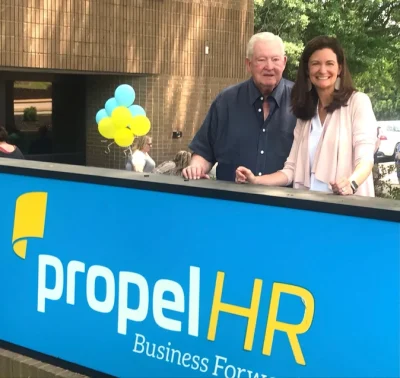 Our business has grown since then, and our industry has also matured. Employment laws have multiplied and have become more complex. Today, Propel HR has Master Health plans, multiple Workers’ Compensation plans, and two payroll platforms. Our worksite employees are in 47 states and will soon be in all 50 states. Twenty-seven years ago, I felt comfortable handling most of our operational functions; today, I wouldn’t know where to start!
 The Evaluation of New Tools.
 A Chance to Celebrate the Team.
 “My father, Braxton Cutchin, and I founded the company in 1996. After being in the PEO and HR world for 25 years, I have experienced firsthand the value we can provide to both the clients and the employees. It is truly a win for all parties. I’m proud to have helped establish Propel HR as an industry forerunner in the Southeast. There is nothing I love more than receiving phone calls from clients who seek my advice as a trusted advisor. This is a business where I feel that I can help others, and that is important to my own value.”
 Shifts in the Job Market. The job market is constantly changing, and the benefits that were once a standard part of a benefits package may no longer be enough. For example, during the pandemic, priorities shifted. While health care remained the benefits employers believed to be a top priority to their workforce, other benefits emerged in importance. According to an SHRM
  A recent benefits study finds that more than one-third of workers surveyed find their benefits inaccessible and unaffordable and fail to meet their real-life needs. Find out what your workforce wants and needs by gathering feedback to determine what areas need improvement.
  Your Business is Growing. Has your business experienced significant change or expanding into other markets? If so, your benefits may need to be adjusted to keep up with your growing business.
 Misclassifying Employees.
 Failing to Comply with Minimum Wage Laws.
  Increased Turnover. Inaccurate or late paychecks can result in losing some of your best talent. A Kronos study shows that 49% of workers will start a new job search after experiencing just two problems with their paycheck.
 Use Top-Rated and Reliable Payroll Software.
 Seek Expert Guidance
 Create a Positive Work Environment. A positive work culture can help attract and retain skilled talent. Employers can create this culture by promoting open communication, encouraging feedback, recognizing and rewarding achievements, and investing in employee training and development.
 Enhance the Onboarding Process. According to a recent study, nearly half of employees surveyed are actively looking for a new job. But there’s good news. Effective onboarding can be a powerful retention tool. Once a new hire accepts a position, a positive and effective onboarding experience helps works feel valued, motivated, and confident in their new roles.
 Develop Your Employees to Fill the Skills Gap. Business growth depends on the availability and quality of the skills of their workers. Creating a culture that prioritizes continuous learning and skill development is another way to attract talent and keep workers. In a tight labor market, employers have to get creative to find ways to fill the skill gaps, such as leveraging talent already on staff.
 Verify Requirements for Minimum Wage. Under federal law, covered non-exempt employees must be paid a minimum wage of $7.25 per hour. Many states also have minimum wage laws. When an employee is subject to state and federal minimum wage laws, the employee is entitled to the higher minimum wage rate. To learn more about applicable minimum wage laws in the states where you have employees working, visit the
  Prepare 2022 EEO-1 Component 1 Data Collection. Follow the EEOC for updates on requirements for covered employers to report
 Review Record-keeping Requirements. Small businesses are required to follow a number of regulations for record-keeping. A few examples include:
  Review All Insurance Policies. Is your health plan the right fit for your business? Do you know what to expect during the insurance renewal process? Do you have all the policies in place to protect your business? National Insurance Awareness Day is June 28, 2023, and an annual reminder to review all of your insurance policies. Determine if changes in your work environment or staff work assignments may impact your current exposure and codes on your account. Also, check with your Workers’ Comp insurance broker to determine if you need to make any necessary adjustments to cover additional exposure, including remote workers.
 Enhance Your Mental Health & Wellness Benefits. Are you doing enough to reduce stress and support mental health and wellness in your workplace? Unfortunately, stress and anxiety are at an all-time high. In addition to an Employee Assistance Program (EAP), consider offering additional resources and ways to nurture mental health and wellness, such as well-being hours or time off, and encourage employees to take advantage of existing tools, resources, and guidance.
 In today’s tight labor market, hiring the right person for the right position is even more critical.
 Recruitment and Retention. Finding and keeping top talent is an ongoing challenge, especially in a tight labor market. Research shows that losing an employee can cost 1.5 to 2 times their salary depending on experience, position, industry, and location, etc. To keep costs under control, HR professionals are turning to new strategies to fill critical skills gaps.
 Employee Health Plans and Benefits. A top-notch benefits package plays a key role in attracting and keeping top talent. However, for many small businesses, offering high-quality-quality benefits is too expensive to consider.
  HR Administration. From regulatory reporting, record-keeping, and frequently changing filing deadlines for state, federal, and local tax compliance, your HR team may be spending a lot of time chasing paperwork. Finding ways to cut inefficiencies, reduce basic HR administrative tasks, and streamline your HR processes not only saves time but also saves money.
  In addition, a PEO can provide guidance on cost-cutting decisions and ways to make your processes more efficient. According to a study conducted by the National Association of Professional Employer Organizations (NAPEO), PEOs provide access to more HR services at a cost that is close to $450 lower per employee compared to companies that manage their HR services in-house.
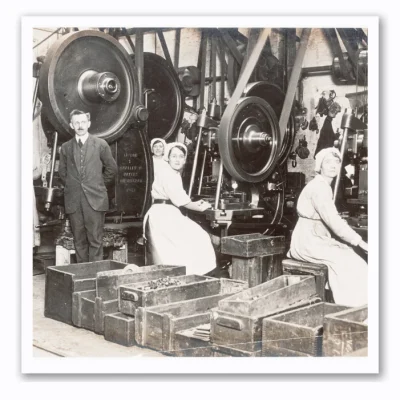 Things began to change once our country was at war. In 1917, President Woodrow Wilson enacted the draft for all men between 21 and 30. Millions were drafted into service, which left gaping holes in the workforce. Women were ready to jump in to help their country and quickly entered the job market.
  After Pearl Harbor, the defense industry continued to expand while American men were mobilized for service. Workers were needed, and once again, American women were there to support their country. Rosie the Riveter was the star of the wartime campaign aimed at recruiting women to the workforce. Rosie the Riveter was used in songs, movies, posters, and articles. The most famous “Rosie” was Norman Rockwell’s portrait which was featured on the cover of The Saturday Evening Post on May 29, 1942.
 Another important factor in the evolving role of women was reproductive control. Although the contraceptive Pill first went to market in 1960, it was not widely available until the early 1970s. In 1999, The Economist magazine named The Pill the invention that defined the twentieth century. And it is no coincidence that the number of young women applying to post-secondary schools dramatically increased when the birth control pill became widely available. It allowed young women to decide when to have children and gave them the confidence to begin careers.
 The 1980s was the decade when women tried to have it all – career, husband, and children – and they continued to fight for things they thought they had already won. Women demonstrated they could competently perform the work but now had to fight individual battles in male-dominated worlds. It was not as easy as women had hoped it would be.
  The pandemic created additional issues for working women. Women, especially women of color, were more likely to have been laid off or furloughed during the pandemic because many of the industries that were hardest hit heavily employ women, such as the hospitality and service industries.
 A
A Saves Time, Money, and Resources
 Redesign Current Job Roles
 Today, the traditional workweek is once again being tested. The impact of the pandemic has changed the way we work.
 Reduced Levels of Stress.
 Improved Efficiency.
  Quiet quitting is when an employee disengages and stops going above and beyond their job responsibilities and only fulfilling the bare minimum to keep their job.
  Studies on quiet quitting show the following reasons employees opt to disengage:
  While quiet quitting ultimately costs the employee in terms of advancement and compensation, it also costs the employer in a number of ways.
 Establish Expectations.
  COVID adds More Responsibilities at Home. The pandemic created additional childcare responsibilities when schools moved to remote learning and childcare facilities were closed. Even as students resumed back-to-normal studies, quarantine requirements after exposure forced parents to make sacrifices at work. This often falls on the women.
  The Great Resignation. The 2020 study also found that one in four women contemplated leaving the workforce entirely, scaling back their career ambitions, or permanently reducing their working hours. The stress of the pandemic and the additional childcare and domestic burdens have caused many women to reevaluate their working status. This is the first time we have seen women leaving the workforce at higher rates than men in generations. It is called the Great Resignation and is a factor in today’s labor shortage.