These tasks shouldn’t take up your workweek. But when systems fall short, they do. If you’re a small or mid-size business owner or HR leader, you probably didn’t get into this role because you love tracking down time-off requests, chasing signatures, or answering the same benefits question 14 times.
And yet… here we are.
Studies show that small business owners spend about 16 hours (or two full days) per week on HR-related administrative work.
Most businesses lose valuable time to the slow drip of small, repetitive “this will only take a minute,” tasks that quietly eat up the workweek. Add them up, and suddenly your strategic HR goals, like recruitment, retention, and leadership development, get pushed aside.
Here are some of the most common areas that may be draining your time.
Time-Consuming HR-Related Tasks
They seem small. But over time, these tasks drain your attention, your energy, and your progress.
1. Repetitive Tasks and Rework
Every time you hunt down a missing signature or resend login details, you lose time you could be using elsewhere. The common offenders? Answering the same employee questions over and over:
“How do I add my baby to insurance?” “When do benefits start?” “How many PTO days do I have left?”
Sound familiar?
Individually, these are quick answers. Collectively? They’re a constant interruption machine. When you stop to respond, you lose focus, break momentum, and push higher-value work further down your list.
🛠️How To Fix It:Uncover the pain points.Which areas are bogging down the process due to repetition? Where can you create a self-service culture? This can mean establishing a simple internal HR hub (in your intranet, shared drive, or HR platform), short FAQs on benefits, PTO, payroll timing, and onboarding, or short videos that walk through routine processes.
Then, train employees to go there first. When someone asks a repeated question, send the link along with your answer. Over time, behavior shifts. HR becomes a source, not a help desk.
2. Correcting Payroll Errors
The latest software makes running payroll seem easy, but if something goes wrong, the liability is still yours. Miscalculating pay, outdated tax information, and manually tracking time off are time-consuming to fix, hard to catch, and expensive if you don’t, not just in terms of costs but also in lost time and eroded trust among your workers.
🛠️How To Fix It:Automate what you can.Look for tools that let employees request time off directly, route approvals to managers, automatically update balances, and sync with payroll.
When automation handles the basics, HR shifts away from data entry to policy guidance. You’ll still handle exceptions, but you won’t be stuck crunching numbers late at night.
Or leave it to the experts by outsourcing payroll to an IRS-certified PEO. A PEO can simplify the payroll process with a cloud-based payroll portal for employers, online employee access to pay stubs, W-2s, benefits info, employee handbooks, and secure, paperless direct deposits. They can also take care of onboarding, payroll taxes, IRS deposits, benefits administration, compliance guidance, and provide HR support.
3. DIY Compliance Monitoring
Labor laws change constantly. Posting requirements update. Salary thresholds shift. Leave laws multiply. Keeping up with shifting deadlines, state-level compliance requirements, and studying the IRS’s recently updated guidance under the One Big Beautiful Bill Act. Trying to monitor all of this yourself is not only time-consuming – it’s also stressful.
One misstep can be costly. In 2025, the Department of Labor’s Wage and Hour Division recovered more than $259 million in back wages for nearly 177,000 employees. That’s an average of $1,465 per worker (the most since 2019).
🛠️How To Fix It:Don’t carry compliance alone.Get expert help by partnering with a professional. Whether it’s through a PEO, outside counsel, or a compliance partner, get support that keeps you updated on requirements that apply to your business.
You’ll need advice on tricky employee situations, alerts on multi-state regulatory changes, new pay transparency rules, evolving paid leave requirements, changing wage-and-hour laws, new employment-related laws on AI, and much more.
🚀 Pro Tip: Stay compliant with our HR Checklist covering the latest updates and deadlines related to compliance, benefits, payroll, and general HR that you need to take care of each quarter. Download your free HR Checklist ➡️ HERE
4. Updating Employee Data in Multiple Places
Name changes. Address changes. Promotions. New pay rates. If you’re entering the same update into payroll, benefits, retirement platforms, and internal trackers, you’re doing triple-plus work and increasing the chance of errors.
🛠️How To Fix It:Integrate your systems, invest in HR technology, or work with a PEO. A unified HR platform can help connect payroll, benefits, time tracking, and employee records, among other things.
With better integration, changes flow through automatically. That means fewer entries, fewer errors, and more free time.
5. Handling Every Employee Issue Personally
When you’re the only go-to for every conflict, complaint, or issue, your day gets hijacked fast. Some things absolutely belong with HR. But many could be resolved earlier and better by trained managers.
🛠️How To Fix It:Upskill your managers by teaching them to give feedback,handle minor conflicts, anddocument specific issues. This doesn’t remove HR from the process; rather, it elevates the role, moving them from firefighter to advisor.
Stop the HR Busy Work, Amplify Your Impact
Normalizing HR busy work has real consequences, including burnout. Your top performers may feel overwhelmed by constant overtime or pressure to meet demands. It also creates dependence on key team members, making it difficult to delegate when only a few people hold essential knowledge or responsibilities.
Maintaining inefficient processes limits growth, slows project delivery, and prevents your team from focusing on strategic initiatives.
🛠️How To Fix It: Partnering with an IRS-certified PEO can help. By taking on time-consuming tasks, PEOs help small businesses get back more time to focus on productivity and growth.
In addition to saving time, a PEO can also save your business money by identifying inefficiencies, streamlining HR processes, and helping you make critical cost-cutting decisions.
If you constantly feel behind, the fix isn’t more hustle. It’s better tools, clearer processes, and the right support. A PEO can help you stop the small stuff from piling up, so you can invest your time where it matters most. And if you need help, just give us a call at📱 800-446-6567
Find Out What a PEO Can Do for You
If you’re a small to mid-sized business, a PEO can lighten your workload and strengthen your operations. Imagine focusing on growth while experts handle your payroll, taxes, benefits, HR, and compliance.
⬇️Read more about the advantages of working with a PEO in our series:
🔷 HELP WANTED: HR Team or PEO Partner
Investing in an HR team versus partnering with a PEO, which path is best for your small business? As your business grows, managing HR gets complicated – fast.
Should you build your own HR team or explore the benefits of partnering with a PEO? Here’s how to decide which choice best fits your business. ➡️Link #1Link #1Read More
🔷 NEW RESEARCH: More Small Businesses Are Turning to PEOs
Compelling research from the National Association of Professional Employer Organizations (NAPEO) shows that PEOs are helping small businesses scale – a game-changer in 2026.
Working with a PEO isn’t about outsourcing; it’s about upgrading how you manage HR. It’s about investing in smarter growth, happier employees, and peace of mind. In a business world that’s only getting more complex, that’s a benefit worth having on your side. Thousands of successful businesses are already doing it – and the data proves it works. ➡️Link #2Link #2Read More
IT’S HERE!
Your FREE HR Checklist
Here’s your checklist of important tasks related to payroll, benefits, compliance, and general HR.
About Propel HR.Propel HR is an IRS-certified PEO and a leading provider of human resources and payroll solutions for 30 years. Propel partners with small to mid-sized businesses to manage payroll, employee benefits, compliance and risks, and other HR functions in a way that maximizes efficiency and reduces costs. For more information, visit propelhr.com
Productivity is the secret sauce that separates teams stuck on the sidelines from those with winning streaks. Chances are you’re juggling hiring, compliance, benefits, culture, and about a dozen other priorities . . . all while the clock keeps ticking.
Your power play? Outsourcing. When used strategically, it boosts productivity, streamlines operations, and frees you up to focus on what actually moves the scoreboard – your bottom line.
First Quarter: What Productivity Really Means
In HR, productivity isn’t about sprinting faster – it’s about running the right plays at the right time.
True HR productivity means delivering meaningful outcomes with minimal wasted effort. Speed matters, sure, but impact matters more.
Fast hiring doesn’t matter if turnover remains high. Smooth payroll is great . . . unless errors keep forcing replays.
At its core, productivity is about consistent, high-quality execution that supports your business year-round.
Here’s the basic stat line. The fundamental formula HR teams use looks like this: Productivity = Total Output / Total Input.
🎯Stronger Compliance Defense. Mistakes lead to fines, audits, and penalties – that’s expensive. Productive HR keeps risk off the scoreboard.
🎯Scoring Efficiency. In the Red Zone, the stakes are high, and scoring opportunities significantly increase. When your HR team isn’t buried in paperwork, they can make a more strategic impact by focusing on culture, performance, and growth.
🎯Leadership Trust. HR shifts from order-taker to trusted partner.
The results? A productive HR function is the engine that keeps your people – and your business – moving forward.
The Stats Don’t Lie: Proof from the League
The data backs it up:
➡️Flexibility & Remote Work. A Gartner report finds that 43% of employees working flexible hours say they are more productive. Gallup found that fully remote workers report the highest engagement levels.
➡️Engagement Matters. Highly engaged teams are 17% – 21% more productive than disengaged ones.
➡️The Productivity Gap. Top-tier companies grew more productive, while others saw declines due to inefficient collaboration and low engagement.
🎯Winning teams don’t guess; they measure, adjust, optimize, and power up.
The Box Score: Common HR Productivity Metrics
To know how your team is performing, you need the right stats:
📊 Output Metrics. Revenue per employee, output per hour, goals completed vs. assigned
📊 Efficiency Metrics. Time spent per task, employee utilization
📊 Quality Metrics. Accuracy and impact, not just speed
📊 Engagement Indicators. Engagement scores and absenteeism.
📊 Financial Metrics. Total Cost of Workforce (TCOW)
These numbers tell you whether your plays are working and what needs to be redesigned.
A PEO helps improve productivity by offloading time-consuming tasks while strengthening the entire employee lifecycle through MVP expertise and next-level HR tech.
🔥Think of it as adding multiple Tom Bradys to your roster.
THE GAME PLAN
Play #1: Reallocate Resources to Core Strengths
The fastest productivity gain comes from freeing your teams from admin overload. By outsourcing, you get:
✅Time Savings. Business owners can spend 20+ hours per month on HR admin-related tasks. Outsourcing frees up time for growth, sales, and strategy.
✅Administrative Relief. Payroll, benefits enrollment, and multi-state compliance tasks move off your plate and into expert hands.
✅A Team of MVPs. Outsourcing gives you access to a team of pros, ready to help when you need it.
Play #2: Build a Deeper Talent Bench that Flexes
An engaged workforce is naturally more productive.
💼 Lower Turnover. Companies using PEOs see 10%–14% lower turnover, reducing disruptions and retraining time.
💼 Big-league Benefits. PEOs provide access to Fortune 500-level benefits, boosting satisfaction and engagement.
💼 Faster Onboarding. Streamlined onboarding helps new hires get in the game.
Play #3: Upgrade Your Tech Stack
PEOs give small and mid-sized businesses access to advanced HR technology without the big-ticket price tag.
📊 Automation.Payroll and tax automation reduce errors and time-consuming fixes.
📊 Employee Self-service. Employees handle PTO, pay stubs, and benefits updates themselves with fewer interruptions for HR.
Play #4: Strengthen Your Compliance Defense
Compliance isn’t optional and managing it internally can drain focus fast. With a PEO on your team, you get:
🛡️Expert Guidance. A team of HR pros helps prevent fumbles and penalties. PEOs stay on top of federal, state, and local regulations, including ACA and FMLA.
🛡️Safety Programs. Proactive safety audits reduce workplace incidents and business disruption.
Play #5: Win on the Scoreboard
All these efficiencies lead to real, measurable stats:
🏆Faster Growth. Businesses using a PEO grow 7% – 9% faster than those that don’t. And are 50% Less Likely to Go Out of Business
💥That’s not just a win – it’s a blowout. It’s the stuff championships are made of.
FINAL CALL: Make Productivity Your Winning Play!
How far can you go? Productivity isn’t a one-time drill – it’s a GOAT mindset.
When you measure what matters, optimize repetitive work, and outsource strategically, you’re not just working faster . . . You’re working smarter. That’s for legends.
🔥Outsourcing is no rookie move. It’s a strategic productivity partner that helps HR shift from scrambling to scoring. And keeping that winning streak hot.
Ready to Turn HR into a Powerhouse?
Ready to hear your crowd ROOOAAARRR? 🎉 This power playbook is your first step.
➡️If you need some coaching or a huddle about your productivity game plan, we’ve got you all the way to the Super Bowl winning streak and beyond – just give us a call.
IT’S HERE!
Your FREE HR Checklist
Here’s your checklist of important tasks related to payroll, benefits, compliance, and general HR.
About Propel HR. Propel HR is an IRS-certified PEO and a leading provider of human resources and payroll solutions for 30 years. Propel partners with small to mid-sized businesses to manage payroll, employee benefits, compliance, risk, and other HR functions in ways that maximize efficiency and reduce costs.
To learn more, visit propelhr.com
If you run a small or midsize business, you already know growth is exciting, yes — but also unpredictable, and sometimes overwhelming. That’s exactly why more business owners and HR leaders are choosing Professional Employer Organizations, or PEOs, not just to outsource HR tasks, but to grow smarter, faster, and more sustainably.
The Top 10
A PEO helps you scale without letting the behind-the-scenes stuff collapse under the weight of bigger payrolls, more onboarding, greater compliance risk, and higher employee expectations. It’s like adding an entire HR department overnight, minus the overhead and recruitment scramble. A few advantages include:
1. You Get HR Infrastructure Before You Actually Need It (Which Is Exactly When You Need It)
Most small businesses don’t feel the pain of HR complexity until it’s too late. Payroll errors start multiplying, employees want benefits you’re not equipped to provide, and suddenly you’re Googling state labor laws at 11:30 p.m.
A PEO lays the foundation before those cracks show. Payroll scales without drama. Whether you have 10 people or 110, payroll stays smooth, compliant, and on time.
Onboarding becomes a real process and not a scramble. Templates, checklists, digital forms, background screening, and automated workflows ensure consistency as you grow.
Policies adjust proactively. A PEO helps you build employee handbooks, update them with new laws, and create clear rules that reduce risk as your headcount increases.
2. A PEO Delivers the Big-Company Benefits Employees Want
Here’s the part that often surprises business owners: a PEO can give you access to benefits packages typically reserved for much larger companies.
Because a PEO pools together employees across its client base, you essentially get to “buy in bulk,” accessing high-quality benefits at lower rates. That means you can offer your team robust health plans, retirement savings options, and other top-tier benefits typically reserved for larger companies (and top talent expects).
🎯When employees enjoy comprehensive benefits without compromise, your company is seen as a long-term career option. Retention rises, and as every HR pro knows, that’s a growth strategy.
3. Compliance Stops Being a Guessing Game
Growth = risk. New states. New regulations. New employment laws. New reporting requirements.
This is where many small businesses unintentionally step into danger territory. The rules change constantly and the stakes are high.
✅They track federal, state, and local employment laws.
✅They help maintain the required documentation.
✅They ensure new hires are classified correctly.
✅They reduce risk with structured workplace policies.
✅And because of the co-employment relationship, many PEOs also share certain administrative responsibilities – meaning you’re not alone if something goes sideways.
🎯Growing is risky. Growing without compliance support? That’s gambling.
4. HR Technology You Don’t Have to Build Yourself
Scaling is smoother when everything is connected, such as payroll, onboarding, PTO tracking, benefits enrollment, performance management, and reporting. But building your own HR tech stack or licensing multiple vendors gets expensive fast.
🎯A PEO delivers the all-in-one HR command center designed for your business. Better data, better workflows, better decision-making.
5. A PEO Frees Up Time (A Lot of It)
If you’re a business owner, your job is to grow the business, not troubleshoot payroll deductions. If you’re an HR manager, your job is to support the people strategy, not drown in admin work.
A PEO takes on repetitive, time-consuming tasks, such as processing payroll, managing benefits, handling tax filings, and preparing compliance documentation. The more you grow, the more time you reclaim, instead of watching your workload escalate with each hire.
6. You Gain a Team of HR Experts Without Expanding Your Staff
Growing companies don’t always have the luxury of immediately hiring a full HR team — HR generalists, benefits specialists, payroll administrators, compliance officers, recruiters, risk managers, the whole lineup.
A PEO gives you access to exactly those roles, on-demand expertise, without the full-time salary load.
Need help rolling out a new PTO policy? Preparing for benefits renewal? Handling a sensitive employee relations issue? There’s an expert for that. It’s like having a seasoned HR department already onboard, ready to advise you every step of the way.
7. You Become More Attractive to Investors and Partners
Here’s something entrepreneurs don’t always think about: investors love operational maturity. When a PEO is part of your infrastructure, it signals you’re compliant, manage risks well, your HR processes are stable and that you can scale responsibly.
🎯For investors, lenders, and potential partners, a strong HR foundation = reduced risk. And reduced risk makes you a better bet. For acquisitions and rapid growth phases, a PEO can also make integration smoother.
8. A PEO Helps You Build a Better Employee Experience
Growth doesn’t just require more people; it requires keeping the good people you already have on board.
A PEO helps you:
✅Improve communication and access to information.
✅Build modern HR processes that employees trust.
✅Provide competitive benefits
✅Create fair, consistent workplace policies.
🎯A better employee experience leads to lower turnover and higher morale. And in high-growth companies, stability is gold.
9. You Can Expand Into New States With Confidence
Need to hire employees in another state? That’s great for growth, but it creates compliance challenges due to different tax rules and labor law requirements.
🎯A PEO handles all of it, letting you recruit the best talent in any location without losing sleep or risking penalties.
10. You Scale Strategically
Growth can stress your business when operations lag behind headcount. A PEO aligns both, so you’re expanding strategically.
🎯The result? Smooth transitions. Predictable costs. Cleaner processes. Less risk. Happier employees. And more time to focus on what actually grows the business — not on what slows it down.
Growth Is Easier ➡️When You’re Not Doing Everything Yourself
If you’re preparing to scale — or even thinking about it — the question isn’t whether you can handle growth alone. It’s whether you should.
With a PEO, growth is a plan.
A PEO delivers the infrastructure, expertise, and stability that power growing companies, without requiring a major investment or a staff increase.
Ready to see what a PEO can do? We can lighten your workload and help you drive growth, just give us a call at (800) 446-6567 or visit propelhr.com
🎯PEO Series: The PEO Difference🎯
Learn more about how a PEO can help your business in our series:
🔶HR Help Wanted: In-house Team or PEO Partner. Investing in an HR team versus partnering with a PEO, which path is best for your small business? As your business grows, managing HR gets complicated – fast. Should you build your own HR team or explore the benefits of partnering with a PEO? Here’s how to decide which choice best fits your business. Read More
🔶Navigating Compliance Minefields. Navigating HR compliance can feel like tiptoeing through a minefield — one wrong move can trigger costly consequences. From pay transparency laws to overtime thresholds, new regulations evolve faster than most small HR teams can keep up with. Here’s a look at the top HR compliance challenges and how to avoid turning small missteps into expensive lessons. Read More
🔶New Research Shows Why More Small Businesses Are Turning to PEOs. The data is in! And it shows how partnering with a PEO will be the smartest move for small businesses in 2026. Recently released research from the National Association of Professional Employer Organizations (NAPEO) shows that PEO partnerships are helping small businesses scale. It’s smarter, more efficient, and a game-changer. Here’s what the latest data shows. Read More
IT’S HERE!
Your FREE HR Checklist
Here’s your checklist of important tasks related to payroll, benefits, compliance, and general HR.
About Propel HR. Propel HR is an IRS-certified PEO that has been a leading provider of human resources and payroll solutions for more than 25 years. Propel partners with small to mid-sized businesses to manage payroll, employee benefits, compliance and risks, and other HR functions in a way that maximizes efficiency and reduces costs. For more information, visit www.propelhr.com
Consumers have more options and access to information than ever before. And at the heart of driving buying decisions and influencing choice is the customer service experience. According to a report by Microsoft 2018 State of Global Customer Service Report, customer service impacts brand choice and loyalty of 95 percent of consumers around the globe.
As the front-line of a brand, customer service can make or break the experience with your company. Make it positive, then you’ve got more business and loyal brand ambassadors (maybe lifelong). But if an experience that goes sideways, it can harm the strongest of reputations. The same customer service study found that the majority of consumers are focused on the following areas:
Exceed expectations. Expectations are high. With more technology and access to information, customers expect quick and seamless experience. In the same, 66 percent of respondents believe the quality of customer service is improving overall and 34 percent say it has gotten worse. In fact, 61 percent said poor customer service was the primary reason for switching brands.
Build a long-term relationship. Business is no longer a one-time transaction. Consumers want a relationship. More than 75 percent of those surveyed expect the company’s customer service rep to have access to a full history of customer interactions. There’s an expectation for brands to listen, meet their needs, exceed expectations and anticipate future needs.
WHY INVEST IN CUSTOMER SERVICE?
Builds Trust. The value of trust is priceless. According to a recent study, 95 percent of customers are more likely to share a bad experience and 87 percent will share a good customer service experience. In addition, an online review – good or bad – strongly influences the decision of new customers (88 percent) to purchase. A positive experience builds trust and gives your customers the confidence to support your business long-term.
For an example, just look at companies like Chick-fil-A, who delivered the model for superior customer service and as a result, a loyal following. By creating positive experiences, for both customers and employees, the company is able to compensate store operators more than double the industry average, as well as donate a portion of sales to support charities.
Drives Sales. Positive experiences pay. A recent Harvard Business Review study on customer service found that customers who had the best experience spent 140 percent more with the company compared to those who had a poor experience.
Saves Money. Meeting the needs of an unhappy customer is costly and depending on your business and industry, acquiring a new customer is five to 25 times more expensive than retaining an existing customer.
6 WAYS TO IMPROVE CUSTOMER SERVICE
There’s an old business saying that goes something like, “Good, fast, cheap. Pick two.” Known as the Project Management Triangle, or Iron Triangle, it’s an idea familiar to anyone in business who is faced with the pressure and dilemma of meeting the demands of quality, speed and cost – all at the same time. In order to deliver something fast at a low cost, you may have to reduce the quality and scope. And in order to maintain high quality, it may cost more or require additional time.
So what do customers want? Today’s customers want all three – and then some. And while you may not be able to break the Iron Triangle, you may have to rethink the way your company interacts with customers. Here are a few ways to stand out.
Know your customer. Disney knows its customer – the guest willing to save for a trip to visit the happiest place on earth – which is not exactly cheap. By investing in the the time, tools, staff and research, Disney understands what their guest wants and knows how to deliver value beyond the price paid. To their customer, that’s priceless.
Make information easy to find. Want customers to know more about your product? Make it easy to find on your website and simple to understand. Consider developing a Q & A page with the most important questions and a dedicated customer-support contact and email address.
Effective use of chat support. For customers, the use of technologies, like chatbots – those cute popup help icons at the corner of the screen – enhances the buying experience by resolving simple issues quickly. It also allows companies to use staff to deal with more complex customer issues. In addition, research shows that customers who use chat convert at a rate nearly 3.5 times more than those who don’t.
Increase use of socialmedia. The good news is that social media allows consumers to receive immediate help from companies. The bad news is that companies are required to respond immediately. Using social media is no longer optional as today’s consumers expect social media to be part of the customer service experience – and at lightning speed.
Training. Training. Training. What defines a superior customer service experience? Getting an issue resolved in a single interaction tops the list. And the worst? A customer service rep’s lack of knowledge and authority leads in creating a negative experience. Investing in a training program can be an effective strategy for retaining customers for the long-term.
Get Human. While experts say by 2020, customers will manage more than 85 percent of their interactions without ever connecting with a human, nothing replaces the value of a human connection. Knowledgeable customer service reps along with supporting self-serve technologies can be a powerful combination for increasing the buyer experience.
Are you ready for 2019? Download this free checklist of some of the most important HR-related tasks to complete now.
New laws, regulations and ever-changing filing deadlines can make year-end a challenge. We’ve made it easy with a checklist of a few important HR tasks, related to payroll, benefits and compliance, to help small businesses prepare for the coming year.
PAYROLL
Audit Employee Records. Year-end is a good time to review and update your employee records, including Form I-9. Make sure inactive employees are termed in the system and full-time employees are correctly classified as full-time.
Prepare W-2 and W-3 Forms. Remind employees to update their personal data by December 31, 2018. Employers must file W-2 and W-3 forms by Thursday, January 31, 2019.
Prepare Forms 1096 and 1099-MISC. If your business paid independent contractors or freelancers in 2018, you must file IRS Form 1096 and 1099-MISC by Thursday, January 31, 2019.
Prepare FUTA Form 940. The Federal Unemployment Insurance (FUTA) tax applies to the first $7,000 you pay to each employee during a calendar year after subtracting any payments that are exempt. FUTA Form 940 is due to the IRS by January 31, 2019.
Calculate FTEs and Prepare ACA Reporting. Under the Affordable Care Act (ACA), the responsibility for affordable healthcare coverage is shared and reporting requirements depend on the number of full-time employees (FTE). Review the requirements for large and small companies to determine the type of information your business is required to submit and if you need to calculate your FTEs.
Prepare Forms 1094-C and 1095-C. Applicable employers must file IRS Forms 1094-C and 1095-C for each FTE and provide 1095-C statements to employees. In the past, the IRS accepted and processed tax returns without health coverage information. That’s no longer the case. For the 2018 tax season, the IRS will not accept electronically filed tax returns without information on health coverage, exemptions and shared responsibility payments. On November 29, 2018, the IRS extended the deadline for employers to submit Form 1095-C by March 4, 2019.
Prepare a Health Plan Summary. Prepare and distribute a summary of your employee health plan to current employees and offer to new employees within 90 days of initial coverage.
Prepare an Employee Benefits Report. Applicable employers must file Form 5500 if on the first day of an ERISA plan year (which is different than the policy year) 100 or more participants are enrolled in coverage. In addition, health and life insurance and retirement plans require businesses to provide enrollment figures and balances before the end of the year. Follow up with your carrier to determine if there are any changes in reporting and deadlines.
COMPLIANCE
Check OSHA Record Requirements. The Occupational Safety and Health Administration (OSHA) mandates that all employers, who are required to maintain a log (OSHA Form 300) of work-related injuries and illnesses, must post a summary of the previous year’s log between February 1st and April 30th each year — even if there were no incidents in the preceding calendar year. The summary (OSHA Form 300A) must be certified by a company executive and placed in a visible location where employee notices are customarily posted.
Employers, with more than ten employees, are covered by this requirement unless they qualify as part of an exempt low-risk industry. A full list of industries exempt from OSHA’s routine record-keeping requirements (including posting Form 300A) can be found in the guides section of the HR Support Center by searching OSHA 300 exempt industries.The OSHA log of work-related injuries and illnesses (Form 300), summary (Form 300A) can be found in the forms section of the HR Support Center by searching for OSHA Form 300.
Update Your Employee Handbook. Review your company’s policies and procedures to ensure you are in compliance with new laws. Make sure your employee handbook includes standards for conduct, policies for communication and privacy, compensation and performance reviews, social media, attendance, break periods, benefits, company-observed holidays for 2019, and procedures for termination, discipline, workplace safety, sexual harassment, inclement weather, and workplace emergencies.
Prepare EEO-1 Report. Employees are protected under many federal laws and their rights are enforced by the U.S. Equal Employment Opportunity Commission (EEOC). Applicable employers must submit an EEO-1 Report by March 31, 2019.
Laws and new regulations are constantly changing. Review local and federal employment laws, including laws for overtime and tax filing requirements for contract workers, freelancers and remote employees located in other states.
Update Workplace Labor Law Posters. Check for changes in federal, state or local laws about specific labor law notices your business may be required to post onsite.
Schedule Required Training and Update Certifications. Schedule training sessions required by your state, such as for sexual harassment, and specific training, such as for blood borne pathogens. Also check for required industry-specific training and certifications, such as for hazardous materials and forklift operations.
Update New Hire Paperwork. Update information for new employees for 2019, including W-4 and any state withholding tax documents.
GENERAL HR
Complete Employee Performance Reviews. Conduct or schedule employee performance reviews according to your company’s policies for timing and process.
Develop a 2019 Company Calendar. Create and distribute a 2019 calendar of vacation days and company-observed holidays.
Share your Company’s Performance with Employees. Plan a “State of the Company” employee meeting to share your company’s financial performance, accomplishments and to announce goals and strategies for the coming year.
Are You Ready for 2019?
The year-end just got easier. Our downloadable checklist offers HR professionals an overview of some of the most important year-end tasks. Stay compliant and download your free checklist now.
And if you need help. Depending on the type of business and industry, your company’s year-end checklist may be different and even more complex. As a certified PEO, Propel HR can save your business both time and money, as well as protect your company from potential compliance violations. Let us show you how.
One of my favorite Christmas stories is A Christmas Carol by Charles Dickens. The story takes place on Christmas Eve when Ebenezer Scrooge is visited by three spirits, the Ghosts of Christmas Past, Present, and Future. Scrooge is a miserly man who dislikes Christmas. The ghosts visit him throughout the night to show him how his greedy actions affect his life and others as well. After a night of disturbing apparitions, Scrooge wakes up a changed man and begins to embody the true spirit of Christmas.
I love the transformative power of this story. The holidays are a perfect time to reflect on the past, embrace the present, and plan the future. Personally, I take time each December to write a Christmas letter. It allows me a chance to reflect on the year and put both blessings and hardships into proper perspective.
However, when it comes to my business, I tend to plan and reflect in a more business-like approach with budgets, annual goals, and planning sessions. It is not as introspective as I view my personal life. This year, I am inspired by Ebenezer and have thought about what the Ghosts of Business Past, Present, and Future might teach me.
The Ghost of Business Past would have lots to share with me. In my career, I have made plenty of mistakes and had my share of success too. There are many lessons to be learned from the past. However, I think the overall message to me would be to stay engaged and focused on the goal. As a leader, when I am not engaged, things seem to slow down or get off track. It is my job to keep the team motivated and on task. I also notice that when I am preoccupied with other things, I do not make decisions timely and I do not follow my instinct as well.
The Ghost of Business Present would celebrate the people of Propel HR. Right now, we have the strongest team we have ever had. There have been many lessons learned on how to put together a strong staff and I know I will continue to learn. It is important to focus on the value of each employee and be willing to pay for talent as needed. As Good to Great author, Jim Collins, explains, success is more than having the right people on the bus, they need to be in the right seats. It is best to invest time and resources during the hiring process with multiple interview formats and assessments and build a culture of learning and support. My business is affected by many things outside of my control such as technology, insurance, and rising costs, however, I strongly believe that people still conduct business with people they like, admire and trust. That is why the people of Propel HR are our greatest asset.
What would the Ghost of Business Future tell me? As much as we plan with budgets, lists, and metrics, our goals do not always turn out the way we project. When I think about what my company’s future holds, I see two possibilities. Like Scrooge, I must look at the past and present to help determine the future. If I continue to stay the same, I will continue to get the same results. I want to grow the business, innovate HR, and use the resources to give back to the community. To do this, I must be engaged and focused on the future. I must surround myself with smart individuals who can take the company to the next level. I must celebrate wins and learn from mistakes.
This holiday season, A Christmas Carol will serve as my guide to reflect personally and professionally. And my holiday greeting to all will be the same as Tiny Tim’s, “God bless us, every one!”
With unemployment rates at a record low, it’s a candidate-driven market and top performers are shopping top companies for the best jobs. What’s the one deciding factor ? Look no further than your employee benefits package.
Why? A company’s benefits package reveals much more than wage, health insurance and paid time off. It also provides candidates and employees alike with valuable insight into how a company values its workforce and the company’s future. And employers are taking note.
According to a study conducted by the Society of Human Resources Management (SHRM),The Evolution of Benefits, employers that had improved their benefits package reported better overall employee performance and improved recruitment and retention results. But enhancing benefits is no easy task, especially if you’re a small business. In the same study, employers named the following top challenges related to providing benefits:
Increasing Costs of Healthcare (70 percent). Unexpected rate hikes and lack of control make it difficult to manage budgets.
Cost of the Overall Benefits Package (41 percent). Standardcookie-cutter policies can be costly and may not meet the needs of employees.
Recruitment (31 percent) and Retention Tools (28 percent). Benefits may not be strong enough to attract, hire and keep the best of the best, and costs to make improvements may not be in the budget.
Compliance and Keeping up with Regulations (24 percent). Employment laws, regulations and filing requirements are constantly changing, making it more difficult for companies to invest the time and staff necessary to stay compliant.
The Right Tools to Attract the Right Talent
Great benefits attract, motivate and engage workers. A few essentials include:
Affordable Health Insurance. Affordable health insurance plans with more options and better access is at the top of the list.
Financial Benefits. Paid leave, retirement savings, planning benefits and financial incentives, such as stock options, and bonuses for employee and business referrals are attractive reward benefits.
Training and Development. Professional development and training programs enable workers to step into roles with growth opportunities and preparation for changing job functions.
Workplace Wellness Programs. According the Centers for Disease Control and Prevention, indirect costs associated with sick days can be as much as $1,685, per employee, per year. From boosting morale, enhancing mental well-being and managing work-related stress, wellness programs are effective preventative measures that benefit long-term health.
Flexible Work Options. Thanks to technology, employees can be productive from any location. Benefits, such as flextime and telecommuting, encourage a work life balance for employees and may also lead to reduced real estate costs.
Innovative Benefits. From pet health, caregiving and divorce insurance to fertility benefits and adoption assistance, companies are looking for more innovative options to meet the needs of their workforce. And perks like free tech tools, parking, and transportation are other ways that make a benefits package more attractive. According to SHRM’s study, more than half of organizations surveyed offer employees free computers for personal use and company smart phones, as well as discounts for employee-owned devices.
Driven by changing labor laws and increased regulations, the responsibilities of HR are now more complex and time-consuming than ever before. And often too costly for small businesses to manage on its own. Professional Employer Organizations, (PEO), entered the market to help with HR-related tasks, such as payroll, taxes, compliance, recruitment and training. Here are a few ways a PEO can make a difference with employee benefits:
Benefits Assessment. PEOs can help with assessing current benefits packages and provide recommendations for the most effective options that are tailored to the needs of your employees and the long-term business strategy of your company.
Cost Savings. Recruiting, retaining and training employees is costly. According to a study conducted by McBassi & Company, companies that use a PEO grow 7 to 9 percent faster, have 10 to 14 percent lower employee turnover, and are 50 percent less likely to go out of business. In addition, a National Association of Professional Employer Organizations (NAPEO) study found that companies that use a PEO benefited from access to more HR services at close to $450 lower per employee, as compared to companies that used an in-house HR department. That’s mean more money to reinvest back into your business.
Preventing Compliance Issues. Cyber-security, privacy, mental health parity, and shared responsibility of reporting coverage are a few of the top compliance issues according to Employee Benefits News. Certified PEOs are current with the latest regulatory issues and labor laws and can provide guidance to stay compliant.
Access to Affordable Health Insurance. By working with a PEO, small businesses have access to quality health insurance plan with stable and affordable rates. This is because of the PEO’s ability to pool employees together into one group in order to negotiate better rates.
While an employee benefits package is a strategic recruitment tool, it’s also an extension of your brand and investment in your workforce. To determine if you need to reboot your employee benefits, take an in-depth look at your current program, including surveying employees, reviewing costs and assessing benefit options which are meaningful to your workforce and right for your business.
As we approach the end of another year, it’s a good time to shift into planning mode and take a look at what’s trending ahead. From new technologies, innovative training methods, to new ways of boosting employee benefits, emerging trends are reshaping the workplace and impacting the role of HR. Here are a few areas to watch in the coming year.
Upskilling, Reskilling and Training. According to World Economic Forum’s The Future of Jobs Report, new technologies will enter the workplace at historic speed and with that comes the launch of new job categories. By 2020, at least 54 percent of all workers will need to be reskilled or upskilled and every employee will need to be proficient in new technologies. Skills in demand include analytical thinking, innovation, technology design and programming. And a few human skills that will be sought-after include creativity, critical thinking, negotiation, leadership and social influence.
Why employers should care: Training programs don’t happen overnight. Employers should take a long-term approach by establishing an in-house education and training program supported by new methods and systems to develop skills, including leadership training.
Focus on Technology. New technology will drive hiring accuracy. Digital and mobile delivery will continue to impact how employers find and connect with talent. Candidates will have more control over their personal information and will use social media for employment. Looking ahead, employers will have to do more to attract the best talent, including polishing their own brand image and delivering a top-rated interview experience. Why employers should care: Technology and training are expensive but a necessary investment with long-term benefits.
Anticipated Job Growth. According to the U. S. Bureau of Labor Statistics, there are 7 million job openings (as measured on in September 2018). That’s good news for job seekers, but not so good for employers who have positions to fill. Why employers should care: Increased competition means employers will have to improve recruiting techniques and implement more strategic ways to attract strong candidates. This may also mean changing an old mindset on how and where employees work and considering options such as flexible schedules and remote staffing.
Salary Growth. While the job market is strong, wages have been stagnate. That’s expected to change as record-low unemployment rates continue to fuel competition for the best candidates.Why employers should care: Hiring new employees at a more competitive rate may mean realigning current salaries.
Gig Economy Continues to Boom. According to a recent report by Upwork, 59 percent of hiring managers are using independent contract workers – that’s more than double from the year before – and there are no signs of slowing down. Another Upwork study, released in October 2018, reports that the U.S. freelance workforce is growing faster than the overall U.S. workforce.
Along with a number of cost-saving benefits, the increased use of contract workers also brings a host of new issues, such as new rules for reporting and compliance. Under the federal Fair Labor Standards Act (FLSA), employers are required to pay nonexempt workers 1.5 times their rate for hours worked beyond 40 hours within a week. In addition, some state laws mandate even higher overtime pay. Technology makes it easier for employees to work short periods after hours, so follow up phone calls and email may fall under FLSA law. Why employers should care: The IRS and the Department of Labor are working together to protect U.S. workers. Violating the tax code and labor regulations can result in fines and charge back taxes, plus additional penalties for improperly classifying workers as independent contractors. To prevent potential compliance violations, employers should have clearly defined guidelines for all employees.
Generations Continues to Reboot HR. According to a Pew Research Center analysis of U.S. Census Bureau data, millennials are the largest generation in our workforce. More than 56 million millennial and 53 million Gen Z workers will continue to drive change and bring fresh ideas into the workplace. Why employers should care: That means employers should be thinking about change management methods and leadership skills training.
Benefits Get Big. Smart employers know that a strong benefits package is a powerful tool for attracting and retaining employees. According to a recent study conducted by the Society of Human Resources Management, the main reasons employers increased employee benefits was to retain employees and to attract new talent. Why employers should care: The cost of benefits continue to be on the rise. According to the Department of Labor and Statistics, the cost of benefits is 31 percent of an employee’s total compensation, with health insurance leading at 7.5 percent.
HOW WILL THESE TRENDS IMPACT YOUR BUSINESS?
It’s clear that investing in human capital will be at the forefront of building business next year and beyond. While no one can predict how trends will impact your business, smart businesses can take steps now to prepare and plan ahead for what’s important to its employees and customers.
Our country has recently witnessed an unimaginable display of hate. Eleven worshipers were killed at a Pittsburgh synagogue, bombs were delivered to prominent politicians’ homes as well as workplaces, and two shoppers were gunned down in a Kentucky grocery store. Our country is dramatically divided, and tensions are high.
The FBI defines a hate crime as a criminal offense against a person or property motivated in whole or in part by an offender’s bias against a race, religion, disability, sexual orientation, ethnicity, gender, or gender identity.
In 2016, the FBI tracked 6,121 hate crimes however, many claims go unreported. The Bureau of Justice Statistics estimates a more realistic number of 250,000 hate crimes per year from 2004 to 2015. As we have seen with sexual harassment, many victims choose not to report to avoid retaliation or simply because they feel their experiences will not be believed or taken seriously.
Americans spend almost half of their waking hours at work. In today’s polarized world, violent hateful acts can find its way into the workplace and employers have a duty to ensure the safety of their employees.
What can a company do to protect their employees and manage hate at work?
Take Action. If a threat has been made, take it seriously and investigate. Do not ignore hostile behavior and have a zero-tolerance policy towards discrimination. Management needs to be aware of what happens in the workplace and how employees, vendors, and customers interact with each other.
Review Policies and Educate Employees. Most companies have harassment policies as well as other policies addressing social media, violence, weapons, and security. Make sure your policies are up to date and that your employees understand them. Employees need to report incidents, but it is imperative they understand the process as well as their rights.
Increase Security. Employers have an obligation to provide a safe workplace. Depending on the environment and workforce, security can be handled in different ways. Ideas include installing security cameras, increasing lighting, or implementing safety training such as active shooter training. It is also important to establish emergency procedures and educate employees.
Promote Tolerance. Organizations thrive when diversity is at its core. Bias in the workplace can impact the corporate culture and can negatively affect employee well-being as well as the company’s bottom line. Problems are solved, and innovation occurs when people from different backgrounds bring their own unique strategies and ideas to the table.
Martin Luther King, Jr. said it best,“I have decided to stick with love …Hate is too great a burden to bear.”
As an HR professional, I would rather advise companies about the best ways to motivate their staff to their greatest potential instead of discussing ways to protect employees from hate crimes. Yet, when grandparents are killed while buying poster board for their grandson and people of faith are killed in their place of worship, it is hard not to think about what to do if hate enters our workplaces.
As a country and as individuals, we all must rise up against hate. We must be aware of its presence and work to extinguish it. Hate can become toxic and we have witnessed the results of this toxicity reflected in the news recently. To honor the recent victims, we must not tolerate acts of hate, small or large.
Health insurance remains one of the biggest challenges for small businesses, where premiums are high and benefits are low. How can a small business control costs and compete? One way to save is by pooling employees through a master health plan.
Here’s how it works.
Master Health Plan. Basically, a master health plan is a custom health insurance policy designed to improve access and quality of healthcare services to employees — including stable, affordable rates.
Calculating Premiums. A number of factors go into calculating the cost of premiums, but risk is the primary driver. The larger the employee group the lower the risk. The smaller the group, the higher the risk. That’s how large corporations are able to offer comprehensive employee health plans at attractive prices. For small business, it’s a game that can’t be won alone.
For small employer group plans, insurance companies use age-banded rates and composite pricing to determine premiums. Age-banded, or age-based, rates increase for every member, for every age from 14-64. You can see how this structure could be challenge for forecasting and managing costs. For composite pricing, rates are based on the overall risk profile of a whole group which makes it easier to manage healthcare budgets.
The Bargain Power of PEOs. Working with a Professional Employer Organization, (PEO), is one of the best ways for a small business to access a master health plan. By grouping small businesses together into one large pool, PEOs have more bargaining power to secure lower rates, partner with reputable insurance providers, and to assemble the type of health insurance plans that better fit the needs of its clients. In addition, PEOs are able to help small businesses identify cost-saving strategies, such as managing administrative costs.
Are you ready to propel the health of your workforce AND your company’s bottom line?
Propel HR is excited to announce our own master health plan through a partnership with one of the most respected health insurance companies, BlueChoice Health Plan of South Carolina. A few highlights include:
Lower Premiums. Bulk rating and composite rates (not age-banded) are lower and less volatile. By joining the larger pool of our Master Health Plan and using our advanced underwriting tools, your renewal premiums will be more predictable, more stable and more affordable.
Greater Coverage. The plan can begin any time during the year and provides access to leading health, wellness and medical programs, including 98 percent of S.C. doctors and all hospitals, as well as access to BlueCross BlueShield networks in all 50 states.
As a South Carolina based, IRS certified PEO, we see this master health plan as a significant addition to our comprehensive menu of HR solutions and exciting news for our current and future PEO clients in South Carolina.
Contact us at 800-446-6567 to learn more about the Propel HR Master Health Plan.
And for more information about PEOs, download our great new eBook, “The Small Business Guide to Choosing the Right PEO.” You’ll learn how to offer better health insurance to your employees, how to minimize HR risks and how to save time and money.
The unemployment rate in South Carolina is currently 3.4% and unemployment rates across the South average 3.9%. With unemployment numbers this low, businesses are not only concerned about hiring the right talent, they are also focused on retaining the workers they currently employ.
According to the Bureau of Labor Statistics, approximately three million employees across the U.S. leave their jobs voluntarily each month. High turnover can be detrimental to businesses. Turnover slows down production due to the increased time spent on recruitment and training new hires. It can also hurt customer relations, dampen employee morale, and affect the bottom line. Research suggests it costs businesses approximately 20% of an employee’s annual salary to replace that worker.
Once you have invested time and money to hire the right team, how can your company retain the talent. A Glassdoor survey finds that 45% of employees leave jobs because of salary, followed by career advancement opportunities, benefits, and location.
4 Areas to Improve Employee Retention
Salary. Amazon has announced plans to raise the company’s minimum wage to $15 per hour effective November 1. This is almost double the current minimum wage. This may sound high to many small businesses but raising salaries may be an investment in your workforce. To help you make these decisions, you can use an HR provider to perform a comprehensive industry salary analysis. This will provide you with the data to make decisions on wages, as well as the tools to make the changes.
Career Advancement Opportunities. There is nothing worse than a dead-end job. Employees will be more engaged if they feel that the job can provide them a future. Offer valuable learning opportunities to your staff, make advancement possible, and establish regular feedback sessions with your employees. The feedback sessions can focus on employee performance metrics as well as ways that the company can improve to provide a better work environment. The employee/employer relationship is crucial to the success of the business and like all relationships, both sides must communicate needs and be willing to listen.
Benefits. Salary is important but according to Metlife’s 2018 Benefits Trends Study, the right benefit offerings are key to retention. 62% of employees state that benefits are an important reason why they work for their company. Valuable benefit offerings include major medical, dental, vision, supplemental programs such as accident and disability, as well as retirement benefits and paid time off. Small businesses that use a PEO can provide employees top notch benefit plans that many companies can’t access on their own.
Location. Although job location may be a reason that employees leave, it is the one area that businesses can’t control as much. However, top employers listen to their employees and work to provide solutions that are a win-win for everyone. If a job can be performed remotely and a valuable employee has no choice to leave due to location, then a remote option may be much wiser than replacing the employee. Consider different work arrangements as necessary to ensure that you can retain talented and engage employees.
Companies that use a PEO grow 7 -9% faster, have 10 -14% lower employee turnover, and are 50% less likely to go out of business.
Employee turnover is costly and hurts the bottom line. In today’s world with low unemployment, businesses are wise to focus on retention strategies. One strategy is to work with a Certified PEO to help with all your HR needs. According to McBassi & Company, companies that use a PEO grow 7 -9% faster, have 10 -14% lower employee turnover, and are 50% less likely to go out of business. That sounds like a winning strategy all around!
Keeping up with growing employment-related laws, changing regulations, and associated HR paperwork can shutter the productivity of any business. By taking over these time-consuming tasks, Professional Employer Organizations, or PEOs, have stepped in to help small businesses get back to business and focus on productivity and growth.
How? Basically, PEOs act as co-employers with a business, meaning that there’s a contractual allocation and sharing of employer responsibilities. The business still maintains control over operations and managing employees, while the PEO oversees HR responsibilities, such as payroll, workers’ comp, and benefits administration.
As the popularity of PEOs grew, so did the demand for accountability. After all, PEOs are trusted with a body of sensitive information, such as employee data, Social Security numbers and financial information.
One way to establish trust, as well as peace of mind, is through certification.
PEO Certification Raises the Standards
In 2014, Certified Professional Employer Organizations, or CPEOs, entered the marketplace with the Small Business Efficiency Act. The new legislation required the IRS to develop a certification program for PEOs. Once certified, the CPEO had the authority to collect and remit federal employment taxes.
Provide documentation of positive working capital.
Provide CPA-administered documentation of paid employment taxes
Must agree to a thorough background check, as well as follow up audits.
Why Certification Matters
A few years ago, a home improvement company settled a multi-million dollar class action for misclassifying independent contractors. Who is responsible? OSHA issued over $250,000 in penalties to a company for failing to protect its warehouse employees. Who pays? A healthcare professional, paid by three different agencies under one employer, worked under 40 hours a week for each agency. Is the employee eligible for overtime? What happens when the PEO fails to pay employment taxes? Who is liable?
Navigating the complexities of today’s workforce requires businesses to be more equipped than ever before. Under a PEO arrangement, both the PEO and the business share liability. Certification provides businesses with another level of added protection. In the CPEO arrangement, if something goes wrong, the CPEO is responsible, not the business.
Advantages of a CPEO
Assurance. The designation provides businesses the assurance of working with a reputable, compliant, and stable PEO.
FICA and FUTA Wage Base Restart. Employers are required to pay federal employment taxes on a portion of each employee’s wage – known as the wage base. Under the CPEO relationship, the CPEO is designated as the successor and the business no longer has a wage base restart at the beginning of the relationship.
Federal Tax Credits. Certification opens more opportunities for federal tax credits for the company, not the CPEO.
Sole Payroll Tax Liability. A certification designation means that the IRS looks to the CPEO for federal payroll taxes, not your company.
Bonded. CPEOs are required to have a bond, up to $1 million, to cover federal taxes.
(Note: The IRS does not endorse any particular professional employer organization. You can find more information about certification at www.irs.gov.)
IS A CPEO RIGHT FOR YOUR BUSINESS?
By raising the bar, the CPEO designation brings companies and PEOs closer together in a relationship based on trust. For businesses, it helps with making more informed decisions about the PEOs to partner with. For PEOs, it’s an opportunity to demonstrate exceptional business practices.
As a leading provider of human resources and payroll solutions for more than 20 years, we know first–hand about the IRS vetting process. In 2017, Propel HR was one of the first PEOs in the country to receive certification. Currently, we are the only CPEO in the Carolinas. We believe in transparency and are proud to be part of a distinguished group of respected and trustworthy industry leaders.
Is your business growing? Are you looking for more ways to become more cost-efficient and reduce liability? Then it may be a good time to consider a trusted PEO.
How to Get the Best Health Insurance for Your Money
In health insurance, size matters when you start shopping for rates. The larger your company (usually) the lower the premiums you pay for coverage. For small businesses, specific factors about each of your employees can affect your rates. Getting the best health insurance rates and most extensive coverage often starts with how insurance companies calculate your premiums. There are two basic types of rate calculation: composite and age-banded.
Age-Banded Rates Explained
In an age-banded calculation, insurance companies look at your employees as individuals. They will break them down into segments based on things like:
Age
Zip code
Gender
Smokers
Even certain health factors can impact rates for that individual. Everyone pays a different rate based on those categories. Typically, younger employees pay significantly less than older employees. The average age of your workforce will directly impact your total costs when shopping for the best health insurance.
With composite rates, every employee is charged the same for the same type of plan. These policies generally offer four types of enrollment:
Employee Only
Employee + Spouse
Employee + Child
Employee + Family
Some states only allow a two-category system of over or under 21 years old. To determine the rates for each category, insurance companies average the premiums for all employees to create a category price. That means every employee on the family plan pays the same amount. This type of broad price sharing can be very valuable to individuals with larger families or aging employees. When you are attempting to offer the most attractive benefits package at the lowest rate, composite premiums are often the best way to go.
Can your business afford to provide health insurance for your employees?
With the rising cost of health care premiums, cost remains the determining factor for offering employee health insurance. And if you are a small business, there’s no room in your budget for surprise rate hikes or issues with cost-control.
According to a recent report from the National Conference of State Legislatures, annual health insurance premiums reached $18,764 in 2017 per family, with workers paying on average $5,714 towards the cost of their coverage. For those buying insurance on a private market plan for 2018, the average increase with subsidies was $201.
The solution? A master health plan. A custom health insurance policy designed to improve access and quality of healthcare services to employees — including stable, affordable rates.
Available through a Professional Employer Organization, or PEO, these comprehensive health insurance plans offer more benefits at lower prices and are a trusted choice for small business who want to control cost. But not all PEOs or master health plans are treated equal.
The idea is not exactly new, but the access and availability of better benefits packages — normally only offered to large corporations — at lower rates are making small businesses take another look at PEO master health plans.
EMPLOYER-BASED PLANS
Time and events have shaped the path of health insurance in the U.S. For more than 50 years, employers have designed and tested a number of methods and concepts for providing affordable health care to employees.
Employer-based health insurance. In the 1960s, employer-based healthcare was the health insurance model as America’s workforce became more dependent on their employer for health insurance.
Focus on reducing costs and increasing access. In the early 1970s, the Healthcare Maintenance Organization (HMO) Act promised to reduce costs and expand access by increasing competition.
Emphasis on quality care and accountability. A series of amendments to the HMO Act, from 1976 to 1996, increased the emphasis on the quality of care and accountability and improved the way healthcare funds were spent. For example, an HMO requires a referral from a primary care physician in order to see a specialist and does not cover out of network services.
Demand for more choices and controlling costs. In the 1990s, PPOs and Point-Of-Service (POS) products empowered consumers with more healthcare choices and the flexibility to manage costs.
During this time, PEO health plans were more widespread, but operated much differently than they do today. The majority of PEOs had little structure or attention to risk management. Overtime, as risks increased, so did rates.
But that’s changed. Today, because of higher standards required by insurance carriers, PEOs are becoming a leading option for small business health insurance.
VALUE-ADD FOR SMALL BUSINESSES
PEOs entered the market about 25 years ago. As employment laws and regulations increased, the role of human resources shifted beyond just managing people. The responsibilities became more complex and time-consuming. And as a result, too costly for small businesses to manage on its own.
Equipped with more than HR know-how, PEOs introduced multi-faceted solutions to help small businesses tackle the responsibilities of managing a workforce. As a result, small businesses had more time and freedom to focus on growing their business and improving overall efficiency.
Higher growth rates. PEO clients grow faster, have lower rates of employee turnover, and higher rates of business survival than other comparable small business. Seventy percent of companies that use a PEO report revenue increases and revenue growth as twice that of comparable non-PEO firms (10 percent versus 5 percent). With enhanced services and more capabilities, PEOs have proven to be more than just an outsourced service – but a strategic solution delivering long-lasting value.
According to a recent PEO study conducted by McBassi & Company, PEO clients have reported the following advantages.
Lower turnover rates. The cost to replace an employee is roughly 50 percent of an employee’s annual salary. The cost is even higher for mid-to-senior level employees with specialized training. Businesses that use a PEO have 15 percent lower employee turnover than industry averages.
Higher survival rates. Businesses that use PEOs are reported to have higher survival rates and are approximately 50 percent less likely to go out of business.
More HR services at a lower rate per employee. According to a recent study by the National Association of Professional Employer Organizations (NAPEO), PEOs provide access to more HR services at a cost that is almost $450 lower per employee, compared to companies with an in-house HR departments.
WHY A MASTER HEALTH PLAN?
As you can see, partnering with a PEO is similar to hiring a full-service department of HR experts, yet allows companies to retain all of the responsibilities and control of the day-to-day management of employees.
In addition to a wide array of services, such as payroll and related tax filings, compliance management, benefits administration, recruitment and training, and a number of other human resources-related tasks, PEOs are able to align with a select insurance provider to offer a master health insurance plan. But providing a master health plan is no easy task and the reason not all PEOs offer health care. To be considered for a master health plan, PEOs must meet the following requirements.
Prove sound financial stability. Without a strong balance sheet, an insurance carrier is unlikely to enter into a long-term partnership with a PEO.
Have an established delivery model. PEOs must have superior customer-service capabilities and demonstrate seamless procedures for administering the plan.
Demonstrate a commitment to the plan. Insurance providers want to minimize risks and ensure a PEO has sound practices in place, as well as a demonstrated commitment to making the master plan a primary offering.
THE POWER OF SCALE
How can PEO deliver health insurance cost-effectively? The answer is simple. Scale.
Think of a PEO as a pool filled with individual small businesses. Each business has a set number of employees. Collectively, the large scale of this employee pool allows PEOs more bargaining power.
Bigger benefits at lower prices. The larger pools allow PEOs to negotiate more competitive prices and sustainable benefits that are normally only available to larger corporations.
Reduces unexpected premium increases and keeps rates stable. Who couldn’t use stability where health care rates are concerned? Stable rates coupled with lower risks for premium increases allows small businesses to better budget and manage expenses.
Provides more access to top talent. After salary, health insurance plays the largest role in an employee’s consideration of a job offer. A better benefits package is a value-add to businesses owners and allows employers to stay competitive and attract higher quality, top-tier employees.
It’s easy to see how the right master health plan can lead to a healthier bottom-line and a healthier, more productive workforce.
PROPEL HR LAUNCHES A NEW MASTER HEALTH PLAN
As a Certified Professional Employer Organization, or CPEO, we continue to seek innovative solutions to help our clients take care of their employees, as well as their businesses. The introduction of a new master health insurance program is just one example.
While there are 907 PEOs nationwide, not all PEOs offer health insurance or deliver the same quality of health insurance plans. We have partnered with one the most respected names in health insurance to provide a comprehensive master health plan to our South Carolina clients and businesses working with a PEO. All at an affordable cost.
Lower Premiums. Larger employee pools means that bulk and composite rates, that are not age-banded, are lower and less volatile.
Greater Coverage. The plan can start during any time of year and provides access to leading health, wellness and medical programs, including 98 percent of S.C. doctors and hospitals, as well as access to Blue Cross-Blue Shield networks in all 50 states.
As a South Carolina based, IRS certified PEO, we see this master health plan as a significant addition to our already comprehensive menu of HR business solutions and exciting news for our current and future PEO clients in South Carolina.
Are you ready to propel the health of your workforce AND your company’s bottom line? Download more information about choosing the right PEO here or contact us to learn more.
Most businesses work with vendors. Some vendor relationships are very positive and productive, while others have tension and even distrust. The relationship between a client and vendor is built upon a contract that should provide value to both parties. One party pays money for a service of value. In a good relationship, both parties should feel that the contract is fair and valued appropriately, a win-win for everyone.
I recently had an unusual experience that had a powerful impact on how I view vendor relationships. We had been in a long-term contract with a vendor for a product that is essential to our core business. Over the years, this contract felt more like a burden than a benefit. We felt that we were paying too much money and getting too little in return. There are very few providers of this service and we essentially felt trapped by this vendor.
The relationship between a client and vendor is built upon a contract that should provide value to both parties. One party pays money for a service of value. In a good relationship, both parties should feel that the contract is fair and valued appropriately, a win-win for everyone.
After years of searching for a replacement provider, we finally signed a contract with a new company. When we informed the vendor that we were leaving and provided them with a timeframe, they penalized us with exorbitant fees for ending the contract. We were shocked and furious, to say the least. For years, we have been telling the vendor of our concerns and when we finally found a different solution, we were penalized.
My first reaction was anger. I wanted to call the company and give them a piece of my mind. I wanted to share my negative experience and warn others. My second reaction was confrontational. I combed through the contract and all communication to see if the fees were valid as I wanted to pursue legal action against them. But sanity prevailed, and I decided a conversation was necessary to determine which reaction was appropriate. I called one of the more level-headed executives and remained calm as I told him of our history with his company, as well as our recent experience of feeling trapped and penalized. I asked for a resolution that would be fair to both parties. He listened and asked for time to research the situation from his side.
When we reconnected, he explained that he had used my experience as an opportunity to walk in a client’s shoes. He recognized the sense of tension between his company and their clients. He asked me for more feedback about the client experience and how his company could improve. He explained how his company was going through a transition and how it was affecting their employees.
This experience taught me a valuable lesson about communication and the power of honesty, transparency and an open ear.
I think both parties learned some lessons during this recent exchange; I know I did.
He listened to me and I listened to him. Together we worked to find a fair resolution to our problem. We both agreed that we didn’t want to burn a bridge. Our companies may need to work together in the future, and ultimately, as human resources providers, we all need to be on the same team.
We are living in an age of confrontation, and as a society we often speak before we think. Social media has emboldened us, and I am often surprised by the visceral attacks I see online. My initial reaction was confrontation and attack, but that would have been the wrong approach and truthfully, that approach would have hurt me even more. I’m glad I took a deep breath and gathered my wits about me.
Whether in business or in life, we all want to feel heard. By engaging him in genuine communication, I was able to have my voice heard. This executive took the time to listen to me with an open mind and we were able to move forward in a productive manner.







 Maintaining inefficient processes limits growth, slows project delivery, and prevents your team from focusing on strategic initiatives.
🛠️ How To Fix It: Partnering with an IRS-certified PEO can help. By taking on time-consuming tasks, PEOs help small businesses get back more time to focus on productivity and growth.
In addition to saving time, a PEO can also save your business money by identifying inefficiencies, streamlining HR processes, and helping you make critical cost-cutting decisions.
Maintaining inefficient processes limits growth, slows project delivery, and prevents your team from focusing on strategic initiatives.
🛠️ How To Fix It: Partnering with an IRS-certified PEO can help. By taking on time-consuming tasks, PEOs help small businesses get back more time to focus on productivity and growth.
In addition to saving time, a PEO can also save your business money by identifying inefficiencies, streamlining HR processes, and helping you make critical cost-cutting decisions. 



 When HR productivity is dialed in, your entire team plays better.



 A PEO lays the foundation before those cracks show. Payroll scales without drama. Whether you have 10 people or 110, payroll stays smooth, compliant, and on time.
Onboarding becomes a real process and not a scramble. Templates, checklists, digital forms, background screening, and automated workflows ensure consistency as you grow.
Policies adjust proactively. A PEO helps you build employee handbooks, update them with new laws, and create clear rules that reduce risk as your headcount increases.
A PEO lays the foundation before those cracks show. Payroll scales without drama. Whether you have 10 people or 110, payroll stays smooth, compliant, and on time.
Onboarding becomes a real process and not a scramble. Templates, checklists, digital forms, background screening, and automated workflows ensure consistency as you grow.
Policies adjust proactively. A PEO helps you build employee handbooks, update them with new laws, and create clear rules that reduce risk as your headcount increases.  This is where many small businesses unintentionally step into danger territory. The rules change constantly and the stakes are high.
 If you’re a business owner, your job is to grow the business, not troubleshoot payroll deductions. If you’re an HR manager, your job is to support the people strategy, not drown in admin work.
 ✅Build modern HR processes that employees trust.
 With a PEO, growth is a plan.
 🔶HR Help Wanted: In-house Team or PEO Partner. Investing in an HR team versus partnering with a PEO, which path is best for your small business? As your business grows, managing HR gets complicated – fast. Should you build your own HR team or explore the benefits of partnering with a PEO? Here’s how to decide which choice best fits your business.
  🔶Navigating Compliance Minefields. Navigating HR compliance can feel like tiptoeing through a minefield — one wrong move can trigger costly consequences. From pay transparency laws to overtime thresholds, new regulations evolve faster than most small HR teams can keep up with. Here’s a look at the top HR compliance challenges and how to avoid turning small missteps into expensive lessons.
  🔶New Research Shows Why More Small Businesses Are Turning to PEOs. The data is in! And it shows how partnering with a PEO will be the smartest move for small businesses in 2026. Recently released
  Expectations are high. With more technology and access to information, customers expect quick and seamless experience. In the same, 66 percent of respondents believe the quality of customer service is improving overall and 34 percent say it has gotten worse. In fact, 61 percent said poor customer service was the primary reason for switching brands.

 For customers, the use of technologies, like chatbots – those cute popup help icons at the corner of the screen – enhances the buying experience by resolving simple issues quickly. It also allows companies to use staff to deal with more complex customer issues. In addition, research shows that customers who use chat convert at a rate nearly 3.5 times more than those who don’t.
 . Year-end is a good time to review and
  The Occupational Safety and Health Administration (OSHA) mandates that all employers, who are required to maintain a log (OSHA Form 300) of work-related injuries and illnesses, must post a summary of the previous year’s log between February 1st and April 30th each year — even if there were no incidents in the preceding calendar year. The summary (OSHA Form 300A) must be certified by a company executive and placed in a visible location where employee notices are customarily posted.
  Laws and new regulations are constantly changing. Review local and federal employment laws, including laws for overtime and tax filing requirements for contract workers, freelancers and remote employees located in other states.
 would have lots to share with me. In my career, I have made plenty of mistakes and had my share of success too. There are many lessons to be learned from the past. However, I think the overall message to me would be to stay engaged and focused on the goal. As a leader, when I am not engaged, things seem to slow down or get off track. It is my job to keep the team motivated and on task. I also notice that when I am preoccupied with other things, I do not make decisions timely and I do not follow my instinct as well.
 As much as we plan with budgets, lists, and metrics, our goals do not always turn out the way we project. When I think about what my company’s future holds, I see two possibilities. Like Scrooge, I must look at the past and present to help determine the future. If I continue to stay the same, I will continue to get the same results. I want to grow the business, innovate HR, and use the resources to give back to the community. To do this, I must be engaged and focused on the future. I must surround myself with smart individuals who can take the company to the next level. I must celebrate wins and learn from mistakes.
 Thanks to technology, employees can be productive from any location. Benefits, such as flextime and telecommuting, encourage a work life balance for employees and may also lead to reduced real estate costs.
 Recruiting, retaining and training employees is costly.


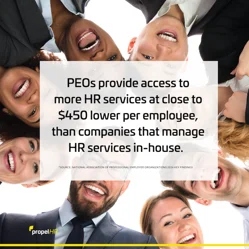 Working with a Professional Employer Organization, (PEO), is one of the best ways for a small business to access a master health plan. By grouping small businesses together into one large pool, PEOs have more bargaining power to secure lower rates, partner with reputable insurance providers, and to assemble the type of health insurance plans that better fit the needs of its clients. In addition, PEOs are able to help small businesses identify cost-saving strategies, such as managing administrative costs.
  There is nothing worse than a dead-end job. Employees will be more engaged if they feel that the job can provide them a future. Offer valuable learning opportunities to your staff, make advancement possible, and establish regular feedback sessions with your employees. The feedback sessions can focus on employee performance metrics as well as ways that the company can improve to provide a better work environment. The employee/employer relationship is crucial to the success of the business and like all relationships, both sides must communicate needs and be willing to listen.
 After all, PEOs are trusted with a body of sensitive information, such as employee data, Social Security numbers and financial information.
 Certification opens more opportunities for federal tax credits for the company, not the CPEO.

 In the 1960s, employer-based healthcare was the health insurance model as America’s workforce became more dependent on their employer for health insurance.




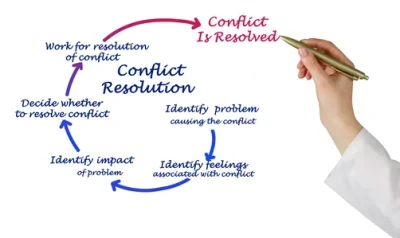 Together we worked to find a fair resolution to our problem. We both agreed that we didn’t want to burn a bridge. Our companies may need to work together in the future, and ultimately, as human resources providers, we all need to be on the same team.