These tasks shouldn’t take up your workweek. But when systems fall short, they do. If you’re a small or mid-size business owner or HR leader, you probably didn’t get into this role because you love tracking down time-off requests, chasing signatures, or answering the same benefits question 14 times.
And yet… here we are.
Studies show that small business owners spend about 16 hours (or two full days) per week on HR-related administrative work.
Most businesses lose valuable time to the slow drip of small, repetitive “this will only take a minute,” tasks that quietly eat up the workweek. Add them up, and suddenly your strategic HR goals, like recruitment, retention, and leadership development, get pushed aside.
Here are some of the most common areas that may be draining your time.
Time-Consuming HR-Related Tasks
They seem small. But over time, these tasks drain your attention, your energy, and your progress.
1. Repetitive Tasks and Rework
Every time you hunt down a missing signature or resend login details, you lose time you could be using elsewhere. The common offenders? Answering the same employee questions over and over:
“How do I add my baby to insurance?” “When do benefits start?” “How many PTO days do I have left?”
Sound familiar?
Individually, these are quick answers. Collectively? They’re a constant interruption machine. When you stop to respond, you lose focus, break momentum, and push higher-value work further down your list.
🛠️How To Fix It:Uncover the pain points.Which areas are bogging down the process due to repetition? Where can you create a self-service culture? This can mean establishing a simple internal HR hub (in your intranet, shared drive, or HR platform), short FAQs on benefits, PTO, payroll timing, and onboarding, or short videos that walk through routine processes.
Then, train employees to go there first. When someone asks a repeated question, send the link along with your answer. Over time, behavior shifts. HR becomes a source, not a help desk.
2. Correcting Payroll Errors
The latest software makes running payroll seem easy, but if something goes wrong, the liability is still yours. Miscalculating pay, outdated tax information, and manually tracking time off are time-consuming to fix, hard to catch, and expensive if you don’t, not just in terms of costs but also in lost time and eroded trust among your workers.
🛠️How To Fix It:Automate what you can.Look for tools that let employees request time off directly, route approvals to managers, automatically update balances, and sync with payroll.
When automation handles the basics, HR shifts away from data entry to policy guidance. You’ll still handle exceptions, but you won’t be stuck crunching numbers late at night.
Or leave it to the experts by outsourcing payroll to an IRS-certified PEO. A PEO can simplify the payroll process with a cloud-based payroll portal for employers, online employee access to pay stubs, W-2s, benefits info, employee handbooks, and secure, paperless direct deposits. They can also take care of onboarding, payroll taxes, IRS deposits, benefits administration, compliance guidance, and provide HR support.
3. DIY Compliance Monitoring
Labor laws change constantly. Posting requirements update. Salary thresholds shift. Leave laws multiply. Keeping up with shifting deadlines, state-level compliance requirements, and studying the IRS’s recently updated guidance under the One Big Beautiful Bill Act. Trying to monitor all of this yourself is not only time-consuming – it’s also stressful.
One misstep can be costly. In 2025, the Department of Labor’s Wage and Hour Division recovered more than $259 million in back wages for nearly 177,000 employees. That’s an average of $1,465 per worker (the most since 2019).
🛠️How To Fix It:Don’t carry compliance alone.Get expert help by partnering with a professional. Whether it’s through a PEO, outside counsel, or a compliance partner, get support that keeps you updated on requirements that apply to your business.
You’ll need advice on tricky employee situations, alerts on multi-state regulatory changes, new pay transparency rules, evolving paid leave requirements, changing wage-and-hour laws, new employment-related laws on AI, and much more.
🚀 Pro Tip: Stay compliant with our HR Checklist covering the latest updates and deadlines related to compliance, benefits, payroll, and general HR that you need to take care of each quarter. Download your free HR Checklist ➡️ HERE
4. Updating Employee Data in Multiple Places
Name changes. Address changes. Promotions. New pay rates. If you’re entering the same update into payroll, benefits, retirement platforms, and internal trackers, you’re doing triple-plus work and increasing the chance of errors.
🛠️How To Fix It:Integrate your systems, invest in HR technology, or work with a PEO. A unified HR platform can help connect payroll, benefits, time tracking, and employee records, among other things.
With better integration, changes flow through automatically. That means fewer entries, fewer errors, and more free time.
5. Handling Every Employee Issue Personally
When you’re the only go-to for every conflict, complaint, or issue, your day gets hijacked fast. Some things absolutely belong with HR. But many could be resolved earlier and better by trained managers.
🛠️How To Fix It:Upskill your managers by teaching them to give feedback,handle minor conflicts, anddocument specific issues. This doesn’t remove HR from the process; rather, it elevates the role, moving them from firefighter to advisor.
Stop the HR Busy Work, Amplify Your Impact
Normalizing HR busy work has real consequences, including burnout. Your top performers may feel overwhelmed by constant overtime or pressure to meet demands. It also creates dependence on key team members, making it difficult to delegate when only a few people hold essential knowledge or responsibilities.
Maintaining inefficient processes limits growth, slows project delivery, and prevents your team from focusing on strategic initiatives.
🛠️How To Fix It: Partnering with an IRS-certified PEO can help. By taking on time-consuming tasks, PEOs help small businesses get back more time to focus on productivity and growth.
In addition to saving time, a PEO can also save your business money by identifying inefficiencies, streamlining HR processes, and helping you make critical cost-cutting decisions.
If you constantly feel behind, the fix isn’t more hustle. It’s better tools, clearer processes, and the right support. A PEO can help you stop the small stuff from piling up, so you can invest your time where it matters most. And if you need help, just give us a call at📱 800-446-6567
Find Out What a PEO Can Do for You
If you’re a small to mid-sized business, a PEO can lighten your workload and strengthen your operations. Imagine focusing on growth while experts handle your payroll, taxes, benefits, HR, and compliance.
⬇️Read more about the advantages of working with a PEO in our series:
🔷 HELP WANTED: HR Team or PEO Partner
Investing in an HR team versus partnering with a PEO, which path is best for your small business? As your business grows, managing HR gets complicated – fast.
Should you build your own HR team or explore the benefits of partnering with a PEO? Here’s how to decide which choice best fits your business. ➡️Link #1Link #1Read More
🔷 NEW RESEARCH: More Small Businesses Are Turning to PEOs
Compelling research from the National Association of Professional Employer Organizations (NAPEO) shows that PEOs are helping small businesses scale – a game-changer in 2026.
Working with a PEO isn’t about outsourcing; it’s about upgrading how you manage HR. It’s about investing in smarter growth, happier employees, and peace of mind. In a business world that’s only getting more complex, that’s a benefit worth having on your side. Thousands of successful businesses are already doing it – and the data proves it works. ➡️Link #2Link #2Read More
IT’S HERE!
Your FREE HR Checklist
Here’s your checklist of important tasks related to payroll, benefits, compliance, and general HR.
About Propel HR.Propel HR is an IRS-certified PEO and a leading provider of human resources and payroll solutions for 30 years. Propel partners with small to mid-sized businesses to manage payroll, employee benefits, compliance and risks, and other HR functions in a way that maximizes efficiency and reduces costs. For more information, visit propelhr.com
Productivity is the secret sauce that separates teams stuck on the sidelines from those with winning streaks. Chances are you’re juggling hiring, compliance, benefits, culture, and about a dozen other priorities . . . all while the clock keeps ticking.
Your power play? Outsourcing. When used strategically, it boosts productivity, streamlines operations, and frees you up to focus on what actually moves the scoreboard – your bottom line.
First Quarter: What Productivity Really Means
In HR, productivity isn’t about sprinting faster – it’s about running the right plays at the right time.
True HR productivity means delivering meaningful outcomes with minimal wasted effort. Speed matters, sure, but impact matters more.
Fast hiring doesn’t matter if turnover remains high. Smooth payroll is great . . . unless errors keep forcing replays.
At its core, productivity is about consistent, high-quality execution that supports your business year-round.
Here’s the basic stat line. The fundamental formula HR teams use looks like this: Productivity = Total Output / Total Input.
🎯Stronger Compliance Defense. Mistakes lead to fines, audits, and penalties – that’s expensive. Productive HR keeps risk off the scoreboard.
🎯Scoring Efficiency. In the Red Zone, the stakes are high, and scoring opportunities significantly increase. When your HR team isn’t buried in paperwork, they can make a more strategic impact by focusing on culture, performance, and growth.
🎯Leadership Trust. HR shifts from order-taker to trusted partner.
The results? A productive HR function is the engine that keeps your people – and your business – moving forward.
The Stats Don’t Lie: Proof from the League
The data backs it up:
➡️Flexibility & Remote Work. A Gartner report finds that 43% of employees working flexible hours say they are more productive. Gallup found that fully remote workers report the highest engagement levels.
➡️Engagement Matters. Highly engaged teams are 17% – 21% more productive than disengaged ones.
➡️The Productivity Gap. Top-tier companies grew more productive, while others saw declines due to inefficient collaboration and low engagement.
🎯Winning teams don’t guess; they measure, adjust, optimize, and power up.
The Box Score: Common HR Productivity Metrics
To know how your team is performing, you need the right stats:
📊 Output Metrics. Revenue per employee, output per hour, goals completed vs. assigned
📊 Efficiency Metrics. Time spent per task, employee utilization
📊 Quality Metrics. Accuracy and impact, not just speed
📊 Engagement Indicators. Engagement scores and absenteeism.
📊 Financial Metrics. Total Cost of Workforce (TCOW)
These numbers tell you whether your plays are working and what needs to be redesigned.
A PEO helps improve productivity by offloading time-consuming tasks while strengthening the entire employee lifecycle through MVP expertise and next-level HR tech.
🔥Think of it as adding multiple Tom Bradys to your roster.
THE GAME PLAN
Play #1: Reallocate Resources to Core Strengths
The fastest productivity gain comes from freeing your teams from admin overload. By outsourcing, you get:
✅Time Savings. Business owners can spend 20+ hours per month on HR admin-related tasks. Outsourcing frees up time for growth, sales, and strategy.
✅Administrative Relief. Payroll, benefits enrollment, and multi-state compliance tasks move off your plate and into expert hands.
✅A Team of MVPs. Outsourcing gives you access to a team of pros, ready to help when you need it.
Play #2: Build a Deeper Talent Bench that Flexes
An engaged workforce is naturally more productive.
💼 Lower Turnover. Companies using PEOs see 10%–14% lower turnover, reducing disruptions and retraining time.
💼 Big-league Benefits. PEOs provide access to Fortune 500-level benefits, boosting satisfaction and engagement.
💼 Faster Onboarding. Streamlined onboarding helps new hires get in the game.
Play #3: Upgrade Your Tech Stack
PEOs give small and mid-sized businesses access to advanced HR technology without the big-ticket price tag.
📊 Automation.Payroll and tax automation reduce errors and time-consuming fixes.
📊 Employee Self-service. Employees handle PTO, pay stubs, and benefits updates themselves with fewer interruptions for HR.
Play #4: Strengthen Your Compliance Defense
Compliance isn’t optional and managing it internally can drain focus fast. With a PEO on your team, you get:
🛡️Expert Guidance. A team of HR pros helps prevent fumbles and penalties. PEOs stay on top of federal, state, and local regulations, including ACA and FMLA.
🛡️Safety Programs. Proactive safety audits reduce workplace incidents and business disruption.
Play #5: Win on the Scoreboard
All these efficiencies lead to real, measurable stats:
🏆Faster Growth. Businesses using a PEO grow 7% – 9% faster than those that don’t. And are 50% Less Likely to Go Out of Business
💥That’s not just a win – it’s a blowout. It’s the stuff championships are made of.
FINAL CALL: Make Productivity Your Winning Play!
How far can you go? Productivity isn’t a one-time drill – it’s a GOAT mindset.
When you measure what matters, optimize repetitive work, and outsource strategically, you’re not just working faster . . . You’re working smarter. That’s for legends.
🔥Outsourcing is no rookie move. It’s a strategic productivity partner that helps HR shift from scrambling to scoring. And keeping that winning streak hot.
Ready to Turn HR into a Powerhouse?
Ready to hear your crowd ROOOAAARRR? 🎉 This power playbook is your first step.
➡️If you need some coaching or a huddle about your productivity game plan, we’ve got you all the way to the Super Bowl winning streak and beyond – just give us a call.
IT’S HERE!
Your FREE HR Checklist
Here’s your checklist of important tasks related to payroll, benefits, compliance, and general HR.
About Propel HR. Propel HR is an IRS-certified PEO and a leading provider of human resources and payroll solutions for 30 years. Propel partners with small to mid-sized businesses to manage payroll, employee benefits, compliance, risk, and other HR functions in ways that maximize efficiency and reduce costs.
To learn more, visit propelhr.com
If you run a small or midsize business, you already know growth is exciting, yes — but also unpredictable, and sometimes overwhelming. That’s exactly why more business owners and HR leaders are choosing Professional Employer Organizations, or PEOs, not just to outsource HR tasks, but to grow smarter, faster, and more sustainably.
The Top 10
A PEO helps you scale without letting the behind-the-scenes stuff collapse under the weight of bigger payrolls, more onboarding, greater compliance risk, and higher employee expectations. It’s like adding an entire HR department overnight, minus the overhead and recruitment scramble. A few advantages include:
1. You Get HR Infrastructure Before You Actually Need It (Which Is Exactly When You Need It)
Most small businesses don’t feel the pain of HR complexity until it’s too late. Payroll errors start multiplying, employees want benefits you’re not equipped to provide, and suddenly you’re Googling state labor laws at 11:30 p.m.
A PEO lays the foundation before those cracks show. Payroll scales without drama. Whether you have 10 people or 110, payroll stays smooth, compliant, and on time.
Onboarding becomes a real process and not a scramble. Templates, checklists, digital forms, background screening, and automated workflows ensure consistency as you grow.
Policies adjust proactively. A PEO helps you build employee handbooks, update them with new laws, and create clear rules that reduce risk as your headcount increases.
2. A PEO Delivers the Big-Company Benefits Employees Want
Here’s the part that often surprises business owners: a PEO can give you access to benefits packages typically reserved for much larger companies.
Because a PEO pools together employees across its client base, you essentially get to “buy in bulk,” accessing high-quality benefits at lower rates. That means you can offer your team robust health plans, retirement savings options, and other top-tier benefits typically reserved for larger companies (and top talent expects).
🎯When employees enjoy comprehensive benefits without compromise, your company is seen as a long-term career option. Retention rises, and as every HR pro knows, that’s a growth strategy.
3. Compliance Stops Being a Guessing Game
Growth = risk. New states. New regulations. New employment laws. New reporting requirements.
This is where many small businesses unintentionally step into danger territory. The rules change constantly and the stakes are high.
✅They track federal, state, and local employment laws.
✅They help maintain the required documentation.
✅They ensure new hires are classified correctly.
✅They reduce risk with structured workplace policies.
✅And because of the co-employment relationship, many PEOs also share certain administrative responsibilities – meaning you’re not alone if something goes sideways.
🎯Growing is risky. Growing without compliance support? That’s gambling.
4. HR Technology You Don’t Have to Build Yourself
Scaling is smoother when everything is connected, such as payroll, onboarding, PTO tracking, benefits enrollment, performance management, and reporting. But building your own HR tech stack or licensing multiple vendors gets expensive fast.
🎯A PEO delivers the all-in-one HR command center designed for your business. Better data, better workflows, better decision-making.
5. A PEO Frees Up Time (A Lot of It)
If you’re a business owner, your job is to grow the business, not troubleshoot payroll deductions. If you’re an HR manager, your job is to support the people strategy, not drown in admin work.
A PEO takes on repetitive, time-consuming tasks, such as processing payroll, managing benefits, handling tax filings, and preparing compliance documentation. The more you grow, the more time you reclaim, instead of watching your workload escalate with each hire.
6. You Gain a Team of HR Experts Without Expanding Your Staff
Growing companies don’t always have the luxury of immediately hiring a full HR team — HR generalists, benefits specialists, payroll administrators, compliance officers, recruiters, risk managers, the whole lineup.
A PEO gives you access to exactly those roles, on-demand expertise, without the full-time salary load.
Need help rolling out a new PTO policy? Preparing for benefits renewal? Handling a sensitive employee relations issue? There’s an expert for that. It’s like having a seasoned HR department already onboard, ready to advise you every step of the way.
7. You Become More Attractive to Investors and Partners
Here’s something entrepreneurs don’t always think about: investors love operational maturity. When a PEO is part of your infrastructure, it signals you’re compliant, manage risks well, your HR processes are stable and that you can scale responsibly.
🎯For investors, lenders, and potential partners, a strong HR foundation = reduced risk. And reduced risk makes you a better bet. For acquisitions and rapid growth phases, a PEO can also make integration smoother.
8. A PEO Helps You Build a Better Employee Experience
Growth doesn’t just require more people; it requires keeping the good people you already have on board.
A PEO helps you:
✅Improve communication and access to information.
✅Build modern HR processes that employees trust.
✅Provide competitive benefits
✅Create fair, consistent workplace policies.
🎯A better employee experience leads to lower turnover and higher morale. And in high-growth companies, stability is gold.
9. You Can Expand Into New States With Confidence
Need to hire employees in another state? That’s great for growth, but it creates compliance challenges due to different tax rules and labor law requirements.
🎯A PEO handles all of it, letting you recruit the best talent in any location without losing sleep or risking penalties.
10. You Scale Strategically
Growth can stress your business when operations lag behind headcount. A PEO aligns both, so you’re expanding strategically.
🎯The result? Smooth transitions. Predictable costs. Cleaner processes. Less risk. Happier employees. And more time to focus on what actually grows the business — not on what slows it down.
Growth Is Easier ➡️When You’re Not Doing Everything Yourself
If you’re preparing to scale — or even thinking about it — the question isn’t whether you can handle growth alone. It’s whether you should.
With a PEO, growth is a plan.
A PEO delivers the infrastructure, expertise, and stability that power growing companies, without requiring a major investment or a staff increase.
Ready to see what a PEO can do? We can lighten your workload and help you drive growth, just give us a call at (800) 446-6567 or visit propelhr.com
🎯PEO Series: The PEO Difference🎯
Learn more about how a PEO can help your business in our series:
🔶HR Help Wanted: In-house Team or PEO Partner. Investing in an HR team versus partnering with a PEO, which path is best for your small business? As your business grows, managing HR gets complicated – fast. Should you build your own HR team or explore the benefits of partnering with a PEO? Here’s how to decide which choice best fits your business. Read More
🔶Navigating Compliance Minefields. Navigating HR compliance can feel like tiptoeing through a minefield — one wrong move can trigger costly consequences. From pay transparency laws to overtime thresholds, new regulations evolve faster than most small HR teams can keep up with. Here’s a look at the top HR compliance challenges and how to avoid turning small missteps into expensive lessons. Read More
🔶New Research Shows Why More Small Businesses Are Turning to PEOs. The data is in! And it shows how partnering with a PEO will be the smartest move for small businesses in 2026. Recently released research from the National Association of Professional Employer Organizations (NAPEO) shows that PEO partnerships are helping small businesses scale. It’s smarter, more efficient, and a game-changer. Here’s what the latest data shows. Read More
IT’S HERE!
Your FREE HR Checklist
Here’s your checklist of important tasks related to payroll, benefits, compliance, and general HR.
About Propel HR. Propel HR is an IRS-certified PEO that has been a leading provider of human resources and payroll solutions for more than 25 years. Propel partners with small to mid-sized businesses to manage payroll, employee benefits, compliance and risks, and other HR functions in a way that maximizes efficiency and reduces costs. For more information, visit www.propelhr.com
Employee benefits are key to a productive and satisfied workforce. Benefits take on many forms, from paid time off to flexible hours to free snacks and coffee. Companies are required by law to provide unemployment insurance and workers’ compensation insurance, but many employers go beyond the basics and offer employees health insurance, retirement plans, voluntary benefits, and even gym memberships. These benefits are part of an overall compensation package that help attract and retain the talented employees that are the engine of any good business.
Companies with over 50 full-time equivalent employees are required to offer health insurance under the Affordable Care Act, and they have access to a larger pool of employees to help lower the cost of premiums. However, smaller businesses often find it difficult to provide a competitive benefits package, which makes attracting and retaining great employees difficult, especially in this tight market. Many small organizations want to provide rich benefits to their employees, but don’t even know where to begin the process.
How to Create a Benefits Package
When designing a benefits package for your small business, consider these guidelines:
Start with health insurance. It is the most comprehensive plan and can be designed to best suit your workforce as well as your budget.
Be creative and educate. Work with a licensed agent who has the expertise and is willing to think outside of the box. For example, a High Deductible Health Plan coupled with a Health Savings Account may be the answer to shrinking benefits and rising costs. The important thing is that employees are educated and know how to best use the insurance for their individual needs.
Jump in the pool. By joining a master health plan offered by a Professional Employer Organization (PEO), like Propel HR, small businesses can offer large company benefits. By pooling risks, insurance companies are better able to provide richer benefits at potentially better rates and stabilize renewal rates.
Provide options. Every employee has different needs, and a benefits package that allows for choice is a win for both employees and employers. Most health insurance will provide dual options providing choice for employees. Many employers contribute to the basic plan and allow employees to “buy up” for the richer option.
Plan for the future. A rich benefits package should include a method for employees to save for a rainy day. Whether a 401(k), Simple IRA, or even access to a credit union, there are many options available to a small employer.
Make it voluntary. By providing different voluntary products such as dental, vision, disability, and accident insurance, employees can design a package that suits their individual needs. Employees can purchase the products through payroll deductions, pre-tax as well as after-tax. By partnering with a PEO, like Propel HR, small employers can provide a multitude of rich benefits for their employees.
Consider the whole person. A benefits package is more than just health insurance. Paid time off allows employees to take time off for vacation, illness, or just a mental break from work. Another cost-effective benefit which can be priceless for the employee is an Employee Assistance Program (EAP). An EAP offers counseling and treatment to assist employees in resolving personal problems that may be adversely affecting work performance.
I have operated a small business for over 20 years and in that time, I have worked with countless other small businesses. All operate very differently with different service offerings and unique cultures. However, there is one theme that resonates throughout the businesses I work with: they all care about their employees. Small businesses are like families, and most employers want to provide their employees with the best benefits possible. This can feel daunting to a small business that doesn’t have the buying power of a large company and must watch every dollar, but there are options. Most of all, employees want to know they are valued during good times and bad. I know how it feels to have my work family rally around me during a time of need. That is a benefit that is priceless.
With unemployment rates at a record low, finding the right talent can be a challenge. In a tight labor market, fast-growing small businesses often feel the pressure to make a hasty hiring decision – a move that could prove to be expensive.
How expensive? According to a study conducted by CareerBuilder, the average cost of one bad hire is close to $15,000 and the average cost of losing a top employee is nearly $30,000. In addition to salary costs, a hiring misstep also means lost money on employee benefits, incentives, and severance, as well as the added costs associated with hiring and training a replacement.
What defines a wrong hire?
Not producing quality work, a negative attitude, attendance issues, and not working well with other team members were the primary reasons a new hire did not work out.
How do bad hires happen?
According to the survey,nearly three in four employers are affected by a bad hire.A few reasons for making hiring mistakes include the lack of qualified candidates, feeling forced to fill the role quickly, focusing on skills and not attitude, and candidates misrepresenting their qualifications.
Before you rush out to add to your staff, watch out for the employees types that could potentially undermine your business. Here are four of the most common.
Employees Putting Your Business At Risk
THE STAR.
Egocentric, self-absorbed, the heat of the spotlight shines bright – but only in the mind of this charmer. A self-proclaimed star, your workplace is the stage for his indulgence as he parlays for the lead. Before you know it, his off-color remarks are bringing down the curtain on your business.
The Risks. Often viewed as stubborn and inflexible,this employee may not be coachable or open to change. According to a recent Harvard Business Review study, overconfident employees are more likely to be toxic workers. The fallout in your workplace could be disastrous and end up with a number of costly complaints and damage employee morale. Workplace training can help. Conducting an anti-harassment training program, which addresses screening and how to manage a diverse workforce, is essential in reducing risks. Also, check with your state and federal authorities on the types of HR training programs required for your particular business.
Bubbly and eager, this employee smacks with fresh enthusiasm and sparks inspiration as she waxes on into the wee hours of overtime about all of the glitter and possibilities for your business. While you are bedazzled by the spell and begin to rekindle hope for a stronger bottomline, this serial muse’s ongoing timesheet errors are costing you – oh, so extra.
The Risks. The growth of wage and hour settlements have increased in recent years and continues to be a primary exposure for businesses. Check the labor and wage and hour laws in your state for overtime and minimum wage requirements as well as laws relating to paid breaks, work schedules, and rounding practices.
THE UNRELIABLE EMPLOYEE.
That flashing smile, firm handshake, locking gaze, and a style coiffed to perfection, this employee is cunning and knows how to beat the office game. Equipped with all of the slick moves, convincing excuses and shady tricks of the trade, be prepared to shell out – this employee is hard to trust and hardwired to win – at your expense.
The Risks. Having employees that over-commit and under-deliver can cost a business their customers and good employees. Also, simple mistakes on routine HR forms, such as on Form I-9, can cost up to $1,100 in fines per violation, and fines increase to $16,000 for knowingly hiring unauthorized workers. Be diligent in checking references to understand the applicant’s previous experience and perform background checks on every employee to help you know the person you are hiring.
THE ANTAGONISTIC EMPLOYEE.
This hot-headed employee flexes his power and is ruthless in spreading negativity and fear. To a bully, your workplace is a battleground where conflict rules. Just before slaying what’s left of morale, the bully has forced productivity to a complete stop.
The Risks. This employee is a lawsuit waiting to happen. Due to frequent changes in employment laws, make sure your employee handbook includes standards of professional conduct as well as specific procedures for handling employee complaints about the bully’s behavior.
AVOID MAKING A COSTLY HIRING MISTAKE
Managing today’s workforce requires businesses to be more equipped than ever before. By partnering with a certified PEO (CPEO) like Propel HR, our HR experts can help you navigate the complexities of human resources and compliance, as well as provide guidance on how to make better hiring decisions.Let us show you how.
My husband Hubert and I have been married for almost 22 years. Our marriage has endured because we work at it. When we were dating, we took the time to make sure we shared the same values and long-term goals, which are important for navigating the challenges that inevitably arise. Even though it’s not easy with two kids and a busy life, we make the time to be together and to reconnect. We help each other out and lean on each other when necessary. Even though we sometimes argue, we always make up. That’s because our relationship is built on a foundation of trust and mutual respect, and so it’s important that we listen to one another.
In order to have a successful marriage, we must be intentional about our actions and our time together. The same is true at work. A good leader focuses not only on her work product, but also on being intentional with her co-workers. This starts with hiring the right person. Just like Hubert and I dated before we jumped into a marriage, it is important for a company to take the time to find the right employee.
Hiring the wrong person
Hiring the wrong person can damage the morale in the workplace and cost a business approximately 30 percent of the employee’s first-year earnings. Some costs, such as placement fees and benefits, are easy to quantify but there are additional costs that need to be considered such as lost time associated with interviewing, onboarding, and training. With the current unemployment rate at just under 4 percent, companies are feeling the pressure to quickly hire any available talent. This is not the best solution. Would you advise someone to marry the first person they date? Of course not. The same is true when growing your work family. The interview process should be similar to the dating process and include a trial run until you find the right person.
Do not rush to the altar
If possible, plan for future hires in advance. When the process is rushed, due diligence is not always performed, and a knee-jerk decision can lead to a costly mistake. Structure the interview process with actual scenarios that are similar to the prospective job. For example, when we hire new HR professionals, candidates are required to make a presentation to our Executive team. Take the time to get to know your candidate’s values, work ethic, and how they perform under pressure.
Get an outside perspective
When Hubert and I dated, it was important for my family and friends to get to know him and approve of him. The same philosophy needs to be considered when hiring. The most successful hiring techniques involve not only the direct supervisor, but also the Human Resources professionals and co-workers. Many firms conduct panel interviews, which provide a more diverse perspective of a candidate.
Ask around
Singles who are searching for a partner today are likely to turn to social media and ask friends for recommendations as a way to pre-screen prospects. The same is true in the hiring process. Use assessment tools, check references, and discover more about the work background of a candidate before hiring.
Trust your instincts
During the dating process, people are encouraged to trust their instincts. However, at work we focus on data to make decisions. I believe there is also value in listening to our inner voice. When it comes to hiring the right person for a position, we must be attuned to the red flags. If something doesn’t feel right, then we need understand the reason for that feeling.
I believe the old sayings about finding love are true: there are plenty of fish in the sea; don’t settle for less than you deserve; and you must kiss a lot of frogs before you find your Prince (or Princess) Charming. The same is true when searching for the perfect employee. In the end, the investment is worth it. It is important to find the perfect match.
HR Checklist for Small Businesses
As a small business, you have a lot on your plate. We’re here to help with a one-page checklist of some of the most important HR-related tasks to take care of before the end second quarter of 2019.
After a recent investigation conducted by the U.S. Department of Labor’s Wage and Hour Division, a Georgia-based manufacturer was required to pay $454,655 in back wages to 28 employees for failing to pay their workers overtime pay, deducting short rest breaks from their time cards, and for rounding their time outside of the parameters as required by the Fair Labor and Standard Act (FLSA).
A company in Bristol, Tennessee, was required to pay $195, 193 in back wages to 27 employees for incorrect classifications. The employer paid the workers at a lower rate as general laborers, when the work performed was that of skilled finishers, which required higher rates. The employer also failed to record and pay employees who also worked multiple positions for which different rates applied.
Do you know the minimum wage requirements where your company is located? How does your business record time? How do you classify employees doing multiple, or specialized tasks at multiple locations? It’s easy to see why the growth of wage and hour disputes has increased over the past few years and its now one of the primary areas costing small businesses.
IMPORTANT Q2 HR-RELATED TASKS
From record-keeping, regulatory reporting, mandatory employee training, and filing deadlines for state, federal and local tax compliance, the HR responsibilities of a small business continue to grow and grow – and change. Here are some of the most important HR-related tasks to address as we head into second quarter of 2019.
PAYROLL
Verify minimum wage and overtime pay laws.Federal law requires non-exempt employees to be paid a minimum wage of no less than $7.25 per hour. Many states also have minimum wage laws. Overtime is paid at a rate of one and a half times the regular pay rate after working 40 hours during a workweek. At the beginning of the year, 19 states and 21 cities increased the minimum wage requirements – many reaching $15 per hour.
Employee coverage, wage payments, compliance, as well as most exemptions are all determined based on a workweek. What is considered a workweek? According to FSLA, a workweek is defined as a period of 168 hours during seven consecutive 24-hour periods. It may begin on any day of the week and at any hour of the day determined by the employer. When it comes to minimum wage and overtime pay, each workweek must stand alone and two or more workweeks cannot be averaged together. To help employers stay up-to-date, the U.S. Department of Labor recently launched new compliance tools, including an enhanced digital Fair Labor and Standards Act (FSLA) Reference Guide with simple, easy-to-follow wage and hour information.
Update W-4 Forms. Update employee and new hire information, including W-4 and any state withholding tax documents.
Prepare Corporate Tax Returns. The deadline for 2018 corporate tax returns, Forms 1120, 112A, and 1120S and to request a 6-month extension, Form 7004, is March 15.
BENEFITS
Review your benefits plan. Follow up with your benefits broker to address any changes, new reporting requirements, deadlines, and to verify that health care reform requirements are met, such as quarterly disclosure notices for 401(k) plans.
File ACA Forms 1094-C and 1095-C. To file electronically through the IRS AIR System, employers must submit Forms 1094-C, the employer’s form, with copies of 1095-C, the employee form, by March 31.
COMPLIANCE
Check OSHA Record Requirements. Each year, applicable employers are required to post a copy of a summary of work-related injuries and illnesses, OSHA Form 300A, from February 1 through April 30. The summary must be displayed in a common area where notices to workers are usually posted. Businesses with 10 or fewer workers and those in certain low hazard industries are exempt from OSHA record-keeping and posting requirements. Visit OSHA’s site on record-keeping for more information.
Update workplace labor law posters. Check for changes in federal, state or local laws about specific labor law notices your business may be required to post on site. Post new compliance posters, update required pamphlets and wage orders, as necessary.
Audit employee recordsand Form I-9. Simple errors and incomplete forms can cost up to $1,100 per violation. Review and update employee records, including I-9 for new hires.Make sure inactive employees are termed in the system and full-time employees are correctly classified as full-time.
Prepare EEO-1 Report. Employees are protected under many federal laws and their rights are enforced by the U.S. Equal Employment Opportunity Commission (EEOC). Employers with 100 or more employees or federal contractors with 50 or more employees must submit an EEO-1 Report. The deadline was recently extended to May 31, 2019.
COMPLIANCE
Review employee handbooks. Review your company’s policies and procedures to ensure your business is in compliance with the latest changes in new employment laws. Make sure your employee handbook includes standards for conduct, policies for communication and privacy, compensation and performance reviews, social media, attendance, break periods, benefits, company-observed holidays, and procedures for termination, discipline, workplace safety, sexual harassment, inclement weather, and emergencies. If your business has locations in multiple states, it’s important to include supplements to your handbook with appropriate guidelines that apply to local and state laws.
Review required training deadlines. Review budgets and deadlines for required annual training sessions, such as for sexual harassment, and specific training, such as for blood-borne pathogens. Also check for industry-specific training and certifications requirements, such as for forklift operations and regulations for hazardous materials.
GENERAL HR
Review record retention requirements. The IRS requires employers to keep payroll and time records for 7 years. It’s just one example of the many documents that small businesses are required to keep. Develop a calendar and schedule of important records, review deadlines requirements and discard outdated records. Organizations, such as the Small Business Administration, offer free guides and best practices for record retention.
Review succession and performance plans. Succession and performance plans prepare your business during transitions in leadership. It’s also a good opportunity to identify, train and prepare those employees for future leadership roles.
Review budgets and staffing plans. While staffing plans are often developed during budget cycles, managing staffing needs and costs is an ongoing process.
Note: Because new laws, regulations and filing deadlines are ever-changing, please check with the appropriate organization or government agency for the latest information (Updated March 6, 2019).
NEED HR HELP?
We’ve got you covered with a helpful one-page checklist. On it you’ll find important HR tasks, related to payroll, benefits, compliance and general HR, to address by the end of second quarter, June 30, 2019. Depending on the type of business and industry, your list may be different and even more complex. If so, just contact us. By partnering with a certified PEO (CPEO), you gain access to a team of experts to help you navigate the complexities of your business, as well as help to stay compliant.
Does having a diverse workplace matter? Absolutely. And employers failing to tap into diversity are not only missing out on critical perspectives, but are also risking the opportunity to grow. Just look to the tech industry for an example of how the absence of diversity-focused practices can directly impact the future of an entire industry.
At its core, the technology industry is about innovation. While Silicon Valley has been able to thrive without having to focus on building a diverse workforce, change is coming.
According to the Bureau of Labor Statistics, by 2020 there will be 1.4 million open computer science-related jobs and only 400,000 qualified candidates available to fill those jobs. Why? Supply and demand. Since the beginning, the tech industry has focused on recruiting and employing young, white men. As the demand for technology continued to grow, so did the number tech-related jobs. But not the number of qualified candidates.
Needless to say, diversity can be a game changer to an industry facing a one million unfilled jobs. According to the National Center for Education Statistics, women outnumber men earning college degrees, so female graduates would seem as an obvious talent pool. But the number of women enrolled in computer science is falling for a number of reasons, such as the lack of access to jobs and a discriminatory pay.
According to Women in Computer Science, of the women employed in today’s computer programming workforce, approximately 41 percent eventually leave their careers because of the hostile work environment. A recent Ernst and Young study finds that only 11 percent of female students plan to pursue STEM (Science, Technology, Engineering and Mathematics) careers. Partly due to the fact that women in STEM make $16,000 less on average than male counterparts.
Creating an inclusive environment that retains and attracts female talent may be one of the biggest challenges in the tech industry. And at the same time, it also presents the greatest opportunities. The good news is that positive change is currently underway. For example, as a way to increase the number of women in technology, nonprofit AnitaB.org, along with companies like Facebook and Microsoft, are working together with universities to modify the language of computer science courses in order to make it less intimidating to female students. And it’s working. By simply renaming a course,The Beauty and the Joy of Computing, at UC-Berkeley, the enrollment of women outnumbered men for the first time.
THE BUILDING BLOCKS
What should HR leaders consider when addressing diversity? Here are a few strategies leading companies are using to build a Diversity and Inclusion program.
Define diversity and inclusion. The first step to a Diversity and Inclusion program is to determine what diversity means in your business. Your program should address areas such as compensation, benefits, safety policies, and guidelines for special needs.
Put values in action. Confronting entrenched and outdated systems and breaking down barriers are required to change a mindset. Different experiences and backgrounds can help employers recruit diverse candidates and help leadership manage teams.
A recent Dice Report study on recruiting in the tech industry found that female job candidates put a higher value on benefits, while male candidates ranked benefits fourth in importance.
Develop an environment of trust. In order for a diverse workforce to thrive, HR must create a on-going culture of inclusion. Value differences and create an environment where employees are empowered to contribute.
Form a diversity and inclusion team. Designate a diversity officer and form a Diversity and Inclusion team to demonstrate your company’s commitment and to work your plan.
Measure and track success. Evaluate data to track success and repair blind spots as needed. Benchmark key aspects of your organization’s culture, which is particularly important for attracting and recruiting talent and for mentoring and retaining employees. For example, when recruiting, consider that women candidates look to work for companies where women hold leadership roles.
Diversity training. Train managers, as well as employees, to show that diversity is a core competency. Integrating diversity training helps employees recognize issues that may affect workplace or business. For example, an open-ended training exercise asks employees to describe themselves. And another has employees reacting to photographs of potential seatmates on a plane. How we define ourselves and react to others help to recognize and address biases and assumptions that may enter the workplace through interactions with co-workers, clients, customers, vendors, and management.
Building a diversity and inclusion program takes time. But without it, employers are limiting their success when it comes to creating products, developing services or bringing new ideas that have the potential to change the world.
With more than 20 years in the industry, I have seen my fair share of issues in human resources. When people are involved, situations that occur in the workplace can be unpredictable and complex. The HR world is constantly evolving, and every day presents a new challenge. However, there is one concern I hear from clients and business owners repeatedly. The names change, and details vary, but the scenario is always the same and avoidance is always the theme. Here is an example.
Dealing with a Difficult Employee
Barbara Business Owner:Larry has worked for the company for a long time. His work is valuable and no one else in the company really knows how to do his job, but I keep having to deal with issues surrounding his attitude. He is negative and makes inappropriate comments about work, the company, and even clients. There is tension between him and his co-workers. Morale is low, and I see an impact across the company. His attitude is affecting production.
Me: Have you spoken to Larry and counseled him about his attitude?
Barbara: Well, he knows that I am upset because of a comment he made last week, but we didn’t have a formal talk. After his most recent comments, I just moved the team around so that no one would have to work directly with him and all communication now goes through me. He is working on a big project which is key to meeting our quarterly goals. We can’t lose him!
Me: Help me understand, you have changed the structure of the team so that he doesn’t have to work with anyone? You are now taking time from your day to act as his communicator? This doesn’t sound good. In fact, it sounds toxic.
Barbara: It is, but I don’t know what to do about it. I feel stuck because I need Larry. No one else knows how to do his job and sometimes it is easier to just avoid dealing with him. But, it is now affecting my work and I am worried that other employees may be searching for another job.
Me: You can’t avoid this problem any longer. It is time to act!
Typically, the business owner has been dealing with the problem for a long time and the behavior has not been properly addressed. The business owner often avoids dealing with the problem because there are no procedures in place to handle the workload in the event the employee quits or is terminated. It is easier to just avoid the problem. No action is taken, and the current behavior continues or accelerates. Employees witness the poor performance, as well as the avoidance tactics from management. As a result, morale declines and trust erodes. The work team, once united and productive, is now fragmented.
Conflict Resolution
Solving this problem sounds simple, yet it can be the most challenging part of a business leader’s job because action is required to address the problem and form a resolution. Not dealing with issues, dealing with them poorly, or letting things go on too long puts a strain on your business and can have a direct impact on your bottom line. Avoidance is not the answer, the problem should be confronted and resolved.
The conversation continued with Barbara and together we came up with a plan for her to address the problem. We focused on the business needs, the morale of her team, and the overall performance of the individual. That week, she dug into the problem by learning more about Larry’s job and cross-training other employees. She met with Larry and counseled him on his behavior. She provided productive feedback and documented the problems as well as the expectations of improvement. The employees felt encouraged because they felt like she was making fair decisions for the entire team.
In the end, a difficult decision was made, and Larry no longer works for the company. Instead of being the catastrophic event Barbara had predicted, it occurred without a hitch. The team picked up his workload and overall, the company fared better. Employees were happier and worked harder to meet business goals. Barbara was less stressed and more productive as well. The quarterly goals were not only met but were exceeded.
She called me a few months later with an update and to thank me for the advice. I reminded her that she knew what the problem was, and she knew how to handle it. All I did was encourage her to take action and recognize when avoidance was becoming a barrier to success.
A business card slipped into a back pocket; the silence during a negotiation; or a gift presented at a meeting, communication cues are often subtle or even unspoken when working with other cultures. But if missed, it could be a defining factor in forming a successful relationship or even securing new business.
Globalization is impacting every aspect of our lives. In 2017, more than 23 million jobs were tied to foreign trade. In the U.S., one in five students speak or are learning a second language. Understanding culture norms, addressing differences and learning how to communicate effectively with culturally diverse groups are more important than ever before.
GLOBALLY FLUENT
From technology and HR to product development and customer service, culture impacts all aspects of business. Challenges emerge in areas where people are different from the dominant culture, whether that means race, gender, age, religion or other.
In today’s global economy, where businesses are required to interact effectively with a culturally-diverse marketplace, traditional communication strategies no longer work. One of the most well-known examples of why cultural awareness is so important is the mergee between Daimler-Benz and Chrysler Corporation. Daimler’s reserved more structured business approach clashed with Chrysler’s casual, entrepreneurial culture and made it difficult for the newly-formed company to find common ground and build a business together.
One way to strengthen cross-cultural competency is with diversity training. Organizations like the Global Fluency Institute helps professionals understand the traditions, beliefs, and behaviors that are commonly shared among a particular group, along with the skills to leverage cultural diversity in the workplace. Here’s an example.
In a training session, a mock negotiation explores the communication process between two cultures in a common business situation – negotiating a sale. Participants are divided into two separate teams. One team represents the Buyer, an American company which has sent its top sales professionals and best negotiators to close the deal. The second team, the Seller, represents a company located in a small region of a foreign country. This team includes the owner of the company and support staff. Both sides are provided with a set of instructions for the business transaction. For this exercise, team members representing the foreign company are given cultural characteristics of their fictitious country and the protocols for conducting business, such as: the company owner always attends business meetings and expects the owner of the other company to attend as well. A subordinate staff member speaks on behalf of the company owner. Handshakes and direct eye-contact are not customary.The American team knows little about the Seller’s cultural background or the proper etiquette of doing business.
As roles are played, embedded beliefs and practices are exposed. By the end of the session, it’s easy to see how differences may cause miscommunication and potentially derail business.
TRAINING FOR CHANGE
Employers are embracing diversity-led practices, especially the ability to interact with people from other cultures, as a necessary skill for business professionals. The benefits of cross-cultural training include:
Strengths the ability to compete globally. Diversity and inclusion are no longer an option. All aspects of business, including building relationships and problem-solving, are impacted by culture and in order to compete globally, companies will need to demonstrate a commitment to diversity.
Builds business. Strengthens the ability to identify and capitalize on new financial opportunities.
Enhances recruitment and retention efforts. Cross-cultural training has become an important talent management strategy in many leading organizations. Equipping employees with practical skills helps in building and leading a diverse organization and work group.
Better ability to adapt to economic changes. Helps employers to adapt and respond to shifts in the economy.
Supports local economic long-term. Improving global and cultural awareness not only benefits business, but it also enhances economic growth in local markets.
Clearly, there is a business case for creating a diverse workforce – one that works collaboratively together and is prepared to compete in a global community and economy.
Whether it happens subconsciously or not, bias still exist in the workplace. It shapes preconceived stereotypes and prejudices based on gender, age, race, geographic location, financial status, political affiliation, religion and cultural differences. Diversity and Inclusion (D&I) programs help to remove bias. More than an HR-focus program, today, D&I is a critical business strategy instrumental in driving recruitment, retention, innovation, and business growth. Here’s how.
Builds your bottom line. Companies with a diverse workplace are not only better at HR, but also have overall stronger performance in business, financial, and talent outcomes. According to a McKinsey research study, companies with a diverse workplace are more likely to experience financial returns above the national industry average. Research also indicates that companies that have more women on the board statistically outperforms companies that do not, including higher return on equity and a higher return on sales.
Improves relationships and expands customer base. By having a more inclusive mindset, employees are better equipped to address customer needs, as well as identify, attract and secure new customers among a more diverse customer base.
“Strength lies in differences, not in similarities,” Stephen Covey
Enhances recruitment and retention efforts. By strengthening diversity efforts, HR professionals are better able to identify and attract top talent. The increased availability of tools, such as artificial intelligence (AI) technology, are effective in helping to eliminate bias triggers in resume screening and recruitment efforts.
Increases productivity and creativity outcomes. Diversity breeds innovation in many ways. In some businesses, brainstorming sessions put diverse values in action by bringing together different cultures with fresh perspectives. For example, employees from other countries may approach a problem differently than American-born workers. Business programs, like the Wizard Academy in Texas, are just one of many breaking down barriers and introducing new thinking and prompting creativity in business education. Inclusion initiatives can be taken to a new level by bringing together different professions, such as architects, artists, authors, business professionals, entrepreneurs, educators, inventors, and engineers, from all over the world, to explore, learn and share experiences.
Enhance company’s brand reputation. Your brand reflects your values and also you’re your biases. Companies with strong diversity and inclusion programs have a progressive, people-oriented, and community-minded corporate identity.
DIVERSITY WORKS
Diversity doesn’t manage itself or create success alone. And transforming your workplace doesn’t happen overnight. But given the potential for a high return in all areas of business, an investment in diversity is worth the effort in the long run.
It was a complaint from an employee that triggered an investigation into the safety practices of a small manufacturer of commercial truck trailers. From the outside, the company was viewed as an industry leader with a 30-year reputation for quality products, short lead times and excellent customer service. From the inside, workers revealed a different story.
After an inspection, OSHA officials found more than 20 serious safety violations. The manufacturer had not conducted the required medical evaluations and respirator testing for its workers, and had repeatedly failed to provide welding protection. OSHA concluded that the scope of violations demonstrated that the company had created a dangerous work environment that put workers at risk for serious injuries or even death. As a result, the manufacturer was fined more than $35,000.
Fines like this are just one example of the more than 6,887 safety violations OSHA recorded in 2017 — a record year for penalties with the largest, $2.6 million, fined to one employer.
4 Ways to Improve Workplace Safety
Far too many workplace injuries and illnesses are preventable. Fortunately, the hazards at the manufacturing company were eliminated before anyone was hurt. But that’s not always the case. According to the Bureau of Labor and Statistics, the industries with the highest work-related violations and deaths include, construction, transportation, warehousing and agriculture.
Every year, OSHA publishes a list of top 10 violations as a way to educate employers about some of the most common workplace hazards. In 2018, failing to provide adequate respiratory, eye, and face protection and failing to train employees about slip and fall protection are examples of some of the most frequent violations.
Safety is often overlooked until something goes wrong and there’s a workers’ comp penalty. Assessing the risks is essential to managing the safety of your business. It doesn’t mean identifying what could go wrong but instead, addressing the risks as more of a strategy to keep a business productive and running efficiently. Here are a few ways to improve safety in the workplace.
Conduct a risk assessment. What are the safety issues putting your business at risk? A slip and fall during a trade show, a tear from lifting heavy equipment, a back injury as a result of years of loading stock, these are some of the most common injuries that lead in Workers’ Comp claims. According to the American Academy of Pain Medicine, complaints of back pain alone cost employers an estimated $7. 4 billion a year and lead to 100 million lost workdays. Be proactive by addressing the risks before injuries and costs are incurred.
Increase communication. Hold ongoing discussions with employees about safety issues. Not only does it build trust within your organization, but it’s also an effective approach for identifying risks from those on the front line.
Establish safety guidelines. While there are general guidelines for workplace safety, such as precautions for spreading seasonal flu and protecting employees from slip and falls, your business may have additional criteria unique to your industry, location, and type of business.
When running a small business, it’s easy to overlook the potential hazards that may put your employees and business at risk. Here are a few ways to improve your workers’ comp risk management.
Lower Workers’ Comp rates. Reducing the number of injury claims not only helps to lower Workers’ Comp costs, but it also helps to reduce medical expenses and improve productivity.
Cost savings. Not every safety improvement will have an immediate cost benefit but most improvements will save money in the long run. According to a study conducted by the European Agency for Safety and Health at Work found thatthe majority of small businesses experience a positive ROI in safety investments within five years.
Maintaining compliance. Analyzing safety and health programs, such as training and risk assessments, helps to maintain compliance and prevent costly mistakes.
Stronger ability to identify risks. Implementing an ongoing risk assessment process enhances the ability to better identify potential risks and increases safety outcomes.
Workers’ Comp for Small Businesses
Some businesses care about their employees while other businesses are more invested in their bottom line. Assessing workplace risks focuses on both. As aCertified Professional Employer Organization, also known as CPEO, Propel HR can help your business assess the risks in your workplace and even save money on Workers’ Comp insurance.
To learn more, download our new e-book on Workers’ Comp insurance for small businesses. In this free guide, you’ll learn how to get better rates, details on coverage and effective ways to save your business money.
Samantha, a company’s data analyst, works from home. She has been a valuable member of her company for years but recently asked to work from home when her husband’s job moved out of town. It has been a win-win for everyone, the company is able to retain a valuable employee and Samantha is able to keep a job she loves while maintaining a work-life balance.
Her home office is set up in her basement and her work day hours are 8:30 a.m. to 5 p.m. While working one day, she walks upstairs to her kitchen to get a cup of coffee. She returns within minutes but has a terrifying fall down the stairs and breaks her shoulder. While waiting for EMS to arrive at her home, Samantha calls her HR department to inform them that she has had a Workers’ Compensation accident.
More people than ever work remotely. Telecommuting has many benefits for employees including higher morale, flexible hours, and work-life balance. For employers, it can be a wonderful way to retain top talent. The number of people working from home has dramatically increased over the years, but there are still unknowns when it comes to handling certain aspects of human resources and remote employees. Workers’ Comp for telecommuters is one area that can certainly be confusing.
I imagine when Samantha called her office about the fall, the HR department did not quite know what to do. She had fallen in her house and the company can’t control how safe her house is. For all HR knew, there could have been toys or items on her stairs which contributed to the fall. Plus, Samantha wasn’t even working when she had the fall, she had left her office to get coffee. But, just to be safe, HR filed a claim with the Workers’ Compensation insurance company.
Most Workers’ Comp policies are based on state laws, but generally, injuries that “arise out of or in the course of employment” are compensable. Most states acknowledge that minor detours at work are normal. Just like in a corporate office, employees get up from their desks to get coffee or grab a snack, remote workers do the same. If Samantha left her home office to pick up a child from school, that would be considered a major detour and not a part of her normal work day. An accident on the drive to or from school would not be compensable, but an accident on her walk to the kitchen for some coffee would most likely be covered.
3 Ways to Reduce Liability
How does a company reduce its liability when it comes to the safety of a remote worker?
Create a telecommuting policy.
Clearly define work expectations, work hours, and reporting guidelines. Address equipment needs and confidentiality standards.
Establish guidelines for a home office.
Remote workers should be required to have a designated workspace that is safe, secure, and up to OSHA standards. To reduce workers’ comp risk and ensure that standards are met, employers may request a photo of the work area.
Carefully determine which employees are eligible for telecommuting.
Not everyone is a candidate to work from home. It depends on the job as well as the individual. Even a star employee may not be able to successfully work from home due to distractions or feelings of isolation. Strategically work with any employee considered for telecommuting to ensure success.
Samantha’s shoulder surgery was covered by Workers’ Comp insurance. Her HR department worked with her and the insurance company during the healing process and helped get her back to work as soon as possible. She moved her office to another room in her house to avoid future accidents and continued to be a valuable employee. In the end, the company’s HR department worked on new policies for remote workers and established guidelines for success. The company to this day continues to use telecommuting as a valuable talent retention tool, but it is now more deliberate in the process. It is a win-win for everyone.
Workers’ Comp Insurance for Small Businesses. To learn more about Workers’ Comp Insurance, download our new e-book for small businesses. In this free guide, you’ll learn how to get better rates, details on coverage and effective ways to save money.
Workplace injuries and illnesses are costly. If you own a small business and have two or more employees, by law your business may have to carry Workers’ Compensation Insurance. Just consider the following numbers on worker-related accidents:
$1 billion per week. The estimated amount an employer pays per week for Workers’ Compensation direct costs. Direct costs include Workers’ Comp, medical and legal costs. Indirect costs include lost productivity, training staff, investigations, and corrective measures.
Average cost per claim is $39, 424. According to the National Safety Council injury 2016 study, the average combined costs per Workers’ Comp claim.
8 days. According to the Department of Labor & Statistics, the average number of days a worker is out of work as the result of a workplace injury or illness.
$1,000 per employee. The injury impact is the value of goods or services each worker must produce to offset the cost of work injuries. It does not represent the average cost of a work-related injury.
$164.6 billion. The 2017 National Safety Council Injury Facts on costs of work-related injuries and deaths in the U.S.
Safety and human resources professionals are often charged with analyzing the many factors that influence Workers’ Comp Insurance costs. Job classification codes, experience Mods, risks factors, industry rating systems and other variables – determining your premium can seem complex and expensive. Once you understand the basics of how premiums are calculated, it’s easier to identify areas where costs can be reduced. Here’s how it works.
The Formula. Workers’ Compensation Insurance premiums are based on your company’s business and industry, the type of work performed by each employee, claims history and your company payroll.
The formula looks something like this:
Employee Classification Rate XEmployer Payroll (Per $100) X Experience Mod Rate (Mod) = Your Workers’ Comp Premium
Employee Classification Rate. First, a rate is assigned to your employee class code. This is a 4-digit code for the specific type of work performed by each employee. The system helps to identify the risk associated with different types of work. In most states, the National Council on Compensation Insurance (NCCI) determines the employee classification rate, although some states have their own system.
Here’s an example. A manufacturing company has nine employees classified as 5506 and a Workers’ Compensation rate of $12 per 100. That means for every $100 of taxable wages paid to the nine workers, the employer is charged for Workers’ Comp Insurance. The same company also has one administrative support staff with an 8810 class code, which has a rate of $0.15. For $100 of taxable wages paid to that employee, the employer is charged $0.15 for Workers’ Comp Insurance.
Employer Payroll. Workers’ Comp premiums are tied directly to the employer’s payroll. For each employee class code, the employer pays on every $100 of payroll.
Experience Mod Rate. Also factored into the premium is the Experience Mod Rate (EMR), also called Mod. This is a number based on how your business compares to other businesses in your industry with similar employee classifications. A company’s Mod is determined based on a number of factors, including the age of the business and the severity, frequency and number of claims. An average Mod starts at 1.0. If your business experiences fewer and less severe accidents than the industry average, your Mod would be assigned a number less than 1.0. And if you recorded higher and more severe accidents, your Mod will be higher than 1.0. Once the classification rate and payroll are determined, the Mod is then applied to the premium. For a Mod of 1.10, the premium would be assessed a 10 percent debit and a Mod of .90, a 10 percent credit.
WAYS TO SAVE
Is reducing costs a priority for your small business? Often a PEO can help businesses save money on Workers’ Compensation Insurance. It’s one of the many benefits of working with a Certified Professional Employer Organization (CPEO).
Here are just a few cost-saving benefits.
Better rates. PEOs represent a number of small businesses. By pooling together the employees of these businesses into one large group, a PEO can negotiate better plans with more competitive rates.
No money down. Most traditional Workers’ Comp Insurance plans require as much as 15 to 25 percent down on a premium. With our plan, an upfront payment is not necessary.
More accurate pay-as-you-go premiums. Because our Workers’ Comp program is tied to your payroll, you can extend your premium over the year.
Prevent costly mistakes. We help you prevent costly mistakes. Some of the most common include incorrectly classifying employees, not providing employees with required information, and failing to file claims correctly and on time. In addition, our certified Safety Risk Managers will help identify the potential hazards and address the liabilities that may put your business at risk.
A Resource for Small Businesses. To learn more about Workers’ Comp Insurance, download our free e-book for small businesses. In this guide, you’ll learn how to get better rates, details on coverage and effective ways to save money.
Work-related injuries can happen suddenly or over a longer period time. Thanks to Workers’ Compensation, also called Workers’ Comp, workers who are injured or become ill on the job are provided the benefits needed to recover and get back to work. And thanks to these laws, employers have more information, support and tools than ever before to provide safer and more productive work environments. While regulations have been in place close to half a century, Workers’ Comp is still one of the most misunderstood laws today. To understand how it works, here’s a short look back on how Workers’ Comp evolved in the U.S.
The Industrial Revolution
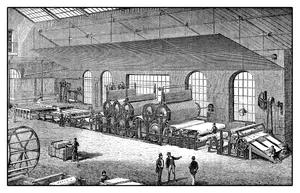
Workers weren’t always protected and workplaces weren’t always as safe as it is today. In the U.S., the history of Workers’ Compensation goes back to the early 1800s. It was a period defined by a major economic shift which included steam-powered machinery, factories and mass production. The rise of steam power, steam trains and steam-powered machines opened new and more efficient ways to produce and deliver goods. These new inventions dramatically transformed manufacturing efficiency by reducing production time and costs. Take Eli Whitney’s cotton gin for example. It increased cotton production from 4,000 bales in 1790 to 1,400,000 bales in 1840.
Social Changes
Mass production pulled large numbers of workers away from farms and rural areas to jobs in factories located in larger cities. As cities grew, the increase in population impacted housing and created new issues around the way we work, including wages, child labor and working conditions.
Shifts in Labor Patterns and Working Conditions
With plenty of people eager and willing to work, factories were able to set wages low, which was about $8 to $10 for a six-day workweek with 14-16-hour days. Women earned one-third to one-half the pay of men and children were paid less than 10 cents an hour for 14-hour days. As goods were manufactured faster and cheaper, the pressure to boost production increased as well.
To compete, factories were forced to expand production hours, which placed new demands and hardships on workers. To keep their jobs, factory workers often overlooked safety issues and dangerous working conditions. Dust-filled air made breathing unhealthy and the loud noise of machinery impaired hearing. Combined with long hours, the lack of exercise and sunlight, workers developed serious health issues. And without safety precautions, accidents, and even deaths, were a common occurrence.
New laws and safer workplaces
In 1833, the Factory Act was one of many attempts to establish safety standards for workers. It restricted the hours children were allowed to work and also helped to improve working conditions. Eventually, additional labor laws followed suit. Reaping the rewards of economic progress, employers found labor, as well as workplace injuries, cheap and without strict enforcement, had little incentive to make necessary improvements.
OSHA enforces new standards
In 1970, The Williams-Steiger Occupational Safety and Health Act introduced tougher regulations and the following year, the Occupational Safety and Health Administration (OSHA) was formed. As part of the U.S. Department of Labor, OSHA established and enforced standards for workplace safety. It also provided training, education and support, as well as provisions for Workers’ Compensation insurance. The act applies to employees and employers in all 50 states and all industries and encouraged states to develop its own safety program.
Currently, 22 states have OSHA-approved State Occupational Safety and Health Plans for both public and private sectors. Workers’ Comp insurance is one of the few insurance policies regulated by the state, which is the reason employers must follow state laws when providing Workers’ Comp insurance. The insurer pays all benefits required as the result of a workplace injury or illness. This includes medical costs, a portion of lost wages, and the support needed to recover and return to work. Provisions for death benefits are also included.
Workers’ Compensation for Small Businesses
As a Certified Professional Employer Organization (CPEO), Propel HR is a member of NAPEO, an organization committed to the integrity of Workers’ Compensation by working together with top carriers, rating bureaus, and regulators who administer the system for workplace safety.
We believe in upholding these standards and in helping small businesses with information, services and business solutions. To find out more, download our free Small Business Guide to Workers’ Compensation. You’ll learn how to get better rates, how premiums are calculated, details on coverage and effective ways to save money.







 Maintaining inefficient processes limits growth, slows project delivery, and prevents your team from focusing on strategic initiatives.
🛠️ How To Fix It: Partnering with an IRS-certified PEO can help. By taking on time-consuming tasks, PEOs help small businesses get back more time to focus on productivity and growth.
In addition to saving time, a PEO can also save your business money by identifying inefficiencies, streamlining HR processes, and helping you make critical cost-cutting decisions.
Maintaining inefficient processes limits growth, slows project delivery, and prevents your team from focusing on strategic initiatives.
🛠️ How To Fix It: Partnering with an IRS-certified PEO can help. By taking on time-consuming tasks, PEOs help small businesses get back more time to focus on productivity and growth.
In addition to saving time, a PEO can also save your business money by identifying inefficiencies, streamlining HR processes, and helping you make critical cost-cutting decisions. 



 When HR productivity is dialed in, your entire team plays better.



 A PEO lays the foundation before those cracks show. Payroll scales without drama. Whether you have 10 people or 110, payroll stays smooth, compliant, and on time.
Onboarding becomes a real process and not a scramble. Templates, checklists, digital forms, background screening, and automated workflows ensure consistency as you grow.
Policies adjust proactively. A PEO helps you build employee handbooks, update them with new laws, and create clear rules that reduce risk as your headcount increases.
A PEO lays the foundation before those cracks show. Payroll scales without drama. Whether you have 10 people or 110, payroll stays smooth, compliant, and on time.
Onboarding becomes a real process and not a scramble. Templates, checklists, digital forms, background screening, and automated workflows ensure consistency as you grow.
Policies adjust proactively. A PEO helps you build employee handbooks, update them with new laws, and create clear rules that reduce risk as your headcount increases.  This is where many small businesses unintentionally step into danger territory. The rules change constantly and the stakes are high.
 If you’re a business owner, your job is to grow the business, not troubleshoot payroll deductions. If you’re an HR manager, your job is to support the people strategy, not drown in admin work.
 ✅Build modern HR processes that employees trust.
 With a PEO, growth is a plan.
 🔶HR Help Wanted: In-house Team or PEO Partner. Investing in an HR team versus partnering with a PEO, which path is best for your small business? As your business grows, managing HR gets complicated – fast. Should you build your own HR team or explore the benefits of partnering with a PEO? Here’s how to decide which choice best fits your business.
  🔶Navigating Compliance Minefields. Navigating HR compliance can feel like tiptoeing through a minefield — one wrong move can trigger costly consequences. From pay transparency laws to overtime thresholds, new regulations evolve faster than most small HR teams can keep up with. Here’s a look at the top HR compliance challenges and how to avoid turning small missteps into expensive lessons.
  🔶New Research Shows Why More Small Businesses Are Turning to PEOs. The data is in! And it shows how partnering with a PEO will be the smartest move for small businesses in 2026. Recently released











 Check OSHA Record Requirements. Each year, applicable employers are required to post a copy of a summary of work-related injuries and illnesses, OSHA Form 300A, from February 1 through April 30. The summary must be displayed in a common area where notices to workers are usually posted. Businesses with 10 or fewer workers and those in certain low hazard industries are exempt from OSHA record-keeping and posting requirements.




 Train managers, as well as employees, to show that diversity is a core competency. Integrating diversity training helps employees recognize issues that may affect workplace or business. For example, an open-ended training exercise asks employees to describe themselves. And another has employees reacting to photographs of potential seatmates on a plane. How we define ourselves and react to others help to recognize and address biases and assumptions that may enter the workplace through interactions with co-workers, clients, customers, vendors, and management.
 Larry has worked for the company for a long time. His work is valuable and no one else in the company really knows how to do his job, but I keep having to deal with issues surrounding his attitude. He is negative and makes inappropriate comments about work, the company, and even clients. There is tension between him and his co-workers. Morale is low, and I see an impact across the company. His attitude is affecting production.
  It is, but I don’t know what to do about it. I feel stuck because I need Larry. No one else knows how to do his job and sometimes it is easier to just avoid dealing with him. But, it is now affecting my work and I am worried that other employees may be searching for another job.


 Diversity and inclusion are no longer an option. All aspects of business, including building relationships and problem-solving, are impacted by culture and in order to compete globally, companies will need to demonstrate a commitment to diversity.
 Companies with a diverse workplace are not only better at HR, but also have overall stronger performance in business, financial, and talent outcomes. According to a McKinsey research study, companies with a diverse workplace are more likely to experience financial returns above the national industry average. Research also indicates that companies that have more women on the board statistically outperforms companies that do not, including higher return on equity and a higher return on sales.
 . Diversity breeds innovation in many ways. In some businesses, brainstorming sessions put diverse values in action by bringing together different cultures with fresh perspectives. For example, employees from other countries may approach a problem differently than American-born workers. Business programs, like the Wizard Academy in Texas, are just one of many breaking down barriers and introducing new thinking and prompting creativity in business education. Inclusion initiatives can be taken to a new level by bringing together different professions, such as architects, artists, authors, business professionals, entrepreneurs, educators, inventors, and engineers, from all over the world, to explore, learn and share experiences.





 Also factored into the premium is the Experience Mod Rate (EMR), also called Mod. This is a number based on how your business compares to other businesses in your industry with similar employee classifications. A company’s Mod is determined based on a number of factors, including the age of the business and the severity, frequency and number of claims. An average Mod starts at 1.0. If your business experiences fewer and less severe accidents than the industry average, your Mod would be assigned a number less than 1.0. And if you recorded higher and more severe accidents, your Mod will be higher than 1.0. Once the classification rate and payroll are determined, the Mod is then applied to the premium. For a Mod of 1.10, the premium would be assessed a 10 percent debit and a Mod of .90, a 10 percent credit.