These tasks shouldn’t take up your workweek. But when systems fall short, they do. If you’re a small or mid-size business owner or HR leader, you probably didn’t get into this role because you love tracking down time-off requests, chasing signatures, or answering the same benefits question 14 times.
And yet… here we are.
Studies show that small business owners spend about 16 hours (or two full days) per week on HR-related administrative work.
Most businesses lose valuable time to the slow drip of small, repetitive “this will only take a minute,” tasks that quietly eat up the workweek. Add them up, and suddenly your strategic HR goals, like recruitment, retention, and leadership development, get pushed aside.
Here are some of the most common areas that may be draining your time.
Time-Consuming HR-Related Tasks
They seem small. But over time, these tasks drain your attention, your energy, and your progress.
1. Repetitive Tasks and Rework
Every time you hunt down a missing signature or resend login details, you lose time you could be using elsewhere. The common offenders? Answering the same employee questions over and over:
“How do I add my baby to insurance?” “When do benefits start?” “How many PTO days do I have left?”
Sound familiar?
Individually, these are quick answers. Collectively? They’re a constant interruption machine. When you stop to respond, you lose focus, break momentum, and push higher-value work further down your list.
🛠️How To Fix It:Uncover the pain points.Which areas are bogging down the process due to repetition? Where can you create a self-service culture? This can mean establishing a simple internal HR hub (in your intranet, shared drive, or HR platform), short FAQs on benefits, PTO, payroll timing, and onboarding, or short videos that walk through routine processes.
Then, train employees to go there first. When someone asks a repeated question, send the link along with your answer. Over time, behavior shifts. HR becomes a source, not a help desk.
2. Correcting Payroll Errors
The latest software makes running payroll seem easy, but if something goes wrong, the liability is still yours. Miscalculating pay, outdated tax information, and manually tracking time off are time-consuming to fix, hard to catch, and expensive if you don’t, not just in terms of costs but also in lost time and eroded trust among your workers.
🛠️How To Fix It:Automate what you can.Look for tools that let employees request time off directly, route approvals to managers, automatically update balances, and sync with payroll.
When automation handles the basics, HR shifts away from data entry to policy guidance. You’ll still handle exceptions, but you won’t be stuck crunching numbers late at night.
Or leave it to the experts by outsourcing payroll to an IRS-certified PEO. A PEO can simplify the payroll process with a cloud-based payroll portal for employers, online employee access to pay stubs, W-2s, benefits info, employee handbooks, and secure, paperless direct deposits. They can also take care of onboarding, payroll taxes, IRS deposits, benefits administration, compliance guidance, and provide HR support.
3. DIY Compliance Monitoring
Labor laws change constantly. Posting requirements update. Salary thresholds shift. Leave laws multiply. Keeping up with shifting deadlines, state-level compliance requirements, and studying the IRS’s recently updated guidance under the One Big Beautiful Bill Act. Trying to monitor all of this yourself is not only time-consuming – it’s also stressful.
One misstep can be costly. In 2025, the Department of Labor’s Wage and Hour Division recovered more than $259 million in back wages for nearly 177,000 employees. That’s an average of $1,465 per worker (the most since 2019).
🛠️How To Fix It:Don’t carry compliance alone.Get expert help by partnering with a professional. Whether it’s through a PEO, outside counsel, or a compliance partner, get support that keeps you updated on requirements that apply to your business.
You’ll need advice on tricky employee situations, alerts on multi-state regulatory changes, new pay transparency rules, evolving paid leave requirements, changing wage-and-hour laws, new employment-related laws on AI, and much more.
🚀 Pro Tip: Stay compliant with our HR Checklist covering the latest updates and deadlines related to compliance, benefits, payroll, and general HR that you need to take care of each quarter. Download your free HR Checklist ➡️ HERE
4. Updating Employee Data in Multiple Places
Name changes. Address changes. Promotions. New pay rates. If you’re entering the same update into payroll, benefits, retirement platforms, and internal trackers, you’re doing triple-plus work and increasing the chance of errors.
🛠️How To Fix It:Integrate your systems, invest in HR technology, or work with a PEO. A unified HR platform can help connect payroll, benefits, time tracking, and employee records, among other things.
With better integration, changes flow through automatically. That means fewer entries, fewer errors, and more free time.
5. Handling Every Employee Issue Personally
When you’re the only go-to for every conflict, complaint, or issue, your day gets hijacked fast. Some things absolutely belong with HR. But many could be resolved earlier and better by trained managers.
🛠️How To Fix It:Upskill your managers by teaching them to give feedback,handle minor conflicts, anddocument specific issues. This doesn’t remove HR from the process; rather, it elevates the role, moving them from firefighter to advisor.
Stop the HR Busy Work, Amplify Your Impact
Normalizing HR busy work has real consequences, including burnout. Your top performers may feel overwhelmed by constant overtime or pressure to meet demands. It also creates dependence on key team members, making it difficult to delegate when only a few people hold essential knowledge or responsibilities.
Maintaining inefficient processes limits growth, slows project delivery, and prevents your team from focusing on strategic initiatives.
🛠️How To Fix It: Partnering with an IRS-certified PEO can help. By taking on time-consuming tasks, PEOs help small businesses get back more time to focus on productivity and growth.
In addition to saving time, a PEO can also save your business money by identifying inefficiencies, streamlining HR processes, and helping you make critical cost-cutting decisions.
If you constantly feel behind, the fix isn’t more hustle. It’s better tools, clearer processes, and the right support. A PEO can help you stop the small stuff from piling up, so you can invest your time where it matters most. And if you need help, just give us a call at📱 800-446-6567
Find Out What a PEO Can Do for You
If you’re a small to mid-sized business, a PEO can lighten your workload and strengthen your operations. Imagine focusing on growth while experts handle your payroll, taxes, benefits, HR, and compliance.
⬇️Read more about the advantages of working with a PEO in our series:
🔷 HELP WANTED: HR Team or PEO Partner
Investing in an HR team versus partnering with a PEO, which path is best for your small business? As your business grows, managing HR gets complicated – fast.
Should you build your own HR team or explore the benefits of partnering with a PEO? Here’s how to decide which choice best fits your business. ➡️Link #1Link #1Read More
🔷 NEW RESEARCH: More Small Businesses Are Turning to PEOs
Compelling research from the National Association of Professional Employer Organizations (NAPEO) shows that PEOs are helping small businesses scale – a game-changer in 2026.
Working with a PEO isn’t about outsourcing; it’s about upgrading how you manage HR. It’s about investing in smarter growth, happier employees, and peace of mind. In a business world that’s only getting more complex, that’s a benefit worth having on your side. Thousands of successful businesses are already doing it – and the data proves it works. ➡️Link #2Link #2Read More
IT’S HERE!
Your FREE HR Checklist
Here’s your checklist of important tasks related to payroll, benefits, compliance, and general HR.
About Propel HR.Propel HR is an IRS-certified PEO and a leading provider of human resources and payroll solutions for 30 years. Propel partners with small to mid-sized businesses to manage payroll, employee benefits, compliance and risks, and other HR functions in a way that maximizes efficiency and reduces costs. For more information, visit propelhr.com
Productivity is the secret sauce that separates teams stuck on the sidelines from those with winning streaks. Chances are you’re juggling hiring, compliance, benefits, culture, and about a dozen other priorities . . . all while the clock keeps ticking.
Your power play? Outsourcing. When used strategically, it boosts productivity, streamlines operations, and frees you up to focus on what actually moves the scoreboard – your bottom line.
First Quarter: What Productivity Really Means
In HR, productivity isn’t about sprinting faster – it’s about running the right plays at the right time.
True HR productivity means delivering meaningful outcomes with minimal wasted effort. Speed matters, sure, but impact matters more.
Fast hiring doesn’t matter if turnover remains high. Smooth payroll is great . . . unless errors keep forcing replays.
At its core, productivity is about consistent, high-quality execution that supports your business year-round.
Here’s the basic stat line. The fundamental formula HR teams use looks like this: Productivity = Total Output / Total Input.
🎯Stronger Compliance Defense. Mistakes lead to fines, audits, and penalties – that’s expensive. Productive HR keeps risk off the scoreboard.
🎯Scoring Efficiency. In the Red Zone, the stakes are high, and scoring opportunities significantly increase. When your HR team isn’t buried in paperwork, they can make a more strategic impact by focusing on culture, performance, and growth.
🎯Leadership Trust. HR shifts from order-taker to trusted partner.
The results? A productive HR function is the engine that keeps your people – and your business – moving forward.
The Stats Don’t Lie: Proof from the League
The data backs it up:
➡️Flexibility & Remote Work. A Gartner report finds that 43% of employees working flexible hours say they are more productive. Gallup found that fully remote workers report the highest engagement levels.
➡️Engagement Matters. Highly engaged teams are 17% – 21% more productive than disengaged ones.
➡️The Productivity Gap. Top-tier companies grew more productive, while others saw declines due to inefficient collaboration and low engagement.
🎯Winning teams don’t guess; they measure, adjust, optimize, and power up.
The Box Score: Common HR Productivity Metrics
To know how your team is performing, you need the right stats:
📊 Output Metrics. Revenue per employee, output per hour, goals completed vs. assigned
📊 Efficiency Metrics. Time spent per task, employee utilization
📊 Quality Metrics. Accuracy and impact, not just speed
📊 Engagement Indicators. Engagement scores and absenteeism.
📊 Financial Metrics. Total Cost of Workforce (TCOW)
These numbers tell you whether your plays are working and what needs to be redesigned.
A PEO helps improve productivity by offloading time-consuming tasks while strengthening the entire employee lifecycle through MVP expertise and next-level HR tech.
🔥Think of it as adding multiple Tom Bradys to your roster.
THE GAME PLAN
Play #1: Reallocate Resources to Core Strengths
The fastest productivity gain comes from freeing your teams from admin overload. By outsourcing, you get:
✅Time Savings. Business owners can spend 20+ hours per month on HR admin-related tasks. Outsourcing frees up time for growth, sales, and strategy.
✅Administrative Relief. Payroll, benefits enrollment, and multi-state compliance tasks move off your plate and into expert hands.
✅A Team of MVPs. Outsourcing gives you access to a team of pros, ready to help when you need it.
Play #2: Build a Deeper Talent Bench that Flexes
An engaged workforce is naturally more productive.
💼 Lower Turnover. Companies using PEOs see 10%–14% lower turnover, reducing disruptions and retraining time.
💼 Big-league Benefits. PEOs provide access to Fortune 500-level benefits, boosting satisfaction and engagement.
💼 Faster Onboarding. Streamlined onboarding helps new hires get in the game.
Play #3: Upgrade Your Tech Stack
PEOs give small and mid-sized businesses access to advanced HR technology without the big-ticket price tag.
📊 Automation.Payroll and tax automation reduce errors and time-consuming fixes.
📊 Employee Self-service. Employees handle PTO, pay stubs, and benefits updates themselves with fewer interruptions for HR.
Play #4: Strengthen Your Compliance Defense
Compliance isn’t optional and managing it internally can drain focus fast. With a PEO on your team, you get:
🛡️Expert Guidance. A team of HR pros helps prevent fumbles and penalties. PEOs stay on top of federal, state, and local regulations, including ACA and FMLA.
🛡️Safety Programs. Proactive safety audits reduce workplace incidents and business disruption.
Play #5: Win on the Scoreboard
All these efficiencies lead to real, measurable stats:
🏆Faster Growth. Businesses using a PEO grow 7% – 9% faster than those that don’t. And are 50% Less Likely to Go Out of Business
💥That’s not just a win – it’s a blowout. It’s the stuff championships are made of.
FINAL CALL: Make Productivity Your Winning Play!
How far can you go? Productivity isn’t a one-time drill – it’s a GOAT mindset.
When you measure what matters, optimize repetitive work, and outsource strategically, you’re not just working faster . . . You’re working smarter. That’s for legends.
🔥Outsourcing is no rookie move. It’s a strategic productivity partner that helps HR shift from scrambling to scoring. And keeping that winning streak hot.
Ready to Turn HR into a Powerhouse?
Ready to hear your crowd ROOOAAARRR? 🎉 This power playbook is your first step.
➡️If you need some coaching or a huddle about your productivity game plan, we’ve got you all the way to the Super Bowl winning streak and beyond – just give us a call.
IT’S HERE!
Your FREE HR Checklist
Here’s your checklist of important tasks related to payroll, benefits, compliance, and general HR.
About Propel HR. Propel HR is an IRS-certified PEO and a leading provider of human resources and payroll solutions for 30 years. Propel partners with small to mid-sized businesses to manage payroll, employee benefits, compliance, risk, and other HR functions in ways that maximize efficiency and reduce costs.
To learn more, visit propelhr.com
If you run a small or midsize business, you already know growth is exciting, yes — but also unpredictable, and sometimes overwhelming. That’s exactly why more business owners and HR leaders are choosing Professional Employer Organizations, or PEOs, not just to outsource HR tasks, but to grow smarter, faster, and more sustainably.
The Top 10
A PEO helps you scale without letting the behind-the-scenes stuff collapse under the weight of bigger payrolls, more onboarding, greater compliance risk, and higher employee expectations. It’s like adding an entire HR department overnight, minus the overhead and recruitment scramble. A few advantages include:
1. You Get HR Infrastructure Before You Actually Need It (Which Is Exactly When You Need It)
Most small businesses don’t feel the pain of HR complexity until it’s too late. Payroll errors start multiplying, employees want benefits you’re not equipped to provide, and suddenly you’re Googling state labor laws at 11:30 p.m.
A PEO lays the foundation before those cracks show. Payroll scales without drama. Whether you have 10 people or 110, payroll stays smooth, compliant, and on time.
Onboarding becomes a real process and not a scramble. Templates, checklists, digital forms, background screening, and automated workflows ensure consistency as you grow.
Policies adjust proactively. A PEO helps you build employee handbooks, update them with new laws, and create clear rules that reduce risk as your headcount increases.
2. A PEO Delivers the Big-Company Benefits Employees Want
Here’s the part that often surprises business owners: a PEO can give you access to benefits packages typically reserved for much larger companies.
Because a PEO pools together employees across its client base, you essentially get to “buy in bulk,” accessing high-quality benefits at lower rates. That means you can offer your team robust health plans, retirement savings options, and other top-tier benefits typically reserved for larger companies (and top talent expects).
🎯When employees enjoy comprehensive benefits without compromise, your company is seen as a long-term career option. Retention rises, and as every HR pro knows, that’s a growth strategy.
3. Compliance Stops Being a Guessing Game
Growth = risk. New states. New regulations. New employment laws. New reporting requirements.
This is where many small businesses unintentionally step into danger territory. The rules change constantly and the stakes are high.
✅They track federal, state, and local employment laws.
✅They help maintain the required documentation.
✅They ensure new hires are classified correctly.
✅They reduce risk with structured workplace policies.
✅And because of the co-employment relationship, many PEOs also share certain administrative responsibilities – meaning you’re not alone if something goes sideways.
🎯Growing is risky. Growing without compliance support? That’s gambling.
4. HR Technology You Don’t Have to Build Yourself
Scaling is smoother when everything is connected, such as payroll, onboarding, PTO tracking, benefits enrollment, performance management, and reporting. But building your own HR tech stack or licensing multiple vendors gets expensive fast.
🎯A PEO delivers the all-in-one HR command center designed for your business. Better data, better workflows, better decision-making.
5. A PEO Frees Up Time (A Lot of It)
If you’re a business owner, your job is to grow the business, not troubleshoot payroll deductions. If you’re an HR manager, your job is to support the people strategy, not drown in admin work.
A PEO takes on repetitive, time-consuming tasks, such as processing payroll, managing benefits, handling tax filings, and preparing compliance documentation. The more you grow, the more time you reclaim, instead of watching your workload escalate with each hire.
6. You Gain a Team of HR Experts Without Expanding Your Staff
Growing companies don’t always have the luxury of immediately hiring a full HR team — HR generalists, benefits specialists, payroll administrators, compliance officers, recruiters, risk managers, the whole lineup.
A PEO gives you access to exactly those roles, on-demand expertise, without the full-time salary load.
Need help rolling out a new PTO policy? Preparing for benefits renewal? Handling a sensitive employee relations issue? There’s an expert for that. It’s like having a seasoned HR department already onboard, ready to advise you every step of the way.
7. You Become More Attractive to Investors and Partners
Here’s something entrepreneurs don’t always think about: investors love operational maturity. When a PEO is part of your infrastructure, it signals you’re compliant, manage risks well, your HR processes are stable and that you can scale responsibly.
🎯For investors, lenders, and potential partners, a strong HR foundation = reduced risk. And reduced risk makes you a better bet. For acquisitions and rapid growth phases, a PEO can also make integration smoother.
8. A PEO Helps You Build a Better Employee Experience
Growth doesn’t just require more people; it requires keeping the good people you already have on board.
A PEO helps you:
✅Improve communication and access to information.
✅Build modern HR processes that employees trust.
✅Provide competitive benefits
✅Create fair, consistent workplace policies.
🎯A better employee experience leads to lower turnover and higher morale. And in high-growth companies, stability is gold.
9. You Can Expand Into New States With Confidence
Need to hire employees in another state? That’s great for growth, but it creates compliance challenges due to different tax rules and labor law requirements.
🎯A PEO handles all of it, letting you recruit the best talent in any location without losing sleep or risking penalties.
10. You Scale Strategically
Growth can stress your business when operations lag behind headcount. A PEO aligns both, so you’re expanding strategically.
🎯The result? Smooth transitions. Predictable costs. Cleaner processes. Less risk. Happier employees. And more time to focus on what actually grows the business — not on what slows it down.
Growth Is Easier ➡️When You’re Not Doing Everything Yourself
If you’re preparing to scale — or even thinking about it — the question isn’t whether you can handle growth alone. It’s whether you should.
With a PEO, growth is a plan.
A PEO delivers the infrastructure, expertise, and stability that power growing companies, without requiring a major investment or a staff increase.
Ready to see what a PEO can do? We can lighten your workload and help you drive growth, just give us a call at (800) 446-6567 or visit propelhr.com
🎯PEO Series: The PEO Difference🎯
Learn more about how a PEO can help your business in our series:
🔶HR Help Wanted: In-house Team or PEO Partner. Investing in an HR team versus partnering with a PEO, which path is best for your small business? As your business grows, managing HR gets complicated – fast. Should you build your own HR team or explore the benefits of partnering with a PEO? Here’s how to decide which choice best fits your business. Read More
🔶Navigating Compliance Minefields. Navigating HR compliance can feel like tiptoeing through a minefield — one wrong move can trigger costly consequences. From pay transparency laws to overtime thresholds, new regulations evolve faster than most small HR teams can keep up with. Here’s a look at the top HR compliance challenges and how to avoid turning small missteps into expensive lessons. Read More
🔶New Research Shows Why More Small Businesses Are Turning to PEOs. The data is in! And it shows how partnering with a PEO will be the smartest move for small businesses in 2026. Recently released research from the National Association of Professional Employer Organizations (NAPEO) shows that PEO partnerships are helping small businesses scale. It’s smarter, more efficient, and a game-changer. Here’s what the latest data shows. Read More
IT’S HERE!
Your FREE HR Checklist
Here’s your checklist of important tasks related to payroll, benefits, compliance, and general HR.
About Propel HR. Propel HR is an IRS-certified PEO that has been a leading provider of human resources and payroll solutions for more than 25 years. Propel partners with small to mid-sized businesses to manage payroll, employee benefits, compliance and risks, and other HR functions in a way that maximizes efficiency and reduces costs. For more information, visit www.propelhr.com
Whether you are running a business or developing your career, networking is essential to building and maintaining business relationships. Effective networking takes practice and preparation, but moreover it takes patience.
Tom Farley, President of the NYSE, stated in Fortune Magazine, “Networking is about collecting relationships with interesting or influential people irrespective of the immediate benefit of these relationships.” I wholeheartedly agree. Often the time, energy, stress and money we put into going to non-profit galas, Chamber of Commerce celebrations, leadership functions and business grand openings are dismissed as a waste of time and a burden on your social and family calendars. But I truly believe that coordinating networking opportunities at least once or twice a month is a great investment in your future.
Here are 3 reasons why business networking is important:
Builds character: Networking in a variety of environments with a diverse group of people that represent multiple industries builds character. The more you interact with others and tell your business story, the more confident you become. Also your listening skills will improve. Eventually you’ll find yourself relaxed and having fun and making new contacts.
Widens your circle of influence: Networking helps raise awareness of your name and the name of your business. You want people to remember YOU in all the right ways and spread your name and business among their peers and colleagues.
Forces you to practice your pitch: The more people you interact with at networking events, the more opportunities you’ll have to tell your story. It’s important that you have a refined proposition that you can pitch in 15 seconds or less. The more you practice, the better you’ll be received.
Investing your time and effort in networking should be an essential part of your job. It’s important to remember that networking is not selling, but rather it’s opening the door to new opportunities. Look at the big picture: networking is more like running a marathon than sprinting. With patience, preparation and smart execution, the dividends of business networking will benefit you and your business.
For Christmas, we took our girls on a Disney cruise. If you have ever been on a Disney Cruise or anything Disney related, then you know that it was top-notch. When I wasn’t seeing Mickey, snorkeling, or just relaxing by the pool, I couldn’t help but think of the business of Disney. A few years ago, I read The Disney Way: Harnessing the Management Secrets of Disney in Your Company by Bill Capodagli and Lynn Jackson. As I looked around the ship and interacted with the “team” members, I was reminded of this book and the deliberate business model behind Disney. Walt Disney’s original philosophy and vision is still evident in all things Disney. Dream. Believe. Dare. Do. These four words are the pillars behind Disney’s success and can help all business leaders.
Dream:
Encourage all employees, regardless of job title, to dream in a structured way in order to solve problems and develop solutions.
Hold off-site retreats to plan and strategize.
Believe:
Formalize your company’s mission and values and use as a training tool all employees. Every employee attends Disney University to learn about Walt’s vision. As you walk through a Disney park, you can feel the difference.
Use the core values as a guide when evaluating all business decisions.
Reinforce the company’s vision and values on a regular basis through companywide meetings.
Dare:
Allow employees the opportunity to develop innovative ideas and reward this behavior.
Spend time evaluating failures to help plan for future projects.
Use multifunctional teams to evaluate processes. For example, when Disney evaluated new attractions, even the custodian was brought in to provide valuable feedback.
Do:
Treat your customers like guests.
Expect perfection and plan out all details before execution.
Go the extra mile. Disney does such a great job with this that their guests don’t mind paying extra for the experience.
Walt Disney died before Disney World in Florida opened. Yet if he were alive today, he would see that his core beliefs are still the driving force of the Walt Disney Company. As business leaders, we all need to take more time to dream; inspire our team to believe; take risks and dare to be unique; and pay attention to the details in order to do what is necessary for success. In essence, channel your Inner-Mickey!
The anticipated and controversial changes to the Exempt status as defined under the Fair Labor Standards Act (FLSA) are in! The effective date of the final rule is December 1, 2016, with future automatic updates every three years beginning January 1, 2020. A few highlights to the Final Rule include updating the salary and compensation levels for Executive, Administrative and Professional workers as defined under the FLSA.
Here is an overview with details from the Department of Labor that we found Link #1on their website:
Increases the current standard salary level of exempt compensation from $455 weekly (annualized at $23,660) to the new $913 weekly (annualized at $47,476)
Increases the current highly compensated employee (HCE) from $100,000 annually to $134,004
Establishes automatic updates to the salary and compensation levels every three years beginning January 1, 2020
A few important keys as we all prepare for December 1st is to review the following:
The status of your current employees
Hours worked
Assigned duties
How their time is tracked (both exempt and non-exempt)
How you pay their compensation
Remember, this change impacts overtime eligibility and pay. Its critically important to start with evaluating individual positions in an effort to properly classify each, develop how you are tracking hours worked and policies supporting timekeeping requirements and how will you communicate the changes.
Should you have concerns or want to discuss the Final Overtime Rule and your company’s position, please call your Propel HR team. We’re here to assist you.
Since 2000, Gallup Research has measured employee engagement in the U. S. on an annual basis. Engaged employees are defined as those who are involved in, enthusiastic about and committed to their work. In 2014, only 31.5% of U.S. workers were engaged in their jobs.
This means that almost 70% of employees were NOT engaged in their work. As a business owner, this number is staggering and upsetting.
If employees are not engaged at work, there are huge potential risks for businesses: the risk of losing clients due to poor customer service; the risk of costly mistakes; the risk of demotivating other employees; the risk of high turnover; and the obvious risk of paying for a non-productive employee. It is estimated that disengaged employees cost the U.S. $350 billion each year in lost productivity.
According to Dale Carnegie, companies with engaged employees outperform those without by up to 202%. Employee engagement is more than just happiness; engagement is an emotional commitment to the organizations and its goals.
As a business leader, how do you increase employee engagement on your own team?
Start at the top. Senior leadership must demonstrate the behaviors that are desired for the employees. Employees need to believe in their leaders.
Transparency. Openness shows trust. Management transparency is critical to employee engagement.
Manage by Walking Around. Don’t just sit in your office; be on the floor and in the action. Get to know your employees and understand their job. Engage with them and they are more likely to engage.
Get rid of toxic employees. Every organization has had a toxic employee that zaps morale and hurts production. If you can’t solve the employee issue quickly, then it may be time to detox the environment.
Use the right employee engagement survey. Ask questions that are relevant and specific. And once you receive the opinions from employees, you must act on the data.
Promote pride in company. Every employee should add value to the organization. Acknowledge that value and allow them to have pride in their work and their contribution to the larger goal.
Employee engagement is vital to a company’s growth. Having an engaged workforce adds to the bottom line and increases customer loyalty. And as a business leader, that is worth the effort to ENGAGE.
As the President of a company, I am tasked with many jobs. Unfortunately, one of those jobs is to handle any elevated customer complaints. Thankfully, I don’t receive many calls from unhappy clients, but when I do, this means that the client is frustrated to the point of the “last straw”. Over the years, I have realized that most of these calls can be avoided altogether if communication with clients is improved. Mistakes can always happen, but many mistakes can be avoided with proper communication.
Here are some simple ways to improve client communication in any office environment.
Review and Respond to Open Emails. Even if you have to tell a client that you can’t get to their request at the time, you need to set an appropriate time for completion and honor it.
Return All Voicemails within 3 Hours. If you are gone for a whole day, change your voice mail to reflect that.
Pick Up the Phone. All too often, we hide behind emails. Remember, email is for CONFIRMATION, NOT COMMUNICATION. After you talk to the client, send an email to confirm the discussion points.
Raise Your Hand. If you are too busy to handle a client request, ask a teammate or manager.
LISTEN. Make sure you listen to the entire problem before you offer solutions. Sometimes people just want to vent and feel heard. By actively listening, you validate their concerns.
Share Progress Updates. If you are working on a big project, communicate updates regularly.
Own Your Mistakes. We all make mistakes. It is much easier when you admit it, learn from it and then work towards a resolution. This approach also makes it easier for management to stand behind you and help with the resolution. Defensiveness and negative energy do not help work towards a solution.
Communication is the basis of any good relationship and this is especially true of your relationships at work. In today’s busy world, we are all guilty of not taking the time to communicate properly with each other. By working daily to improve communications, the end result will be an elevated level of customer service. And that means fewer calls to the President!
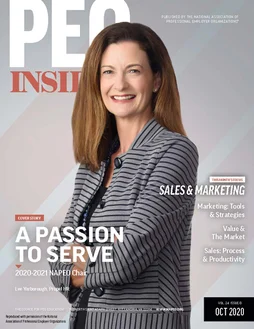
Propel HR President Lee Yarborough was recently elected Chair of the National Association of Professional Employer Organizations (NAPEO) Board of Directors.
She spoke with PEO Insider magazine to share where she thinks the industry is headed and how NAPEO can continue to grow. Download a pdf version of the full interview: A Passion To Serve
About Propel HR. An IRS-certified Professional Employer Organization (PEO), Propel HR has been a leading provider of Human Resources and payroll solutions for more than 25 years. We partner with small to mid-sized businesses to manage payroll, employee benefits, compliance, and other HR functions in a way that maximizes efficiency and reduces costs. Visit our new website at www.propelhr.com.
Innovations in technology and the strategic evolution of human resource departments have caused many employers to transition to paperless HR processes. Handling, organizing and retaining paper documents costs companies time, money and space. Going paperless offers several advantages, including environmental sustainability, convenient document accessibility, and the reduction of costs and physical storage space. But before you start scanning and shredding your old files, there are a few aspects to consider.
First, it’s important to note that best practices regarding paper personnel files shouldn’t be abandoned. More specifically, you should separate personnel files into categories to limit access to Equal Employment Opportunity (EEO) protected characteristics, medical records, and other information that could be unfairly used in making employment decisions (i.e. hiring, promoting, transferring, terminating, etc.)
Next, although we haven’t seen regulations addressing electronic recordkeeping across all HR disciplines, the US Department of Labor has issued Final Rule guidance for documents governed by the Employee Retirement Income Security Act (ERISA), which gives employers important points to consider when transitioning to an electronic filing system.
According the DOL, employers should ensure that:
(1) Its electronic recordkeeping system has reasonable controls to ensure the integrity, accuracy, authenticity and reliability of the records kept in electronic form.
(2) Its electronic records are maintained in reasonable order and in a safe and accessible place, and in such manner as they may be readily inspected or examined (for example, the recordkeeping system should be capable of indexing, retaining, preserving, retrieving and reproducing the electronic records).
(3) Electronic records are readily convertible into legible and readable paper copy as may be needed to satisfy reporting and disclosure requirements.
(4) Its electronic recordkeeping system is not subject, in whole or in part, to any agreement or restriction that would, directly or indirectly, compromise or limit a person’s ability to comply with any reporting and disclosure requirement.
(5) Adequate records management practices are established and implemented (for example, following procedures for labeling of electronically maintained or retained records, providing a secure storage environment, creating back-up electronic copies and selecting an off-site storage location, observing a quality assurance program evidenced by regular evaluations of the electronic recordkeeping system including periodic checks of electronically maintained or retained records, and retaining paper copies of records that cannot be clearly, accurately or completely transferred to an electronic recordkeeping system.[1]
The primary takeaway is – an electronic recordkeeping system can save your company time, money and space, but you must ensure that your electronic documents are organized correctly, are legible when accessed and are equally as secure as their paper predecessors.
Our friends at PTG have written a blog about Protecting Your Company from CEO Impersonation Attacks. Read about that here.
I have been reading the book Quiet: The Power of Introverts in a World that Can’t Stop Talkingby Susan Cain. Introverts are people who recharge by spending time alone and need quiet time in order to succeed and be creative. According to best-selling author Susan Cain, more than one third of all people are introverted, yet our world operates as if we are all extroverted.
Our workplaces are made for the extrovert. Office furniture is positioned so employees can function as teams with little privacy. Companies have brainstorming sessions, but most ideas come from the loudest voice. Presentations are mandatory, regardless of skill set. A constant stream of interruptions is normal in offices and expected to be managed well.
For the introvert, this can cause stress and may lead to performance issues or burnout. As managers, we need to know our staff and help them reach their greatest potential. Here are some suggestions to help your “Quieter” team members:
1. Give Advance notice. Introverts prefer to prepare and think before speaking. An impromptu brainstorming session will not produce the results you want if part of your team is introverted. Prepare an agenda and communicate expectations. Allow time for preparation.
2. Use different communication techniques. In addition to meetings, ask for ideas in writing. Many introverts prefer to communicate non-verbally and this will allow a chance for their voices to be heard.
3. Encourage privacy. Offices today have open floor plans. This does not allow the introvert to have the quiet space needed to refocus and be productive. Encourage quiet atmospheres and if possible, provide space where employees can have a privacy break.
4. Consider work alternatives. If an introverted employee is in the middle of a big project, be flexible. They may be more effective working from home or a different environment.
5. Listen. Introverts need time to reflect while they respond. An extroverted manager may get inpatient with this, but it is important not to interrupt their response. Just listen.
Introverts add significant value to every workplace. Their differences need to be respected and celebrated. If you need convincing of the value of introversion in business, just look to Bill Gates, Warren Buffett, and Apple’s Steve Wozniak.
Working in the human resources field, I’ve come to be a huge believer in the Employee Assistance Program (EAP). This often under-utilized program can be exactly what’s needed to help employees, their family members and the employer.
An Employee Assistance Program is a workplace service designed to accomplish several goals:
To help employees identify and resolve problems that could affect their job performance and their life in general.
To assist an organization in dealing with productivity issues, such as absenteeism, poor job performance and personal conflicts.
To provide counseling for alcohol and substance abuse, financial concerns, legal issues, loss and grief, and marital/relationship problems.
To keep the costs for the employee free or significantly discounted.
I’d like to share one particular case in which the EAP truly helped an employee climb out of her depths of depression, restored her marriage and steered her into a life of recovery.
“Ms. B” was a successful business woman who worked in the corporate world. She was driven to be a leader. Through great ambition and hard work she had climbed to top of the ladder within her institution in record time. She was well educated, was attractive and had a tremendous social network. But under all the glitter and prestige, Ms. B was suffering. Years of work dinners, cocktail parties and social engagements had started to take its toll. She started missing days of work and had trouble meeting deadlines. Her marriage was beginning to crumble as she and her husband drifted apart, in large part because of her hectic work schedule. Her doctor prescribed an anti-depressant to help with her anxiety and fatigue to little avail. She was overwhelmed and was living in a state of panic and worry.
One of her co-workers suggested that she schedule an appointment with the human resources department, where Ms. B learned about the benefits of the company’s EAP program. Her HR manager scheduled an appointment for her with a professional counselor. Ms. B not only took advantage of the EAP’s free counseling sessions but also took advantage of the marital counseling with her husband. After a few sessions she and the EAP counselor determined that she was most likely suffering from alcoholism. Today she’s a member of Alcoholics Anonymous and attends meetings regularly, and she has once again become a thriving top-tier executive within her organization.
Are you, your employees or your co-workers taking advantage of your company’s EAP? When you think of personal problems that might impact the workplace, what comes to mind? Do you know a “Ms. B?” Moreover, are YOU a “Ms. B?” If so, an Employee Assistance Program can help you get your life back on track.
Businesses agree: Growth is Good! Growth means new clients and increased production. Ultimately, growth translates to increased profit.
Employees may view growth differently. Growth can be scary. It can mean more work in less time. Employees may worry about additional hours, the impact of stress on their personal lives, and added potential to make mistakes. They may feel that they are overworked and need help, but that no one is listening.
As business leaders, how do we maximize growth and manage employee morale?
Hire sooner rather than later. Businesses often hire in a reactive manner. However, the most successful companies hire before the need arises. Personnel requirements should be constantly monitored and the candidate search should begin before the crisis point.
Manage the hiring process. Hiring and recruiting require a great deal of time and money. However, finding the right employees to grow your business is worth it. Take the time to update job descriptions, advertise effectively, work with recruiting firms and consider using employee assessments.
Involve the team in the process of structuring new positions.Current employees may feel threatened by the possibility of new personnel. Ask for feedback from employees and keep communication open. Post jobs internally first. When recruiting from the outside, consider having key employees involved in the interview process. This will make them feel less threatened by new hires.
Create a training program. Whether formal or informal, a training program for new hires is crucial to your growth strategy. Focus the training on the skills and knowledge necessary to perform the job successfully as well as the cultural expectations of the job.
Evaluate current employees. Do you have the right people on your team to grow with you? You must make objective assessments of your current employees, in particular, the management. Additional training or resources may elevate current managers to the necessary level, but if not, you must be willing to make difficult decisions.
Plan for physical expansion. Can your current facility handle your expected growth? Can you make modifications to optimize your space and expand your timeline?
Remember the three C’s: Coordinate, Communicate and Celebrate. Plan your growth strategy; be open to your staff; and celebrate your growth. Encourage everyone to work towards continued success. And most importantly, enjoy, this is when business becomes fun!
My daughter is obsessed with Harry Potter. She has read the books, seen the movies, and has a wand! She is in England this week and had a chance to visit the studio where the movie was filmed.
The books take readers on the adventures of the young wizard, Harry Potter, and his best friends as they learn the wizardry trade at the Hogwarts School. One of the skills they learn is how to use a wand. The key to casting a spell involves the correct command, the right voice inflection and the accurate flick of the wrist. And of course, using the right spell at the right time.
The same skills can be used when communicating to your employees. It is not enough to tell employees what must be done. Good managers must provide adequate instruction and give reasons for the requests. The tone of the request is important as it sets a priority and should treat the employee with respect. The medium of communication must also be considered. Is it best to email or speak directly to the individual?
Just as Harry had to practice using his wand in order to cast spells, managers should also have periodic training on communication and leadership skills. The students of Hogwarts were taught to use magic with respect and only when needed. This is a good lesson for managers as well: use your authority only when necessary. The manager who is willing to work with the team rather than just giving orders gets the most respect. Take time to listen, observe, and give feedback as well as thanks.
Although not instant magic, learning proper communication skills can be as effective as a magic wand in the business world.
On Sunday, my husband and I drove our oldest daughter to summer camp. This is her 7th summer at camp and it will be her home for the next 3 weeks. I went to the same camp for 12 years, so camp is truly in her blood. As a camper, counselor and now a mom of a camper, I have seen up close the many benefits of camp.
Each summer, I get a little “campsick” as I sit at my computer and day dream about the mountains. Camp songs ring through my head and I yearn for days full of swimming, climbing, crafts and an actual rest hour after lunch.
As adults, it is easy to get complacent, especially in our work life. This summer, I encourage you to apply the lessons of summer camp to your business.
Try something new. Camp revolves around trying things that you wouldn’t try at home. Whether a new work strategy, a new product line or a new vendor, now is the time to take that risk.
Trust. If you have ever been rock climbing, then you understand the meaning of trust. You must trust the leader, the equipment and yourself. This same level of trust is essential in your business.
Follow the chore chart. Each cabin has a chore chart that instructs campers of their daily cleaning duty. If everyone does their job according to the chart, the cabin will be clean. Does your business have current job descriptions? Do your employees understand the full scope of their job?
Honor tradition. Successful camps celebrate the past while constantly looking towards the future. Campers sing the same campfire songs that previous generations sang while adding new songs to their repertoire. Businesses should operate that way as well. Honor past successes, learn from past mistakes and continuously look forward.
Take a break from the high tech. For the next three weeks, my daughter will not have access to anything electronic. Although this can be difficult, I challenge each of us to take technology breaks this summer. Encourage more actual conversation and less email. More client visits and fewer texts. Focus on genuine human connections and watch your business grow.
And the most important lesson of all, have fun! My daughter returns from camp each summer a little wiser, stronger, and more mature. Yet, in her mind, camp is just FUN! Wouldn’t work be better if it was a little more fun?
Every day when Teresa leaves the office, she asks herself one question: “Did I provide value to the company today?” As the VP of Operations for Propel HR, Teresa provides plenty of value every day to the company as well as to the clients and employees. Teresa has had much success in her career and has a reputation for excellence. Yet, she continues to ask this same question every day.
I find significance in the asking of this daily question. Since Teresa shared this ritual with me, I began asking myself this same question on my daily drive home.
If I am truthful, some days my value is minimal. I may have been busy all day, running around, emailing and checking things off my to-do list; but the value to the company was minimal. Other days, nothing is checked off my to-do list, but I may have had wonderful quality time with clients, employees or outside innovators which adds tremendous value to the company.
I am a Type A person that is constantly on the move. I multi-task like a champ and accomplish a lot each day. I love a to-do list and I love the feeling of gratification when I can check off an item. I guard my work time and don’t like to spend a lot of time on idle chat. Teresa’s question shakes up my whole theory of the value that I bring to the company.
By answering this question, I have learned that my true value is in brain storming, delegating, networking, questioning, and leading. My value is not defined by a list of items on a piece of paper. Every employee brings a different skill set which should add value to the company each day. Not only does Teresa ask this question to herself, she also encourages her team to be introspective as well. Everyone’s value proposition is different, but there are days when we all can answer, “YES, we brought value to Propel HR,” and those days are dynamite! Work is fun and what we can accomplish as a team is endless.
I challenge you to ask this question of yourself and to redefine what you consider as valuable. Challenge your employees and peers to also look at their work value each day.
Did you provide VALUE to the company today? You may be surprised by your answer.







 Maintaining inefficient processes limits growth, slows project delivery, and prevents your team from focusing on strategic initiatives.
🛠️ How To Fix It: Partnering with an IRS-certified PEO can help. By taking on time-consuming tasks, PEOs help small businesses get back more time to focus on productivity and growth.
In addition to saving time, a PEO can also save your business money by identifying inefficiencies, streamlining HR processes, and helping you make critical cost-cutting decisions.
Maintaining inefficient processes limits growth, slows project delivery, and prevents your team from focusing on strategic initiatives.
🛠️ How To Fix It: Partnering with an IRS-certified PEO can help. By taking on time-consuming tasks, PEOs help small businesses get back more time to focus on productivity and growth.
In addition to saving time, a PEO can also save your business money by identifying inefficiencies, streamlining HR processes, and helping you make critical cost-cutting decisions. 



 When HR productivity is dialed in, your entire team plays better.



 A PEO lays the foundation before those cracks show. Payroll scales without drama. Whether you have 10 people or 110, payroll stays smooth, compliant, and on time.
Onboarding becomes a real process and not a scramble. Templates, checklists, digital forms, background screening, and automated workflows ensure consistency as you grow.
Policies adjust proactively. A PEO helps you build employee handbooks, update them with new laws, and create clear rules that reduce risk as your headcount increases.
A PEO lays the foundation before those cracks show. Payroll scales without drama. Whether you have 10 people or 110, payroll stays smooth, compliant, and on time.
Onboarding becomes a real process and not a scramble. Templates, checklists, digital forms, background screening, and automated workflows ensure consistency as you grow.
Policies adjust proactively. A PEO helps you build employee handbooks, update them with new laws, and create clear rules that reduce risk as your headcount increases.  This is where many small businesses unintentionally step into danger territory. The rules change constantly and the stakes are high.
 If you’re a business owner, your job is to grow the business, not troubleshoot payroll deductions. If you’re an HR manager, your job is to support the people strategy, not drown in admin work.
 ✅Build modern HR processes that employees trust.
 With a PEO, growth is a plan.
 🔶HR Help Wanted: In-house Team or PEO Partner. Investing in an HR team versus partnering with a PEO, which path is best for your small business? As your business grows, managing HR gets complicated – fast. Should you build your own HR team or explore the benefits of partnering with a PEO? Here’s how to decide which choice best fits your business.
  🔶Navigating Compliance Minefields. Navigating HR compliance can feel like tiptoeing through a minefield — one wrong move can trigger costly consequences. From pay transparency laws to overtime thresholds, new regulations evolve faster than most small HR teams can keep up with. Here’s a look at the top HR compliance challenges and how to avoid turning small missteps into expensive lessons.
  🔶New Research Shows Why More Small Businesses Are Turning to PEOs. The data is in! And it shows how partnering with a PEO will be the smartest move for small businesses in 2026. Recently released
  Pick Up the Phone. All too often, we hide behind emails. Remember, email is for CONFIRMATION, NOT COMMUNICATION. After you talk to the client, send an email to confirm the discussion points.
 She spoke with