These tasks shouldn’t take up your workweek. But when systems fall short, they do. If you’re a small or mid-size business owner or HR leader, you probably didn’t get into this role because you love tracking down time-off requests, chasing signatures, or answering the same benefits question 14 times.
And yet… here we are.
Studies show that small business owners spend about 16 hours (or two full days) per week on HR-related administrative work.
Most businesses lose valuable time to the slow drip of small, repetitive “this will only take a minute,” tasks that quietly eat up the workweek. Add them up, and suddenly your strategic HR goals, like recruitment, retention, and leadership development, get pushed aside.
Here are some of the most common areas that may be draining your time.
Time-Consuming HR-Related Tasks
They seem small. But over time, these tasks drain your attention, your energy, and your progress.
1. Repetitive Tasks and Rework
Every time you hunt down a missing signature or resend login details, you lose time you could be using elsewhere. The common offenders? Answering the same employee questions over and over:
“How do I add my baby to insurance?” “When do benefits start?” “How many PTO days do I have left?”
Sound familiar?
Individually, these are quick answers. Collectively? They’re a constant interruption machine. When you stop to respond, you lose focus, break momentum, and push higher-value work further down your list.
🛠️How To Fix It:Uncover the pain points.Which areas are bogging down the process due to repetition? Where can you create a self-service culture? This can mean establishing a simple internal HR hub (in your intranet, shared drive, or HR platform), short FAQs on benefits, PTO, payroll timing, and onboarding, or short videos that walk through routine processes.
Then, train employees to go there first. When someone asks a repeated question, send the link along with your answer. Over time, behavior shifts. HR becomes a source, not a help desk.
2. Correcting Payroll Errors
The latest software makes running payroll seem easy, but if something goes wrong, the liability is still yours. Miscalculating pay, outdated tax information, and manually tracking time off are time-consuming to fix, hard to catch, and expensive if you don’t, not just in terms of costs but also in lost time and eroded trust among your workers.
🛠️How To Fix It:Automate what you can.Look for tools that let employees request time off directly, route approvals to managers, automatically update balances, and sync with payroll.
When automation handles the basics, HR shifts away from data entry to policy guidance. You’ll still handle exceptions, but you won’t be stuck crunching numbers late at night.
Or leave it to the experts by outsourcing payroll to an IRS-certified PEO. A PEO can simplify the payroll process with a cloud-based payroll portal for employers, online employee access to pay stubs, W-2s, benefits info, employee handbooks, and secure, paperless direct deposits. They can also take care of onboarding, payroll taxes, IRS deposits, benefits administration, compliance guidance, and provide HR support.
3. DIY Compliance Monitoring
Labor laws change constantly. Posting requirements update. Salary thresholds shift. Leave laws multiply. Keeping up with shifting deadlines, state-level compliance requirements, and studying the IRS’s recently updated guidance under the One Big Beautiful Bill Act. Trying to monitor all of this yourself is not only time-consuming – it’s also stressful.
One misstep can be costly. In 2025, the Department of Labor’s Wage and Hour Division recovered more than $259 million in back wages for nearly 177,000 employees. That’s an average of $1,465 per worker (the most since 2019).
🛠️How To Fix It:Don’t carry compliance alone.Get expert help by partnering with a professional. Whether it’s through a PEO, outside counsel, or a compliance partner, get support that keeps you updated on requirements that apply to your business.
You’ll need advice on tricky employee situations, alerts on multi-state regulatory changes, new pay transparency rules, evolving paid leave requirements, changing wage-and-hour laws, new employment-related laws on AI, and much more.
🚀 Pro Tip: Stay compliant with our HR Checklist covering the latest updates and deadlines related to compliance, benefits, payroll, and general HR that you need to take care of each quarter. Download your free HR Checklist ➡️ HERE
4. Updating Employee Data in Multiple Places
Name changes. Address changes. Promotions. New pay rates. If you’re entering the same update into payroll, benefits, retirement platforms, and internal trackers, you’re doing triple-plus work and increasing the chance of errors.
🛠️How To Fix It:Integrate your systems, invest in HR technology, or work with a PEO. A unified HR platform can help connect payroll, benefits, time tracking, and employee records, among other things.
With better integration, changes flow through automatically. That means fewer entries, fewer errors, and more free time.
5. Handling Every Employee Issue Personally
When you’re the only go-to for every conflict, complaint, or issue, your day gets hijacked fast. Some things absolutely belong with HR. But many could be resolved earlier and better by trained managers.
🛠️How To Fix It:Upskill your managers by teaching them to give feedback,handle minor conflicts, anddocument specific issues. This doesn’t remove HR from the process; rather, it elevates the role, moving them from firefighter to advisor.
Stop the HR Busy Work, Amplify Your Impact
Normalizing HR busy work has real consequences, including burnout. Your top performers may feel overwhelmed by constant overtime or pressure to meet demands. It also creates dependence on key team members, making it difficult to delegate when only a few people hold essential knowledge or responsibilities.
Maintaining inefficient processes limits growth, slows project delivery, and prevents your team from focusing on strategic initiatives.
🛠️How To Fix It: Partnering with an IRS-certified PEO can help. By taking on time-consuming tasks, PEOs help small businesses get back more time to focus on productivity and growth.
In addition to saving time, a PEO can also save your business money by identifying inefficiencies, streamlining HR processes, and helping you make critical cost-cutting decisions.
If you constantly feel behind, the fix isn’t more hustle. It’s better tools, clearer processes, and the right support. A PEO can help you stop the small stuff from piling up, so you can invest your time where it matters most. And if you need help, just give us a call at📱 800-446-6567
Find Out What a PEO Can Do for You
If you’re a small to mid-sized business, a PEO can lighten your workload and strengthen your operations. Imagine focusing on growth while experts handle your payroll, taxes, benefits, HR, and compliance.
⬇️Read more about the advantages of working with a PEO in our series:
🔷 HELP WANTED: HR Team or PEO Partner
Investing in an HR team versus partnering with a PEO, which path is best for your small business? As your business grows, managing HR gets complicated – fast.
Should you build your own HR team or explore the benefits of partnering with a PEO? Here’s how to decide which choice best fits your business. ➡️Link #1Link #1Read More
🔷 NEW RESEARCH: More Small Businesses Are Turning to PEOs
Compelling research from the National Association of Professional Employer Organizations (NAPEO) shows that PEOs are helping small businesses scale – a game-changer in 2026.
Working with a PEO isn’t about outsourcing; it’s about upgrading how you manage HR. It’s about investing in smarter growth, happier employees, and peace of mind. In a business world that’s only getting more complex, that’s a benefit worth having on your side. Thousands of successful businesses are already doing it – and the data proves it works. ➡️Link #2Link #2Read More
IT’S HERE!
Your FREE HR Checklist
Here’s your checklist of important tasks related to payroll, benefits, compliance, and general HR.
About Propel HR.Propel HR is an IRS-certified PEO and a leading provider of human resources and payroll solutions for 30 years. Propel partners with small to mid-sized businesses to manage payroll, employee benefits, compliance and risks, and other HR functions in a way that maximizes efficiency and reduces costs. For more information, visit propelhr.com
Productivity is the secret sauce that separates teams stuck on the sidelines from those with winning streaks. Chances are you’re juggling hiring, compliance, benefits, culture, and about a dozen other priorities . . . all while the clock keeps ticking.
Your power play? Outsourcing. When used strategically, it boosts productivity, streamlines operations, and frees you up to focus on what actually moves the scoreboard – your bottom line.
First Quarter: What Productivity Really Means
In HR, productivity isn’t about sprinting faster – it’s about running the right plays at the right time.
True HR productivity means delivering meaningful outcomes with minimal wasted effort. Speed matters, sure, but impact matters more.
Fast hiring doesn’t matter if turnover remains high. Smooth payroll is great . . . unless errors keep forcing replays.
At its core, productivity is about consistent, high-quality execution that supports your business year-round.
Here’s the basic stat line. The fundamental formula HR teams use looks like this: Productivity = Total Output / Total Input.
🎯Stronger Compliance Defense. Mistakes lead to fines, audits, and penalties – that’s expensive. Productive HR keeps risk off the scoreboard.
🎯Scoring Efficiency. In the Red Zone, the stakes are high, and scoring opportunities significantly increase. When your HR team isn’t buried in paperwork, they can make a more strategic impact by focusing on culture, performance, and growth.
🎯Leadership Trust. HR shifts from order-taker to trusted partner.
The results? A productive HR function is the engine that keeps your people – and your business – moving forward.
The Stats Don’t Lie: Proof from the League
The data backs it up:
➡️Flexibility & Remote Work. A Gartner report finds that 43% of employees working flexible hours say they are more productive. Gallup found that fully remote workers report the highest engagement levels.
➡️Engagement Matters. Highly engaged teams are 17% – 21% more productive than disengaged ones.
➡️The Productivity Gap. Top-tier companies grew more productive, while others saw declines due to inefficient collaboration and low engagement.
🎯Winning teams don’t guess; they measure, adjust, optimize, and power up.
The Box Score: Common HR Productivity Metrics
To know how your team is performing, you need the right stats:
📊 Output Metrics. Revenue per employee, output per hour, goals completed vs. assigned
📊 Efficiency Metrics. Time spent per task, employee utilization
📊 Quality Metrics. Accuracy and impact, not just speed
📊 Engagement Indicators. Engagement scores and absenteeism.
📊 Financial Metrics. Total Cost of Workforce (TCOW)
These numbers tell you whether your plays are working and what needs to be redesigned.
A PEO helps improve productivity by offloading time-consuming tasks while strengthening the entire employee lifecycle through MVP expertise and next-level HR tech.
🔥Think of it as adding multiple Tom Bradys to your roster.
THE GAME PLAN
Play #1: Reallocate Resources to Core Strengths
The fastest productivity gain comes from freeing your teams from admin overload. By outsourcing, you get:
✅Time Savings. Business owners can spend 20+ hours per month on HR admin-related tasks. Outsourcing frees up time for growth, sales, and strategy.
✅Administrative Relief. Payroll, benefits enrollment, and multi-state compliance tasks move off your plate and into expert hands.
✅A Team of MVPs. Outsourcing gives you access to a team of pros, ready to help when you need it.
Play #2: Build a Deeper Talent Bench that Flexes
An engaged workforce is naturally more productive.
💼 Lower Turnover. Companies using PEOs see 10%–14% lower turnover, reducing disruptions and retraining time.
💼 Big-league Benefits. PEOs provide access to Fortune 500-level benefits, boosting satisfaction and engagement.
💼 Faster Onboarding. Streamlined onboarding helps new hires get in the game.
Play #3: Upgrade Your Tech Stack
PEOs give small and mid-sized businesses access to advanced HR technology without the big-ticket price tag.
📊 Automation.Payroll and tax automation reduce errors and time-consuming fixes.
📊 Employee Self-service. Employees handle PTO, pay stubs, and benefits updates themselves with fewer interruptions for HR.
Play #4: Strengthen Your Compliance Defense
Compliance isn’t optional and managing it internally can drain focus fast. With a PEO on your team, you get:
🛡️Expert Guidance. A team of HR pros helps prevent fumbles and penalties. PEOs stay on top of federal, state, and local regulations, including ACA and FMLA.
🛡️Safety Programs. Proactive safety audits reduce workplace incidents and business disruption.
Play #5: Win on the Scoreboard
All these efficiencies lead to real, measurable stats:
🏆Faster Growth. Businesses using a PEO grow 7% – 9% faster than those that don’t. And are 50% Less Likely to Go Out of Business
💥That’s not just a win – it’s a blowout. It’s the stuff championships are made of.
FINAL CALL: Make Productivity Your Winning Play!
How far can you go? Productivity isn’t a one-time drill – it’s a GOAT mindset.
When you measure what matters, optimize repetitive work, and outsource strategically, you’re not just working faster . . . You’re working smarter. That’s for legends.
🔥Outsourcing is no rookie move. It’s a strategic productivity partner that helps HR shift from scrambling to scoring. And keeping that winning streak hot.
Ready to Turn HR into a Powerhouse?
Ready to hear your crowd ROOOAAARRR? 🎉 This power playbook is your first step.
➡️If you need some coaching or a huddle about your productivity game plan, we’ve got you all the way to the Super Bowl winning streak and beyond – just give us a call.
IT’S HERE!
Your FREE HR Checklist
Here’s your checklist of important tasks related to payroll, benefits, compliance, and general HR.
About Propel HR. Propel HR is an IRS-certified PEO and a leading provider of human resources and payroll solutions for 30 years. Propel partners with small to mid-sized businesses to manage payroll, employee benefits, compliance, risk, and other HR functions in ways that maximize efficiency and reduce costs.
To learn more, visit propelhr.com
If you run a small or midsize business, you already know growth is exciting, yes — but also unpredictable, and sometimes overwhelming. That’s exactly why more business owners and HR leaders are choosing Professional Employer Organizations, or PEOs, not just to outsource HR tasks, but to grow smarter, faster, and more sustainably.
The Top 10
A PEO helps you scale without letting the behind-the-scenes stuff collapse under the weight of bigger payrolls, more onboarding, greater compliance risk, and higher employee expectations. It’s like adding an entire HR department overnight, minus the overhead and recruitment scramble. A few advantages include:
1. You Get HR Infrastructure Before You Actually Need It (Which Is Exactly When You Need It)
Most small businesses don’t feel the pain of HR complexity until it’s too late. Payroll errors start multiplying, employees want benefits you’re not equipped to provide, and suddenly you’re Googling state labor laws at 11:30 p.m.
A PEO lays the foundation before those cracks show. Payroll scales without drama. Whether you have 10 people or 110, payroll stays smooth, compliant, and on time.
Onboarding becomes a real process and not a scramble. Templates, checklists, digital forms, background screening, and automated workflows ensure consistency as you grow.
Policies adjust proactively. A PEO helps you build employee handbooks, update them with new laws, and create clear rules that reduce risk as your headcount increases.
2. A PEO Delivers the Big-Company Benefits Employees Want
Here’s the part that often surprises business owners: a PEO can give you access to benefits packages typically reserved for much larger companies.
Because a PEO pools together employees across its client base, you essentially get to “buy in bulk,” accessing high-quality benefits at lower rates. That means you can offer your team robust health plans, retirement savings options, and other top-tier benefits typically reserved for larger companies (and top talent expects).
🎯When employees enjoy comprehensive benefits without compromise, your company is seen as a long-term career option. Retention rises, and as every HR pro knows, that’s a growth strategy.
3. Compliance Stops Being a Guessing Game
Growth = risk. New states. New regulations. New employment laws. New reporting requirements.
This is where many small businesses unintentionally step into danger territory. The rules change constantly and the stakes are high.
✅They track federal, state, and local employment laws.
✅They help maintain the required documentation.
✅They ensure new hires are classified correctly.
✅They reduce risk with structured workplace policies.
✅And because of the co-employment relationship, many PEOs also share certain administrative responsibilities – meaning you’re not alone if something goes sideways.
🎯Growing is risky. Growing without compliance support? That’s gambling.
4. HR Technology You Don’t Have to Build Yourself
Scaling is smoother when everything is connected, such as payroll, onboarding, PTO tracking, benefits enrollment, performance management, and reporting. But building your own HR tech stack or licensing multiple vendors gets expensive fast.
🎯A PEO delivers the all-in-one HR command center designed for your business. Better data, better workflows, better decision-making.
5. A PEO Frees Up Time (A Lot of It)
If you’re a business owner, your job is to grow the business, not troubleshoot payroll deductions. If you’re an HR manager, your job is to support the people strategy, not drown in admin work.
A PEO takes on repetitive, time-consuming tasks, such as processing payroll, managing benefits, handling tax filings, and preparing compliance documentation. The more you grow, the more time you reclaim, instead of watching your workload escalate with each hire.
6. You Gain a Team of HR Experts Without Expanding Your Staff
Growing companies don’t always have the luxury of immediately hiring a full HR team — HR generalists, benefits specialists, payroll administrators, compliance officers, recruiters, risk managers, the whole lineup.
A PEO gives you access to exactly those roles, on-demand expertise, without the full-time salary load.
Need help rolling out a new PTO policy? Preparing for benefits renewal? Handling a sensitive employee relations issue? There’s an expert for that. It’s like having a seasoned HR department already onboard, ready to advise you every step of the way.
7. You Become More Attractive to Investors and Partners
Here’s something entrepreneurs don’t always think about: investors love operational maturity. When a PEO is part of your infrastructure, it signals you’re compliant, manage risks well, your HR processes are stable and that you can scale responsibly.
🎯For investors, lenders, and potential partners, a strong HR foundation = reduced risk. And reduced risk makes you a better bet. For acquisitions and rapid growth phases, a PEO can also make integration smoother.
8. A PEO Helps You Build a Better Employee Experience
Growth doesn’t just require more people; it requires keeping the good people you already have on board.
A PEO helps you:
✅Improve communication and access to information.
✅Build modern HR processes that employees trust.
✅Provide competitive benefits
✅Create fair, consistent workplace policies.
🎯A better employee experience leads to lower turnover and higher morale. And in high-growth companies, stability is gold.
9. You Can Expand Into New States With Confidence
Need to hire employees in another state? That’s great for growth, but it creates compliance challenges due to different tax rules and labor law requirements.
🎯A PEO handles all of it, letting you recruit the best talent in any location without losing sleep or risking penalties.
10. You Scale Strategically
Growth can stress your business when operations lag behind headcount. A PEO aligns both, so you’re expanding strategically.
🎯The result? Smooth transitions. Predictable costs. Cleaner processes. Less risk. Happier employees. And more time to focus on what actually grows the business — not on what slows it down.
Growth Is Easier ➡️When You’re Not Doing Everything Yourself
If you’re preparing to scale — or even thinking about it — the question isn’t whether you can handle growth alone. It’s whether you should.
With a PEO, growth is a plan.
A PEO delivers the infrastructure, expertise, and stability that power growing companies, without requiring a major investment or a staff increase.
Ready to see what a PEO can do? We can lighten your workload and help you drive growth, just give us a call at (800) 446-6567 or visit propelhr.com
🎯PEO Series: The PEO Difference🎯
Learn more about how a PEO can help your business in our series:
🔶HR Help Wanted: In-house Team or PEO Partner. Investing in an HR team versus partnering with a PEO, which path is best for your small business? As your business grows, managing HR gets complicated – fast. Should you build your own HR team or explore the benefits of partnering with a PEO? Here’s how to decide which choice best fits your business. Read More
🔶Navigating Compliance Minefields. Navigating HR compliance can feel like tiptoeing through a minefield — one wrong move can trigger costly consequences. From pay transparency laws to overtime thresholds, new regulations evolve faster than most small HR teams can keep up with. Here’s a look at the top HR compliance challenges and how to avoid turning small missteps into expensive lessons. Read More
🔶New Research Shows Why More Small Businesses Are Turning to PEOs. The data is in! And it shows how partnering with a PEO will be the smartest move for small businesses in 2026. Recently released research from the National Association of Professional Employer Organizations (NAPEO) shows that PEO partnerships are helping small businesses scale. It’s smarter, more efficient, and a game-changer. Here’s what the latest data shows. Read More
IT’S HERE!
Your FREE HR Checklist
Here’s your checklist of important tasks related to payroll, benefits, compliance, and general HR.
About Propel HR. Propel HR is an IRS-certified PEO that has been a leading provider of human resources and payroll solutions for more than 25 years. Propel partners with small to mid-sized businesses to manage payroll, employee benefits, compliance and risks, and other HR functions in a way that maximizes efficiency and reduces costs. For more information, visit www.propelhr.com
At PropelHR, we believe in helping move business forward. So, when there’s a legislative change estimated to affect 4.2 million workers, we don’t believe you should be taken back by surprise.
As you might already know, December 1st, 2016, marks the effective date of the FLSA changes to overtime exempt employees. Most notably, this change more than doubles the salary threshold for overtime exemption.
That kind of adjustment brings about many changes and challenges for the business owner, manager, and employer.
The Only Thing Constant In Life Is Change
Over our many years of servicing our customers, we’ve learned that the only thing constant in life is change and change is not always easy.
As a business owner, manager, or employer, how do you navigate the complexities of the ever-changing legislative landscape in which you operate?
These changes bring about legal, financial and process implications. They also come with organizational and morale implications, too. As a leader, you need to be equipped and empowered to handle these changes.
We believe the best way to manage change is to be prepared.
How Will Your Business Be Affected By The December 1st FLSA Changes
Our very own, Tracie Lilly, Senior HR Partner and Rebecca Turcotte Kish, HR Director recently hosted a free webinar training on how your business will be affected by the December 1st FLSA Changes. We give you a 6-step Action Plan to help you and your business navigate the complexities of this imminent change.
Watch the Free Webinar Training Here
We created this Free Webinar Training for you; so that you’re not only informed about the upcoming changes but that you also have a step-by-step action plan to be ready for December 1st and keep moving your business forward.
Don’t let these FLSA changes take you by surprise and have a more substantial impact than they need to.
A silo is a structure used for storing bulk materials. On farms, they are typically used to store grain or feed, and the thin cylindrical structures are as familiar to people as the quintessential red barn. Silos are an important and essential part of agriculture but can be destructive in the business world.
The Silo Effect in business refers to the lack of communication across departments or groups. On a farm, the silos keep the grains from mixing; in an organization, the silos prevent information from flowing. And don’t be fooled, the Silo Effect does not just affect the Fortune 500 companies; it is prevalent in businesses of all sizes. One person can represent their own silo and damage the flow of information to other individuals, ultimately affecting productivity.
As a business leader, you need to be mindful of this trend and work to break down the Silo Effect.
Communicate your vision. Make sure ALL employees understand the goals of the organization.
Encourage collaboration and innovation. If the research department has an idea that it wants to present, it is much better to have communicated with production and sales beforehand and receive buy-in and strategic advice.
Re-evaluate the formal organization chart. People should be encouraged to interact regardless of title and position on an organization chart. Information should be shared horizontally as well as vertically.
Improve communication channels. Plan your meetings for increased effectiveness. Use technology to increase information flow. Ask for feedback and then reward it.
Have fun. When team members have fun together, it is much easier for them to work together towards a common goal. There is real value in the company picnic and other social events. A fun work atmosphere encourages creativity and improves morale which will lead to a more productive office.
We have all been victims of the Silo Effect. We have all been frustrated customers of businesses and have wondered if the right-hand knows what the left hand is doing. Remember to work constantly to instill a culture of collaboration in your organization. As the leader, you can effectively SMASH the SILOS.
Congratulations! You had a record year and growth is exploding!
A period of growth is an exciting time for a company, but unfortunately, it can also come with unwelcome headaches. Growing your business usually involves hiring new talent, and there are many steps during the recruiting and onboarding processes that an HR Manager must go through.
Recruiting
Develop position description
Post position to numerous job boards
Review Applicants
Screen and develop a “top candidate” list
Interview
Select most qualified candidates
More interviewing
Hire employee
Wait! You’re not done yet…
Onboarding
New Employee Application
W4 Completion
I-9 Documentation
Direct Deposit form
Benefit Enrollment
Background Authorization
Drug Testing
Handbook Acknowledgement
Harassment Policy & Substance Abuse Policy Acknowledgement Form
As your company grows, so do your Human Resources needs, and so does the amount of information you’re required to report. All of the tasks mentioned above are time-consuming tasks that can be overwhelming to many HR Managers who are wearing multiple hats on a daily basis.
The business world is constantly evolving and continually moving forward, and Human Resources must evolve with it. Employee tracking is trending away from paper and toward electronic tracking through Human Resources Information Systems (HRIS). Simply put, if you are not managing your HR processes with an HRIS platform, you are putting yourself at a disadvantage to employers who are, and you are increasing the likelihood of reporting errors each time you touch an employee’s information. As Millennials enter the workforce in increasing numbers, employee recruiting, hiring, and onboarding processes are crucial to attracting top talent. Millennials are a tech savvy bunch, and they expect the same from their employers. Electronic tracking of HR not only makes it easier for your HR manager to manage their workflow when hiring, but it also makes things more streamlined for the potential employee.
An HRIS platform benefits your business in many different ways:
Ability to reach a bigger pool of potential employees through process automation
Decreased time spent recruiting and onboarding
Increased accuracy of employee tracking and information
Streamlined processes with standard workflow procedures
Paper reduction (and therefore reduction in cost)
Reduction in payroll errors
The recruiting process is the first impression an employee has of your company, so why would you handicap yourself by using outdated methods of tracking the employee recruiting and onboarding processes? Give yourself an advantage and start looking into HRIS platforms today.
For more information on Propel HR’s Kronos HRIS platform, please visit our Custom Solutions page.
For many people, December 1 marks the start of the holiday shopping season, but for business owners and HR managers, this date holds new significance in 2016. December 1 is the effective date for the new Department of Labor regulations regarding FLSA changes regarding overtime. The salary threshold for the overtime exemption will be raised to $913 per week or $47,476 annualized.
By now, employers should have already created their list of impacted employees to ensure compliance with the new salary standard. If you haven’t, do this immediately!Employees who fall between the old salary threshold of $23,660 and the new salary threshold of $47,476 now qualify for overtime pay. Based on the determinations made, companies should now be in the implementation phase, which consists of 2 essential elements.
Communication
While companies may want to offer a high-level overview of the changes to the entire company, the most important recipients of this message are the affected employees and the management team. Employers will need to notify affected employees according to state regulations. Some states require terms of employment changes to be made in writing and within a period of time. It is also important to note that this change may be disconcerting to some employees who feel as if they are being demoted. In these cases, an in-person conversation before the written notice is advised. For some company cultures, a group meeting may be sufficient.
In either case, employers will need to consider both legal requirements and morale implications. For managers who work with and manage employees who have lost their overtime exemption, it is important to share this information as staffing levels, schedule changes, and workload requests may be impacted. Managers may need to plan their workload differently to meet overtime budget allocations.
Training
Timekeeping can be a little trickier than it sounds on the surface, especially for employees who have not kept time records in the past. The obvious first step is to train employees on the timekeeping methods currently used by the company (i.e. time-sheets, time-clocks, web timekeeping, etc.). The not-so-apparent part of this training is making sure newly classified employees know what constitutes “work time” and how they manage this time throughout the workweek to minimize overtime costs. This training is critical for managers as well. Managers will need to understand that paying an employee for overtime is not optional. Employees who incur overtime, with or without permission, must still be paid their overtime rate.
A Final Note
While there has been some legislative activity to stall this change, this legislation has not passed the Senate and would likely be vetoed since the Obama administration initiated this regulatory review in the first place. As a result, it is highly recommended that employers stay on track implementing their plan to meet the December 1 deadline. As we’re all constantly reminded by the holiday decorations in our favorite stores, December is just around the corner!
Businesses agree:Growth is Good! Growth means new clients and increased production. Ultimately, growth translates to increased profit.
Employees may view growth differently. Growth can be scary. It can mean more work in less time.Employees may worry about additional hours, the impact of stress on their personal lives, and added potential to make mistakes. They may feel that they are overworked and need help, but that no one is listening.
As business leaders, how do we maximize growth and manage employee morale?
Hire Sooner Rather Than Later
Businesses often hire in a reactive manner. However, the most successful companies hire before the need arises. Personnel requirements should be constantly monitored and the candidate search should begin before the crisis point.
Manage the Hiring Process
Hiring and recruiting require a great deal of time and money. However, finding the right employees to grow your business is worth it. Take the time to update job descriptions, advertise effectively, work with recruiting firms and consider using employee assessments.
Involve the Team in the Process of Structuring New Positions
Current employees may feel threatened by the possibility of new personnel. Ask for feedback from employees and keep communication open. Post jobs internally first. When recruiting from the outside, consider having key employees involved in the interview process. This will make them feel less threatened by new hires.
Whether formal or informal, a training program for new hires is crucial to your growth strategy. Focus the training on the skills and knowledge necessary to perform the job successfully as well as the cultural expectations of the job.
Evaluate Current Employees
Do you have the right people on your team to grow with you? You must make objective assessments of your current employees, in particular, the management. Additional training or resources may elevate current managers to the necessary level, but if not, you must be willing to make difficult decisions.
Plan for Physical Expansion
Can your current facility handle your expected growth? Can you make modifications to optimize your space and expand your timeline?
Remember the three C’s: Coordinate, Communicate and Celebrate. Plan your growth strategy; be open to your staff; and celebrate your growth. Encourage everyone to work towards continued success. And most importantly, enjoy, this is when business becomes fun!
Between clown sightings and Presidential debates, we have enough scary things to deal with this Halloween season.
Don’t let Human Resources also turn into a nightmare. There are 6 simple practices that businesses need to implement in order to avoid employee issues turning into HR nightmares.
Worker Misclassification
Worker misclassification can be an expensive problem. Avoid this by classifying employees correctly from the beginning. The FLSA provides clear guidance on classifying employees as exempt or non-exempt for overtime pay.
In order to qualify for exempt status, there is a salary test and duties test that must be considered. And remember, the exempt salary level increases on December 1st.
Misclassified Employment Status
Misclassifying the employment status of individuals can cause serious penalties as well as possible back pay and taxes. Is a worker considered an employee or independent contractor?
The Department of Labor has standards that help employers answer this question. Factors such as who controls the individual’s work and who provides the tools necessary to complete the work are key when determining employment status.
Using Pay As Leverage
Don’t mess with pay. Employers sometimes use pay as a leverage to get other things accomplished. For example, a supervisor might hold a paycheck until an employee comes in to sign a document or turn in a uniform. This practice could have serious consequences.
Employees are to be paid for the time worked on the designated pay date regardless of personal feelings or a lost uniform shirt.
Outdated Policies
Outdated policies are a recipe for disaster. Even worse are policies that are inaccurate and not being followed. Handbooks and policies should be reviewed regularly by experienced HR professionals and/or legal counsel. Once the policies are in place, they should be communicated to employees and followed by everyone.
Document properly and often. When issues arise in your daily work, document what is happening. If an employee is consistently late and you have warned them about this, document the tardiness as well as your counseling.
Documentation does not always have to be a formal process. You can write notes on calendars stating the date and time late or send an email to the HR department.
Just keep documentation centered on the facts and leave out your personal feelings.
Disrespectful Treatment
Most importantly, remember that employees are not monsters, they are people. The most important piece of advice to keep away the HR nightmares is to treat employees with the respect they deserve.
Listen to their concerns, work to resolve issues, and develop them to become productive employees who make a difference in your organization and for the rest of their career.
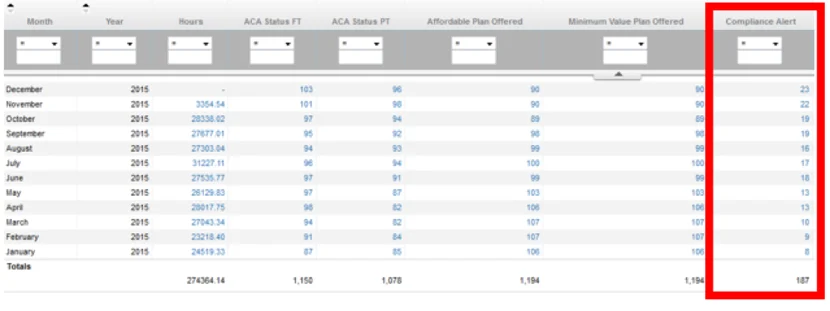
The end of the year is approaching and so are your ACA Reporting deadlines. Make sure to review your Compliance Alerts for the year in preparation for ACA Reporting.
The ACA Manager tool creates a Compliance Alert whenever it detects a coverage issue. To check for them:
Login to your account.
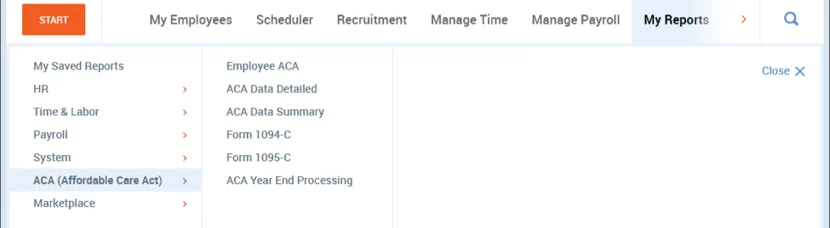
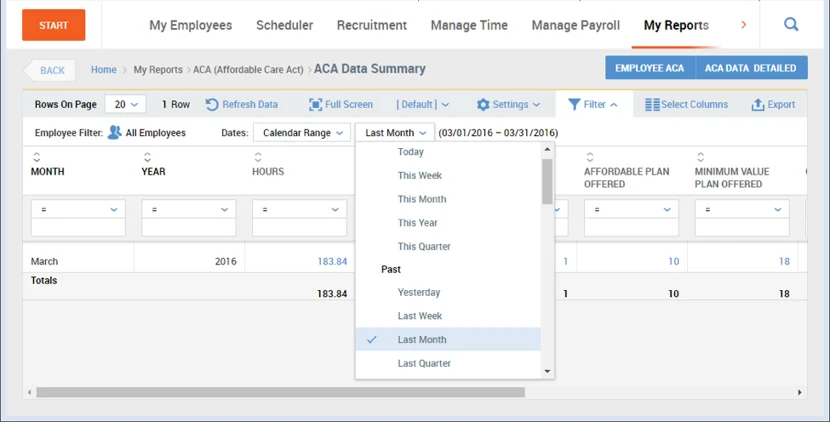
Navigate to the My Reports Tab → ACA (Affordable Care Act)→ ACA Data Summary
While in the report, change the date to reflect the entire year.
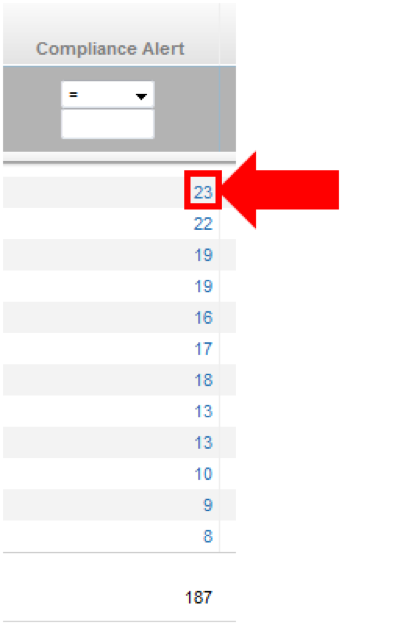
Once the page is refreshed, look under the Compliance Alert column (eighth from the right). Each month will have a blue number listed.
Clicking on the blue numbers will open up a new report listing anyone with a Compliance Alert.
3 Reasons Your Account Might Have Compliance Alerts
The employee waived coverage but the waiver did not get added as a Benefit Plan/Benefit Profile to the system. Maintaining current waivers (and updating the ACA Manager with that information) is an extremely important step in compliance. IRS Form 1095-C for the employee who waived coverage will have a code reflecting that the employee was offered coverage. Keep waivers documented and the system updated!
The Benefit Profile did not get assigned to the employee or did not have correct dates. If the employee has health insurance all year, assign a Benefit Profile to reflect that. If the employee started receiving insurance mid-year, ensure those dates are represented correctly. Please refer to our training videos for more information on how to correctly date the Benefit Profile.
The employee was not offered coverage but should have been. Under ACA, employees are considered non-variable, or full-time, if they average 30+ hours per week or 130+ hours per month. Any employee coded as variable, or part-time, but working full-time hours will trigger a Compliance Alert.
Mill Village Farms transforms vacant properties in Greenville, SC into bountiful gardens that grow locally sourced produce for communities that have limited access to fresh and healthy foods. They offer these farm-fresh foods through their brick and mortar Mill Village Market in West Greenville and their revolutionary Mobile Market, a grocery store on wheels that brings healthy produce to “food-desert” communities.
They also create employment and training opportunities for community youth, empowering them with experiences in basic job skills, sustainable agriculture, and entrepreneurship. Research shows that employed youth are more likely to graduate high school, stay out of trouble, and be prepared for future job success.
Mill Village Farms began in the spring of 2012 when 25 volunteers gathered to break ground on a new urban farm model. The concept is simple: build small, sustainable, organic farms that promote holistic development in Greenville communities.
WHY FARMING?
Not too long ago, Greenville, SC was known as the “textile capital of the world,” and the mill villages were bustling with successful business owners, farmers and workers. But today those once-thriving textile communities battle unemployment, homelessness and high crime rates.
The USDA has labeled many mill village communities as “food deserts,” which means that the residents have easy access to heavily processed foods but only a limited and expensive path to fresh locally grown produce.
The folks at Mill Village Farms are working to combat this situation by establishing fruit and vegetable farms on neighborhood street blocks. Neighborhood interns and volunteers then serve as advocates for the community by sharing the fresh grown produce with other neighbors.
In addition to increasing access to healthy foods, the community farms promote physical activity and healthy eating. But these farms also benefit the environment: beautifying abandoned properties, managing storm water, and increasing biodiversity.
At Propel HR, we are proud to help many nonprofit organizations with their payroll and human resources needs. Each month we are spotlighting one of these organizations. You can read our August Nonprofit Spotlight about TreesGreenville here.
Business is good and your profits are rising. But, what you don’t know can hurt you. Supervisors are key to your business, but a few mistakes can lead to high liability. Here are my top ten HR mistakes made by management.
Failure to Document – Documentation is vital. It does not always have to be formal; a quick email or notes on a calendar will suffice.
Saying too much – As it pertains to documentation as well as “small talk” with the employees, supervisors need to maintain a filter. Keep personal opinions to a minimum. Make sure your communication is fair and unbiased.
Non-compliance with company policies – Supervisors should know the company policies and apply consistently.
Misclassification of employees – Paying someone a salary does not make them exempt from overtime requirements. Supervisors should know the Fair Labor Standards Act and how it applies to their employees.
PTO tracking – Many mistakes are made when it comes to the tracking of Paid Time Off. Know your policy and make sure that it is followed, especially at termination.
Inflating Performance Reviews – Reviews are an important assessment tool for both the company as well as the employee. Always speak the truth and do not inflate performance.
Being too nice – Just like the performance reviews, terminations are a time for the truth, not niceties. Although it is difficult to terminate an employee, it is best to be truthful.
Lack of HR training – Supervisors need to stay current with HR issues. Look to the Chamber and other resources for ongoing training.
Showing favoritism – Treat everyone with respect and listen to concerns. You do not have to agree with everyone, but great managers show respect to all employees.
Not knowing when to get your HR department involved – Your HR department needs to be integral during the course of employment. HR should be involved in the hiring, promotions, counseling and terminations. Many sticky situations can be avoided if HR is involved from the beginning.
If you’ve ever outsourced payroll and human resources, you know it’s not easy. The relationships can be hard to manage, especially when you’ve got several vendors all treating you like a number.
Step one is getting your payroll processed like clockwork. Not so hard. But getting all your administrative and human resources functions working together: that’s a balancing act most companies struggle to achieve, let alone maintain.
Propel HR is a family company. When we do your payroll, you get more than a commodity. We strive to create real one-on-one relationships with everyone we work with. That’s why so many of them can say, with no hedging at all, that we’re the best payroll company they’ve ever worked with.
Enjoying one great relationship is far better than managing several sour ones. So when it comes to outsourcing the rest of your HR, we want to tell you how using Propel as your full-service ASO beats playing vendor roulette.
Here’s what you need to know.
What is an ASO?
Simply put, an Administrative Services Organization (ASO) provides outsourced administration and human resources. Its defining feature is that the client organization remains the employer of record, unlike with a Professional Employer Organization (PEO).
Beyond this simple definition, ASO’s differ widely. Be wary of any company that claims to be the “best ASO” in town. Ask them: Are you talking about payroll, benefits, compliance — what?
Why Propel HR Is Better Than the Average Payroll Company
Just about every ASO offers payroll. So do we. Time-consuming to manage and difficult to perfect, few aspects of doing business are more important to get right every time than processing your employees’ pay.
Propel gets the job done right, but that’s not what makes our payroll special.
We founded our company on family values, and this defines everything we do. We invest in creating real, one-on-one relationships with customers because we know that your appreciation is the most valuable thing we can work toward.
And so we give every client a dedicated point of contact, not just a customer service rep, but a working member of our payroll services team. We schedule time to communicate, learn your expectations, and get to know your company so that, if the time comes, we can solve any issue as quickly as if we were your in-house HR department.
And thanks to the close relationships we make with businesses like yours, we can help you even more as you achieve the success you’ve been working toward.
Get More Services With the Same Great Relationship
We love it when our clients grow. It’s a sign of your success and our own.
As you grow you’ll start doing more and more for your employees, creating a growth strategy, and planning for how to expand your infrastructure and provide new services. These may include:
Employment law compliance.
Workers’ compensation claims.
Insurance benefits and retirement plans.
Human resources consultations.
User-friendly technologies enabling all of the above.
For many companies, handling these needs means managing new relationships with several vendors. Getting anything done with one of them can be pain, let alone all of them.
We hope you’ll consider choosing Propel as your full-service ASO provider, especially if you’ve been part of our payroll family in the past. As a payroll client, your dedicated service person brings Propel’s knowledge of compliance, finance, benefits, claims and implementation to bear in helping you assess your future growth needs.
If you decide to outsource your HR functions with Propel, you’ll keep the same point-of-contact and get the same great customer service you’ve grown accustomed to as a payroll client. And for us, we get the opportunity to further help your company succeed, a privilege we hold in high regard.
Propel Past Payroll to Friendly Full-Service HR
With any luck, your company will be going through growing pains for a long time to come. We believe that great customer service is the most important thing an ASO can provide.
If you’d like your many human resources functions cared for by someone who has a personal investment in you and your business, consider Propel HR for your payroll and beyond.
Let us help propel your business forward. Call us at (800) 446-6567, email us or schedule a time to talk. Whether you’ve just heard of Propel or already know us well, we can provide a free assessment of your HR strengths and weaknesses.
Business leaders and HR professionals often have very different mindsets. Business leaders are focused on driving growth and increasing profits while HR professionals are trained to consider the perspectives of compliance, risk, and company culture.
It’s not uncommon for executives to feel like the human resources department slows down their decision-making, when all they want to do is take swift action. To business leaders, HR can feel like a hurdle they have to jump over before crossing the finish line.
As HR Professionals, how to do we communicate our value to business leaders when it doesn’t always feellike they’re on our side? How can we remind them that human resources plays an important role in making the best decisions for the success of the business?
Acknowledge and support their end goal. When communicating what may seem like an opposing viewpoint, it’s important to be intentional about verbally stating your support for the common goal.
For example, if there’s a manager who’d like to terminate an employee for poor work performance, let him know that you’re aligned with him by saying something like, “I understand that you don’t want to continue to have people on your team who are not pulling their weight. This increases the workload for everyone and costs the company money.”
Connect decision-making to tangibles.
It can be hard to look at people matters objectively. Take emotions out of decision-making and replace them with tangible documentation and risk-reducing processes.
In the example, the manager is frustrated with someone who has not been doing his job well. If he’s upset, the manager may say, “I’m tired of this. This employee has to go!” As HR professionals, we know that the decision to terminate an employee should be based on work performance, not emotions.
This is where you can really add value for the manager. Focus the conversation on the appropriate termination process by asking questions like, “Exactly how does this employee know that work performance expectations have not been met?”
Request documented conversations where this feedback was shared with the employee. Explain how this documentation makes the case to terminate the employee stronger and reduces risk for the company.
Leverage opportunities to show HR value.
Help your business leaders see your value by showing your contributions to the common goal.
In our example, the common goal is to have engaged employees who are all contributing to the overall success of the company. Remind the manager about the HR processes and best practices that you have in place to support this goal, such as training plans, performance reviews, etc.
Proper documentation helps support the fact that this employee was trained on how to do the job and was given feedback about his performance, shifting the accountability to perform the job effectively to the employee.
Remember the big picture.
Again, business leaders and human resources have the same goal – to have a successful company where all stakeholders win: business owners, employees and customers.
In the example of the underperforming employee, support the final decision to terminate by well-documented through-processes in each department.
The same techniques should be used when updating a compensation plan, expanding a department, or even launching a new product. These decisions will ultimately affect employees which means HR needs to be involved.
Some questions HR professionals typically ask before making a big decision include:
“Is this practice legal?”
“If it doesn’t go as planned, what is the exposure for the company?”
“How does this decision reflect on the company’s reputation”
“How will employees feel about this?”
“Will it motivate or demotivate the team?”
Welcome the challenge.
Acknowledge that we all look at the world through different lenses. Varying viewpoints actually prepare you for obstacles that you wouldn’t otherwise see, and that makes your business stronger.
Though executives and HR professionals don’t always share the same point of view, they do share the common goal of a successful business. To promote growth, reduce liability risk and improve the company culture, human resources should be positioned as a valuable part of the decision-making team.
I will miss the lazy days of summer, but there is nothing like the excitement of fall. Kids are back in school, people are focused at work, and there is a renewed sense of order. When I take my girls shopping for school supplies, I also get in the school spirit and buy a few things. September is the time of year when I can be the most productive with a clear mind and a cool new notebook!
Not only does September mean new office supplies, it also means that there are 4 more months to accomplish your annual goals and get ready for the New Year.
So pull out your fancy new notebook and add these HR tasks to your fall to-do list:
EEO-1 – if your company has more than 100 employees, is affiliated with another company that has more than 100 employees, or has 50 employees and is also a federal contractor, then the EEO-1 report must be completed annually by September 30th. The EEO-1 is a survey which categorizes employment data by race/ethnicity, gender and job category. Please note that the 2017 submission is proposed to include pay data, so as you work on your report this year, keep in mind that next year may have additional requirements.
FLSA – Effective December 1, the salary level for employees to be exempt from overtime will increase to $913 per week (previously $455). The highly compensated salary level also increases. If you have not reviewed all of your employees’ exemption status, now is the time. Decisions must be made and if necessary, salaries need to be increased by December 1st. You can find more information on the upcoming FLSA changes here.
ACA – This year, the IRS gave extended filing deadlines and leniency for companies who may not have handled ACA administration perfectly, but gave it a good faith effort. Don’t expect this for 2017. If you are a covered employer, now is the time to make sure your systems are solid, your waivers and enrollment forms are complete, and that you are ready for the January 31st filing deadline.
Inclement Weather Policy – Although the temperature gauge still registers in the high 80s, early fall is still the best time to think about winter. Review your inclement weather policy to determine if it is accurately practiced the way the policy reads. If not, revise and circulate to your team.
W-2 Filing – Before you know it, your payroll provider will be printing W-2s. Now is the time to help this process go smoothly. Check social security numbers for accuracy, confirm addresses for all employees, set reminders to calculate any fringe benefits, and make sure any disability forms are sent to the payroll team.
Use this HR to-do list as a starting point and start checking off the items. If you need some motivation, go buy yourself a cool new pen; I hear the back to school supplies are now on sale!







 Maintaining inefficient processes limits growth, slows project delivery, and prevents your team from focusing on strategic initiatives.
🛠️ How To Fix It: Partnering with an IRS-certified PEO can help. By taking on time-consuming tasks, PEOs help small businesses get back more time to focus on productivity and growth.
In addition to saving time, a PEO can also save your business money by identifying inefficiencies, streamlining HR processes, and helping you make critical cost-cutting decisions.
Maintaining inefficient processes limits growth, slows project delivery, and prevents your team from focusing on strategic initiatives.
🛠️ How To Fix It: Partnering with an IRS-certified PEO can help. By taking on time-consuming tasks, PEOs help small businesses get back more time to focus on productivity and growth.
In addition to saving time, a PEO can also save your business money by identifying inefficiencies, streamlining HR processes, and helping you make critical cost-cutting decisions. 



 When HR productivity is dialed in, your entire team plays better.



 A PEO lays the foundation before those cracks show. Payroll scales without drama. Whether you have 10 people or 110, payroll stays smooth, compliant, and on time.
Onboarding becomes a real process and not a scramble. Templates, checklists, digital forms, background screening, and automated workflows ensure consistency as you grow.
Policies adjust proactively. A PEO helps you build employee handbooks, update them with new laws, and create clear rules that reduce risk as your headcount increases.
A PEO lays the foundation before those cracks show. Payroll scales without drama. Whether you have 10 people or 110, payroll stays smooth, compliant, and on time.
Onboarding becomes a real process and not a scramble. Templates, checklists, digital forms, background screening, and automated workflows ensure consistency as you grow.
Policies adjust proactively. A PEO helps you build employee handbooks, update them with new laws, and create clear rules that reduce risk as your headcount increases.  This is where many small businesses unintentionally step into danger territory. The rules change constantly and the stakes are high.
 If you’re a business owner, your job is to grow the business, not troubleshoot payroll deductions. If you’re an HR manager, your job is to support the people strategy, not drown in admin work.
 ✅Build modern HR processes that employees trust.
 With a PEO, growth is a plan.
 🔶HR Help Wanted: In-house Team or PEO Partner. Investing in an HR team versus partnering with a PEO, which path is best for your small business? As your business grows, managing HR gets complicated – fast. Should you build your own HR team or explore the benefits of partnering with a PEO? Here’s how to decide which choice best fits your business.
  🔶Navigating Compliance Minefields. Navigating HR compliance can feel like tiptoeing through a minefield — one wrong move can trigger costly consequences. From pay transparency laws to overtime thresholds, new regulations evolve faster than most small HR teams can keep up with. Here’s a look at the top HR compliance challenges and how to avoid turning small missteps into expensive lessons.
  🔶New Research Shows Why More Small Businesses Are Turning to PEOs. The data is in! And it shows how partnering with a PEO will be the smartest move for small businesses in 2026. Recently released