This is Part 5 of a series, Women in the Workforce: We Can Do It!, exploring topics related to the history, challenges, and accomplishments of working women in America. Topics to date include: 01_Women in the Workforce: We Can Do It!, 02_The War Opens the Doors for Working Women, 03_Rise of Jobs, Rise of Inequality, and 04_ Working Women and The Great Depression

Lower wages and fewer benefits were the norm for women, particularly women of color. As white women entered the workforce in greater numbers, jobs became fewer for African American women. As a result, they suffered disproportionately during the depression, with more than half of Black women losing their jobs. Historically, Black families had never been able to survive on one income because of racial wage disparity, and during this time, families became destitute. Southern Democrats pushed for local administration of many New Deal policies, which meant segregation in the programs. Black women worked predominantly on farms and as domestic workers. When the 1935 Social Security Act was proposed, Southern Democrats and anti-New Deal Republicans joined forces to deny domestic and farm workers Social Security, excluding 90% of African American women from this benefit.
Defense Industry Expands and Women Step Up. Prior to the invasion of the Japanese on Pearl Harbor on December 7, 1941, industries in the United States were already helping with the war effort. In one of his Fireside Chats in 1940, President Franklin Roosevelt called on America to be the “great arsenal of Democracy” by increasing the production of airplanes and munitions to help the British. Factories increased production, and after Pearl Harbor, the defense industry continued to expand while American men were mobilized for service. Workers were needed, and once again, American women were there to support their country.
▶️▶️Read More: Part 04_Working Women and The Great Depression
Rosie the Riveter was the star of the wartime campaign aimed at recruiting women to the workforce. Rosie the Riveter was used in songs, movies, posters, and articles. The most famous “Rosie” was Norman Rockwell’s portrait which was featured on the cover of The Saturday Evening Post on May 29, 1942. Rockwell based his Rosie on Michelangelo’s painting of Isaiah in the Sistine Chapel. The painting shows Rosie with a masculinized body who can handle the job required of her. Eating her sandwich with her painted nails and holding a rivet gun, she steps on a copy of Mein Kampf. This image shows the strength, courage, and grit of the American woman during the war. Yet, regardless of her strength, she is still a woman, with her lipstick, painted nails, and a compact handkerchief in her pocket.
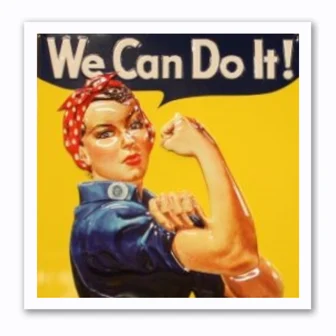
The most iconic poster from that era was by artist J. Howard Miller for Westinghouse Electric & Manufacturing Companies. This poster was used in the Westinghouse factories as a motivation to work hard, yet it would not have had the same widespread exposure that it has today. “We can do it” has become a rallying symbol of the power of individual women during the war and even more so today. It is the ultimate symbol of female empowerment! There is even a COVID Rosie!
Wartime Propaganda Drives More Women into The Workforce. Not all of the propaganda was empowering. The U.S. government played on the emotions of fear, guilt, and patriotism to encourage women to help their nation. Campaigns such as “a soldier may die unless you man this machine” guilted women into the labor pool. One propaganda film that played before movie features titled Conquer the Clock showed the deadly consequences of a smoke break by a female defense worker who allowed cartridges to pass uninspected.
The propaganda worked, and women entered the workforce in great numbers. FDR urged employers to abandon their prejudices and keep factories running at full capacity. In 1942, the government projected a need for three million more workers, and the prime pool available were married women.
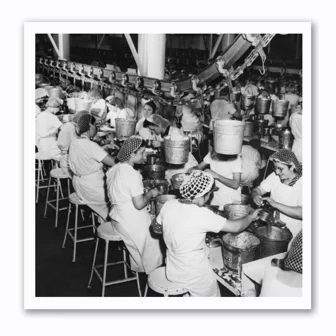 Between 1940 and 1945, women’s presence in the labor force grew by more than 50%, from 11.9 million to 18.6 million. Women’s employment was seen as vital and patriotic. By 1945, nearly one out of every four married women worked outside the home. New jobs opened for women, and the aviation industry saw the greatest increase in female workers. In 1943, 65% of the industry’s total workforce was female, compared to just 1% prior to the war.
▶️▶️Read More: Part 03_Rise of Jobs, Rise of Inequality
Pay Disparity and The War Labor Board. Although working women were crucial to the war effort, their pay did not reflect their value. Female workers often earned half of what their male counterparts earned. The call to work during the war was meant to be temporary, and women were expected to leave their jobs after the war ended. The War Labor Board was set up in 1942 to handle labor disputes and issues related to wages. They mandated that there should be equal pay for equal work during the war, but just like in World War I, companies found ways to get around this mandate and pay disparity persisted.
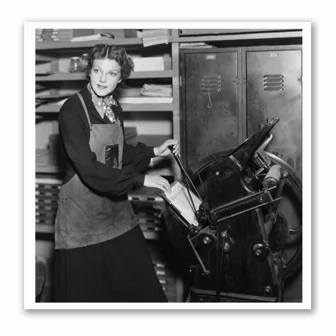 Lack of childcare was another issue that many women faced. In England, the government provided support for working mothers during the war, but the U.S. did not. Children were left at home by themselves or with older family members while mothers went to work in the war plants. For mothers, this was a no-win situation as they would be considered unpatriotic if they didn’t work and bad mothers if they did.
Women in the Workforce: We Can Do It!
Whether married or single, with children or not, working part-time, full-time, or even two jobs, as a stay-at-home mom or a community volunteer, American women can do it! Throughout history, American women always have. And I am so proud we do! Over the next few months, I will explore how topics about women in the workforce from the early 1900s until the present. Also, I want to note the changing trends of women in the workforce that this series contemplates will focus on white, middle-class women. Women of color have had very different experiences, and their work lives have been defined by racism, sexism, and financial necessity. I have pointed this out when possible, but please keep in mind that this series is not a complete picture of all women.
Please check back to read the next blog in the series, Women in the Workforce: We Can Do It! as we explore Working Mothers and the Lack of Childcare.
Propel HR President Lee Yarborough
 “My father, Braxton Cutchin, and I founded the company in 1996. After being in the PEO and HR world for 25 years, I have experienced firsthand the value we can provide to both the clients and the employees. It is truly a win for all parties. I’m proud to have helped establish Propel HR as an industry forerunner in the Southeast. There is nothing I love more than receiving phone calls from clients who seek my advice as a trusted advisor. This is a business where I feel that I can help others, and that is important to my own value.”
— Lee Yarborough, President, Propel HR
Active in many professional and community organizations, Lee recently served as Chair of the Board of Directors of the National Association of Professional Employer Organizations (NAPEO). As NAPEO Chair, Lee focused on diversity and initiatives to deepen member relations. Under her leadership, she formed Women in NAPEO (WIN), a networking group designed to engage, empower, and encourage women working in the PEO industry. On the local level, Lee also served as the Chair of NAPEO’s Carolinas Leadership Council for more than a decade. In 2015, she was named a Fellow of the eleventh class of the Liberty Fellowship Program and a member of the Aspen Global Leadership Network.
An advocate for public education, Lee has served on the executive board as Chair of Public Education Partners and is the founder and director of Read Up Greenville, a young adult and middle grades book festival in downtown Greenville, SC.
 About Propel HR. Propel HR is an IRS-certified PEO that has been a leading provider of human resources and payroll solutions for more than 25 years. Propel partners with small to midsized businesses to manage payroll, employee benefits, compliance and risks, and other HR functions in a way that maximizes efficiency and reduces costs. Visit our website at www.propelhr.com.












 Maintaining inefficient processes limits growth, slows project delivery, and prevents your team from focusing on strategic initiatives.
🛠️
Maintaining inefficient processes limits growth, slows project delivery, and prevents your team from focusing on strategic initiatives.
🛠️



 When HR productivity is dialed in, your entire team plays better.