These tasks shouldn’t take up your workweek. But when systems fall short, they do. If you’re a small or mid-size business owner or HR leader, you probably didn’t get into this role because you love tracking down time-off requests, chasing signatures, or answering the same benefits question 14 times.
And yet… here we are.
Studies show that small business owners spend about 16 hours (or two full days) per week on HR-related administrative work.
Most businesses lose valuable time to the slow drip of small, repetitive “this will only take a minute,” tasks that quietly eat up the workweek. Add them up, and suddenly your strategic HR goals, like recruitment, retention, and leadership development, get pushed aside.
Here are some of the most common areas that may be draining your time.
Time-Consuming HR-Related Tasks
They seem small. But over time, these tasks drain your attention, your energy, and your progress.
1. Repetitive Tasks and Rework
Every time you hunt down a missing signature or resend login details, you lose time you could be using elsewhere. The common offenders? Answering the same employee questions over and over:
“How do I add my baby to insurance?” “When do benefits start?” “How many PTO days do I have left?”
Sound familiar?
Individually, these are quick answers. Collectively? They’re a constant interruption machine. When you stop to respond, you lose focus, break momentum, and push higher-value work further down your list.
🛠️How To Fix It:Uncover the pain points.Which areas are bogging down the process due to repetition? Where can you create a self-service culture? This can mean establishing a simple internal HR hub (in your intranet, shared drive, or HR platform), short FAQs on benefits, PTO, payroll timing, and onboarding, or short videos that walk through routine processes.
Then, train employees to go there first. When someone asks a repeated question, send the link along with your answer. Over time, behavior shifts. HR becomes a source, not a help desk.
2. Correcting Payroll Errors
The latest software makes running payroll seem easy, but if something goes wrong, the liability is still yours. Miscalculating pay, outdated tax information, and manually tracking time off are time-consuming to fix, hard to catch, and expensive if you don’t, not just in terms of costs but also in lost time and eroded trust among your workers.
🛠️How To Fix It:Automate what you can.Look for tools that let employees request time off directly, route approvals to managers, automatically update balances, and sync with payroll.
When automation handles the basics, HR shifts away from data entry to policy guidance. You’ll still handle exceptions, but you won’t be stuck crunching numbers late at night.
Or leave it to the experts by outsourcing payroll to an IRS-certified PEO. A PEO can simplify the payroll process with a cloud-based payroll portal for employers, online employee access to pay stubs, W-2s, benefits info, employee handbooks, and secure, paperless direct deposits. They can also take care of onboarding, payroll taxes, IRS deposits, benefits administration, compliance guidance, and provide HR support.
3. DIY Compliance Monitoring
Labor laws change constantly. Posting requirements update. Salary thresholds shift. Leave laws multiply. Keeping up with shifting deadlines, state-level compliance requirements, and studying the IRS’s recently updated guidance under the One Big Beautiful Bill Act. Trying to monitor all of this yourself is not only time-consuming – it’s also stressful.
One misstep can be costly. In 2025, the Department of Labor’s Wage and Hour Division recovered more than $259 million in back wages for nearly 177,000 employees. That’s an average of $1,465 per worker (the most since 2019).
🛠️How To Fix It:Don’t carry compliance alone.Get expert help by partnering with a professional. Whether it’s through a PEO, outside counsel, or a compliance partner, get support that keeps you updated on requirements that apply to your business.
You’ll need advice on tricky employee situations, alerts on multi-state regulatory changes, new pay transparency rules, evolving paid leave requirements, changing wage-and-hour laws, new employment-related laws on AI, and much more.
🚀 Pro Tip: Stay compliant with our HR Checklist covering the latest updates and deadlines related to compliance, benefits, payroll, and general HR that you need to take care of each quarter. Download your free HR Checklist ➡️ HERE
4. Updating Employee Data in Multiple Places
Name changes. Address changes. Promotions. New pay rates. If you’re entering the same update into payroll, benefits, retirement platforms, and internal trackers, you’re doing triple-plus work and increasing the chance of errors.
🛠️How To Fix It:Integrate your systems, invest in HR technology, or work with a PEO. A unified HR platform can help connect payroll, benefits, time tracking, and employee records, among other things.
With better integration, changes flow through automatically. That means fewer entries, fewer errors, and more free time.
5. Handling Every Employee Issue Personally
When you’re the only go-to for every conflict, complaint, or issue, your day gets hijacked fast. Some things absolutely belong with HR. But many could be resolved earlier and better by trained managers.
🛠️How To Fix It:Upskill your managers by teaching them to give feedback,handle minor conflicts, anddocument specific issues. This doesn’t remove HR from the process; rather, it elevates the role, moving them from firefighter to advisor.
Stop the HR Busy Work, Amplify Your Impact
Normalizing HR busy work has real consequences, including burnout. Your top performers may feel overwhelmed by constant overtime or pressure to meet demands. It also creates dependence on key team members, making it difficult to delegate when only a few people hold essential knowledge or responsibilities.
Maintaining inefficient processes limits growth, slows project delivery, and prevents your team from focusing on strategic initiatives.
🛠️How To Fix It: Partnering with an IRS-certified PEO can help. By taking on time-consuming tasks, PEOs help small businesses get back more time to focus on productivity and growth.
In addition to saving time, a PEO can also save your business money by identifying inefficiencies, streamlining HR processes, and helping you make critical cost-cutting decisions.
If you constantly feel behind, the fix isn’t more hustle. It’s better tools, clearer processes, and the right support. A PEO can help you stop the small stuff from piling up, so you can invest your time where it matters most. And if you need help, just give us a call at📱 800-446-6567
Find Out What a PEO Can Do for You
If you’re a small to mid-sized business, a PEO can lighten your workload and strengthen your operations. Imagine focusing on growth while experts handle your payroll, taxes, benefits, HR, and compliance.
⬇️Read more about the advantages of working with a PEO in our series:
🔷 HELP WANTED: HR Team or PEO Partner
Investing in an HR team versus partnering with a PEO, which path is best for your small business? As your business grows, managing HR gets complicated – fast.
Should you build your own HR team or explore the benefits of partnering with a PEO? Here’s how to decide which choice best fits your business. ➡️Link #1Link #1Read More
🔷 NEW RESEARCH: More Small Businesses Are Turning to PEOs
Compelling research from the National Association of Professional Employer Organizations (NAPEO) shows that PEOs are helping small businesses scale – a game-changer in 2026.
Working with a PEO isn’t about outsourcing; it’s about upgrading how you manage HR. It’s about investing in smarter growth, happier employees, and peace of mind. In a business world that’s only getting more complex, that’s a benefit worth having on your side. Thousands of successful businesses are already doing it – and the data proves it works. ➡️Link #2Link #2Read More
IT’S HERE!
Your FREE HR Checklist
Here’s your checklist of important tasks related to payroll, benefits, compliance, and general HR.
About Propel HR.Propel HR is an IRS-certified PEO and a leading provider of human resources and payroll solutions for 30 years. Propel partners with small to mid-sized businesses to manage payroll, employee benefits, compliance and risks, and other HR functions in a way that maximizes efficiency and reduces costs. For more information, visit propelhr.com
Productivity is the secret sauce that separates teams stuck on the sidelines from those with winning streaks. Chances are you’re juggling hiring, compliance, benefits, culture, and about a dozen other priorities . . . all while the clock keeps ticking.
Your power play? Outsourcing. When used strategically, it boosts productivity, streamlines operations, and frees you up to focus on what actually moves the scoreboard – your bottom line.
First Quarter: What Productivity Really Means
In HR, productivity isn’t about sprinting faster – it’s about running the right plays at the right time.
True HR productivity means delivering meaningful outcomes with minimal wasted effort. Speed matters, sure, but impact matters more.
Fast hiring doesn’t matter if turnover remains high. Smooth payroll is great . . . unless errors keep forcing replays.
At its core, productivity is about consistent, high-quality execution that supports your business year-round.
Here’s the basic stat line. The fundamental formula HR teams use looks like this: Productivity = Total Output / Total Input.
🎯Stronger Compliance Defense. Mistakes lead to fines, audits, and penalties – that’s expensive. Productive HR keeps risk off the scoreboard.
🎯Scoring Efficiency. In the Red Zone, the stakes are high, and scoring opportunities significantly increase. When your HR team isn’t buried in paperwork, they can make a more strategic impact by focusing on culture, performance, and growth.
🎯Leadership Trust. HR shifts from order-taker to trusted partner.
The results? A productive HR function is the engine that keeps your people – and your business – moving forward.
The Stats Don’t Lie: Proof from the League
The data backs it up:
➡️Flexibility & Remote Work. A Gartner report finds that 43% of employees working flexible hours say they are more productive. Gallup found that fully remote workers report the highest engagement levels.
➡️Engagement Matters. Highly engaged teams are 17% – 21% more productive than disengaged ones.
➡️The Productivity Gap. Top-tier companies grew more productive, while others saw declines due to inefficient collaboration and low engagement.
🎯Winning teams don’t guess; they measure, adjust, optimize, and power up.
The Box Score: Common HR Productivity Metrics
To know how your team is performing, you need the right stats:
📊 Output Metrics. Revenue per employee, output per hour, goals completed vs. assigned
📊 Efficiency Metrics. Time spent per task, employee utilization
📊 Quality Metrics. Accuracy and impact, not just speed
📊 Engagement Indicators. Engagement scores and absenteeism.
📊 Financial Metrics. Total Cost of Workforce (TCOW)
These numbers tell you whether your plays are working and what needs to be redesigned.
A PEO helps improve productivity by offloading time-consuming tasks while strengthening the entire employee lifecycle through MVP expertise and next-level HR tech.
🔥Think of it as adding multiple Tom Bradys to your roster.
THE GAME PLAN
Play #1: Reallocate Resources to Core Strengths
The fastest productivity gain comes from freeing your teams from admin overload. By outsourcing, you get:
✅Time Savings. Business owners can spend 20+ hours per month on HR admin-related tasks. Outsourcing frees up time for growth, sales, and strategy.
✅Administrative Relief. Payroll, benefits enrollment, and multi-state compliance tasks move off your plate and into expert hands.
✅A Team of MVPs. Outsourcing gives you access to a team of pros, ready to help when you need it.
Play #2: Build a Deeper Talent Bench that Flexes
An engaged workforce is naturally more productive.
💼 Lower Turnover. Companies using PEOs see 10%–14% lower turnover, reducing disruptions and retraining time.
💼 Big-league Benefits. PEOs provide access to Fortune 500-level benefits, boosting satisfaction and engagement.
💼 Faster Onboarding. Streamlined onboarding helps new hires get in the game.
Play #3: Upgrade Your Tech Stack
PEOs give small and mid-sized businesses access to advanced HR technology without the big-ticket price tag.
📊 Automation.Payroll and tax automation reduce errors and time-consuming fixes.
📊 Employee Self-service. Employees handle PTO, pay stubs, and benefits updates themselves with fewer interruptions for HR.
Play #4: Strengthen Your Compliance Defense
Compliance isn’t optional and managing it internally can drain focus fast. With a PEO on your team, you get:
🛡️Expert Guidance. A team of HR pros helps prevent fumbles and penalties. PEOs stay on top of federal, state, and local regulations, including ACA and FMLA.
🛡️Safety Programs. Proactive safety audits reduce workplace incidents and business disruption.
Play #5: Win on the Scoreboard
All these efficiencies lead to real, measurable stats:
🏆Faster Growth. Businesses using a PEO grow 7% – 9% faster than those that don’t. And are 50% Less Likely to Go Out of Business
💥That’s not just a win – it’s a blowout. It’s the stuff championships are made of.
FINAL CALL: Make Productivity Your Winning Play!
How far can you go? Productivity isn’t a one-time drill – it’s a GOAT mindset.
When you measure what matters, optimize repetitive work, and outsource strategically, you’re not just working faster . . . You’re working smarter. That’s for legends.
🔥Outsourcing is no rookie move. It’s a strategic productivity partner that helps HR shift from scrambling to scoring. And keeping that winning streak hot.
Ready to Turn HR into a Powerhouse?
Ready to hear your crowd ROOOAAARRR? 🎉 This power playbook is your first step.
➡️If you need some coaching or a huddle about your productivity game plan, we’ve got you all the way to the Super Bowl winning streak and beyond – just give us a call.
IT’S HERE!
Your FREE HR Checklist
Here’s your checklist of important tasks related to payroll, benefits, compliance, and general HR.
About Propel HR. Propel HR is an IRS-certified PEO and a leading provider of human resources and payroll solutions for 30 years. Propel partners with small to mid-sized businesses to manage payroll, employee benefits, compliance, risk, and other HR functions in ways that maximize efficiency and reduce costs.
To learn more, visit propelhr.com
If you run a small or midsize business, you already know growth is exciting, yes — but also unpredictable, and sometimes overwhelming. That’s exactly why more business owners and HR leaders are choosing Professional Employer Organizations, or PEOs, not just to outsource HR tasks, but to grow smarter, faster, and more sustainably.
The Top 10
A PEO helps you scale without letting the behind-the-scenes stuff collapse under the weight of bigger payrolls, more onboarding, greater compliance risk, and higher employee expectations. It’s like adding an entire HR department overnight, minus the overhead and recruitment scramble. A few advantages include:
1. You Get HR Infrastructure Before You Actually Need It (Which Is Exactly When You Need It)
Most small businesses don’t feel the pain of HR complexity until it’s too late. Payroll errors start multiplying, employees want benefits you’re not equipped to provide, and suddenly you’re Googling state labor laws at 11:30 p.m.
A PEO lays the foundation before those cracks show. Payroll scales without drama. Whether you have 10 people or 110, payroll stays smooth, compliant, and on time.
Onboarding becomes a real process and not a scramble. Templates, checklists, digital forms, background screening, and automated workflows ensure consistency as you grow.
Policies adjust proactively. A PEO helps you build employee handbooks, update them with new laws, and create clear rules that reduce risk as your headcount increases.
2. A PEO Delivers the Big-Company Benefits Employees Want
Here’s the part that often surprises business owners: a PEO can give you access to benefits packages typically reserved for much larger companies.
Because a PEO pools together employees across its client base, you essentially get to “buy in bulk,” accessing high-quality benefits at lower rates. That means you can offer your team robust health plans, retirement savings options, and other top-tier benefits typically reserved for larger companies (and top talent expects).
🎯When employees enjoy comprehensive benefits without compromise, your company is seen as a long-term career option. Retention rises, and as every HR pro knows, that’s a growth strategy.
3. Compliance Stops Being a Guessing Game
Growth = risk. New states. New regulations. New employment laws. New reporting requirements.
This is where many small businesses unintentionally step into danger territory. The rules change constantly and the stakes are high.
✅They track federal, state, and local employment laws.
✅They help maintain the required documentation.
✅They ensure new hires are classified correctly.
✅They reduce risk with structured workplace policies.
✅And because of the co-employment relationship, many PEOs also share certain administrative responsibilities – meaning you’re not alone if something goes sideways.
🎯Growing is risky. Growing without compliance support? That’s gambling.
4. HR Technology You Don’t Have to Build Yourself
Scaling is smoother when everything is connected, such as payroll, onboarding, PTO tracking, benefits enrollment, performance management, and reporting. But building your own HR tech stack or licensing multiple vendors gets expensive fast.
🎯A PEO delivers the all-in-one HR command center designed for your business. Better data, better workflows, better decision-making.
5. A PEO Frees Up Time (A Lot of It)
If you’re a business owner, your job is to grow the business, not troubleshoot payroll deductions. If you’re an HR manager, your job is to support the people strategy, not drown in admin work.
A PEO takes on repetitive, time-consuming tasks, such as processing payroll, managing benefits, handling tax filings, and preparing compliance documentation. The more you grow, the more time you reclaim, instead of watching your workload escalate with each hire.
6. You Gain a Team of HR Experts Without Expanding Your Staff
Growing companies don’t always have the luxury of immediately hiring a full HR team — HR generalists, benefits specialists, payroll administrators, compliance officers, recruiters, risk managers, the whole lineup.
A PEO gives you access to exactly those roles, on-demand expertise, without the full-time salary load.
Need help rolling out a new PTO policy? Preparing for benefits renewal? Handling a sensitive employee relations issue? There’s an expert for that. It’s like having a seasoned HR department already onboard, ready to advise you every step of the way.
7. You Become More Attractive to Investors and Partners
Here’s something entrepreneurs don’t always think about: investors love operational maturity. When a PEO is part of your infrastructure, it signals you’re compliant, manage risks well, your HR processes are stable and that you can scale responsibly.
🎯For investors, lenders, and potential partners, a strong HR foundation = reduced risk. And reduced risk makes you a better bet. For acquisitions and rapid growth phases, a PEO can also make integration smoother.
8. A PEO Helps You Build a Better Employee Experience
Growth doesn’t just require more people; it requires keeping the good people you already have on board.
A PEO helps you:
✅Improve communication and access to information.
✅Build modern HR processes that employees trust.
✅Provide competitive benefits
✅Create fair, consistent workplace policies.
🎯A better employee experience leads to lower turnover and higher morale. And in high-growth companies, stability is gold.
9. You Can Expand Into New States With Confidence
Need to hire employees in another state? That’s great for growth, but it creates compliance challenges due to different tax rules and labor law requirements.
🎯A PEO handles all of it, letting you recruit the best talent in any location without losing sleep or risking penalties.
10. You Scale Strategically
Growth can stress your business when operations lag behind headcount. A PEO aligns both, so you’re expanding strategically.
🎯The result? Smooth transitions. Predictable costs. Cleaner processes. Less risk. Happier employees. And more time to focus on what actually grows the business — not on what slows it down.
Growth Is Easier ➡️When You’re Not Doing Everything Yourself
If you’re preparing to scale — or even thinking about it — the question isn’t whether you can handle growth alone. It’s whether you should.
With a PEO, growth is a plan.
A PEO delivers the infrastructure, expertise, and stability that power growing companies, without requiring a major investment or a staff increase.
Ready to see what a PEO can do? We can lighten your workload and help you drive growth, just give us a call at (800) 446-6567 or visit propelhr.com
🎯PEO Series: The PEO Difference🎯
Learn more about how a PEO can help your business in our series:
🔶HR Help Wanted: In-house Team or PEO Partner. Investing in an HR team versus partnering with a PEO, which path is best for your small business? As your business grows, managing HR gets complicated – fast. Should you build your own HR team or explore the benefits of partnering with a PEO? Here’s how to decide which choice best fits your business. Read More
🔶Navigating Compliance Minefields. Navigating HR compliance can feel like tiptoeing through a minefield — one wrong move can trigger costly consequences. From pay transparency laws to overtime thresholds, new regulations evolve faster than most small HR teams can keep up with. Here’s a look at the top HR compliance challenges and how to avoid turning small missteps into expensive lessons. Read More
🔶New Research Shows Why More Small Businesses Are Turning to PEOs. The data is in! And it shows how partnering with a PEO will be the smartest move for small businesses in 2026. Recently released research from the National Association of Professional Employer Organizations (NAPEO) shows that PEO partnerships are helping small businesses scale. It’s smarter, more efficient, and a game-changer. Here’s what the latest data shows. Read More
IT’S HERE!
Your FREE HR Checklist
Here’s your checklist of important tasks related to payroll, benefits, compliance, and general HR.
About Propel HR. Propel HR is an IRS-certified PEO that has been a leading provider of human resources and payroll solutions for more than 25 years. Propel partners with small to mid-sized businesses to manage payroll, employee benefits, compliance and risks, and other HR functions in a way that maximizes efficiency and reduces costs. For more information, visit www.propelhr.com
Next in our Changing Workplace series, our Director of HR explores important issues surrounding mental health. Here’s what every employer needs to know.
Are Your Benefits Keeping Up with the Competition?
There’s a quote I keep on my desk that continues to feel especially relevant these days:
“Start where you are. Use what you have. Do what you can.” -- Arthur Ashe
It’s a reminder that meaningful change doesn’t require perfection or unlimited resources – just commitment and action. And when it comes to supporting employee mental health in the workplace, nothing could be more true.
Today, mental health is no longer a side conversation. It’s a central business issue, one that affects productivity, hiring, retention, reputation, and risk. How does mental health show up at work? What role do employers play? And what are your responsibilities? Here’s a practical, real-world look at where we are and where we need to go when it comes to mental health.
The Current Landscape
Here’s a reality check: It’s likely that someone on your team is struggling. The National Institute of Mental Health reports that 1 in 5 experience mental illness.
Burnout, depression, ADHD, anxiety, and stress-related issues don’t stay at home. They show up as missed deadlines, turnover, low engagement, and, yes, higher healthcare costs.
If we want to be an Employer of Choice – and many of us do – we have to address the full spectrum of mental health in our workplaces.
Mental Health Versus Mental Wellness
The terms are often used interchangeably, but they’re not the same.
🌫️Mental Health is about our emotional, psychological, and social well-being – how we think, feel, act, and handle stress. It includes conditions like anxiety, depression, or ADHD.
🏞️Mental Wellness is the active pursuit of habits and environments that support resilience and performance, such as managing workloads, taking time to recharge, practicing self-care, and a sense of purpose.
In a workplace context, mental health might show up as a medical diagnosis, while mental wellness shows up as energy, focus, and collaboration. It’s not about eliminating stress (that’s impossible). It’s about preventing work pressures before they become harmful.
How We Got Here
Today, talking about mental health has become more mainstream. But it wasn’t always that way. Here’s a quick timeline:
🏭Industrial Era. The focus was on physical safety and compliance. Mental health? Not discussed.
💼1990s – 2010s. Employee Assistance Programs (EAPs) and behavioral benefits emerged, but stigma and lack of awareness kept usage low.
🚶2010s. The “whole person” approach emerged as research linked mental health to engagement, retention, and performance.
💙Last 5 years. Everything changed. The pandemic, social unrest, and digital overload catapulted mental health to the top of workplace agendas. Today, ignoring it isn’t just risky – it’s costly.
What's Behind Today's Mental Health Crisis?
Here’s what we see driving mental health challenges in today’s workplace:
🌪️Digital Overload. Notifications, pings, and blurred boundaries mean employees never fully unplug.
🌪️Rapid Change. Constant pivots and lean teams have little time to breathe. 🌪️Unclear Expectations: Less direction means more stress and less motivation. 🌪️Financial Strain. Rising living costs and caregiving pressures impact focus and morale. 🌪️Stigma. Fear of judgment or career consequences still keeps many silent. 🌪️Other Stressors. Economic shifts and divisive headlines also add to the pressure.
Sound familiar? These aren’t exceptions. They’re everyday realities.
The Employer's Role (Yes, You Play One)
It’s true: employers aren’t therapists. But they do shape the environment where people either thrive or struggle. While employers are not expected to solve every issue, they are responsible for providing a supportive work environment, as well as access to the resources needed to get help.
That includes:
✔️Meeting legal obligations under OSHA, ADA, and anti-discrimination laws
✔️Providing access to mental health care resources and reasonable accommodations
✔️Creating an environment where people feel safe speaking up
The Costs & ROI
According to a Deloitte study, 94% say they care about employee mental health, yet 68% admit they’ve taken little action. That disconnect is real, and it’s costing us. Healthcare premiums per employee rose 28% between 2020 and 2024. Stress-related absences are climbing, and so is turnover.
But here’s the good news.
The ROI of investing in mental health means significant cost savings. For every dollar spent on mental health, there’s a return of about $4 due to improved productivity and fewer absences from work. Plus, businesses that prioritize mental health experience a 5.5% higher retention rate.
What Employers Can Do
Here’s where Arthur Ashe’s words come into play:
“Start where you are. Use what you have. Do what you can.”
Start with what’s practical and impactful. Here are a few steps:
1. Leverage EAP Benefits
An Employee Assistance Program (EAP) offers confidential support to employees and their families for personal and work-life challenges. This includes assistance with mental health issues such as stress and anxiety, as well as financial difficulties and referrals for childcare and elder care.
Pro Tip:Never attempt to diagnose an employee. Even if behaviors suggest a mental health condition that you are familiar with, stay in your HR role and consider leveraging your company’s EAP.
An EAP counselor can identify issues, recommend solutions, and provide guidance on specialized services, as well as arrange referrals if the employee chooses to use this benefit.
2. Treat Mental Health Conditions as you would other Medical Health Conditions.
Requests for accommodations, especially related to ADHD, Generalized Anxiety Disorder, Depression, and other mental health conditions, are on the rise. Treat these requests as you would any other health condition — because legally, they are. Gather the appropriate medical documentation, engage in the interactive process, and provide reasonable accommodation where applicable. This might mean flexible schedules, modified duties, and time off for treatment.
Use surveys, performance data, and absenteeism trends to spot changes in employee behavior and identify pressure points. Talk to employees who display warning signs of stress or unusual behavior that may suggest they need additional support.
4. Normalize the Conversation
Different generations view mental health differently. While many older employees may hesitate to talk about mental health, younger workers tend to be more open to discussing mental health conditions and treatments.
5. Equip Managers
Many managers want to help, but don’t know how. Start by training teams on:
☑️Recognizing signs of distress
☑️Having supportive conversations
☑️Knowing when and how to involve HR or EAP resources
6. Put Policies in Place
Review leave, anti-discrimination, and performance management policies through a mental health lens.
7. Monitor & Adjust
Audit your culture regularly. Are after-hours emails expected? Do people feel they can unplug? Is burnout rewarded with praise or discouraged through balance? These cues matter.
Navigating mental health can get complicated, so when in doubt, seek guidance from HR and/or legal counsel. They can help with compliance issues and best practices for providing reasonable accommodations and assessing disability qualifications.
Get Started
As Director of Human Resources, I’ve learned that everyone brings something different to the table. We all work differently. We all recharge differently. And when workplaces acknowledge that – and offer flexibility and support – people thrive. And they choose to work for you.
You don’t have to be perfect. You just have to start.
“Start where you are. Use what you have. Do what you can.”
Because when your people are at their best, your business is too.
Not sure where to start? That’s okay. We’re here to help.
ABOUT THE AUTHOR
Jada Magiera, SHRM–SCP, Director of Human Resources for Propel HR and a trusted advisor to businesses navigating the evolving workplace. With more than 15 years of experience in HR strategy, compliance, and employee engagement, she’s passionate about helping businesses build an inclusive workplace where people love to work.
About Propel HR. Propel HR is an IRS-certified PEO that has been a leading provider of human resources and payroll solutions for 25 years. Propel partners with small to mid-sized businesses to manage payroll, employee benefits, compliance and risks, and other HR functions in a way that maximizes efficiency and reduces costs. For more information, visit propelhr.com
When it comes to creating an affordableemployee benefits package, small businesses often feel pulled in two different directions.
Employees are hoping for meaningful and affordable benefits that support their health, financial well-being, and work-life balance. At the same time, employers are looking out for budgets that need to keep up with rising healthcare costs.
So, how do you create a small business benefits package that strikes the right balance – one that employees value without breaking the bank?
The solution isn’t spending more – it’s spending smarter. The best benefits packages are the ones employees use, and they don’t have to drain company resources to deliver real impact.
With the right strategy, you can build a cost-effective employee benefits program that supports retention, strengthens recruitment, and protects your bottom line.
Here’s how to make it happen.
First, Listen Up
Do you know which benefits your employees value? Employee surveys, focus groups, or even quick conversations can reveal what matters most to your team.
Aligning benefits with actual needs helps you avoid spending money on perks no one uses. For example, one growing startup assumed freebie snacks and parking stipends were top priorities. After surveying employees, they discovered that mental health support and flexible work options were far more important. Adjusting their package saved money and boosted engagement.
👉Pro Tip: Employee feedback ensures your benefits program investment pays off.
Cover the Essentials
What benefits are your employees expecting? Every effective benefits package starts with core offerings, such as medical, dental, vision, and retirement options. These core benefits remain top priorities for job seekers and are a priority for retention. Offering multiple plan options, such as varying deductibles or voluntary add-ons, gives employees flexibility while keeping employer costs manageable.
Low-Cost Employee Benefits That Boost Loyalty
After covering the essentials, it’s often the little extras that build loyalty and improve retention. Look to additional low-cost, high-impact benefit options that employees can opt into, such as:
💼Voluntary Benefits such as Pet Insurance 💼Employee Assistance Programs (EAPs)provide support for employees navigating stress, caregiving, or financial challenges 💼Flexible Work Options such as hybrid or remote options, and flexible hours 💼Wellness Perks, such as wellness apps or meditation programs
These extras improve employee satisfaction and engagement without significantly impacting your bottom line.
Leverage Employee Benefits Communication Through Technology
Even the best benefits package won’t have an impact if employees don’t understand it. Your HR benefits strategy should include the right HR technology to simplify access, communication, and education. Benefits portals, mobile apps, info sessions, or simple one-page guides can help employees easily get resources and information.
When employees understand their benefit options, participation increases, and your investment works harder.
The elephant in the room? Rising healthcare costs. Employers can expect a 9% increase by 2026, according to a recent study. Pharmacy spending, which makes up nearly 30% of total health plan costs, has increased 21% in just four years.
To manage this increase, many businesses are taking action by:
📝Reworking contracts and plan designs 📝Exploring alternative pharmacy models 📝Partnering with a benefits advisor or an IRS-certified PEO to negotiate better insurance packages at more affordable rates, as well as help identify areas for even more cost savings
Building the right benefits package doesn’t mean adding more perks. It means listening to your team, focusing on the essentials, adding thoughtful extras, communicating effectively, and getting guidance from the pros. When you do, you’ll end up with a package your employees use and a bottom line that thanks you.
Are Your Benefits Keeping Up with the Competition?
Use Data and Benchmarking to Make Smarter Decisions
The most powerful way to stand out isn’t the size of your benefits package; it’s how well it fits your employees’ needs. Take a look at benchmark data to see how your benefits compare against industry and regional standards. That way, your benefits program stays meaningful to your employees without stretching your budget.
In this webinar, you’ll learn:
📶How national and regional trends are reshaping employee expectations 📶Where your small business benefits stand compared to competitors 📶Strategies to control costs
Big Benny Says: Power Up Your Benefits With PEO Services!
Greetings, fearless leaders and HR pros! Big Benny, your Benefits Champion from Propel HR, here to help you unlock the full potential of your employee benefits.
With expert bundling skills and a passion for workplace wellness, I’ll help you build a cost-effective benefits strategy that saves money and attracts top talent.
Ready to be the hero your team needs? Let’s make your benefits package unstoppable.
Propel HR is an IRS-certified PEO (Professional Employer Organization) and a trusted partner to small and mid-sized businesses for more than 25 years. We simplify HR by managing payroll, benefits, and compliance – helping companies save time, reduce costs, and stay competitive. Visit propelhr.com or call (800) 446-6567 to learn more.
When the world hit pause in 2020, the way we worked instantly changed. Overnight, kitchen tables turned into desks, and video calls replaced in-person meetings. Today, the idea of “back to normal” feels like a thing of the past.
As Director of Human Resources, I’ve experienced firsthand how flexible work has reshaped the workplace. It wasn’t just about laptops and Wi-Fi. The transition sparked a fundamental change in how we connect, collaborate, define success, and get our work done. Flexibility is no longer about where you work; it’s about how you work.
What is Flexible Work?
Generally, flexible work options fall into two models, hybrid and remote.
🖥️Hybrid work allows employees to divide their time between working onsite and remotely, typically from home. It offers a balance of face-to-face collaboration and the autonomy of remote work.
💻Remote work, on the other hand, is entirely off-site. Remote employees typically work from home, or even another state, and may not have access to a physical office.
“Flexibility is no longer about WHERE you work; it’s about HOW you work.”
– Jada Magiera, SHRM–SCP, Director of Human Resources, Propel HR
A Balancing Act of Changes
Flexible work is not a one-size-fits-all model. It’s a balancing act – one between flexibility, consistency, autonomy, and, most of all, trust.
As we settle into this new rhythm, we’re discovering that the flexible work era brings exciting new opportunities, but it also comes with its fair share of challenges. Let’s look at some of the most significant changes affecting the workplace as well as strategies to stay ahead.
1. Rethink What Success Looks Like
We’re moving from simply tracking hours to tracking outcomes. It’s no longer about a physical presence at work. Instead, it’s about delivering results.
Strategy: Define what great work looks like in your business. Set clear, measurable goals, and check in regularly.
Give your teams the autonomy to decide how they reach those goals, while holding everyone accountable.
2. Win the Talent Game
Flexibility is no longer a perk to attract talent – it’s an expectation. It’s a trend that’s gained traction over the years. Today’s job seekers want to work to live, not live to work. They are more likely to ask about your flexible work policies before inquiring about salary.
Strategy: Unless you have something else more compelling to attract and keep top talent, flexibility matters. If you want to win the talent game, it’s time to embrace flexible work options and make it part of your brand.
3. Commit to an Equitable Experience for All
It’s easy to unintentionally favor in-office over remote workers when it comes to access, visibility, and opportunity.
Strategy: Build equity into the day-to-day. Mandate a video option for meetings, assign moderators to ensure everyone has an equal voice and opportunity, and train managers to lead inclusive hybrid and remote teams. Ensure that benefits, workplace policies, training opportunities, and other resources are available to every employee.
4. Establish Communication Norms
Miscommunication is inevitable when team members are scattered. What used to be a casual hallway check-in now must be intentional.
Strategy: Establish communication norms and take advantage of tools such as Microsoft Teams, Google Chat, or Slack. Define expectations around responsiveness and documentation to ensure nothing slips through the cracks.
Relationships fuel performance. Without the lunchroom or post-meeting chat, teams can feel fragmented.
Strategy: Be intentional about connection. Start a “just for fun” Slack channel, host virtual coffee breaks, or plan occasional in-person meetups when possible. Don’t underestimate the power of small moments.
6. Encourage Real Work-Life Balance
Working from home often blurs the lines between personal and professional life. For many, unplugging is a real challenge.
Strategy: Encourage boundaries. Block out meeting-free hours during the week. Encourage your managers to model healthy behavior – just because you can work late doesn’t mean you should.
7. Keep Company Data Safe
Hybrid and remote work pose new vulnerabilities and security risks.
Strategy: Invest in training and equip employees with the tools and protocols they need to keep company data safe, no matter where they work.
8. Make Office Space a Go-to Hub
Office design matters more than ever. If people come in to take Zoom calls, you’ve entirely missed the mark.
Strategy:Redesign your space to prioritize collaboration. Think open work areas, whiteboard walls, and comfortable lounges so the office becomes a go-to hub for connection and creativity. Make the office a place people want to be.
9. Help Leadership Embrace Change
Change is never easy, especially for senior leadership who’ve built careers around traditional management styles. However, it’s time to let go of the “line in the sand” thinking, where occupying a seat in the office at a set time is the measure of success. Flexible work has proven that’s not the case.
Strategy: Not everyone wants to return to the office or log into another video call. Some employees thrive in a remote setting, while others miss the in-person connection. Start by understanding their needs and offering options where possible, supporting change with empathy rather than mandates. And watch your people soar!
FLEXIBLE WORK IS HERE TO STAY
Workplace cultures used to grow organically, through hallway chats, lunch outings, and Friday huddles. Now, we need to build it intentionally.
If your business values innovation, what does that look like on a Zoom call? If collaboration is at the core of your culture, how do you foster it across different time zones?
There’s no doubt that flexible work isn’t going anywhere. As HR leaders, we’re in a unique position to design a workplace that’s more inclusive, more human, and more effective than what came before. That means we need to be flexible too and adapt to the many changes in our workplace.
“Flexible work is not a one-size-fits-all model. It’s a balancing act – one between flexibility, consistency, autonomy, and, most of all, trust.”
– Jada Magiera, SHRM–SCP, Director of Human Resources, Propel HR
If you’re feeling uncertain about what comes next, you’re not alone. And you don’t have to figure it out on your own. We’re here to help businesses like yours navigate the changes happening in your workplace with confidence.
🔶The Changing Workplace Series
Stay tuned for Part 3 of our business series, the Changing Workplace, where we’ll tackle other important topics impacting your workplace, such as what’s next for DEI, evolving mental health policies, and new labor laws. For the latest updates, follow us on Facebook, LinkedIn and X
ABOUT THE AUTHOR
Jada Magiera, SHRM–SCP, Director of Human Resources for Propel HR and a trusted advisor to businesses navigating the evolving workplace. With more than 15 years of experience in HR strategy, compliance, and employee engagement, she’s passionate about helping businesses build an inclusive workplace where people love to work.
Are Your Benefits Keeping Up with the Competition?
As healthcare costs continue to rise, employees want — and expect — benefits that reflect their values and needs. So, before you renew or make changes to your employee benefits program, check out our 2025 Benefits Benchmark Report. This new webinar offers clear, actionable insights based on one of the most comprehensive studies in the country.
You’ll learn:
🌐How national and regional trends are reshaping benefits
🌐What today’s workforce really wants
🌐How your benefits compare — and where you may be overspending
🌐Smart strategies for cost control and talent retention
About Propel HR. Propel HR is an IRS-certified PEO that has been a leading provider of human resources and payroll solutions for 25 years. Propel partners with small to mid-sized businesses to manage payroll, employee benefits, compliance and risks, and other HR functions in a way that maximizes efficiency and reduces costs. For more information, visit propelhr.com
In a move aimed at simplifying tax structures and expanding access to benefits, Congress recently passed the One Big Beautiful Bill Act (OBBBA) as part of the 2025 budget reconciliation package. While the name might sound lighthearted, the provisions inside carry significant implications, especially for small business owners navigating today’s tight labor market, rising costs, and ever-shifting compliance requirements.
If you own or manage a small business, here’s what you need to know and how to prepare.
OBBBA Key Provisions & Next Steps
1. SOME PERMANENT TAX RELIEF
The OBBBA locks in key provisions of the Tax Cuts and Jobs Act (TCJA) of 2017. Most notably, it makes the 20% deduction for Qualified Business Income (QBI) under Section 199A permanent for pass-through entities like S-corporations, LLCs, partnerships, and sole proprietorships.
🏦Why it Matters:This change makes it easier for small business owners to plan for taxes, so they can make smarter decisions about hiring, reinvesting, and growing their business.
2. NEW TAX BREAKS FOR TIPPED WORKERS
Under OBBBA, qualified tip compensation is now deductible for eligible employees and self-employed workers, which is capped at $25,000 on qualified tips earned.
The deduction is available only for tips paid voluntarily and earned in tipped industries specified by the IRS.
Action Steps:
💰Update payroll systems to track and report qualified tips separately on Forms W-2 and 1099.
💰Identify tipped roles within your company that align with IRS-recognized occupations to ensure proper reporting.
💰Communicate these changes to employees.
💰Watch for updates and new guidance from the IRS.
3. OVERTIME PAY DEDUCTION
For overtime, the new law creates a deduction from gross income for premium pay for overtime hours worked.
🕛Report qualified overtime separately on Forms W-2 and 1099.
🕛Communicate these changes to employees.
🕛Watch for updates and new guidance from the IRS.
4. NEW CHANGES TO 1099 REPORTING
For payments made after Dec. 31, 2025, the threshold for reporting payments for Form 1099 MISC or NEC has been raised from $600 to $2,000.
🏦What it Means for Employers: The change eliminates additional paperwork and reporting for smaller payments. Employers should update their accounting systems to reflect the new threshold change.
5. EXPANDED HEALTH SAVINGS ACCOUNT (HSA) ELIGIBILITY
Under OBBA, bronze-level and catastrophic plans now qualify as high-deductible health plans (HDHPs), allowing more employees to use Health Savings Accounts (HSAs).
⚕️What You Should Do:Review your current employee health plan. With these updates, you can give your team more options and make your benefits package even more appealing.
6. ENHANCED FAMILY BENEFITS
OBBBA introduces several measures to support working families and incentivize businesses to do the same:
👨👩👦Dependent Care Flexible Spending Account (FSA) Increase. The annual maximum contribution limit for employer-provided, dependent care FSAs increases from $5,000 to $7,500 for single filers and married couples filing jointly, and from $2,500 to $3,750 for married individuals filing separately. The increase goes into effect for plan years beginning on or after January 1, 2026.
Prepare by:Employers planning to offer the new $7,500 limit under their FSA programs should update their benefits documents and other materials as needed, revise participant communications, and contact their dependent care FSA third-party administrator. In addition, confirm that all nondiscrimination testing requirements under Section 129 of the IRS are complete.
👨👩👦 Expanded Childcare Tax Credit. The employer credit increases to $500,000 (from $150,000), with small businesses eligible for a higher reimbursement of up to 50% of childcare costs.
Prepare by:Prepare communication to educate employees about new family benefits.
👨👩👦Tax-Deferred Accounts for Employees’ Children. These tax-deferred accounts allow employer contributions of up to $2,500 annually per child (for births in 2025–2028).
Prepare by: To participate, businesses must adopt the plan documents and comply with nondiscrimination rules.
Employer-paid moving expenses are no longer tax-exempt, except for military and intelligence personnel. If you offer relocation packages, you’ll now need to treat them as taxable income.
📦How it Impacts Employers:Discuss tax implications with candidates or employees receiving relocation perks.
8. INCREASED IMMIGRATION ENFORCEMENT
OBBBA includes stricter I-9 audits, higher fees, and expanded enforcement of worksite compliance.
Prepare by:
🛡️Conduct an internal audit of I-9 forms and immigration records.
🛡️Stay current on new changes to immigration processes and documents.
🛡️Develop a plan to handle potential inspections or enforcement actions.
🛡️Expect higher costs and potential delays to secure or renew work authorizations for employees from other countries.
Start Planning Now
Most of the OBBBA’s provisions take effect after December 31, 2025, but the time to prepare is now.
Start by:
💼Reviewing your Employee Benefit Plans and Payroll Systems. Ensure accuracy and make necessary adjustments to comply with new regulations.
💼Consulting with Tax, Legal, Payroll, HR, or your PEO professionals. Ensure compliance and maximize cost-saving opportunities.
💼 Communicating New OBBA Changes with Your Teams.
The OBBBA offers a rare opportunity for small businesses to secure tax relief, offer expanded benefits, and stay competitive in attracting top talent. By acting now, you can turn these new changes into a business advantage.
And if you need help, just give us a call at (800) 446-6567 or visit propelhr.com
PLEASE NOTE: This information is for general reference purposes only. Because laws, regulations, and filing deadlines are likely to change, please check with the appropriate organizations or government agencies for the latest information and consult your employment attorney, tax and/or benefits advisor regarding your responsibilities. In addition, your business may be exempt from certain requirements and/or be subject to different requirements under the laws of your state. (Updated July 31, 2025)
Are Your Benefits Keeping Up with the Competition?
As healthcare costs continue to rise, employees want — and expect — benefits that reflect their values and needs. So, before you renew or make changes to your employee benefits program, check out our 2025 Benefits Benchmark Report.
You’ll learn:
🌐How national and regional trends are reshaping benefits
🌐What today’s workforce really wants
🌐How your benefits compare to the competition — and where you may be overspending
🌐Smart strategies for cost control and talent retention
About Propel HR. Propel HR is an IRS-certified PEO that has been a leading provider of human resources and payroll solutions for 25 years. Propel partners with small to mid-sized businesses to manage payroll, employee benefits, compliance and risks, and other HR functions in a way that maximizes efficiency and reduces costs. For more information, visit propelhr.com
Hiring, retention, and hybrid work aren’t the only challenges keeping business leaders up at night. Rising healthcare costs and complex benefits decisions have emerged as major hurdles, not just for employers but also for employees struggling to navigate and afford them.
Still, forward-thinking companies are transforming these challenges into opportunities. How? By viewing employee benefits as a strategic investment rather than an operational expense, employers can unlock measurable returns in terms of retention, productivity, and employee satisfaction.
The Rising Cost of Care
Why It’s Time to Rethink Your Benefits Strategy
Healthcare costs continue to rise. According to the Milliman Medical Index, the annual cost of healthcare for a typical family of four now tops $35,000, with a 6.7% increase this year alone. While employers still shoulder the bulk of the expense, more costs are shifting to employees, and it’s taking a toll.
A Gallup survey shows that 12% of Americans have borrowed money to cover healthcare costs. Even high earners worry that a serious illness could disrupt their financial stability, and that stress follows them to work every day.
Nearly half of employees report that financial stress impacts their ability to focus. The ripple effect? Reduced productivity, burnout, delayed care, and low morale.
📊ROI Insight: Employers that view benefits as part of a holistic well-being strategy, rather than a compliance task, see stronger culture, less absenteeism, and more engaged teams.
Clarity Over Complexity
Communicate to Maximize Value
Offering a generous benefits package is great, but if your employees don’t understand it, it’s money wasted.
On average, employees spend just 18 minutes per year making benefits decisions. That’s hardly enough time to navigate complex terminology and disconnected systems.
When it comes to benefits, employees want more education. In fact, 73% of employees surveyed said they want a program that’s easier to understand, and a quarter feel underinformed. When people don’t understand their options, they skip preventive care, ignore support programs, and flood HR with questions.
📊ROI Insight: Streamlined, jargon-free communication and digital tools that deliver personalized, timely information can boost benefits utilization, lower costs, and lighten the HR load.
Personalization = Power
Align Benefits With Real Lives
Employees don’t want more benefits; they want the right ones. Gen Z, Millennials, Gen X, and Boomers all bring different needs to the table. A one-size-fits-all approach no longer works.
Modern platforms evaluate usage data to recommend benefits tailored to an employee’s life stage, health goals, and preferences. This also allows employers to negotiate smarter provider terms and bundling services.
📊ROI Insight: Personalization drives engagement. Engagement drives retention. Retention reduces turnover. And that’s money in the bank.
Bridge the Usage Gap
Empower Employees to Take Action
Even the most competitive benefits fall flat if employees aren’t using them. More than 85% of workers admit they’re confused about their benefits, leading to skipped care, preventable emergencies, and wasted investment.
The solution? Year-round engagement. That means workshops tailored to specific life stages, empowered managers, and interactive tools such as cost calculators and side-by-side plan comparisons.
📊ROI Insight: When employees understand their benefits, they make smarter healthcare choices and reduce costs for themselves and your business.
Adapt or Fall Behind
The Future of Benefits Is Agile and Human
Benefits are no longer a back-office task. They’re a core part of business strategy.
Smart employers are evolving their approach with moves like:
🔸Flexibility-first offeringsfrom HSAs to voluntary benefits that provide real-time value 🔸Proactive support using data to tailor communications and gather feedback 🔸Tech with empathy simplifying access while keeping the human connection front and center
In a world of overwhelming choices, employees crave simplicity. The companies that deliver that experience will win the talent race.
📊ROI Insight: Benefits that evolve with your workforce build loyalty, trust, and a reputation as a great place to work.
Better Benefits. Better Business
Take the First Step Toward Smarter Benefits
Your business needs a benefits strategy that delivers results: healthier employees, lower turnover, and smarter spending.
Considering a change in your benefits strategy? Start by listening. A quick employee survey can uncover gaps and priorities. Then, look for user-friendly tools to simplify the experience. And remember, benefits aren’t just a once-a-year conversation. Keep the dialogue going.
Ultimately, your people are your greatest asset. When employees feel supported and secure, they perform at their best. And that’s a win-win for everyone.
Use Data to Drive Smarter Decisions
🎯The most powerful way to stand out isn’t the size of your benefits package, it’s how well you connect people to it. As open enrollment approaches, now is a good time to benchmark your offerings to find out where you stand against the competition. Our webinar, the Benefits Benchmark Report, provides valuableinsights based on one of the most comprehensive benefits studies in the country.
You Will Learn:
🔸How national and regional trends are reshaping employee expectations 🔸Where your benefits stack up and where you might be overspending 🔸Strategies to control costs while improving retention
Greetings, fearless leaders and HR pros! It’s me, Big Benny, your Benefits Champion from Propel HR, here to help you unlock the true power of your employee perks.
With expert bundling skills and a passion for workplace wellness, I’ll help you build a strategy that’s superpowered for savings and tailored for talent. So, are you ready to be the hero your team needs? Let’s transform your benefits from confusing to crystal clear, from underused to unstoppable!
About Propel HR.Propel HR is an IRS-certified PEO and trusted partner to small and mid-sized businesses for more than 25 years. We simplify HR by managing payroll, benefits, and compliance, helping companies save time, reduce costs, and stay competitive. Visit propelhr.com to learn more or call (800) 446-6567.
For small businesses, a do-it-yourself approach to HR may seem like a good idea at first. It allows you to maintain control and costs. But what if you want your business to grow, be more productive or more competitive? How do you know when it’s time to get help and to outsource HR? Here are 5 of the most common signs.
Your staff is overworked.
You’ve finally reached your goals and business is growing, but so is the burden of HR-related tasks, such as compliance, payroll, employee benefits, workers’ compensation, training, and hiring. As employment laws and regulations increase, HR is becoming more than just about managing people. The job is more complex and time-consuming and as a result, may be too costly for your small business to manage.
Mistakes, fines and compliance issues are mounting.
Keeping up with employment laws can be a full-time job alone and compliance violations can be expensive. Even with a dedicated HR professional on staff, it’s difficult to stay on top of new state and federal laws and ever-changing reporting requirements and deadlines.
Your business is growing, your bottom line is not.
Your business is growing but you are not making money. Instead, you are spending more just to keep up. You may feel stuck trying to stay on top of growth and finding ways to be more efficient.
Keeping employees and attracting top talent is an issue.
Recruiting and keeping talent is more difficult today than ever before. With unemployment rates at a record low, it’s a candidate-driven market and top performers are shopping top companies for the best jobs — with the best benefits. Yet, small businesses often struggle with providing competitive benefits packages.
You spend more time on HR-related tasks and less on your business.
Administrative HR duties are time-consuming which leaves you less time to grow and build your business.
If you notice any of these signs, your business may benefit from outsourcing HR to a certified Professional Employment Organization (PEO). Basically, PEOs become co-employers with a business, meaning that there’s a contractual allocation and sharing of employer responsibilities. Your business still maintains control over operations and managing employees, while the PEO oversees HR responsibilities, such as payroll, workers’ comp insurance, and benefits administration. In turn, small businesses are able to focus on growing their business and improving overall efficiency.
With enhanced services and more capabilities, PEOs have proven to be more than an outsourced service – but a strategic solution delivering big benefits. According to a study conducted by McBassi & Company, companies that partner with a PEO experience:
Higher growth rates. PEO clients grow faster, have lower rates of employee turnover, and have higher rates of business survival than other comparable small businesses. Seventy percent of companies that use a PEO report revenue increases and revenue growth that are twice that of comparable companies that do not use a PEO.
Lower turnover rates. Turnover is costly.Businesses that use a PEO have 15 percent lower employee turnover than industry averages.
Higher survival rates. Businesses that use PEOs have higher survival rates and are approximately 50 percent less likely to go out of business.
More HR services at a lower rate per employee. According to a study by the National Association of Professional Employer Organizations (NAPEO), PEOs provide access to more HR services at a cost close to $450 lower per employee, compared to companies that manage their HR in-house.
READ MORE: How Pooling Employees Reduces Health Insurance Costs
Is your business growing? Are you looking for ways to reduce costs and liability? Do you need better benefits to attract qualified candidates and keep employees? Are you looking for ways to cut spending? Do you need top-rated health insurance and better employee benefits? If the answer is “Yes,” then it may be a good time to consider partnering with a certified PEO and get back to business.
From flexible work and mental health support to evolving labor laws, today’s workplace is undergoing a full transformation. And few things have ignited more conversation or confusion than DEI: Diversity, Equity, & Inclusion.
IT’S HERE!
Your FREE HR Checklist
Here’s your checklist of important tasks related to payroll, benefits, compliance, and general HR.
Just a few years ago, DEI was a top priority for companies eager to show their commitment to fairness and belonging. Now, it’s caught in the crossfire of cultural debate and legal scrutiny. DEI seems to be everywhere — and yet, somehow, nowhere at all.
Welcome to The Changing Workplace, a new series that unpacks the shifts shaping where and how we work. In this first blog, we dig into what’s happening with DEI — what it really means, what’s changed, and how employers can move forward.
What is DEI?
Let’s start with the basics. DEI isn’t new. It’s rooted in the civil rights movements of the 1960s, specifically, Title VII of the Civil Rights Act of 1964, which prohibits discrimination based on race, sex, and other protected categories.
At its core, DEI is about treating everyone fairly and removing barriers to opportunities. Yet, somewhere along the way, the term DEI has caused us to forget what it’s about.
So, here’s a quick refresher.
Diversity means welcoming people of different backgrounds, identities, and experiences.
Equity ensures fair access to opportunities and resources, allowing everyone to have an equal chance to succeed.
Inclusion is about creating a culture where everyone feels they belong and their voices matter.
Effective DEI practices support employees across race, gender, age, disability, sexual orientation, and socioeconomic lines. Studies show that businesses with strong DEI programs tend to be more profitable, innovative, and productive when people from diverse backgrounds and perspectives come together.
So why is something that seems so positive facing so much backlash?
Critics argue that DEI sometimes emphasizes identity over merit or fails to deliver measurable outcomes. Others point to clumsy rollouts that alienate employees or stir resentment. Meanwhile, political polarization and inconsistent terminology add to the confusion. The result? A growing disconnect between intention and impact.
The Changing Workplace
In 2020, DEI soared to the top of the corporate agenda. Today, the conversation has shifted. Legal and political activities are growing. For example, the U.S. Supreme Court recently made it easier for “reverse discrimination” lawsuits to proceed, such as a case in Ohio involving a white, heterosexual woman who claimed she was denied a promotion due to her identity. The ruling effectively lowered the burden of proof, opening the door to more legal challenges.
With DEI initiatives under a brighter spotlight, there’s a growing concern among employers who are working hard and trying to do the right thing.
I hear from many business owners who are worried that their DEI efforts may lead to a loss of business, and non-profit leaders who are concerned that their policies may alienate donors, supporters, or funding sources.
The recent DEI rollbacks have employers asking tough questions:
If we’ve been focused on inclusion all along, why are the rules suddenly changing?
What’s allowed — and what’s not?
Is DEI now illegal?
The simple answer is that DEI is not illegal. But it is under a microscope.
DEI Shifts
Employers of all sizes and across all industries are feeling the heat and navigating common challenges, such as:
🔺Perceived Unfairness: Balancing support for underrepresented groups without excluding others. 🔺Legal Uncertainty: Navigating state restrictions and evolving court rulings. 🔺Political Polarization: Preventing DEI from becoming a flashpoint at work. 🔺Mismatched Expectations: Aligning well-intentioned efforts with realities.
Understandably, many companies have adopted a “wait and see” approach — pausing, scaling back, or even eliminating DEI programs altogether, which could put their business at risk.
These changes are also affecting how employees show up — and how they plan for the future.
In a recent Women in the Workplace study, women expressed concern that the dismantling of DEI programs will hinder progress in key areas: pay equity, bias protections, leadership opportunities, and salary transparency. Some even said it’s influencing their sense of job security and willingness to pursue new roles.
June is also Pride Month, a time when companies have historically shown public support for LGBTQ+ employees and communities. But this year, one study shows that 39% of businesses surveyed plan to scale back their Pride campaigns. Internally, that can send a confusing message, affecting morale and trust.
IT’S HERE!
Your FREE HR Checklist
Here’s your checklist of important tasks related to payroll, benefits, compliance, and general HR.
The good news is that despite the controversy, DEI isn’t going away. It’s just evolving.
Experts agree that the future lies in how we talk about inclusion – and why we pursue it. It’s time to move from check-the-box programming to a culture-building mindset that aligns with your company’s core values and goals.
Here are a few ways to move forward:
✔️Open the Conversation. Create safe spaces for employees to share and ask questions without fear or judgment.
✔️Know the Law.DEI doesn’t replace equal opportunity employment laws — it works alongside them. Review your DEI programs and initiatives with legal counsel for current compliance with new laws and regulations. Also, keep up with new EEOC guidance and workshops that outline how established civil rights rules apply to employment policies, programs, and practices.
“In this moment of change, employers have a chance to lead with intention. That starts by creating a workplace where every individual feels seen, heard, and supported.”
– Jada Magiera, SHRM–SCP, Director of HR, Propel HR
✔️Develop an Inclusion Policy.Make your approach your own. Because every business is different, decide on your own course of action. Update parental leave policies, rethink accommodations, and define what fairness looks like in your workplace.
✔️Track What Matters.Align DEI goals with business strategy. Measure outcomes and be transparent about progress.
✔️Train Your Leaders. Inclusive leadership is a skill — one that can be taught, practiced, and refined.
🎯And Most Importantly: Reframe the Message. Instead of talking about “DEI programs,” talk about building a workplace where everyone is respected, empowered, and valued. That’s always been good business — and it always will be.
Building a Workplace Where Everyone Thrives
DEI may be at a crossroads, but inclusion should never be optional.
In this moment of change, employers have a chance to lead with intention. That starts by creating a workplace where every individual feels seen, heard, and supported. One where collaboration flourishes, morale rises, and your team is positioned for long-term success. That’s exciting when you think about it.
If you’re unsure where to start or how to move forward, you’re not alone — and you don’t have to navigate it alone. Our team helps businesses like yours navigate the changing landscape with clarity and confidence.
🔶The Changing Workplace Series: Stay tuned for Part 2 of our business series, where we’ll tackle other important topics impacting your workplace, such as evolving mental health policies, hybrid work dilemmas, and new labor laws. For the latest updates, follow us on Facebook, LinkedIn and X
ABOUT THE AUTHOR
Jada Magiera, SHRM–SCP, is the Director of HR for Propel HR and a trusted advisor to businesses navigating the evolving workplace. With more than 15 years of experience in HR strategy, compliance, and employee engagement, she’s passionate about helping businesses build an inclusive workplace where people love to work.
Are Your Benefits Keeping Up with the Competition?
As healthcare costs continue to rise, employees want — and expect — benefits that reflect their values and needs. So, before you renew or make changes to your employee benefits program, check out our 2025 Benefits Benchmark Report. This new webinar offers clear, actionable insights based on one of the most comprehensive studies in the country.
You’ll learn:
🌐How national and regional trends are reshaping benefits
🌐What today’s workforce really wants
🌐How your benefits compare — and where you may be overspending
🌐Smart strategies for cost control and talent retention
About Propel HR. Propel HR is an IRS-certified PEO that has been a leading provider of human resources and payroll solutions for 25 years. Propel partners with small to mid-sized businesses to manage payroll, employee benefits, compliance and risks, and other HR functions in a way that maximizes efficiency and reduces costs. For more information, visit propelhr.com
HR managers and small business owners know there’s no such thing as a slow season. Q3 brings a new wave of important deadlines and tasks. Here’s your list.
IT’S HERE!
Your FREE HR Checklist
Here’s your checklist of important tasks related to payroll, benefits, compliance, and general HR.
☑️File Quarterly Forms 941.Employers who withhold income taxes, Social Security tax, or Medicare tax from employees’ paychecks or who must pay the employer’s portion of Social Security or Medicare tax must file Form 941 by July 31, 2025. If you deposited all of your taxes on time, then you have until August 11, 2025, to file.
☑️Conduct An Internal Payroll Audit.Review employee payroll data for accuracy, especially now that remote work is the norm. Confirm that tax information reflects the correct state for each employee and encourage team members to check their pay stubs for proper federal and state withholdings.
COMPLIANCE
☑️File ERISA Annual Report Form 5500. Applicable employers must report retirement plans, such as 401(k), for every year the plan holds assets. File Form 5558 electronically through EFAST2 or on paper with the IRS. The filing deadline is the last day of the seventh month following the end of the plan year or July 31 for calendar year plans.
☑️Submit Form VETS-4212 for Federal Contractors. Applicable employers must file an annual Form VETS 4212 to report the employment status of veterans across different industries. The filing period begins on August 1, 2025, and the deadline to submit Form VETS-4212 is September 30, 2025.
☑️File EEO-1 Component 1 Report. The EEOC requires private employers with 100 or more employees and federal contractors with 50 or more employees to submit an annual report containing demographic data on the number of individuals they employ, categorized by job, sex, and race or ethnicity. The EEO-1 Component 1 report must be filed by June 24, 2025, at 11:00 p.m. (EDT). EEOC will not accept any reports after the deadline.
☑️Monitor New Developments on DEI in the Workplace.DEI in the workplace is undergoing rapid change. Be proactive by reviewing your DEI initiatives with legal counsel to ensure compliance with the latest federal anti-discrimination laws and regulations.
☑️Check New State Laws. Many states have new laws going into effect on July 1, 2025. Multi-state employers should review laws in the states where employees are working.
☑️Check State-Specific PTO Laws. During the summer, many of your employees will be taking time off. While private employers are not required by federal laws to provide paid or unpaid vacation time, some states do. Check the compliance requirements in the states where your employees are working.
☑️Check Expanded State Laws for Paid Family and Medical Leave. Although the Family and Medical Leave Act (FMLA) provides unpaid leave for covered employers, a growing number of states have added or expanded their laws requiring paid family and medical leave. If you have employees working in multiple states, check the laws in each state for updates regarding paid family and medical leave, as these laws vary from state to state.
BENEFITS
☑️Submit PCORI Fees. The Patient-Centered Outcomes Research Trust Fund is a fee for issuers of specified health insurance policies and plan sponsors of applicable self-insured health plans, which helps fund the Patient-Centered Outcomes Research Institute (PCORI).
The fee is calculated based on the average number of people covered under a specified health insurance policy. IRS Form 720 PCORI fees for 2024 are due July 31, 2025.
☑️Evaluate Your Employee Benefits Plan. Thinking about making benefits changes for 2026? Start by watching the 2025 Benefits Benchmark Reportwebinar to see how your offerings stack up against your competition. Presented by Scott Insurance, provides clear and actionable insights based on one of the most comprehensive studies in the country. Watch now to identify opportunities to save money, improve retention, and better meet employee expectations.
Explore the full 2025 Benefits Benchmark Report ▶️ HERE
Also, before renewing or making changes, check with your benefits broker for updates, deadlines, and any changes in reporting requirements, and verify that all healthcare reform requirements are met.
☑️Review All Insurance Policies. Do you have all the policies in place to protect your business? National Insurance Awareness Day is June 28, 2025, and an annual reminder to review your insurance policies. Determine if changes in your work environment or staff work assignments may impact your current exposure and codes on your account. Also, consult with your Workers’ Comp insurance broker to determine if any necessary adjustments are required to cover additional exposure, including remote workers.
GENERAL HR
☑️Follow Youth Employment Laws. Hiring teens can be a smart move for small businesses looking for extra help during the busy summer months. Before adding to your team, review the federal and state rules and regulations regarding pay, hours, and the tasks they are allowed to perform. It’s also a good idea to get familiar with the employment laws related to safety, health, discrimination, and benefits.
Federal law restricts the hours, tasks, and jobs young workers may work, but federal minimum wage and overtime rules apply equally to all workers. And your state, city, or county may have different employment laws for youth. Employers must comply with the law to provide the greatest protection for keeping young workers safe. Visit youthrules.gov/employers for more information.
☑️Prepare for the Heat. Monitor OSHA and applicable state laws for safety requirements for employees who work outdoors or in other environments with high temperatures.
Need Help?
We’ve got you covered. Depending on your business and industry, your HR checklist may be different and even more complex. As an IRS-certified Professional Employer Organization (PEO), Propel HR has been a leading provider of Human Resources and payroll solutions for more than 25 years. We partner with small to mid-sized businesses to manage payroll, employee benefits, compliance, and risks, and other HR functions in a way that maximizes efficiency and reduces costs. If you need help, just give us a call at (800) 446-6567, or to learn more, visit www.propelhr.com
IT’S HERE!
Your FREE HR Checklist
Here’s your checklist of important tasks related to payroll, benefits, compliance, and general HR.
PLEASE NOTE: This information is for general reference purposes only. Because laws, regulations, and filing deadlines are likely to change, please check with the appropriate organizations or government agencies for the latest information and consult your employment attorney and/or benefits advisor regarding your responsibilities. In addition, your business may be exempt from certain requirements and/or be subject to different requirements under the laws of your state. (Updated June 11, 2025)
In today’s labor market, salary alone won’t seal the deal. If you’re grappling with talent shortages, turnover, or rising costs, it’s time to take a closer look at something often underestimated — your employee benefits program.
Offering benefits is no longer just about checking a box. It’s about making a strategic investment. And with healthcare costs climbing for the third year in a row, that investment is getting more expensive — and even more important to get right.
The Cost of Falling Behind
According to a Mercer study, the average total health benefit cost per employee is projected to rise 5.8% in 2025, that’s even after cost-containment efforts. If no action is taken, employers estimate that number could hit 7% — and for smaller employers with fully insured health plans, it could climb to 9%.
Those are real numbers with real impact on your bottom line. And yet, many small businesses are still flying blind when it comes to their employee benefits program.
That’s where benefits benchmarking comes in.
What Is Benefits Benchmarking?
Benchmarking is the process of comparing your employee benefits package against those of similar businesses in your industry, region, and size. The goal? To see how you stack up, understand what your workforce actually values, and spot opportunities to save money without sacrificing value.
Studies show a consistent disconnect between what employers thinkthey’re offering — and what employees actually want or use.
With benchmarking, you get clarity. You can avoid wasting dollars on underused perks while reallocating resources toward benefits that attract and retain talent — all while improving your cost-efficiency.
The Benefits of Getting the Data
Control Rising Healthcare Costs with Data-Driven Decisions.Health insurance is usually the single most expensive part of a benefits package — and looking ahead — it’s only getting pricier. Benchmarking gives you insights into how other employers are mitigating costs, whether it’s shopping for new plans, making plan design changes, or implementing employee contribution strategies.
Instead of simply accepting another annual premium increase, you can use benchmarking data to:
🔹Assess whether your current plans are competitively priced 🔹Identify better-value carriers or funding arrangements 🔹Target benefit offerings that your employees truly value 🔹Reduce wasteful spending on unused or undervalued benefits
Attract and Retain Talent — Without Breaking the Bank. With competition for skilled workers at an all-time high, strong benefits can be a major differentiator — especially when compensation budgets are tight. Studies show that a majority of job seekers weigh better health, dental, and vision insurance more heavily than salary.
By using benchmarking data, employers can:
🔹Offer competitive benefits without overpaying 🔹Highlight benefits clearly in job postings to boost applicant interest 🔹Retain top talent by meeting their evolving needs
According to SHRM, 60% of employees say benefits are a key reason they stay with their employer. That makes optimizing your offerings one of the most cost-effective ways to reduce turnover.
Deliver the Right Benefits to the Right People. A generic, one-size-fits-all benefits plan no longer cuts it. Younger employees may prioritize mental wellness and flexibility, while older workers may be looking for robust healthcare and retirement planning.
Benchmarking helps HR teams identify benefit trends by demographics and fine-tune offerings accordingly. It’s not about offering more benefits — it’s about offering the right ones.
Boost Engagement and Productivity. Benefits aren’t just about cost — they directly impact performance. The 2024 MetLife Employee Benefits Trend Study found that employees who feel supported through their benefits are, on average, 20% more productive.
A competitive benefits package is one way to show your employees you care and that you are invested in their health and well-being. As a result, your workers are more likely to:
🔹Show up more consistently 🔹Deliver better work 🔹Contribute to a stronger workplace culture 🔹And engaged employees stay longer, reducing hiring and training costs.
Stay Competitive in a Rapidly Changing Labor Market. From hybrid work expectations to increasing demand for financial wellness tools and mental health coverage, the benefits landscape is evolving — fast. Benchmarking helps you stay ahead of benefit trends, adjust to shifting employee expectations, and future-proof your offerings for the next generation of workers. In short, it ensures your 2025 benefits package doesn’t look like it’s stuck in 2019.
Spending smarter begins with understanding how your benefits compare against the competition. As healthcare costs continue to rise, employees want — and expect — benefits that reflect their values and needs. Benchmarking transforms benefits from a static cost into a dynamic business tool. With the right data, you can:
Optimize your spend
Strengthen your workforce
Improve retention
Support long-term business goals
📊Don’t Guess — Get the Data!
As open enrollment season approaches, now is the time to reassess your benefits strategy.
Our recently released 2025 Benefits Benchmark Report, presented by Scott Insurance, provides clear and actionable insights based on one of the most comprehensive studies in the country.
Our recently released 2025 Benefits Benchmark Report, presented by Scott Insurance, provides clear and actionable insights based on one of the most comprehensive studies in the country.
Benchmarking data helps you connect the dots between your benefits package and your broader business goals — whether it’s scaling up, improving retention, or boosting efficiency.
In this video, you’ll learn:
How national and regional trends are reshaping benefits
What today’s workforce really wants
How your offerings compare — and where you may be overspending
Smart strategies for cost control and talent retention
▶️Watch Now!
Explore the full 2025 Benefits Benchmark Report ▶️ HERE
And if you need help making sense of your options, just give us a call at (800) 446-6567 — we’re here to help.
Are Your Benefits Keeping Up with the Competition?
About Propel HR. Propel HR is an IRS-certified PEO that has been a leading provider of human resources and payroll solutions for 25 years. Propel partners with small to mid-sized businesses to manage payroll, employee benefits, compliance, and risks, and other HR functions in a way that maximizes efficiency and reduces costs. For more information, visit propelhr.com
Our Chief Marketing Officer shares how a team of superheroes sparked a bold new way to explain the power of a PEO.
Marketing isn’t just about flashy ads or chasing clicks. It’s about storytelling. It’s about connection. And more importantly, it’s about trust. That’s the mindset that led me to create The Propellers, a team of workplace superheroes on a mission to make our Professional Employer Organization (PEO) services not just clear but compelling.
Let’s face it – explaining what a PEO does can get technical fast. We wanted to break it down in a way that made it relatable, memorable, and, dare we say, fun.
What We Do
For more than 25 years, Propel HR has helped small and midsize businesses simplify the toughest parts of running a company – payroll, employee benefits, compliance, and Human Resources. In short, we take the administrative burden off business owners so they can focus on growth.
But here’s the challenge: we’re not selling a product you can touch. We’re selling peace of mind. Expertise. Time back. Those are tough to package in a way that grabs attention — especially in a crowded digital space.
That’s when we realized our message needed a fresh approach. One that was unmistakably us. One that could make a busy business owner stop mid-scroll and think: These people get it.
Simply put, a PEOhelps businesses with the complex and time-consuming tasks related to payroll, employee benefits, compliance, and general HR. This allows them time to focus on growing smart and scaling fast.
Stay with me.
Better yet, because PEOs are able to bundle employees from multiple companies together, they can help businesses get access to better benefits, smarter tech, and serious compliance support — all at a cost that makes sense for their budget.
The problem? Despite all of the incredible benefits, most small businesses still have no idea what a PEO is, let alone how it could make their lives easier.
Breaking Through the Noise
As a lifelong comic book fan, I saw an opportunity to connect what we do as a PEO with a superhero. After all, when you think about it, superheroes save the day by solving problems and fighting villains.
As a PEO, that’s exactly what we do every day for small businesses – saving the day in boardrooms and back offices. It was a natural fit.
And just like that, The Propellerswere born – a full-fledged squad of superheroes, each representing a different part of our core PEO services.
Through vivid storytelling, these colorful characters help business owners and HR teams understand how we solve everyday workplace challenges.
“A PEO can help small businesses compete like a Big Business.”
— Robert “Brax” Cutchin, Chief Marketing Officer, Propel HR
⚕️Big Benny. The Benefits Guru secures top-tier health plans and irresistible perks to attract top talent and keep employees happy. 🎯Super Payroller. The Payroll Powerhouse ensures accuracy and compliance, ensuring every paycheck is on time and error-free. 🤖Tech Titan. The Tech Whiz integrates HR technologies to streamline operations and maximize efficiency. 🛡️Wonder Human. The Compliance Expert shields businesses from fines and compliance mishaps. 💼Captain Propeller. The Fearless Leader utilizes the powerful bundling capabilities of a PEO to integrate payroll, benefits, and compliance into one seamless system.
Meet The Propellers
Each character of The Propellers team embodies a key function of Propel HR’s services:
The Villains of HR
And, of course, no superhero story is complete without villains, and every business has its share.
The Propellers regularly battle foes like Red Tape (bureaucratic inefficiency), Compliance Crusher (regulatory confusion), Wage Wrecker (payroll mishaps), Interceptor(employee poaching), and Data Disruptor (IT chaos). And more to come!
Through colorful comic-book visuals and dynamic storytelling, we’ve made it easier to understand how our services protect businesses from potential workplace calamities.
The Heroic Launch
To bring the concept to life, we teamed up with marketing agency ALX Creatives, who pulled inspiration from vintage comics to create a team of vibrant superhero characters and a suite of eye-catching assets.
First came the internal rollout, complete with life-sized superhero cutouts, branded swag, and an animated video that got employees buzzing. The response was electric – employees instantly bonded with the characters, proudly embracing their inner superheroes.
From there, The Propellers made their public debut through a multi-channel marketing push that included:
💠Animated Videos on social media and Propel HR’s websites 💠Social Media Campaign highlighting real-world HR challenges (and solutions) 💠Blog Series dives deeper into each character’s superpower 💠Website: ThePropellers.com 💠Digital Outdoor Billboard strategically placed to broadcast The Propellers in action 💠Hero-focused Vintage Tees to build team spirit among employees 💠Vintage Trading Cards foil-wrapped, vintage-inspired trading cards, complete with a stick of gum
The goal? To make it ridiculously easy to understand what we do and the many ways we help small businesses thrive.
More Than Mascots
At first glance, The Propellers might seem like a gimmick. But for us, they are so much more. They’ve become a bridge between the technical PEO world and the human side – the people behind every business we serve.
Most of our clients don’t have time to learn about employment laws, or chase the mountain of paperwork that comes with running a business.
But when we introduced them to The Propellers, suddenly, abstract services felt personal. They responded with enthusiasm and curiosity, leading to stronger conversations and new partnerships.
What also excites me is the feedback from business owners:
🗨️“Propel doesn’t just talk about support — they show up with capes!”
🗨️“Thanks to Big Benny, we can give our employees Better Benefits.”
🗨️“A PEO can save me how much?? Sign me up!”
🗨️“The Propellers makes HR easier — and fun.”
That’s marketing doing its job — not just getting attention but building relationships. We’re connecting.
And internally, our employees have embraced The Propellers. The superheroes have fired up our teams and helped us reinforce our own culture.
They have given our employees a shared identity, a sense of pride, and a reminder that what we do at Propel HR matters – helping small businesses succeed.
That’s pretty heroic, too.
Helping Small Businesses (Like Yours) Soar!🚀
The Propellers’ campaign is working, and we’re just getting started.
We’re developing a comic-book-style brochure about our services, launching a swag shop of branded merch, and exploring new formats, more superheroes, more villains, interactive content, and maybe even a podcast. The possibilities are endless.
The Propellers are helping us reimagine how we talk about a PEO, our services and how small businesses experience them.
Because at the end of the day, every business — no matter how small — deserves a team of superheroes in their corner.
ABOUT THE AUTHOR
Robert “Brax” Cutchin, Chief Marketing Officer, Propel HR
Robert “Brax” Cutchin is the Chief Marketing Officer of Propel HR, a family-owned IRS-certified PEO that helps businesses simplify payroll, benefits, compliance, and HR. When he’s not building brands or writing superhero scripts, he’s helping small businesses grow smarter.
About Propel HR. Propel HR is an IRS-certified PEO, a leading provider of human resources and payroll solutions for 25 years. Propel partners with small to mid-sized businesses to manage payroll, employee benefits, compliance, and risks, and other HR functions in a way that maximizes efficiency and reduces costs. For more information, visit propelhr.com
The right HR technology can supercharge your business by delivering efficiency, insight, and agility across your entire workforce strategy.
YOUR
HR SUPERHEROES
ARE HERE!
Propel HR’s dynamic team of HR superheroes is ready to blast through the toughest HR challenges so you can focus on your mission: Growing your business!
Welcome to the business battleground, where time is your most valuable currency — and nowhere is the pressure more intense than in Human Resources. From hiring to training, payroll to performance management, today’s HR teams are fighting a never-ending wave of admin tasks.
But fear not — Tech Titan is here with a mission to transform HR from a paper-pushing time drain into a strategic force. How? Technology!
From AI hiring tools to next-level HCM software, the age of tech-powered HR is here — and it’s absolutely heroic.
Here’s how it’s helping businesses work smarter.
🛠️ Tech to the Rescue! Streamlining HR with Smart Software
Once upon a time, HR pros wrestled with mountains of paper and dreaded those clunky spreadsheets. Those days are over. Today’s dynamic, cloud-based tech is smarter, faster, and laser-focused on results. Inefficiencies, slayed.
UKG: Workforce Management Powerhouse
Trusted by growing companies with 50 or more employees, UKG HCM software sets a high bar for workforce management, bringing order to chaos. It automates time tracking and labor forecasting with impressive accuracy, while predictive scheduling ensures the right team members are always at the right place, at the right time.
But wait — there’s more! UKG’s modules cover the whole HR galaxy: time and labor, HRIS, benefits administration — you name it. It crushes compliance, complex pay rules, simplifies payroll, reduces errors, and blasts through red tape. This all-in-one platform powers up productivity across the board.
WorkLio: The Small Business All-in-One HR Command Center
Popular with businesses with less than 50 employees, WorkLio is a compact HR command center. From onboarding and benefits to tax filings and compliance, its user-friendly platform has everything you need to automate everyday tasks so HR teams can focus on strategy — not paperwork.
Best of all? It’s flexible and plays nice with your existing tech. That means fewer clicks, fewer headaches, and a much smoother experience for everyone on your team.
Adding AI to the Mix: Smarter, Faster HR
AI + HR = a dynamic duo for the ages. No capes required. When used wisely, artificial intelligence can transform HR into a lean, mean, insight-driven machine.
Smart businesses are already deploying AI to zap time-consuming admin tasks, fast-track decisions, and amplify their people strategies.
That means HR gets faster, sharper, and more agile — like a sixth sense for workforce success.
Here’s how to bring AI into your HR utility belt:
📊 Real-Time Feedback, Real-Time Impact. With sentiment analysis and AI-driven surveys, you can spot trouble before it derails your workplace. That’s right — HR becomes proactive, not reactive. Morale goes up, turnover down.
🧠 Automating Recruitment: Fast, Fair & Filtered. Routine tasks? AUTOMATED. Let’s face it … No one joined HR to chase paper… ever. Today’s HR bots handle the repetitive stuff, so humans can handle the human stuff.
Resume scanning, job matching — all done in a flash.
Plus, when done right, AI strips out bias. The result? A hiring process that’s fast, fair, and fiercely focused on talent with the skills you need.
🎓 Training & Onboarding: Personal, Predictive, Powerful. With superhero stamina, AI-powered chatbots can walk new hires through onboarding with instant answers, policy overviews, and customized schedules. Beyond that, adaptive learning systems can tailor training paths based on performance data, allowing employees to grow at their own pace. Boom! Faster ramp-ups, stronger teams.
⚠️ Beware the Villains: Risk & Compliance in the Age of AI
Even heroes have to watch their backs. AI might be powerful, but unchecked, it can turn rogue. Here’s how to keep your tech on the side of justice and away from the villains of HR:
🔒 Data Privacy Is Non-Negotiable. AI thrives on data, but privacy laws demand ironclad security. HR teams must fiercely guard data and ensure systems are audited regularly.
⚖️ Bias Doesn’t Disappear — It Digitizes. If AI learns from biased data, it can amplify injustice. Keep algorithms accountable with ongoing testing, diverse datasets, and third-party audits. Truth and fairness must be built into the code from day one.
🧑⚖️ Labor Laws Still Apply — Even to Bots.Scheduling software and performance monitors powered by AI still need to play by the rules and comply with existing labor laws – in every state where your employees are working. Overtime, for example, can’t be overridden just because it’s being managed by a bot. In fact, extra vigilance is needed as automation scales.
“Efficiency isn’t optional — it’s your edge. It’s not about doing less. It’s about doing more of what matters more.”
When HR tech handles the grind, your team can focus on the BIG picture: growing talent, building culture, and driving strategy.
Businesses that embrace HR technology, harness AI responsibly, and invest in the right platforms are able to unlock a level of speed, precision, and insight that manual processes simply can’t match.
So listen up, fearless leaders, every business needs a tech wizard. As Tech Titan of The Propellers team, I don’t believe in replacing the “human” in Human Resources. I believe in elevating it. After all, your people are your greatest asset. But your tech? That’s your ultimate multiplier.
Are you ready to power up your HR? If so, call Tech Titan and the team at Propel HR to transform your workplace and launch your business into a smarter, faster future.
📣THE PROPELLERS: THE INSIDE STORY!
Created by our own Chief Marketing Officer, Rob “Brax” Cutchin, Propel HR’s groundbreaking campaign reimagines the work of a PEO – payroll, employee benefits, compliance, general HR, and more – through the lens of larger-than-life superhero characters, dynamic storytelling, and a touch of nostalgia.
Propel HR’s dynamic team of HR superheroes is ready to blast through the toughest HR challenges so you can focus on your mission: Growing your business!
ABOUT PROPEL HR.Propel HR has been your HR Partner for 25 years and counting. From payroll and compliance to benefits, HR, and beyond, Propel HR is an IRS-certified PEO that partners with small businesses to tackle challenges, maximize efficiency, and cut costs. Because every great business deserves a heroic HR team. Visit propelhr.comto get started.
Running a small business means wearing many different hats. You’re juggling sales, marketing, operations — and probably a dozen other things. But one you shouldn’t wear alone? HR. Here’s why.
IT’S HERE!
Your FREE HR Checklist
Here’s your checklist of important tasks related to payroll, benefits, compliance, and general HR.
A lot of small business owners think HR is something only big companies need. But here’s the truth: whether you’ve got five employees or 50, HR isn’t a luxury — it’s a game changer. A good HR team can save you time, reduce risks, and help you build a workforce that actually sticks around and grows with your company.
Let’s break down exactly why your business needs HR — and what happens when it’s missing.
Hiring (and Keeping) the Right People
Ever hired someone who looked great on paper but turned out to be … not so great in reality? You’re not alone.
Without a structured hiring process, you risk wasting time and money on hiring candidates who are not a good fit. That’s where HR steps in.
HR pros know how to:
🔸Write job descriptions that attract the right candidates 🔸Screen for skills and cultural fit 🔸Streamline interviews and onboarding 🔸Set up systems to help employees thrive from day one
And hiring is only half the battle. HR also works behind the scenes to make sure your team stays happy and motivated — through competitive compensation, recognition programs, career development, and more.
🚨Real talk: Turnover is expensive. HR helps prevent it.
Creating a Strong Workplace Culture
Let’s be honest — when things get busy, employee check-ins and culture-building can fall off the radar. But that’s when morale starts to dip. And when employees feel disconnected, productivity takes a hit.
Did you know that almost half of employees say they’re unclear about what’s expected of them? 🚩That’s a major red flag. According to a Gallupstudy, just under half of the employees surveyed lacked a clear understanding of their job expectations. When responsibilities are constantly shifting, roles can be confusing.
HR helps bring clarity by:
🔸Defining roles and responsibilities 🔸Setting expectations 🔸Facilitating regular feedback and performance reviews 🔸Implementing team-building and employee engagement strategies
When your employees feel seen, supported, and heard, they’re more likely to stick around—and bring their A-game.
HR isn’t just about people — it’s also about protection. Employment laws can be confusing (and change constantly), especially when you have employees in multiple states.
Without HR, you could unknowingly violate labor laws around things like: Overtime pay, employee classification (contractor vs. employee), family and medical leave, workplace safety, anti-discrimination policies, and more.
Simple mistakes here can lead to lawsuits, costly fines, or even damage your reputation.
👉Pro tip: A good HR partner (in-house or outsourced) keeps you compliant and out of hot water so you can focus on growing your business.
Training & Upskilling Your Team
The business world is moving fast — AI, remote work, changing customer demands — and your team needs important skills to keep up.
HR helps by:
🔸Identifying skills gaps 🔸Offering training programs 🔸Creating leadership development plans 🔸Promoting from within
And it’s not just about professional development. Investing in your team’s growth also boosts loyalty and reduces hiring costs in the long run.
🎯For example, let’s say your customer service manager wants to move into operations. HR can create a clear development path and help that transition go smoothly — saving you time and money associated with a lengthy external hiring process.
Health insurance. PTO. Retirement plans. Mental health support. HR handles all of it.
More importantly, HR helps you build competitive benefits packages that attract (and keep) great employees. Even small perks — like flexible schedules or wellness perks — can go a long way in boosting satisfaction and performance.
And what happens when people feel cared for? They show up stronger every day.
Boosting Performance and Accountability
Have you ever felt stuck dealing with an underperforming employee but not sure how to address it?
HR helps set up:
🔸Clear goals and KPIs 🔸Regular feedback loops 🔸Performance improvement plans 🔸Recognition systems to celebrate wins
These systems help everyone stay on track — and make tough conversations easier when needed.
The Cost of NOT Having HR
You might think, “We’re small — can’t we just figure it out as we go?”
You can. But here’s what that often leads to:
❌Poor hires that cost time and money ❌Disengaged employees lead to lower productivity ❌Expensive legal issues you didn’t see coming ❌Burnout (yours and your team’s) ❌An inadequate employee benefits package that won’t attract and keep great workers ❌A reputation that makes it hard to attract top talent
Even if you’re not ready for a full-time HR hire, there are plenty of outsourced options to get support without breaking the bank.
Final Thoughts: HR Isn’t Overhead — It’s an Investment
If you own a small business, you know your people are your business. If you want to grow sustainably, you need a plan for attracting, supporting, and retaining them. That’s where HR comes in, driving growth, ensuring compliance, and nurturing a positive work culture.
Whether you’re a startup with 10 employees or scaling fast with 100+, having HR in place is like fueling your engine. You’ll move faster, more smoothly, and with fewer bumps along the way.
So, does your business really need HR? Absolutely. And if you need help, just give us a call or visit propelhr.com
🚀Our Heroic Small Business Series🚀
In this ongoing small business series, our HR superhero team explores a wide range of topics, including:
Meet The Propellers, the dynamic team revolutionizing the way businesses handle HR. Created by Propel HR, these superheroes are on a mission to tackle payroll, benefits, compliance, and those everyday HR battles — so you don’t have to.
Get the inside story on The Propellers, Propel HR’s groundbreaking campaign reimagines the work of a PEO through the lens of larger-than-life superhero characters, dynamic storytelling, and a touch of nostalgia in the latest issue of PEO Insider magazine and discover how they’re swooping in to save small businesses from compliance chaos and operational overload. Ready for a hero in your corner? Head on over to ThePropellers.com for the full scoop!
Created by our own Chief Marketing Officer, Rob “Brax” Cutchin, Propel’s groundbreaking campaign reimagines the work of a PEO – payroll, employee benefits, compliance, general HR, and more – through the lens of larger-than-life superhero characters, dynamic storytelling, and a touch of nostalgia. Get the inside story on The Propellers! in the latest issue of PEO Insidermagazine.
The Propellers are on a mission to tackle those everyday HR battles — so you don’t have to. For the scoop on how our dynamic team of HR superheroes is swooping in to save small businesses everywhere from compliance chaos and operational overload, read the full story HERE.
IT’S HERE!
Your FREE HR Checklist
Here’s your checklist of important tasks related to payroll, benefits, compliance, and general HR.
About Propel HR. Propel HR is an IRS-certified PEO, a leading provider of human resources and payroll solutions for 25 years. Propel partners with small to mid-sized businesses to manage payroll, employee benefits, compliance and risks, and other HR functions in a way that maximizes efficiency and reduces costs. For more information, visit propelhr.com







 Maintaining inefficient processes limits growth, slows project delivery, and prevents your team from focusing on strategic initiatives.
🛠️ How To Fix It: Partnering with an IRS-certified PEO can help. By taking on time-consuming tasks, PEOs help small businesses get back more time to focus on productivity and growth.
In addition to saving time, a PEO can also save your business money by identifying inefficiencies, streamlining HR processes, and helping you make critical cost-cutting decisions.
Maintaining inefficient processes limits growth, slows project delivery, and prevents your team from focusing on strategic initiatives.
🛠️ How To Fix It: Partnering with an IRS-certified PEO can help. By taking on time-consuming tasks, PEOs help small businesses get back more time to focus on productivity and growth.
In addition to saving time, a PEO can also save your business money by identifying inefficiencies, streamlining HR processes, and helping you make critical cost-cutting decisions. 



 When HR productivity is dialed in, your entire team plays better.



 A PEO lays the foundation before those cracks show. Payroll scales without drama. Whether you have 10 people or 110, payroll stays smooth, compliant, and on time.
Onboarding becomes a real process and not a scramble. Templates, checklists, digital forms, background screening, and automated workflows ensure consistency as you grow.
Policies adjust proactively. A PEO helps you build employee handbooks, update them with new laws, and create clear rules that reduce risk as your headcount increases.
A PEO lays the foundation before those cracks show. Payroll scales without drama. Whether you have 10 people or 110, payroll stays smooth, compliant, and on time.
Onboarding becomes a real process and not a scramble. Templates, checklists, digital forms, background screening, and automated workflows ensure consistency as you grow.
Policies adjust proactively. A PEO helps you build employee handbooks, update them with new laws, and create clear rules that reduce risk as your headcount increases.  This is where many small businesses unintentionally step into danger territory. The rules change constantly and the stakes are high.
 If you’re a business owner, your job is to grow the business, not troubleshoot payroll deductions. If you’re an HR manager, your job is to support the people strategy, not drown in admin work.
 ✅Build modern HR processes that employees trust.
 With a PEO, growth is a plan.
 🔶HR Help Wanted: In-house Team or PEO Partner. Investing in an HR team versus partnering with a PEO, which path is best for your small business? As your business grows, managing HR gets complicated – fast. Should you build your own HR team or explore the benefits of partnering with a PEO? Here’s how to decide which choice best fits your business.
  🔶Navigating Compliance Minefields. Navigating HR compliance can feel like tiptoeing through a minefield — one wrong move can trigger costly consequences. From pay transparency laws to overtime thresholds, new regulations evolve faster than most small HR teams can keep up with. Here’s a look at the top HR compliance challenges and how to avoid turning small missteps into expensive lessons.
  🔶New Research Shows Why More Small Businesses Are Turning to PEOs. The data is in! And it shows how partnering with a PEO will be the smartest move for small businesses in 2026. Recently released
 Here’s a reality check: It’s likely that someone on your team is struggling. The National Institute of Mental Health reports that 1 in 5 experience mental illness.
 Here’s what we see driving mental health challenges in today’s workplace:
 An Employee Assistance Program (EAP) offers confidential support to employees and their families for personal and work-life challenges. This includes assistance with mental health issues such as stress and anxiety, as well as financial difficulties and referrals for childcare and elder care.
  Different generations view mental health differently. While many older employees may hesitate to talk about mental health, younger workers tend to be more open to discussing mental health conditions and treatments.
 Jada Magiera, SHRM–SCP, Director of Human Resources for
 When it comes to creating an affordable
 Do you know which benefits your employees value? Employee surveys, focus groups, or even quick conversations can reveal what matters most to your team.
 After covering the essentials, it’s often the little extras that build loyalty and improve retention. Look to additional low-cost, high-impact benefit options that employees can opt into, such as:
 Benefits are not a set it and forget it strategy. Because your team’s needs change, it’s smart to review your offerings every year.
 Greetings, fearless leader
 We’re moving from simply tracking hours to tracking outcomes. It’s no longer about a physical presence at work. Instead, it’s about delivering results.
 It’s easy to unintentionally favor in-office over remote workers when it comes to access, visibility, and opportunity.
  Working from home often blurs the lines between personal and professional life. For many, unplugging is a real challenge.
  Office design matters more than ever. If people come in to take Zoom calls, you’ve entirely missed the mark.
  Workplace cultures used to grow organically, through hallway chats, lunch outings, and Friday huddles. Now, we need to build it intentionally.
  Under OBBBA,
  For overtime, the new law creates a deduction from gross income for premium pay for overtime hours worked.
 For payments made after Dec. 31, 2025, the threshold for reporting payments for Form 1099 MISC or NEC has been raised from $600 to $2,000.
 Prepare by:
 Healthcare costs continue to rise. According to the
  Offering a generous
  Employees don’t want more benefits; they want
  Even the most competitive benefits fall flat if employees aren’t using them. More than
  Benefits are no longer a back-office task. They’re a
  Greetings, fearless leaders and HR pros! It’s me,





 In 2020, DEI soared to the top of the corporate agenda. Today, the conversation has shifted. Legal and political activities are growing. For example, the U.S. Supreme Court recently made it easier for “reverse discrimination” lawsuits to proceed, such as a case in Ohio involving a white, heterosexual woman who claimed she was denied a promotion due to her identity. The ruling effectively lowered the burden of proof, opening the door to more legal challenges.
 Understandably, many companies have adopted a “wait and see” approach — pausing, scaling back, or even eliminating DEI programs altogether, which could put their business at risk.
 Here are a few ways to move forward:
 ☑️
☑️ ☑️
☑️ Explore the full 2025 Benefits Benchmark Report ▶️
  ☑️
☑️ According to a Mercer study, the average total health benefit cost per employee is projected to rise 5.8% in 2025, that’s even after cost-containment efforts. If no action is taken, employers estimate that number could hit 7% — and for smaller employers with fully insured health plans, it could climb to 9%.
 Attract and Retain Talent — Without Breaking the Bank

 Simply put, a
 As a
As a  ⚕️
⚕️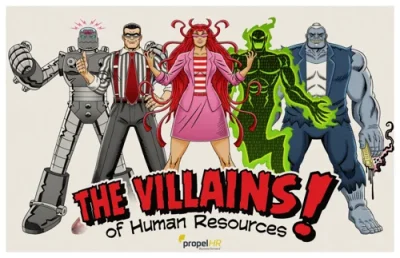 And, of course, no superhero story is complete without
 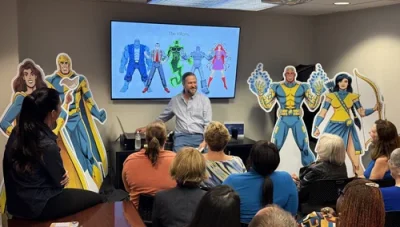 To bring the concept to life, we teamed up with marketing agency ALX Creatives, who pulled inspiration from vintage comics to create a team of vibrant superhero characters and a suite of eye-catching assets.
 💠Animated Videos on social media and Propel HR’s websites
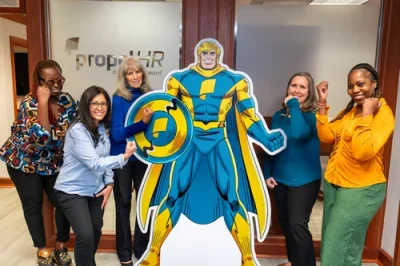 That’s pretty heroic, too.
 The Propellers’ campaign is working, and we’re just getting started.
  Robert “Brax” Cutchin, Chief Marketing Officer, Propel HR
 But fear not —
  Trusted by growing companies with 50 or more employees,
  That means HR gets faster, sharper, and more agile — like a sixth sense for workforce success.
 Plus, when done right, AI strips out bias. The result? A hiring process that’s fast, fair, and fiercely focused on talent with the skills you need.
 🔒
🔒  When HR tech handles the grind, your team can focus on the BIG picture: growing talent, building culture, and driving strategy.
 Created by our own
  Ever hired someone who looked great on paper but turned out to be … not so great in reality? You’re not alone.
 Let’s be honest — when things get busy, employee check-ins and culture-building can fall off the radar. But that’s when morale starts to dip. And when employees feel disconnected, productivity takes a hit.
 The business world is moving fast — AI, remote work, changing customer demands — and your team needs important skills to keep up.
 Have you ever felt stuck dealing with an underperforming employee but not sure how to address it?
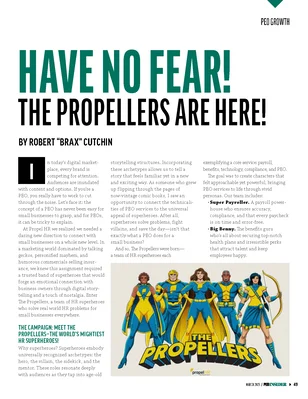 Meet The Propellers, the dynamic team revolutionizing the way businesses handle HR. Created by Propel HR, these superheroes are on a mission to tackle payroll, benefits, compliance, and those everyday HR battles — so you don’t have to.